Ten Plagues of Egypt: When Completeness Became Judgment

Most of us first heard about the Ten Plagues through Sunday school felt boards and children’s Bibles. We memorised them, maybe even sang a song about them. But the older you get and the more carefully you read Exodus, the more you realise how much we missed. These plagues were not random bursts of divine anger. They were precise, purposeful, and deeply personal—each one a challenge to the gods of Egypt, each one an invitation for Pharaoh to change course, and each one a revelation of who YHWH truly is.
What unfolds across Exodus 7–12 is not simply catastrophe. It is a powerful demonstration of God’s sovereignty, patience, and justice, followed by one of the clearest pictures of redemption in all of Scripture. The story moves from warning to judgment, but woven through every stage is an unmistakable thread of mercy. God was not trying to destroy Egypt. He was trying to free Israel, and He repeatedly gave Pharaoh opportunities to respond.
Before we examine each plague, let’s begin with a quick overview.
What Were the Ten Plagues of Egypt?
The ten plagues were a series of judgments God sent upon Egypt through Moses and Aaron to compel Pharaoh to release the Israelites from slavery.
The ten plagues were:
- Water turned to blood
- Frogs
- Gnats (or lice)
- Flies
- Livestock disease
- Boils
- Hail
- Locusts
- Darkness
- Death of the firstborn
Together, these plagues demonstrated God’s authority over Egypt, exposed the weakness of its gods, and ultimately led to Israel’s deliverance from slavery.
Why Did God Send the Ten Plagues?
God sent the ten plagues to compel Pharaoh to release the Israelites from slavery, demonstrate His power over Egypt and its gods, and reveal that He alone is the true God.
The plagues were not random disasters. Before nearly every plague, Pharaoh received a warning and an opportunity to repent. Yet each refusal led to greater consequences. Through the plagues, God displayed His power, patience, and authority while exposing the powerlessness of Egypt’s gods.
The fact that there were ten plagues is also significant. In Scripture, the number ten often signifies completeness. The ten plagues therefore represented God’s complete demonstration of His power and judgment against Egypt.
By the end of the tenth plague, God had fully revealed who He was, exposed the futility of Pharaoh’s resistance, and secured Israel’s freedom.
Let’s walk through the plagues and see what each one reveals about God, Pharaoh, and the story of redemption.
Stage One: Annoying But Manageable (Plagues 1–3)
Plague 1: Water to Blood (Exodus 7:14–24)
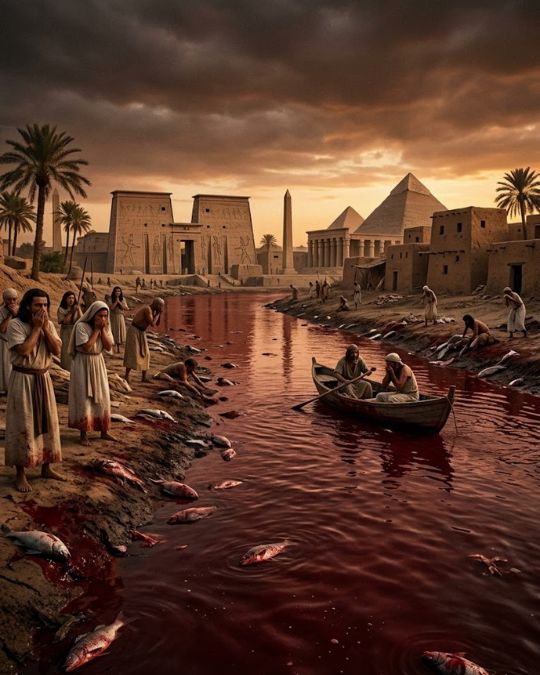
The Nile—Egypt’s lifeblood, the source of their agriculture, their commerce, their survival—turned to blood. Fish died. The water reeked. The entire water supply became undrinkable overnight.
God was confronting Hapi, the god of the Nile, demonstrating that the river Egypt worshipped was under YHWH’s control, not Hapi’s. But Egypt’s magicians managed to replicate the trick (Exodus 7:22), and Pharaoh walked back into his palace, entirely unimpressed. If his own sorcerers could do it, why should he take YHWH seriously?
“But the Egyptian magicians did the same things by their secret arts, and Pharaoh’s heart became hard; he would not listen to Moses and Aaron, just as the Lord had said.” – Exodus 7:22 (NIV)
Plague 2: Frogs (Exodus 8:1–15)

Frogs invaded everywhere—beds, ovens, kneading bowls, every corner of Egyptian life. The magicians duplicated this one too (Exodus 8:7), though why anyone would want more frogs is genuinely beyond explanation.
“But the magicians did the same things by their secret arts; they also made frogs come up on the land of Egypt.” — Exodus 8:7
This challenged Heqet, the Egyptian fertility goddess often depicted with a frog’s head. Pharaoh asked Moses to pray for relief and promised to let Israel go. It sounded like progress. But the moment the frogs died and the pressure lifted, Pharaoh changed his mind (Exodus 8:15). Relief made him forget his promise. Comfort restored his stubbornness.
Plague 3: Gnats or Lice (Exodus 8:16–19)
Tiny insects—the Hebrew word kinnim could mean gnats, lice, or sand flies—covered every person and animal in Egypt. And this time, something shifted. The magicians could not replicate it. They told Pharaoh plainly:
“This is the finger of God” – Exodus 8:19.
Even the occult practitioners recognised a supernatural power beyond their reach. They saw it. They named it. They told Pharaoh directly. And still, his heart remained hard. When even the people working against God acknowledge His power, and you still refuse to listen—that is a dangerous place to stand.

Stage Two: Devastating But Not Yet Deadly (Plagues 4–6)
Plague 4: Flies (Exodus 8:20–32)
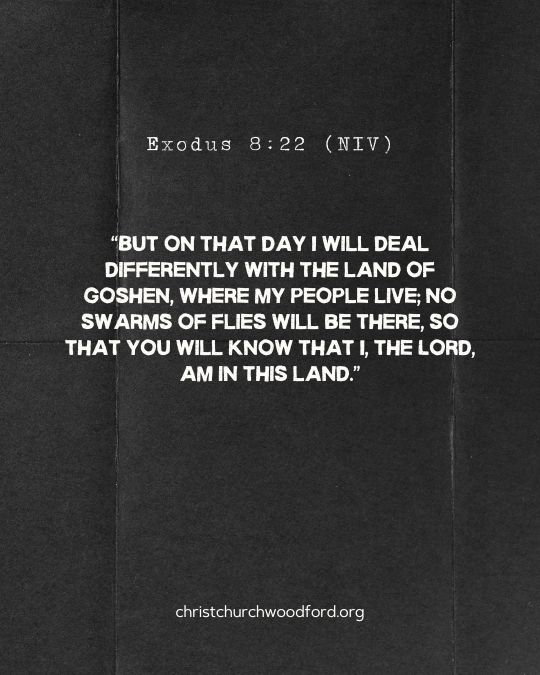
Swarms of flies descended on Egypt—but they did not touch Goshen, where the Israelites lived (Exodus 8:22–23).
This was the first time God made a visible, geographical distinction between His people and their oppressors. The flies were not random. The protection was not accidental. God was demonstrating that He could judge one group while shielding another, that His power was not indiscriminate but deeply intentional.
“But on that day I will set apart the land of Goshen, where my people dwell, so that no swarms of flies shall be there, that you may know that I am the LORD in the midst of the earth.” — Exodus 8:22, ESV
From this point on, the distinction between Egypt and Israel grew more visible with every plague. God was not neutral. He was making a statement about whose side He was on.
Plague 5: Livestock Disease (Exodus 9:1–7)
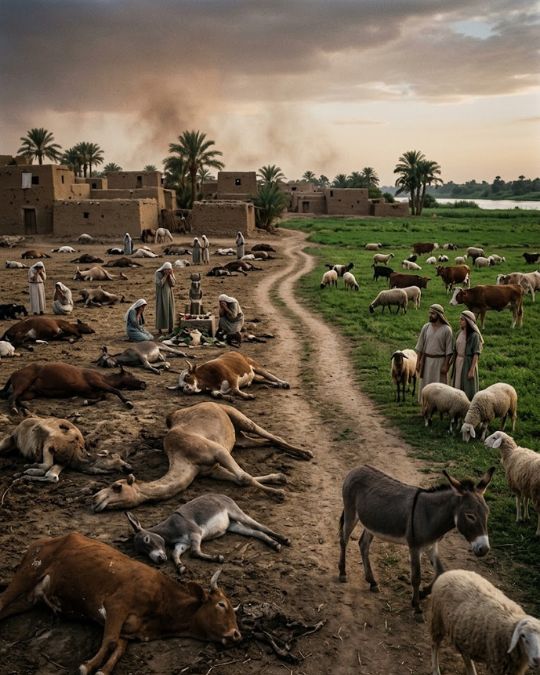
A severe pestilence killed Egypt’s livestock—horses, donkeys, camels, herds, and flocks. But:
“The LORD did this the next day: all the livestock of the Egyptians died, but not one animal belonging to the Israelites died.” – Exodus 9:6 (NIV)
In an agricultural economy, losing your animals meant losing your livelihood, your food supply, your wealth, your ability to work the land. This struck at Hathor, the cow goddess, and Apis, the sacred bull god—animals Egypt venerated as divine.
God showed that Egypt’s economic gods were powerless before YHWH. Pharaoh sent officials to check on Goshen and confirmed that not a single Israelite animal had died (Exodus 9:7). He saw the evidence with his own eyes. And still, he would not let the people go.
Plague 6: Boils (Exodus 9:8–12)
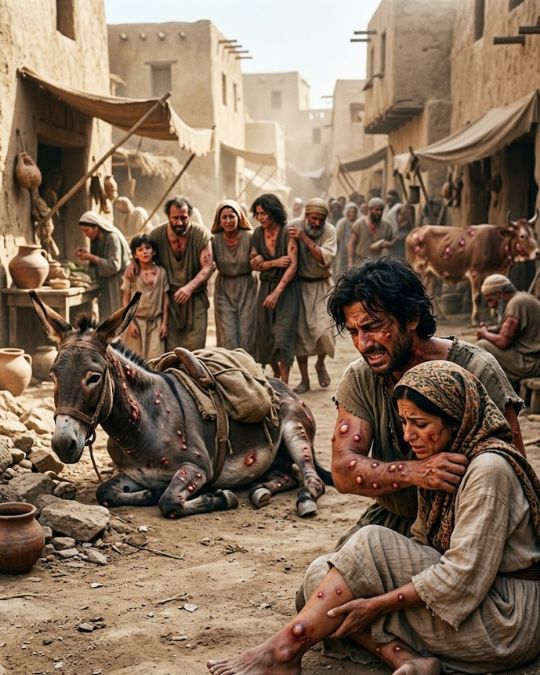
Painful boils broke out across Egypt—on people and animals alike. Even the magicians, who had been trying to compete with Moses since the beginning, could no longer stand before him (Exodus 9:11).
The men who had been Pharaoh’s line of defence were now incapacitated by the very God they had tried to rival. This confronted Sekhmet, goddess of disease, and Imhotep, god of healing. The suffering intensified, but still there were no deaths among the Egyptians. Not yet.
And here the text says something significant:
“But the LORD hardened the heart of Pharaoh” – Exodus 9:12.
After six plagues, six warnings, six genuine opportunities to repent—God gave Pharaoh exactly what he was already choosing. The hardening was not an override of Pharaoh’s will. It was the confirmation of it.
Stage Three: Supernatural and Terrifying (Plagues 7–9)
Plague 7: Hail and Fire (Exodus 9:13–35)
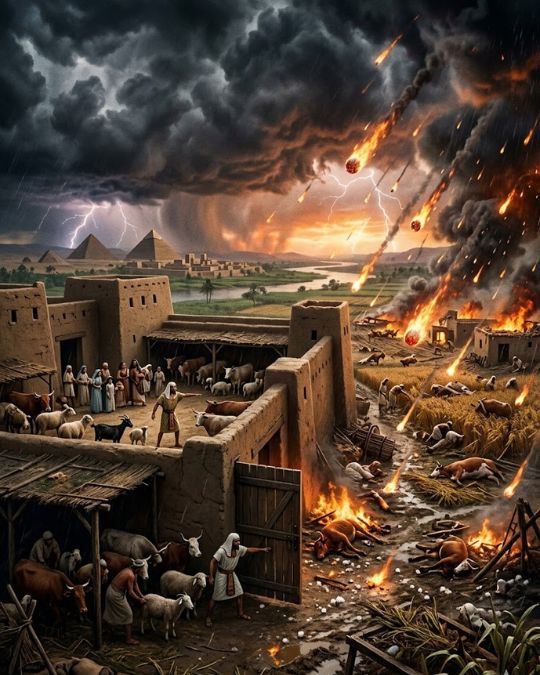
Hail mixed with fire—a meteorological impossibility—devastated Egypt’s crops and killed anyone caught outside. But God gave a warning beforehand, and those Egyptians who feared YHWH’s word brought their servants and livestock inside and were spared (Exodus 9:20). That detail matters enormously. By plague seven, some Egyptians were starting to believe. They had watched the pattern long enough to trust that when YHWH said something was coming, it was coming. Faith was taking root—not among the leadership, but among ordinary people who had been paying attention.
Pharaoh called Moses and made his most dramatic confession yet:
“This time I have sinned; the LORD is in the right, and I and my people are in the wrong” – Exodus 9:27
It sounded like genuine repentance. But the moment the hail stopped?
“He sinned yet again and hardened his heart” – Exodus 9:34
Pharaoh’s repentance lasted only as long as the pain did. Once the crisis passed, so did his contrition. That pattern is worth noticing—not just in Pharaoh, but in ourselves.
Plague 8: Locusts (Exodus 10:1–20)
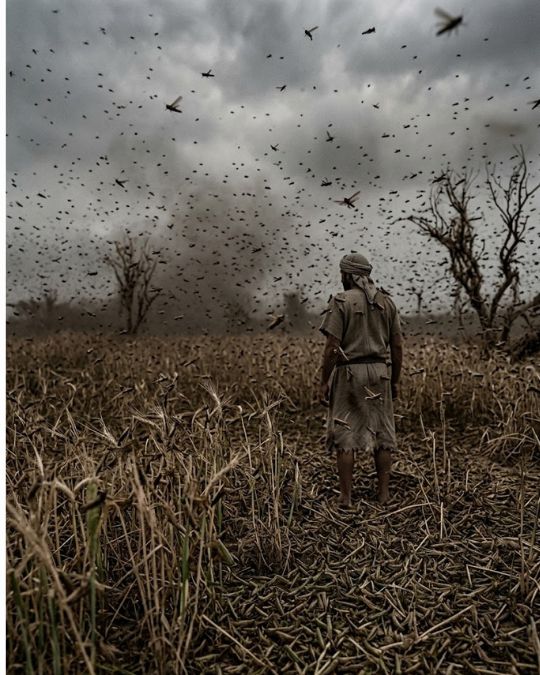
Locusts devoured whatever the hail had left behind. Crops, trees, anything green—gone. By now, even Pharaoh’s own officials were begging him to relent:
“Do you not yet understand that Egypt is ruined?” – Exodus 10:7.
The advisors saw it. The people felt it. Everyone understood what was happening. Everyone except Pharaoh, who continued negotiating, trying to let some Israelites go while keeping others. He wanted partial obedience to produce full relief. God does not work that way.
Plague 9: Darkness (Exodus 10:21–29)
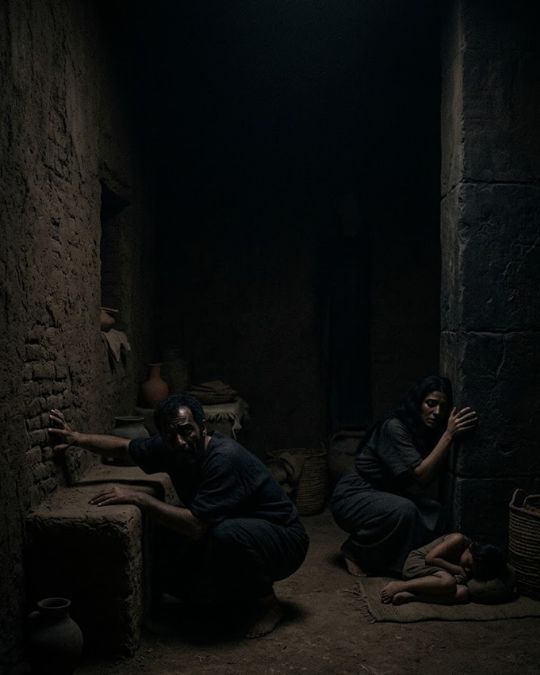
Three days of darkness so thick it could be felt (Exodus 10:21)—a darkness that paralysed all of Egypt. No one could see. No one could move. But the Israelites had light in their dwellings. This was the ultimate confrontation with Ra, the sun god and supreme deity of the Egyptian pantheon. The god that Egypt trusted for life, warmth, order, and blessing was shown to be entirely powerless before YHWH. If Ra cannot give you light, he cannot give you anything.
After this plague, Pharaoh told Moses:
“Get away from me; take care never to see my face again, for on the day you see my face you shall die” Exodus 10:28
The conversation was over. The relationship was severed. The warnings were exhausted. Nine plagues. Nine refusals. Completeness had been reached.
The Final Plague: When Completeness Became Judgment
Plague 10: Death of the Firstborn (Exodus 11:1–12:36)
The death of every firstborn son in Egypt—from Pharaoh’s palace to the prisoner’s dungeon to the livestock in the fields. In Egyptian culture, the firstborn carried the family legacy, the inheritance, the future. This was the complete dismantling of Egypt’s hope. This final plague struck at Pharaoh himself, who was considered a living god, and at Osiris, god of the afterlife. There was no Egyptian deity left unchallenged. The pantheon had been systematically exposed as powerless.
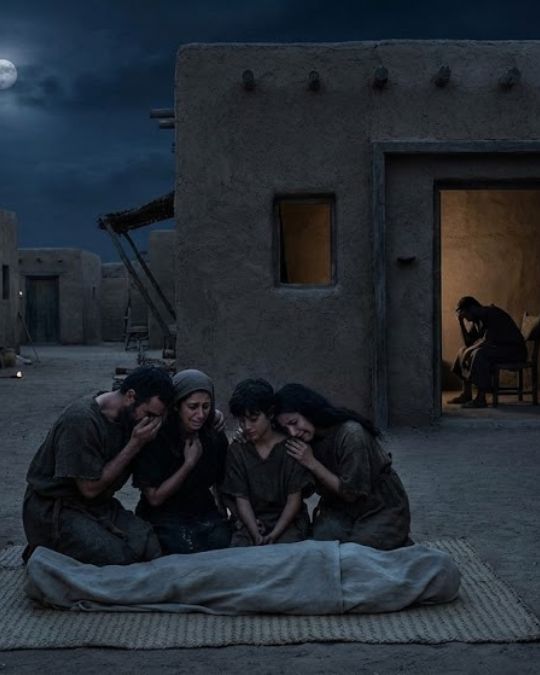
But here is what makes this plague different from every one before it: God provided a way out.
He did not automatically exempt the Israelites. Protection came through obedience and substitution—kill a lamb, spread its blood on the doorposts, stay inside until morning. Every household, Israelite and Egyptian alike, needed the blood of a lamb. No one was spared based on nationality or merit. Everyone needed the covering.
“The blood shall be a sign for you, on the houses where you are. And when I see the blood, I will pass over you, and no plague will befall you to destroy you, when I strike the land of Egypt.” — Exodus 12:13, ESV
The Israelites had to trust that the blood would be enough. They had to stay inside while the wailing began across Egypt. They had to believe that the mark on their doorpost was sufficient—not because they understood the mechanism, but because God said it would work. That is faith. Not certainty. Not full comprehension. But trust in God’s provision when judgment is at the door.
Why did God harden Pharaoh’s heart?
The phrase “God hardened Pharaoh’s heart” has troubled readers for centuries. If God hardened Pharaoh’s heart, how could Pharaoh be responsible for his actions?
The Bible shows that both realities were at work. Pharaoh repeatedly hardened his own heart first (Exodus 8:15, 32; 9:34). Only later do we read that God hardened it further (Exodus 9:12; 10:20, 27). Pharaoh chose the path; God confirmed it.
God did not force Pharaoh into rebellion. Rather, He gave Pharaoh over to what he had already chosen. The more Pharaoh resisted God’s warnings, the less willing he became to listen. What began as stubbornness became a hardened heart.
Paul describes a similar principle in Romans 1, where God repeatedly “gave them over” to their desires (Romans 1:24, 26, 28). Sometimes judgment comes not through immediate punishment but by allowing people to persist in the direction they have chosen.
We should also remember who Pharaoh was. He had enslaved Israel and ordered the death of Hebrew baby boys (Exodus 1:22). The hardening of his heart did not happen in a moral vacuum. It occurred after years of oppression and repeated rejection of God’s commands.
Pharaoh’s story is ultimately a warning. A hardened heart rarely develops overnight. It forms one act of resistance at a time.
The Passover Points to Christ
The Passover is not merely an Old Testament memory. It is the template for understanding Jesus. Paul explicitly calls Christ “our Passover lamb” (1 Corinthians 5:7).
John records that Jesus died at the exact hour the Passover lambs were being sacrificed in the temple (John 19:14). The pattern God established in Exodus—innocent life given so that guilty life can be spared—finds its ultimate fulfilment at the cross.
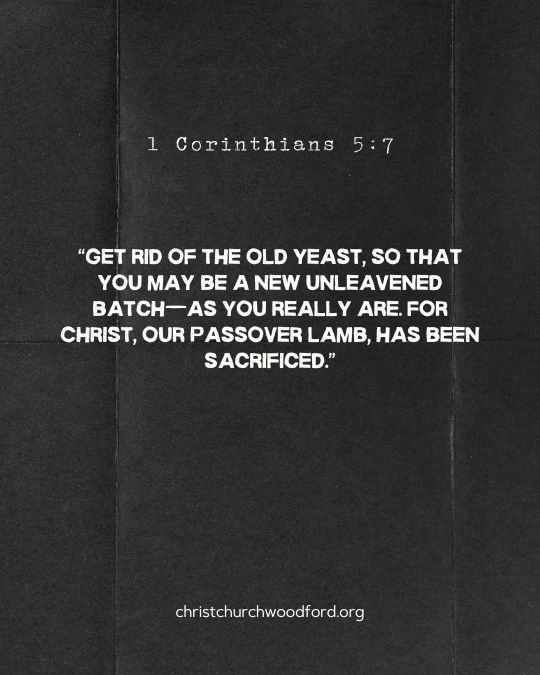
In the Passover, judgment was universal. Death was coming for everyone. But protection was available through substitution. A lamb died so a family could live. That is the gospel in its earliest, most visceral form.
The Jewish Passover Seder includes a striking moment where participants spill drops of wine from their cups while reciting each plague—a recognition that even in liberation, there is grief for Egyptian suffering. The Talmud preserves a tradition where the angels began celebrating as the Egyptian army drowned in the Red Sea, and God rebuked them: “My children are drowning, and you would sing?” (Babylonian Talmud, Megillah 10b).
God can enact justice while simultaneously grieving its necessity. Victory and sorrow coexist in the heart of God. That should shape how we think about judgment—not with triumphalism, but with reverence.
Lessons from the Ten Plagues of Egypt
So what do the ten plagues of Egypt teach us today? While the story took place thousands of years ago, its lessons remain remarkably relevant.
1. God’s Patience Has Limits
One of the clearest lessons from the ten plagues is that God is patient, but He is not indifferent to sin. Again and again, Pharaoh was warned before judgment came. God did not rush to punish Egypt. He gave opportunities to listen, repent, and change course.
But patience rejected eventually becomes judgment. Pharaoh repeatedly chose resistance over obedience, and each refusal brought greater consequences. The plagues remind us not to mistake God’s patience for approval.
2. A Hardened Heart Develops Gradually
Pharaoh’s heart did not become hard overnight. It happened one decision at a time.
Each plague created a moment of humility, but once the crisis passed, Pharaoh returned to his old ways. His temporary repentance never became lasting surrender.
The same danger exists today. Every time we ignore God’s voice, delay obedience, or push aside conviction, our hearts become a little less sensitive. The real warning of the plagues is not simply that Pharaoh hardened his heart, but that any of us can do the same.
3. God Is Greater Than Every False God
The plagues were not random disasters. They were a direct challenge to the gods and powers Egypt trusted. The Nile, fertility, livestock, health, the sun, and even Pharaoh himself were all shown to be powerless before the Lord.
The message was unmistakable: there is no rival to God. The things people trust for security, success, and salvation cannot ultimately save them. Only the Lord is sovereign.
4. God Provides a Way of Salvation
The final plague also reveals one of the greatest themes in Scripture: even in judgment, God provides a way of escape.
Before the death of the firstborn, God instructed His people to place the blood of a lamb on their doorposts. Those who trusted His provision were spared. That Passover lamb points directly to Jesus Christ, the Lamb of God who gave His life so that sinners could be saved.
The ten plagues led to the Exodus, and the Exodus led to freedom. What looked like devastation became the doorway to redemption. The same is true in the gospel. God does not simply rescue His people from something; He rescues them for something.
The choice remains the same today as it was on that first Passover night: will we trust God’s provision and walk into the freedom He offers?
Amen.
Frequently Asked Questions
What did the ten plagues represent?
The ten plagues were more than a series of disasters. They demonstrated God’s power over Egypt, exposed the weakness of its gods, and revealed that the Lord alone is sovereign. Each plague challenged something Egypt trusted, from the Nile River to Pharaoh himself.
Which Egyptian gods were challenged by the ten plagues?
Many scholars believe the plagues confronted specific Egyptian deities. For example, the Nile turning to blood challenged Hapi, the god of the Nile; the plague of frogs challenged Heqet, the fertility goddess; and the plague of darkness challenged Ra, the sun god. Together, the plagues showed that Egypt’s gods were powerless before the God of Israel.
Were the Israelites affected by the ten plagues?
During the early plagues, the effects were widespread. However, beginning with the plague of flies, God made a distinction between Egypt and the land of Goshen where the Israelites lived. As the plagues intensified, God’s protection over His people became increasingly visible.
Are the ten plagues historical?
Christians traditionally understand the ten plagues as real events recorded in the book of Exodus. While scholars debate the historical details and dating of the Exodus, the biblical account presents the plagues as historical acts of God that led to Israel’s deliverance from slavery.
What happened after the ten plagues?
After the death of the firstborn, Pharaoh finally allowed the Israelites to leave Egypt. Their departure became known as the Exodus, a defining event in Israel’s history that ultimately led to the giving of the Law at Mount Sinai and the journey toward the Promised Land.
Further Reading:
- Enns, Peter.Exodus: The NIV Application Commentary. Zondervan, 2000.
- Currid, John D.Ancient Egypt and the Old Testament. Baker Academic, 1997.
- Hoffmeier, James K.Israel in Egypt: The Evidence for the Authenticity of the Exodus Tradition. Oxford University Press, 1999.
- Sarna, Nahum M.Exploring Exodus: The Origins of Biblical Israel. Schocken Books, 1996.