What Does the Number 3 Mean in the Bible?

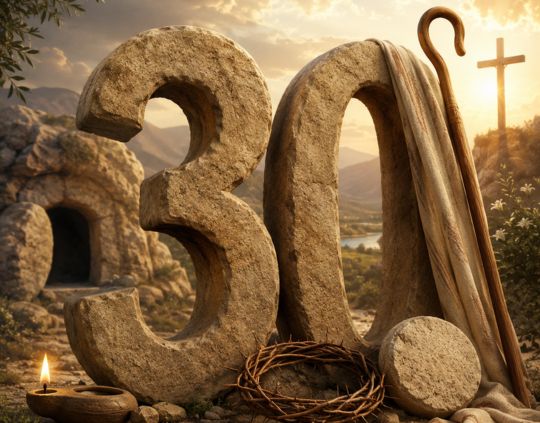
Have you ever wondered why the number three appears so often in the Bible? Why did Jesus rise on the third day? Why did Peter deny Him three times? Why do the angels cry, “Holy, holy, holy,” before God’s throne?
The answer isn’t hidden numerology or a secret biblical code. Throughout Scripture, the number three consistently points to God’s work and, above all, to His triune nature as Father, Son, and Holy Spirit. Because of that, it frequently appears in moments of divine completeness, resurrection, testimony, and redemption.
That doesn’t mean every occurrence of the number three carries symbolic meaning. The Bible isn’t inviting us to search for mystical patterns or assign supernatural significance to everyday numbers. Instead, it invites us to notice the intentional ways God uses recurring themes to reveal His character and His redemptive plan.
As we explore the meaning of the number three in the Bible, you’ll see that this pattern runs from Genesis to Revelation, consistently pointing us back to the God who reveals Himself through Scripture.
The Number 3 and the Holy Trinity: The Primary Answer
If you’re asking what the number three symbolizes in Scripture, the answer that matters most is this: the Trinity.
God exists as three persons—Father, Son, and Holy Spirit—yet remains one God. This isn’t mathematics where 1+1+1=3. It’s mystery, where 1×1×1=1. Three distinct persons. One divine essence. It’s the defining doctrine of Christian faith, and it’s why the number three carries such weight throughout the Bible.
The Trinity is hinted at in the Old Testament and revealed fully in the New. In Genesis 1:26, God says, Let us make mankind in our image—plural language that whispers of plurality within the Godhead.
In Isaiah 6:3, the angels cry Holy, holy, holy is the LORD Almighty—a threefold declaration of God’s holiness. And in Matthew 28:19, Jesus commands His disciples to baptize them in the name of the Father and of the Son and of the Holy Spirit.
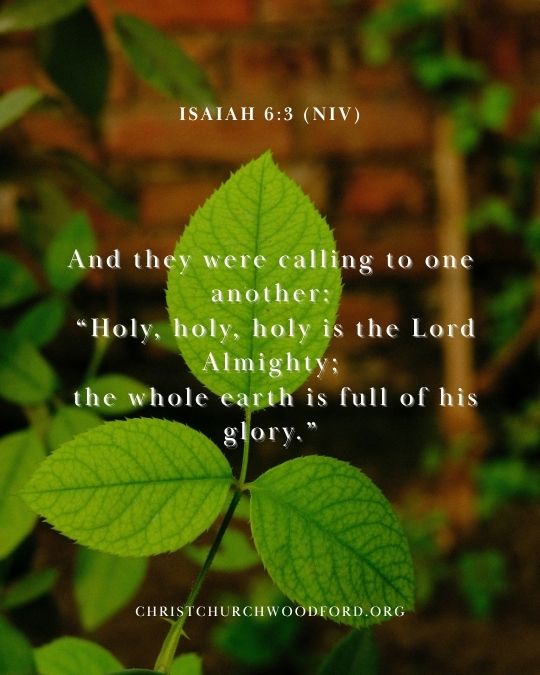
The number three doesn’t create the doctrine of the Trinity. The Bible does. But God has woven this number into Scripture as a constant reminder of His triune nature. Every time we see meaningful patterns of three, we’re seeing echoes of the three-in-one God.
Here’s the beautiful thing about the Trinity: God doesn’t need us. He has love in His very essence. The Father, Son, and Spirit exist in perfect relationship, eternally giving and receiving love within the Godhead. That means when God created us, it wasn’t out of loneliness or necessity—it was an overflow of love. We were created as an act of love, not dependence.
So when you see the number three in Scripture, let it point you back to this: the God who is Father, Son, and Holy Spirit. The God who is complete in Himself and who created you not because He had to, but because He wanted to.
The Meaning of the 3rd Day in the Bible: God’s Pattern of Resurrection
If the Trinity is the what (who God is), the third day is the when (when God acts).
The most significant third-day event in all of Scripture is Jesus’ resurrection. He rose from the dead on the third day—not the second, not the fourth.
Matthew 16:21 says He would be killed and on the third day be raised to life. Luke 24:7 confirms it. 1 Corinthians 15:4 declares it as central to the gospel: He was buried, that he was raised on the third day according to the Scriptures.
Why the third day? Because it fulfilled a pattern God had been establishing throughout biblical history.
Jonah and the Great Fish
Jonah spent three days and three nights in the belly of the great fish. Jesus explicitly connected this to His own death and resurrection in Matthew 12:40: For as Jonah was three days and three nights in the belly of a huge fish, so the Son of Man will be three days and three nights in the heart of the earth. Jonah’s deliverance was a preview—a prophetic pattern pointing forward to Jesus.
Abraham and Isaac
Genesis 22:4 says, On the third day Abraham looked up and saw the place in the distance—the place where he would offer Isaac and where God would provide a ram. The third day marked divine intervention and substitutionary sacrifice, foreshadowing Christ’s own sacrifice.
Hosea’s Prophecy
Hosea 6:2 declares messianic prophecy: After two days he will revive us; on the third day he will restore us, that we may live in his presence. This is God’s pattern of bringing life from death on the third day.
The third day isn’t arbitrary. It’s God’s signature timing for resurrection, deliverance, and new beginnings. Every third-day event in Scripture whispers the same message: watch for God to show up. Watch for life to come from death. Watch for resurrection.
And if you’re in a season of darkness right now—loss, grief, confusion, waiting—the third-day pattern offers you hope. God specializes in resurrection. He brings life from death. He intervenes. Your third day might not come on your timeline, but resurrection is God’s pattern. Hold on.
3 Repetitions in the Bible: When God Repeats Himself Three Times

In Hebrew culture, repetition creates emphasis. Saying something once is a statement. Saying it twice is emphasis. Saying it three times is the ultimate expression—superlative, complete, beyond measure.
When the angels in Isaiah’s vision cry Holy, holy, holy is the LORD Almighty, they’re not just being repetitive. They’re declaring that God is the most holy, completely holy, holy beyond comprehension. The threefold repetition marks the fullness of God’s holiness.
This pattern shows up throughout Scripture:
Peter’s Three Denials and Three Restorations
Peter denied Jesus three times. It wasn’t just failure—it was complete failure, witnessed publicly, repeated until it was unmistakable. But after the resurrection, Jesus asked Peter three times, Do you love me? and commissioned him three times to Feed my sheep. The threefold restoration matched the threefold denial. Complete forgiveness. Complete reinstatement.
Jesus’ Three Temptations
Satan tempted Jesus three times in the wilderness. Jesus defeated him each time with Scripture. Three temptations, three victories—complete triumph over evil.
Paul’s Three Prayers
Paul pleaded with the Lord three times to remove his thorn in the flesh. God’s answer was grace. The threefold prayer marked the completeness of Paul’s petition and God’s sufficient response.
Jesus’ Three Hours of Darkness
At the crucifixion, darkness covered the land from the sixth hour to the ninth hour—three hours of darkness while the Son of God bore sin. The fullness of judgment fell on Christ in those three hours.
Three Friends in the Fiery Furnace
Shadrach, Meshach, and Abednego—three faithful men who refused to bow to Nebuchadnezzar’s idol and were thrown into the fiery furnace. Their threefold witness of faith resulted in deliverance. The king had commanded everyone to worship the image, but these three stood firm.
Their story doesn’t just record historical bravery—it shows the completeness of faithful testimony. Three witnesses. Three who refused. Three who walked out unharmed.
Jesus’ Three Prayers in Gethsemane
In the Garden of Gethsemane, Jesus prayed three times before His arrest. Matthew 26:44 says He went away once more and prayed the third time, saying the same thing. The threefold prayer marked the completeness of His submission to the Father’s will. Each time, the same surrender. Each time, deeper anguish. Three prayers leading to the cross.
When God repeats something three times in Scripture, pay attention. It’s either emphasizing the essence of something or showing its completeness. The repetition itself carries meaning.
Why Is the Number 3 Important to God?
So why does God use the number three so consistently? What does it actually symbolize?
Divine Completeness
Three represents fullness and completeness in God’s work. When something is stated three times or occurs on the third day, it’s finished. Complete. Whole. The threefold pattern marks the moments when God’s action is brought to its intended conclusion.
The Fullness of Testimony
Deuteronomy 19:15 establishes that a matter must be established by the testimony of two or three witnesses. In Jewish law, three witnesses provided complete and legally binding testimony. When God does something three times or on the third day, He’s providing full witness to His action. It’s verified. Confirmed. Undeniable.
Divine Intervention and New Beginnings
The third-day pattern consistently marks when God steps in to bring life from death, hope from despair, deliverance from bondage. It’s the timing of resurrection—not just for Jesus, but as a repeated pattern of how God works. This teaches us that even in our darkest moments, we can anticipate God’s intervention.
Reflection of God’s Nature
Ultimately, the number three points us back to who God is. He is Trinity. He is complete. He is the God of resurrection. Every threefold pattern in Scripture is a fingerprint of the three-in-one God who created and redeems all things.
The number three isn’t magic. It’s meaningful. It’s God’s way of signing His work, of marking the moments when He shows up, of pointing us back to the Trinity again and again.
Threefold Patterns in the Old Testament
The pattern doesn’t start in the New Testament. God has been weaving threes throughout Scripture from the beginning.
The Three Patriarchs
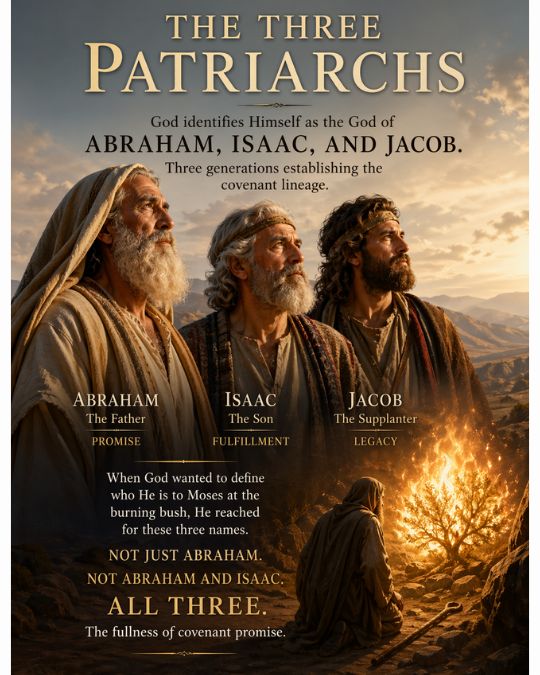
God identifies Himself as the God of Abraham, Isaac, and Jacob. Three generations establishing the covenant lineage.
When God wanted to define who He is to Moses at the burning bush, He reached for these three names. Not just Abraham. Not Abraham and Isaac. All three. The fullness of covenant promise.
The Tabernacle’s Three Sections
The Tabernacle—and later the Temple—had three main sections: the Outer Court, the Holy Place, and the Holy of Holies. This threefold division represented progressive intimacy with God. Anyone could enter the Outer Court. Only priests could enter the Holy Place. And only the High Priest could enter the Holy of Holies, once a year. Three spaces. Three levels of access. All pointing toward the presence of God.
Samuel Called Three Times
God called young Samuel three times before he recognized the Lord’s voice. 1 Samuel 3 records the pattern: the Lord called, Samuel ran to Eli, Eli sent him back. Three times. The threefold call emphasizes the fullness of God’s calling on Samuel’s life—not once, not twice, but until it was unmistakable.
Elijah Prays Three Times
Before God raised the widow’s son back to life, Elijah stretched himself over the child and cried out to the Lord three times (1 Kings 17:21). On the third prayer, God heard Elijah’s plea and restored the boy’s life. Once again, the pattern of three is connected with God’s power to bring life where there was death.
While the focus of the passage is God’s miraculous intervention rather than the number itself, it fits the broader biblical pattern in which God repeatedly uses three to emphasize the fullness of His work and His sovereign power.
The Aaronic Blessing
Numbers 6:24-26 gives us the priestly blessing in three parts: The LORD bless you and keep you; the LORD make his face shine on you and be gracious to you; the LORD turn his face toward you and give you peace. Three declarations. Three invocations of the Lord’s name. The fullness of blessing pronounced over God’s people.
These examples show that long before the birth of Christ, God was already weaving meaningful patterns of three throughout Scripture. While each passage has its own historical context, together they point forward to the God who fully reveals Himself as Father, Son, and Holy Spirit in the New Testament.
The Three Greatest Christian Virtues
Near the end of his great chapter on love, Paul writes these words in 1 Corinthians 13:13: And now these three remain: faith, hope and love. But the greatest of these is love.
Three virtues. Not two. Not four. Three.
This threefold framework defines Christian life. Faith—trusting in what God has done through Christ. Hope—anticipating what God will do when Christ returns. Love—living in response to who God is. Together, these three virtues form a complete picture of what it means to follow Jesus.
The pattern echoes throughout Paul’s letters. In 1 Thessalonians 1:3, he thanks God for the Thessalonians’ work produced by faith, labor prompted by love, and endurance inspired by hope. Three virtues. Three responses. The fullness of Christian discipleship.
It’s worth noting that Paul could have picked any number of virtues to highlight. Patience. Kindness. Gentleness. Self-control. But he chose three. And he structured them as a complete set—the essentials that remain when everything else fades.
Even in defining how we’re meant to live as followers of Jesus, the number three appears—pointing us back to the God who is Trinity, reminding us that completeness is found in Him.
What This Means for You
So what do you do with all this? Is this just interesting biblical information, or does it actually matter?
Understanding the number three in Scripture helps us understand God better. He’s not a distant, unknowable force. He’s Trinity—Father, Son, Holy Spirit. Relationship exists within God’s very being. When we see threes in Scripture, we’re reminded that God is personal, relational, and complete in Himself.
The third-day pattern also offers hope. If you’re in a season of waiting, struggling, or grief, the pattern reminds you that God specializes in resurrection. He brings life from death. He intervenes. The pattern doesn’t guarantee your timeline, but it assures you of His character. Resurrection is what He does.
And once you start recognizing the pattern, you’ll begin to see God’s hand at work in your own life. Those moments when He shows up right when you need Him. When deliverance comes unexpectedly. When death gives way to new life. The number three becomes like God’s signature on those moments: I was here. This was Me. Watch for My pattern.
One final word: don’t make this weird. Don’t become obsessed with finding threes in everything or assigning mystical significance to every occurrence of three. That’s not the point. If you see three birds on a wire, it’s just birds. If you glance at the clock at 3:33, it’s just time. The point is recognizing an intentional biblical pattern that points us to God’s nature and His redemptive work—not turning everyday life into a superstitious scavenger hunt.
Focus on the God the pattern reveals, not the pattern itself.
The God Who Is Three
Here’s what it all comes back to: the number three isn’t about mathematics. It’s about revelation.
God could have revealed Himself any way He wanted. He chose to reveal Himself as Trinity—three persons, one God. He could have had Jesus rise on any day. He chose the third day. He could have structured reality any way. He embedded these patterns of three throughout redemptive history.
Why? Because He wants us to know Him. To recognize His signature. To see the pattern and remember: Resurrection is real, deliverance is possible, God is complete in Himself and faithful in His work.
The number three is woven into the fabric of Scripture like a thread of gold, marking the places where God has been and promising the places He’s going. And every thread leads back to the same truth: our God is Trinity, our hope is resurrection, and His faithfulness is complete.
That’s not numerology. That’s not mysticism. That’s theology. And it changes everything.
Frequently Asked Questions
Is the number 3 always symbolic in the Bible?
No. In many passages, the number 3 simply records a historical fact or quantity. While Scripture often uses the number three in meaningful ways, each passage should be interpreted in its context. Not every occurrence of the number carries symbolic significance.
Does seeing the number 3 have a biblical meaning today?
The Bible does not teach that repeatedly seeing the number 3 is a personal message or sign from God. While the number has rich symbolic meaning within Scripture, Christians are encouraged to seek God’s guidance through His Word rather than through recurring numbers or hidden signs.
Should Christians study biblical numbers?
Yes, when they are studied in their biblical context. Numbers can help us see recurring themes that point to God’s character and His work throughout history. However, Christians should avoid treating numbers as mystical codes or using them to predict the future.
What is the difference between biblical symbolism and numerology?
Biblical symbolism recognizes patterns that God intentionally uses within Scripture to communicate spiritual truths. Numerology, on the other hand, assigns mystical powers or hidden meanings to numbers themselves. The Bible encourages believers to focus on God’s revealed Word rather than secret codes or supernatural interpretations of everyday numbers.
Does the number 3 have any power on its own?
No. The number itself has no supernatural power. Its significance comes from how God chooses to use it throughout Scripture. The purpose of studying the number 3 is not to elevate the number itself, but to better understand the God who reveals His character and redemptive plan through His Word.
Disclaimer: The analysis of symbolism and numerology in this post is offered strictly for theological reflection and spiritual enrichment. We do not offer fortune-telling, guaranteed future outcomes, or specific financial or health advice. For any professional matter, please consult a qualified and licensed medical doctor, financial advisor, or legal counsel.


Liittyykö sininen väri kolmeen? Muistan pienenä pitäneeni lukua kolme ja sinistä väriä onnenlukunani ja lempivärinäni.
Its full of understanding and knowledge of God. It helps a person to grow or mature quickly 🙏🙏May God bless you
Great expo and great resource