Moses Trusting God at the Red Sea: When You’re Trapped and Terrified

Moses’ trust in God at the Red Sea in Exodus 14 is one of the most powerful examples of faith in impossible situations. Trapped between Pharaoh’s army and the sea, Moses chose to trust God when there seemed to be no escape. The story of the Red Sea crossing shows that faith is not the absence of fear—it is standing firm on God’s promises when everything around you says panic.
Picture this: You’re standing at the beach, but instead of feeling relaxed, you’re absolutely terrified. Behind you, you hear the rumble of an approaching army—600 chariots, to be exact—and their only mission is to drag you back into slavery. In front of you? A massive body of water with no bridge, no boats, and no escape route.
That’s exactly where Moses and the Israelites found themselves at the Red Sea, and honestly, it’s one of the most gut-wrenching moments in the entire Bible.
This wasn’t some calm, peaceful trust; this was white-knuckle faith in the face of complete disaster, and it has everything to teach us about trusting God when life feels impossible.
How the Israelites Became Trapped at the Red Sea
Let’s rewind a bit because the Red Sea moment didn’t happen in a vacuum.
The Israelites had just escaped Egypt after 400 years of brutal slavery. God had sent ten devastating plagues to convince Pharaoh to let them go—we’re talking water turned to blood, frogs everywhere, darkness you could feel, and finally, the death of every firstborn son in Egypt (except the Israelites who put lamb’s blood on their doorframes). After that Passover night, Pharaoh basically shoved them out the door.Why the Israelites Were Afraid at the Red Sea
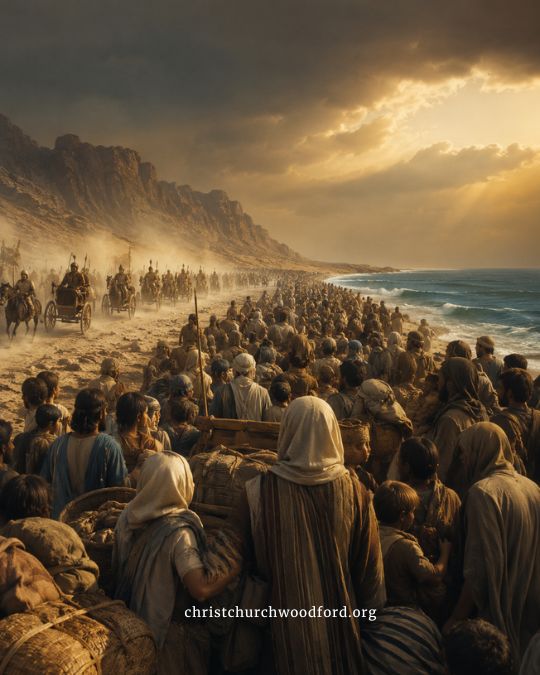
But here’s the thing about Pharaoh—he was a regret-prone decision maker. The Bible tells us in Exodus 14:5-9 that once the shock wore off, Pharaoh looked around at all the work that wasn’t getting done and thought, “Wait, what did I just do?” He gathered 600 of his best chariots (that’s military-grade ancient warfare, by the way), along with his entire army, and took off after them.
The Israelites’ situation was this:
- They were about three days into their freedom journey
- They’d been led by God to camp near Pi-hahiroth, right by the Red Sea (Yam Suph in Hebrew)
- They were essentially trapped—water in front, desert on the sides, Egyptian army behind
- There were potentially 2-3 million people (including women and children) with nowhere to go
Where Did Moses Cross the Red Sea?
The exact location of the Red Sea crossing is still debated today. Some scholars believe the Israelites crossed near the Gulf of Suez, while others argue for the Gulf of Aqaba or a marshy “Reed Sea” area near northern Egypt. In Hebrew, the Red Sea is called Yam Suph, often translated “Sea of Reeds.”
What Scripture makes clear is that God intentionally led Israel to this location. Exodus 13:17–18 explains that God avoided the shorter Philistine route because the Israelites were not ready for war. Instead, He guided them toward the Red Sea through the pillar of cloud by day and the pillar of fire by night.
But that raises a deeper question: Why would God lead His people into what looked like a trap?
Sometimes God leads us into impossible situations so we learn to depend completely on Him. The Red Sea was not a mistake in God’s plan—it was the stage for one of the greatest miracles in Scripture.
Why the Israelites Were Afraid at the Red Sea
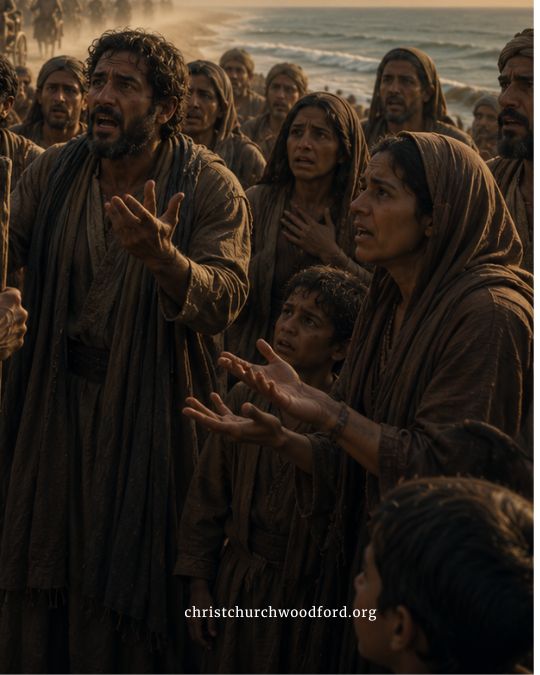
As Pharaoh’s army approached the Red Sea, the Israelites panicked. Trapped between the water and the Egyptian army, they believed they were about to die in the wilderness. Exodus 14 shows how fear can quickly overwhelm faith, even after witnessing God’s miracles.
So imagine you’re one of the Israelites. You’ve been walking through the desert for days, your feet hurt, your kids are complaining, and you’re starting to wonder if this whole “freedom” thing was actually a good idea. Then someone shouts, “Look behind us!”
You turn around and see the dust cloud first. Then you hear the rumble. Then you see them—the Egyptian army, complete with chariots and weapons, bearing down on you.
Exodus 14:10–12 captures the moment perfectly:
“As Pharaoh approached, the Israelites looked up, and there were the Egyptians, marching after them. They were terrified and cried out to the Lord.”
Then the panic turned into blame:
“Was it because there were no graves in Egypt that you brought us to the desert to die?”
And they continued:
“What have you done to us by bringing us out of Egypt? Didn’t we say to you in Egypt, ‘Leave us alone; let us serve the Egyptians’? It would have been better for us to serve the Egyptians than to die in the desert!”
The Israelites had just witnessed ten miraculous plagues in Egypt, yet in this moment of crisis, they forgot everything God had already done for them.
How Fear Affected the Israelites
Let me be honest—I can’t completely judge the Israelites here. They had lived under slavery and trauma for generations. They had seen violence, oppression, and death their entire lives. And now, just when freedom finally seemed possible, it looked like Pharaoh was about to drag them back.
Their fear response included:
- Regretting their decision to leave Egypt
- Blaming Moses for the crisis
- Assuming the worst possible outcome
- Wanting to return to slavery rather than face uncertainty
Sound familiar?
Fear still does the same thing to us today. It makes the past look better than it was. It makes us question God’s direction. It causes panic, blame, and hopelessness.
Yet even in their fear, Exodus 14:10 says the Israelites still cried out to the Lord. That small detail matters. Their faith was weak, but they still turned toward God in their desperation.
Moses’ Response: The Faith That Changes Everything
Moses trusted God at the Red Sea by choosing faith instead of panic. While the Israelites feared death and slavery, Moses stood firm on God’s promises and reminded the people that the Lord would fight for them.
This is where Moses becomes one of my heroes in Scripture.
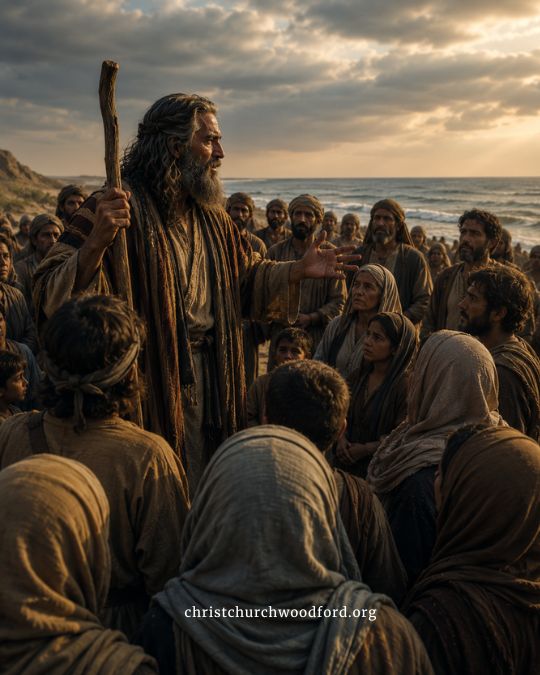
Standing there with a terrified crowd behind him, Pharaoh’s army approaching, and the Red Sea in front of him, Moses doesn’t panic. He doesn’t say, “You know what, maybe this was a terrible idea.” He doesn’t try to negotiate with Pharaoh or search for another escape route.
Instead, he says something absolutely stunning in Exodus 14:13-14:
“Do not be afraid. Stand firm and you will see the deliverance the Lord will bring you today. The Egyptians you see today you will never see again. The Lord will fight for you; you need only to be still.”
Let that sink in for a second.
Moses was essentially saying:
“Stop panicking. Stay where you are. Watch what God is about to do. The enemy you’re terrified of right now? After today, they won’t be a problem anymore. God Himself is going to fight for you.”
What Made Moses So Confident?
This wasn’t fake confidence. Moses had history with God.
He had encountered God at the burning bush in Exodus 3, where God revealed Himself as Yahweh — “I AM WHO I AM.” He had watched God humble Egypt through the ten plagues. He had seen the pillar of cloud and fire leading Israel through the wilderness.
But more than that, Moses understood something about God’s character:
When God starts something, He finishes it.
God had promised to deliver Israel and bring them to the Promised Land. The Red Sea was not the end of the story—it was just another obstacle God would overcome.
The Difference Between Fear and Faith
| The Israelites’ Response | Moses’ Response |
|---|---|
| “We’re going to die!” | “Do not be afraid.” |
| “This was a mistake!” | “Stand firm where you are.” |
| “We should go back to Egypt!” | “You’ll never see these Egyptians again.” |
| “Why did you do this to us?” | “The Lord will fight for you.” |
| Panic and blame | Faith and assurance |
What Does “Stand Firm” Mean in Exodus 14?
The Hebrew word for “stand firm” in Exodus 14:13 is yatsav, meaning:
- to stand your ground
- to remain in place
- to position yourself with confidence
This wasn’t passive surrender. Moses was calling the Israelites to actively trust God instead of running in fear.
Sometimes faith does not look dramatic. Sometimes it simply means staying where God placed you and refusing to give up while you wait for Him to move.
That’s what Moses teaches us at the Red Sea: faith is not the absence of fear—it is choosing to trust God when everything around you feels impossible.
How God Parted the Red Sea in Exodus 14
After Moses speaks those words of faith to the people, God speaks to Moses in Exodus 14:15-16:
“Why are you crying out to me? Tell the Israelites to move on. Raise your staff and stretch out your hand over the sea to divide the water so that the Israelites can go through the sea on dry ground.”
I love this moment because it reveals something important: Moses was also afraid.
Even while encouraging everyone else to trust God, Moses himself was crying out in fear and desperation. That’s what real faith looks like sometimes.
Faith is not pretending you’re fearless—it’s bringing your fear to God instead of letting fear control you.
How God Protected Israel at the Red Sea
Before the sea even parted, God protected His people.
Exodus 14:19–20 says the angel of God and the pillar of cloud moved from the front of Israel’s camp to the rear, standing between the Israelites and the Egyptian army.
The same presence that had been leading Israel now became their protection.
The cloud brought darkness to the Egyptians but light to the Israelites throughout the night. Pharaoh’s army could not advance because God Himself stood between His people and their enemies.
That image is powerful.
Sometimes God does not remove the danger immediately—He first places Himself between you and what is trying to destroy you.
How the Red Sea Was Parted
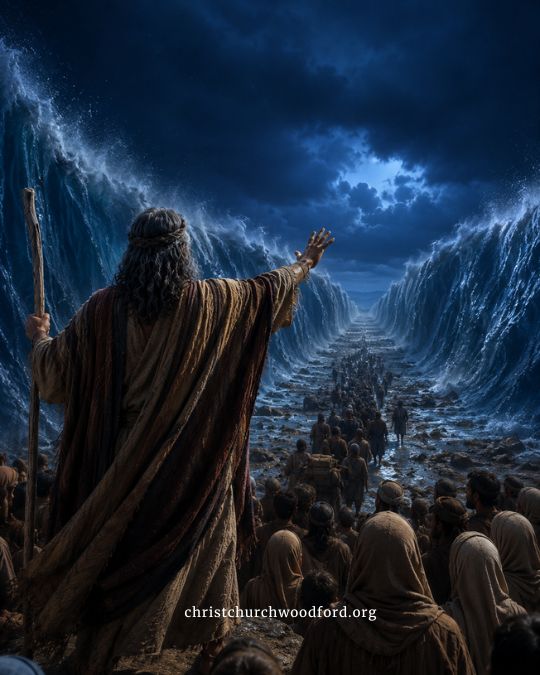
Then Moses does what God told him: he stretches out his hand over the sea. And here’s where Then Moses obeyed God and stretched out his hand over the sea.
Exodus 14:21 says God sent a strong east wind that blew all night long, driving back the waters and turning the seabed into dry ground. The sea divided, forming walls of water on both sides.
The miracle involved:
- Moses stretching out his staff in obedience
- A powerful east wind blowing through the night
- The waters dividing on both sides
- The seabed becoming completely dry
And notice this:
The miracle was not instantaneous.
The wind blew all night long while the Israelites waited in uncertainty. God was working even before they could fully see the path.
That’s often how faith works. Sometimes God begins moving before we can recognize what He is doing.
When morning came, the Israelites crossed safely on dry ground with their families, livestock, and possessions while walls of water stood on both sides.
How God Defeated Pharaoh’s Army
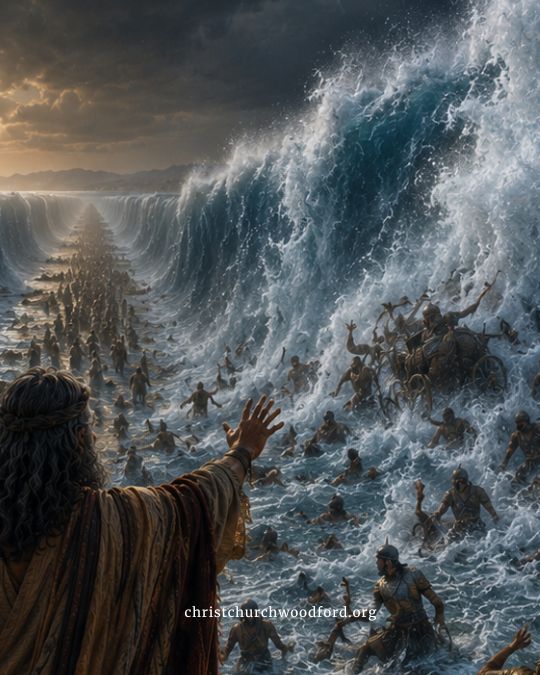
The Egyptian army pursued Israel into the sea, convinced they could still capture them.
But Exodus 14:24–28 says God threw the Egyptians into confusion. Their chariot wheels jammed, panic spread through the army, and the soldiers cried out:
“The Lord is fighting for them against Egypt.”
Too late.
God told Moses to stretch out his hand over the sea once more, and the waters crashed back down over Pharaoh’s army. Not one Egyptian soldier survived.
The same sea that became Israel’s path to freedom became Egypt’s place of judgment.
That is one of the great themes of Exodus 14:
God not only delivers His people—He defeats the enemy they could never overcome on their own.
The Aftermath: What Happened Next
Exodus 14:30-31 gives us the conclusion:
“That day the Lord saved Israel from the hands of the Egyptians, and Israel saw the Egyptians lying dead on the shore. And when the Israelites saw the mighty hand of the Lord displayed against the Egyptians, the people feared the Lord and put their trust in him and in Moses his servant.”
The Israelites watched the power of Egypt collapse before their eyes. The enemy they feared most was finally gone.
And their response?
They feared the Lord in awe and reverence, and they put their trust in both God and Moses.
Exodus 15 says Moses and the Israelites immediately broke into worship, singing what became known as the Song of Moses:
“I will sing to the Lord, for he is highly exalted. Both horse and driver he has hurled into the sea.”
Miriam, Moses’ sister, led the women with tambourines, dancing and celebrating God’s victory.
The Red Sea crossing became a turning point for Israel. It was the moment they fully witnessed God’s power to save, protect, and deliver His people.
What Does the Red Sea Symbolize Spiritually?
The Red Sea crossing became one of the most important symbols of salvation in the Bible. In 1 Corinthians 10:1–2, the Apostle Paul connected the crossing to baptism, describing Israel as passing through the sea into a new identity.
Spiritually, the Red Sea symbolizes:
- deliverance from slavery and bondage
- salvation through God’s power
- death to the old life and beginning of a new life
- baptism and spiritual rebirth
- God’s victory over impossible enemies
The same God who made a way through the sea still leads His people through impossible situations today.
What Can We Learn from Moses at the Red Sea?
You may not be standing in front of an actual sea with Pharaoh’s army behind you—but you probably have your own Red Sea moments.
Maybe it’s:
- a financial crisis with no visible solution
- a health diagnosis that fills you with fear
- a broken relationship despite your best efforts
- a job loss with bills piling up
- a prodigal child making destructive choices
- an addiction that leaves you feeling trapped and ashamed
Whatever your Red Sea looks like, the lessons from Moses in Exodus 14 still apply today.
1. God Often Leads Us to Impossible Places on Purpose
This is hard to accept, but sometimes God allows us to reach the end of our own resources so we’ll discover His. The Red Sea wasn’t a mistake in God’s GPS. He led them there intentionally because He was about to reveal His power in a way they’d never forget.
When you’re in an impossible situation and you’ve been faithfully following God, don’t assume you took a wrong turn. You might be exactly where you need to be for God to show up in a way that changes everything.
2. Your Fear Is Valid, But Don’t Let It Define Your Actions
The Israelites were terrified, and that was completely understandable. Fear is a human emotion, not a sin. Jesus Himself experienced fear in the Garden of Gethsemane.
But here’s the key: Moses felt fear too (he was crying out to God), but he didn’t let that fear dictate his message or his trust. He acknowledged the threat while standing on God’s promises.
You can say, “I’m scared, but I’m choosing to trust God” at the same time. Those aren’t contradictory statements.
3. “Stand Firm” Sometimes Means Do Nothing Except Trust
We’re so conditioned to fix things, to control outcomes, to make something happen. But Moses told the people, “The Lord will fight for you; you need only to be still.”
That Hebrew word for “be still” (charash) can also mean “to be silent.” Sometimes trust looks like closing your mouth, stopping your frantic efforts to solve everything yourself, and letting God work.
This doesn’t mean we’re passive or lazy. It means we’re positioned in faith, doing what God tells us to do (like Moses stretching out his staff), but releasing the outcome to Him.
4. God’s Timing Includes the Waiting
The sea didn’t part instantly. The wind blew all night long. Can you imagine standing there, waiting, while the Egyptian army got closer? That’s the tension of faith.
God often works in the waiting. The delay isn’t denial—it’s development. It’s where trust gets forged into something unshakeable.
5. God Gets Glory When He Delivers You from Impossible Situations
When you solve your own problems through your own cleverness, you get the credit. But when God delivers you from something that was genuinely impossible, everybody knows it was Him.
That’s why God sometimes waits until things look absolutely hopeless—because His rescue will be so undeniable that there’s no mistaking who did it.

Common Questions About Moses and the Red Sea
Did the Red Sea Crossing Really Happen?
The Bible presents the Red Sea crossing in Exodus 14 as a real historical event and repeatedly references it as one of God’s greatest acts of deliverance (Psalm 106:9; Hebrews 11:29). While scholars debate the exact location of the crossing, the story remained central to Israel’s identity for generations. For Christians, the Red Sea crossing is both a historical account and a powerful picture of God rescuing His people from slavery and danger.
Why Did God Harden Pharaoh’s Heart?
The Bible shows both Pharaoh hardening his own heart and God hardening it (Exodus 9:12; 8:15). Pharaoh repeatedly chose pride and rebellion against God, and eventually God confirmed him in that decision. Through Pharaoh’s stubbornness, God displayed His power, judged Egypt’s oppression, and delivered Israel from slavery. The story reveals both God’s sovereignty and human responsibility working together.
What Does the Red Sea Symbolize Spiritually?
The Red Sea symbolizes salvation, deliverance, and new life. Israel passed through the waters to escape slavery in Egypt, representing a transition from bondage to freedom. In Scripture, water often represents both judgment and cleansing. The Red Sea crossing points to God rescuing His people, defeating their enemies, and leading them into a new identity and future.
How Is the Red Sea Connected to Baptism?
The Apostle Paul connects the Red Sea crossing to baptism in 1 Corinthians 10:1–2. Just as Israel passed through the sea and left slavery behind, Christian baptism symbolizes leaving behind the old life of sin and entering a new life with Christ. The Red Sea became a picture of spiritual rebirth, deliverance, and God’s saving power through Jesus.
Final Thoughts: Stand Firm and See
I want to close by speaking to you directly—because I think some of you are reading this from your own Red Sea. You have been faithful. You have followed where you believed God was leading. And right now, you cannot see any way forward, and you can hear what is pursuing you from behind.
What Moses said to Israel, God is saying to you through His word today: “Do not be afraid. Stand firm and you will see the deliverance the Lord will bring you today.”
Not eventually. Not when conditions improve. Now—in this crisis, in this fear, in this moment where you have run out of your own answers—God is at work. He is sending the wind. He is positioning Himself between you and everything that is pursuing you. The same God who parted the Red Sea is the same God who is fighting for you today. That is not a metaphor. That is the testimony of Scripture.
The Red Sea is not the end of your story. It is where God writes the part that you will spend the rest of your life telling others about.
So stand firm. Do the last thing He told you to do. Bring your fear to Him honestly. And wait—not with resignation, but with expectation—for the God who has never once failed to come through for His people.
The Egyptians you see today, you will not see tomorrow.
Stand firm.
Final Key Takeaways:
- Moses’ trust at the Red Sea teaches us that faith is choosing God’s promises over fear
- Impossible situations are often God’s setup for undeniable demonstrations of His power
- “Standing firm” means actively choosing to trust while waiting for God to work
- Your crisis isn’t just about you—it’s part of God’s bigger story and glory
- The God who parted the Red Sea is the same God fighting for you today