What Does the Flood Symbolize in the Bible?

God’s Judgment, Salvation and New Creation
The flood in Genesis is one of the most powerful stories in all of Scripture. It is not simply a story about rain, Noah, and a boat. Every time I come back to this passage, I find myself gripped by how much it holds — judgment, mercy, salvation, new creation, and a God who refuses to give up on the world He made.
When I study biblical flood symbolism, I begin to see that the waters of Genesis point far beyond the days of Noah. They reveal a God who takes sin seriously, yet still provides a way of rescue. The ark becomes a picture of refuge. The rainbow becomes a sign of covenant mercy. And in the New Testament, Noah’s flood reaches forward to baptism, new life, and the saving work of Jesus Christ.
This is why the flood remains such an important passage for Christians today. It shows us both the seriousness of sin and the mercy of God — two truths that meet most clearly in Christ.
The Flood Story in Genesis: A Brief Overview
Before we go deeper, let me bring you back to the Genesis account.
Genesis 6 describes a world that had come completely undone. The corruption was not surface-level. It was not merely that people made poor choices. Scripture tells us:
Genesis 6:5-6 – “The Lord saw how great the wickedness of the human race had become on the earth, and that every inclination of the thoughts of the human heart was only evil all the time. The Lord regretted that he had made human beings on the earth, and his heart was deeply troubled.”
That is devastating. The earth was filled with violence. Human sin had spread so far and so deep that creation itself seemed corrupted from the inside out.
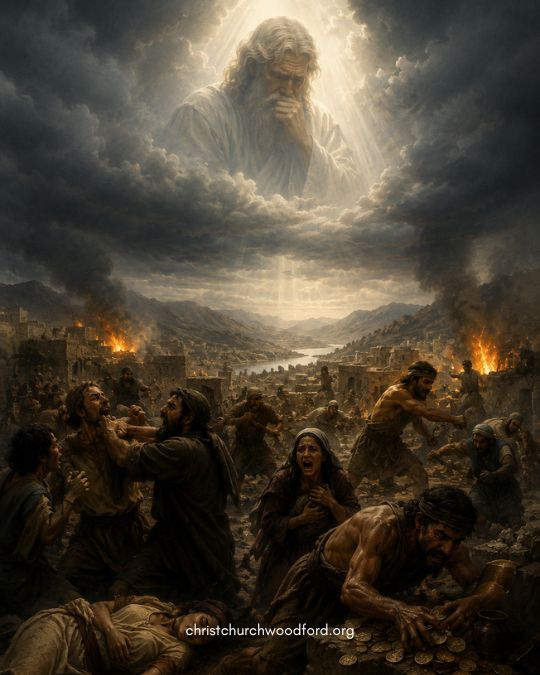
But in the middle of that darkness, one man stood different. Genesis 6:9 says Noah was “a righteous man, blameless among the people of his time, and he walked faithfully with God.” Noah was not sinless. But he trusted God and obeyed Him in a generation that had largely walked away.
God commanded Noah to build an ark. Through that ark, Noah, his family, and the animals were preserved as the floodwaters covered the earth. When the waters finally receded, Noah stepped out into a world that had been cleansed — and God made a covenant, sealed with a rainbow, promising never again to destroy all life with a flood.
That is the story. But I promise you, the meaning goes much deeper.
What Does the Flood Symbolize in the Bible?
The flood carries several major biblical themes at once, and it is worth naming them clearly before we unpack each one.
- God’s judgment on sin — the waters came in direct response to human wickedness and violence.
- Spiritual cleansing — the old corrupted world was washed away, and a renewed world emerged.
- Salvation through faith — Noah and his family were preserved by trusting and obeying God.
- Jesus Christ as the true refuge — the ark protected those inside from judgment, just as Christ saves those who belong to Him.
- Baptism and new life — the New Testament connects Noah’s flood to death, burial, and resurrection in Christ.
- Future judgment and restoration — Jesus Himself compared the days of Noah to His own return.
In other words, this is not only a story about destruction. It is a story about judgment, mercy, cleansing, salvation, covenant, and hope — all held together.
The Flood as a Symbol of God’s Judgment
The first and most obvious meaning of the flood is judgment — and I think we need to sit with that before we move on.
God did not send the flood randomly or in anger He could not control. He judged the world because human wickedness had become severe and widespread.
Genesis 6:11-13 – “Now the earth was corrupt in God’s sight and was full of violence. God saw how corrupt the earth had become, for all the people on earth had corrupted their ways. So God said to Noah, ‘I am going to put an end to all people, for the earth is filled with violence because of them. I am surely going to destroy both them and the earth.’”
God saw what people had become, and judgment came as a holy response to that rebellion.
This matters because the flood reminds us that God is not indifferent. He is patient and merciful — that is absolutely true. But He is not passive in the face of evil. He is not a God who looks at violence, cruelty, and corruption and simply shrugs.
I have spoken to people who say, “I just don’t believe a loving God would judge.” But I want to ask: what kind of love ignores suffering? What kind of God looks at a world full of violence and says, “That’s fine”? The flood tells us that because God is good, He must deal with evil.
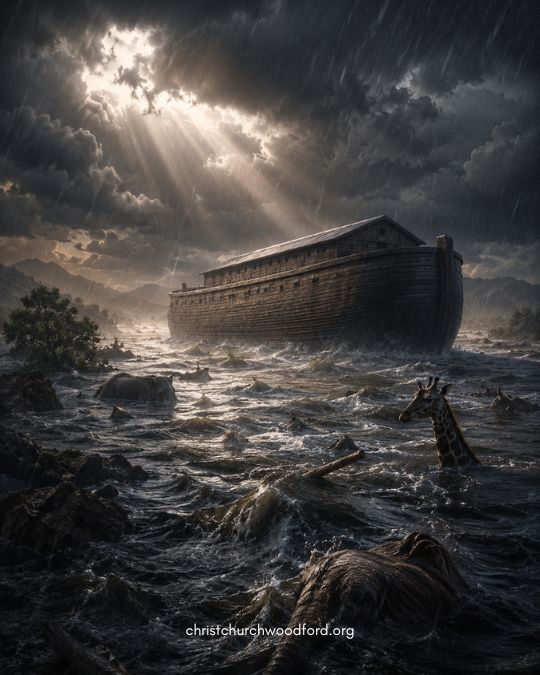
Before the flood came, God waited. The ark was being built. The warning was visible. But eventually, the door shut, and the waters came.
God’s patience should never be mistaken for approval. Judgment is not imaginary. Evil does not have the final word.
The Flood as a Symbol of Spiritual Cleansing
The flood was not only judgment. It was also cleansing.
The waters washed away a corrupted world. They removed violence and wickedness from the earth. And when they receded, Noah stepped into a world that had been renewed. The old world had passed away.
This is one of the most important parts of flood symbolism in the Bible: the same water that judged evil also prepared the way for a new beginning. That may sound paradoxical, but it fits a pattern we see all through Scripture.
In the Bible, water often carries the idea of cleansing, transition, and new life. Think of the crossing of the Red Sea. Think of the Jordan River. Think of baptism. Water marks the end of an old life and the beginning of something new.
The earth was not perfect after the flood, because sin still remained in the human heart. But the flood still marked a fresh start — a sign that God can bring new life after deep corruption. He can cleanse what has been polluted. He can bring hope on the other side of the storm.
Noah’s Ark as a Symbol of Salvation
One of the strongest symbols in Noah’s flood story is the ark itself — and I don’t want us to rush past it.
The ark was not just a boat. It was the place of refuge God provided before judgment came. Those inside were safe. Those outside were not. God did not only warn about judgment; He provided a way of escape.
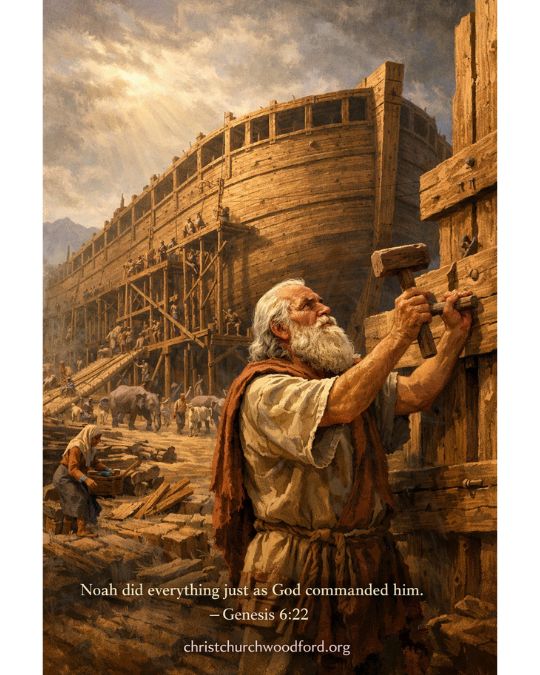
Notice also that Noah did not save himself by being clever or resourceful. God gave the instructions. God provided the way. Noah’s role was simply to trust and obey.
Genesis 7:16 says that after Noah and the animals entered the ark, “the Lord shut him in.” God shut the door. It was God’s action that sealed Noah’s safety — not Noah’s own grip on the handle.
For Christians, the ark is a picture of Christ. Jesus said:
John 14:6 – “I am the way and the truth and the life. No one comes to the Father except through me.”
Just as the ark was the God-given refuge from the flood, Christ is the God-given refuge from judgment. And just as the ark did not stop the flood from coming — it carried Noah safely through it — Jesus does not pretend that sin and judgment are not real. He bears judgment on our behalf and brings us through it into new life.
That is why the ark is such a beautiful picture of Christ. It is not merely about survival. It is about grace. God provided what we could never provide for ourselves.
The Flood and Christian Baptism
The New Testament makes a connection here that I think surprises many people.
In 1 Peter 3:20-21, Peter writes that in the ark, eight people were saved through water — and then he says this water “symbolizes baptism that now saves you also.” He is careful to explain that baptism is not about the physical washing of a body. It is about “a clear conscience toward God through the resurrection of Jesus Christ.”
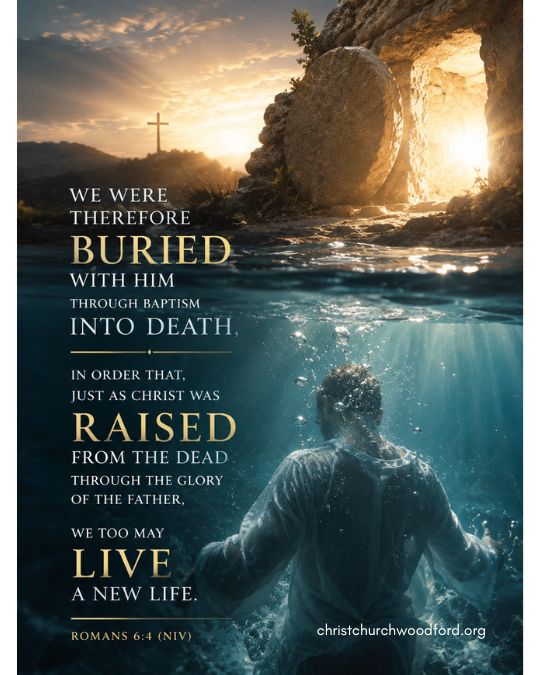
This is one of the clearest places in the New Testament where the Bible gives us the spiritual meaning of the flood. The floodwaters judged the old world — but they also carried Noah and his family into a new beginning. In Christian baptism, that same pattern appears.
Paul picks this up in Romans 6:
Romans 6:4 (NIV) – “We were therefore buried with him through baptism into death, in order that, just as Christ was raised from the dead through the glory of the Father, we too may live a new life.”
Both the flood and baptism point to the same great reality: death and resurrection. The end of the old and the beginning of the new. Judgment swallowed up by grace. The old self buried; the new self raised.
The water always points beyond itself to Christ — to His death for us, and to the new life He gives.
The Rainbow as a Symbol of God’s Mercy
After the flood, God gave Noah a sign: the rainbow.
Genesis 9:13 (NIV) – “I have set my rainbow in the clouds, and it will be the sign of the covenant between me and the earth.”
The rainbow appears after the storm. That alone makes it a powerful symbol. Judgment has passed. The rain has ended. Light breaks through the clouds.
In the flood story, the rainbow symbolizes God’s faithfulness, His restraint, and His covenant love. God had judged the world — but He did not abandon creation. He promised that the rhythms of life would continue. Seedtime and harvest. Cold and heat. Day and night. The world would not be destroyed again by water.
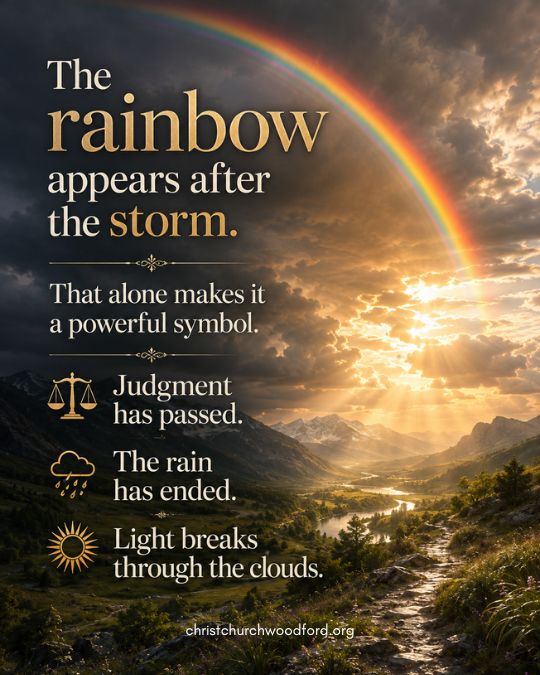
The rainbow does not erase the seriousness of what happened. It stands on the other side of judgment. That is exactly what makes it meaningful. It tells us that God’s justice is real — and His mercy is also real.
Every rainbow is a reminder that God keeps His promises. The storm does not last forever. Mercy shines after the rain.
For Christians, the rainbow covenant points us toward something even greater: the new covenant in Christ. The covenant with Noah preserved the world from another flood. But the new covenant offers forgiveness of sins, reconciliation with God, and eternal life. The rainbow whispers of what Christ would one day accomplish in full.
The Flood as a Picture of Future Judgment
Jesus Himself brought the flood back into the conversation — and He did it as a warning.
Matthew 24:37-39 (NIV) – “As it was in the days of Noah, so it will be at the coming of the Son of Man. For in the days before the flood, people were eating and drinking, marrying and giving in marriage, up to the day Noah entered the ark; and they knew nothing about what would happen until the flood came and took them all away.”
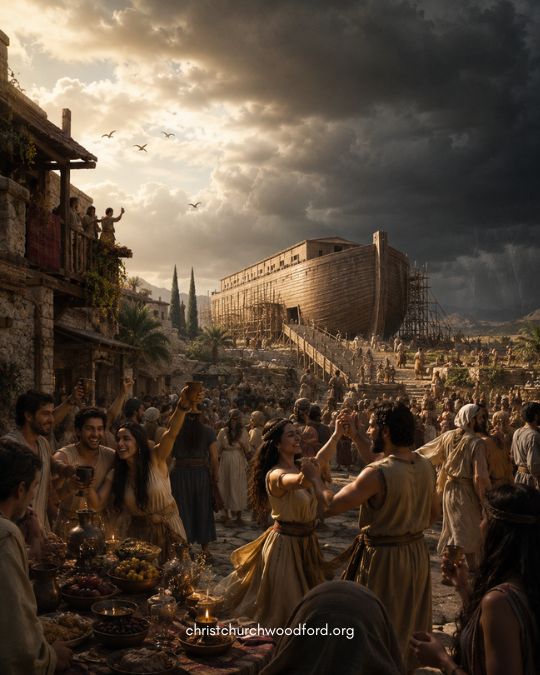
The point Jesus is making is not that eating, drinking, or marrying were wrong. The point is that people were spiritually unprepared. Life felt normal. They ignored the warning. They saw the ark being built and kept going about their days as though nothing was coming.
Then the flood came suddenly.
This is why the days of Noah meaning carries such weight in the teaching of Jesus. The people of Noah’s generation had time. They had a visible warning. They simply did not respond to it.
Jesus uses that story to speak to us about His return. Many will be absorbed in ordinary life, but spiritually unprepared. This does not mean Christians should live in anxiety. It means we should live awake — attentive, ready, trusting.
In Noah’s day, God shut the door of the ark. There will come a time when the opportunity to turn to Christ will end. The flood tells us: do not wait. The door is still open. Come in.
What Christians Can Learn From Noah’s Flood Today
The flood still speaks to us today — not as a relic from ancient history, but as a living word about who God is and how He saves. Here is what this story teaches us:
- God is holy. He takes evil seriously. Violence, corruption, and rebellion grieve Him, and His patience should never be read as indifference. A God who ignores wickedness forever would not be just — and the flood makes that plain.
- God provides salvation before judgment falls. Before the waters came, He had already given Noah the ark. That is the pattern of grace throughout Scripture — God does not leave people without a way of rescue. He provides it before it is too late.
- Faith obeys before it sees. Noah built the ark when the sky was still clear and the ground was still dry. He believed God before the rain came. His faith was not merely a feeling — it moved him to action, even when nothing around him confirmed what God had said.
- New beginnings are possible after devastation. Noah stepped out of the ark into a renewed world. The flood was an ending, but it was unmistakably a beginning. God can bring new life out of what looks like total loss.
- Christ is our true refuge. The ark carried Noah through judgment — not around it, but through it. Jesus does the same for His people, bearing judgment on our behalf and bringing us safely into eternal life. The safest place we can ever be is not in our own goodness or our own works. It is in Him.
Conclusion: The Gospel in the Flood
The flood is one of the most serious stories in Scripture, but it is also one of the clearest pictures of grace.
It reminds us that God’s justice cannot ignore sin. Evil has consequences, and a world filled with violence and corruption cannot continue forever without a holy God responding.
Yet the flood also reveals God’s love. Before the waters came, He provided an ark. He preserved Noah and his family. He gave the rainbow as a sign of covenant mercy. And in the New Testament, the meaning of Noah’s flood points forward to baptism, new life, and Jesus Christ.
The ark did not remove the reality of judgment. It carried Noah safely through it. In the same way, Jesus does not minimize the seriousness of sin. He bears it for us and brings us into the safety of His grace.
That is the Gospel in the flood: judgment is certain, but God has provided a refuge. The door of grace is still open, and Christ is the place of safety for all who trust in Him.
Frequently Asked Questions
What is the spiritual meaning of Noah’s flood?
The flood symbolizes both judgment and mercy. It shows that God takes sin seriously, but it also reveals His desire to save through the ark, renew what has been corrupted, and make a covenant of grace after the storm. For Christians, Noah’s flood ultimately points to Jesus Christ, the true refuge who brings sinners safely into new life with God.
Why did God send the flood in Genesis?
God sent the flood because the earth had become filled with corruption, violence, and wickedness. Genesis 6 shows that human sin had reached a point where judgment came as a holy response. But even in judgment, God provided a way of salvation through the ark.
How does Noah’s ark point to Jesus?
Noah’s ark points to Jesus because it was the place of refuge God provided before judgment came. Those inside the ark were carried safely through the flood. In the same way, Christ is the true refuge for sinners, saving those who trust in Him from judgment and bringing them into new life.
How is the flood connected to baptism?
The New Testament connects Noah’s flood to baptism in 1 Peter 3:20–21. The floodwaters judged the old world but also carried Noah and his family into a new beginning. In baptism, Christians see a picture of death to the old life and resurrection to new life through Jesus Christ.