What Does Bread Symbolize in the Bible?

Bread in the Bible isn’t just about carbs—it’s one of Scripture’s most powerful symbols of God’s provision, spiritual nourishment, daily dependence, and ultimately Jesus Christ Himself as the “Bread of Life” (John 6:35). If you’ve ever wondered what bread symbolizes in the Bible, the answer unfolds throughout Scripture, from manna in the wilderness to communion at the Lord’s Table.
From Joseph saving nations through stored grain, to manna falling from heaven, to the bread of the Presence in the tabernacle, to Jesus declaring, “I am the bread of life,” bread consistently points to God’s care for His people and His ultimate provision in Christ.
Let’s trace that story together, because once you see how bread symbolism runs through the Bible, you’ll never read these passages the same way again.
What Does Bread Symbolize in the Bible?
Before we dive into specific passages, let’s address the obvious question: Why did God choose bread as His go-to symbol?
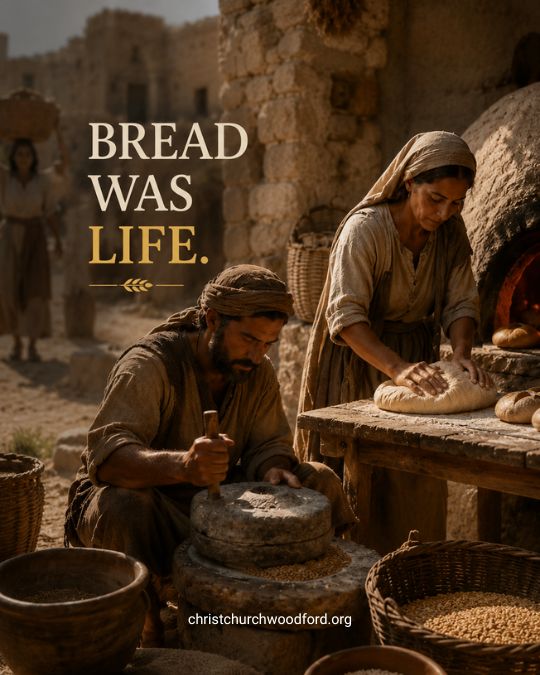
In the ancient world, bread was life itself. Not a side dish—the main event. Families spent hours daily grinding grain, kneading dough, baking loaves. Bread was the difference between survival and starvation. When you had bread, you lived. When bread ran out, you died.
So when Scripture uses bread imagery, it’s not talking about a luxury or treat. Bread symbolism in the Bible points to God’s provision, daily sustenance, and the essential spiritual life found in Him. That’s why bread perfectly symbolizes what God provides and what Jesus offers—absolute essentials for life.
Also, bread requires work and transformation. Grain must be crushed, ground, mixed with water, kneaded, and “killed” in the oven’s heat before it becomes life-giving bread. (File that away—we’ll come back to it when we talk about Jesus.)
Key Takeaways:
- Bread was the staple food of ancient life, not a luxury item
- Having bread meant survival; lacking it meant death
- Bread’s transformation process (crushing, grinding, baking) mirrors Christ’s suffering
- God chose the most essential food to symbolize the most essential provision
Joseph: The Bread Provider Who Saves Nations
From Prison to Pantry Manager
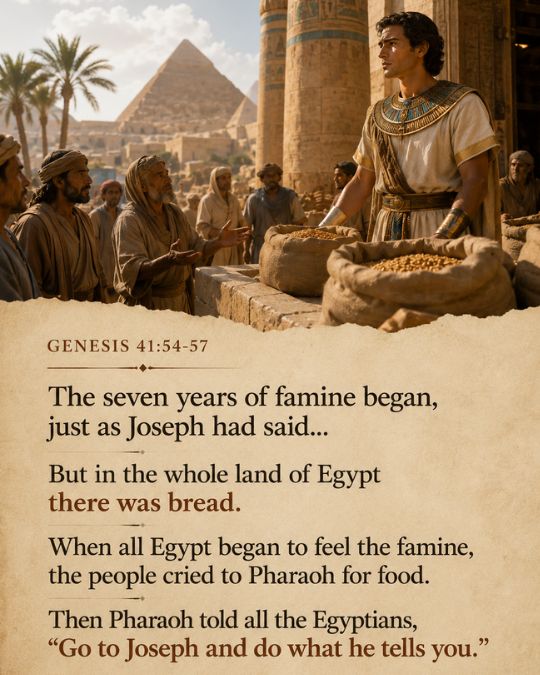
Genesis 41 tells how Joseph interprets Pharaoh’s dreams about seven years of abundance followed by seven years of famine. Pharaoh puts Joseph in charge of Egypt’s grain storage—basically making him the ancient world’s food supply czar.
Genesis 41:54-57 – “The seven years of famine began, just as Joseph had said… But in the whole land of Egypt there was bread. When all Egypt began to feel the famine, the people cried to Pharaoh for food. Then Pharaoh told all the Egyptians, ‘Go to Joseph and do what he tells you.'”
Here’s what gets me: Joseph—the rejected brother, sold into slavery, falsely accused, thrown in prison—becomes the one who provides bread during desperate famine. Not just for Egyptians, but for his own family who betrayed him.
Genesis 42-47 shows Joseph’s brothers traveling to Egypt multiple times, begging for grain to survive. The brother they rejected becomes their savior through bread.
Sound familiar? Yeah, it’s a Christ-pattern hiding in plain sight. Jesus, rejected by His own people, becomes the Bread of Life who saves both Jews and Gentiles from spiritual starvation and offers eternal life.
The Typology Is Wild
Joseph providing literal bread to save physical life prefigures Christ providing spiritual bread to save eternal life. Both were:
- Initially rejected by their brothers
- Raised to positions of authority
- Became saviors through provision
- Reconciled with those who rejected them
I love how God plants these prophetic patterns centuries before anyone understood what they meant.
Joseph’s story did not end with Egypt’s survival. His family eventually settled in Egypt, where their descendants multiplied into the nation of Israel. Centuries later, after God delivered Israel from slavery, they once again found themselves facing hunger—this time in the wilderness. Just as God had provided bread through Joseph during a famine, He would now provide bread directly from heaven. The story of bread in the Bible was only beginning.
Key Takeaways:
- Joseph saved nations from starvation by providing stored grain/bread
- His brothers who rejected him had to come to him for bread to survive
- Joseph as bread provider prefigures Christ as Bread of Life
- God’s provision often comes through unexpected sources
Manna: When Bread Falls From Heaven
Fast-forward about 400 years. Joseph’s descendants are now freed slaves wandering a desert, and they’re starving.
The Original Food Miracle
Exodus 16:4 – “Then the Lord said to Moses, ‘I will rain down bread from heaven for you. The people are to go out each day and gather enough for that day.'”
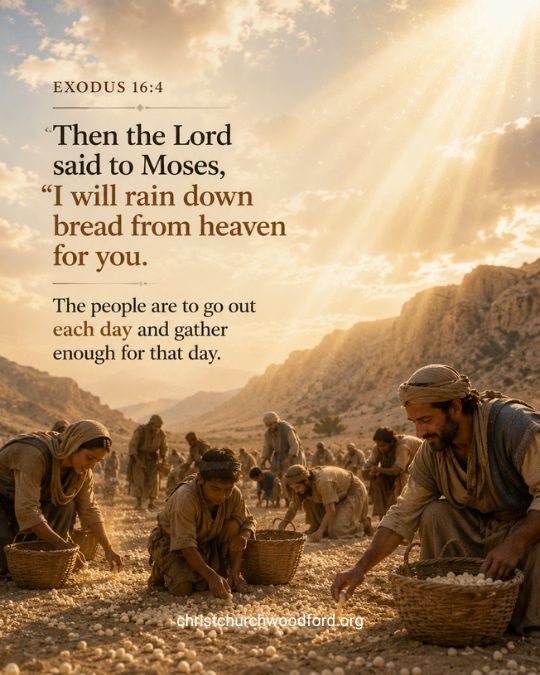
For the next 40 years—that’s nearly 15,000 days—manna appeared every morning except Sabbath. This miraculous bread from heaven covered the ground each day, providing enough food for everyone and serving as a daily reminder of God’s provision.
Exodus 16:15 tells us the Israelites asked “What is it?” (Hebrew: man hu?), which became the name “manna.” They literally ate “What-is-it?” for four decades.
Here’s the brilliance: God designed manna to teach daily dependence on Him. You couldn’t stockpile it (except Friday’s double portion for Sabbath). It rotted if you tried hoarding. Every single morning, you had to trust God would provide again.
I’m the guy who bulk-buys at Costco to feel secure. The manna system would’ve driven me crazy. But that’s the point—God wanted Israel to wake up daily and remember: “My survival depends on God’s provision, not my planning.”
Manna’s Limitations
But here’s what people miss: manna was temporary. It sustained physical life in the wilderness, but it didn’t solve Israel’s deeper problem (sin). People ate manna and still died eventually.
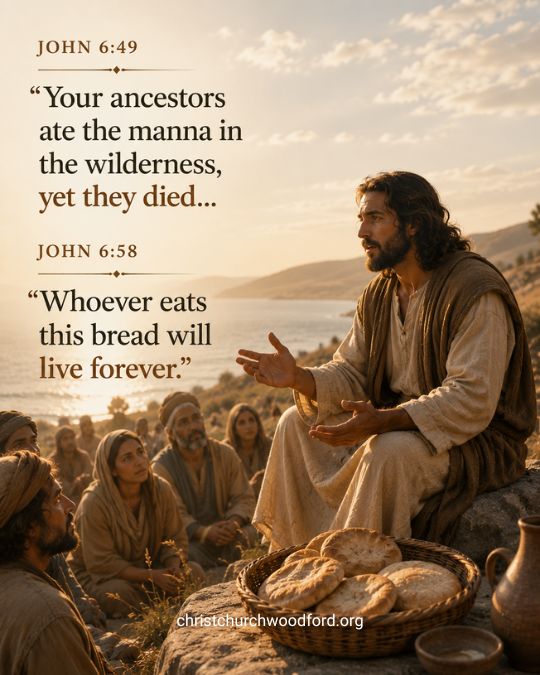
John 6:49, 58 – “Your ancestors ate the manna in the wilderness, yet they died… Whoever eats this bread will live forever.”
Manna was more than food—it was a symbol pointing forward to something greater. The bread from heaven that sustained Israel physically foreshadowed Jesus Christ, the true Bread of Life who provides eternal life and spiritual nourishment.
Manna was the appetizer. Jesus is the main course.
Key Takeaways:
- Manna taught daily dependence on God’s provision
- God provided enough for each day—no hoarding allowed
- Manna sustained physical life but couldn’t give eternal life
- Manna pointed forward to Jesus as the true bread from heaven
Elijah: When Bread Multiplies and Sustains
The Widow’s Never-Ending Flour
1 Kings 17:8-16 might be the most faith-stretching bread miracle in the Old Testament. Israel’s in drought and famine. Elijah meets a widow gathering sticks to make one final meal for herself and her son before they starve to death.
Elijah asks her to make him bread first (which sounds rude, honestly). But then he makes this promise:
1 Kings 17:14 – “For this is what the Lord, the God of Israel, says: ‘The jar of flour will not be used up and the jug of oil will not run dry until the day the Lord sends rain on the land.'”
And it happens. The flour jar never empties. The oil jug never runs dry. Miraculous bread multiplication sustaining life during famine.
Sound familiar? It should—because centuries later, Jesus multiplies bread for 5,000 people, then 4,000 more. Same God, same provision pattern.
Angel Bread for the Exhausted Prophet
Later, Elijah’s running for his life from Queen Jezebel, collapsing exhausted under a tree, wanting to die.
1 Kings 19:5-8 – “All at once an angel touched him and said, ‘Get up and eat.’ He looked around, and there by his head was some bread baked over hot coals, and a jar of water… Strengthened by that food, he traveled forty days and forty nights until he reached Horeb, the mountain of God.”
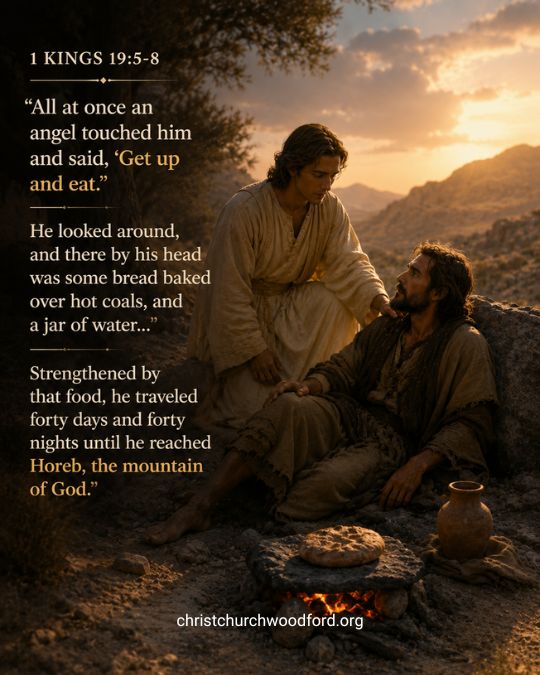
One supernatural meal sustained Elijah for 40 days. Just like manna sustained Israel for 40 years. Just like Jesus—after 40 days of fasting—would face temptation about turning stones to bread.
These stories reveal another layer of bread symbolism in the Bible: bread is not only daily sustenance, but also a sign of God’s miraculous provision in times of desperation.
God provides bread supernaturally when His people desperately need it. Every. Single. Time.
Key Takeaways:
- Elijah’s widow received miraculous bread multiplication during famine
- One angel-provided meal sustained Elijah for 40 days
- These miracles prefigure Jesus’ bread multiplication and sustaining power
- God’s supernatural provision appears in desperate moments
The Showbread: Bread of the Presence and God’s Provision
Here’s a weird one that most people skip: the bread of the Presence (also called showbread).
Twelve Loaves, Always Fresh
Leviticus 24:5-9 commanded that twelve loaves of bread be placed on a golden table in the tabernacle, in God’s presence, replaced fresh every Sabbath. The old loaves were eaten by priests.
Why twelve? One for each tribe of Israel. Why always there? To symbolize that God’s people are continually in His presence, sustained by Him.
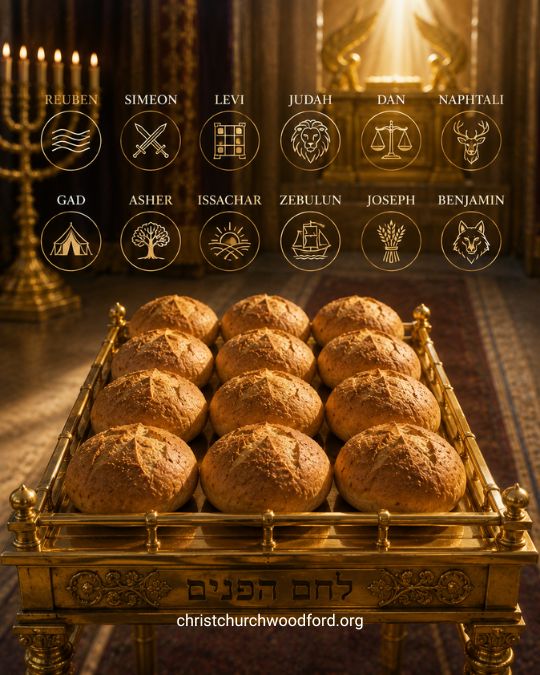
The bread of the Presence symbolized both fellowship with God and His ongoing provision for His covenant people—a reminder that they lived continually before Him.
The bread sat there in the Holy Place, right outside the Most Holy Place where God’s presence dwelt. It’s like God saying “My people and My provision are always before Me.”
And get this: when David was fleeing Saul and starving, he ate the showbread (1 Samuel 21:1-6)—technically forbidden for non-priests. Jesus later defended this (Matthew 12:3-4), essentially saying human need trumps ceremonial rules, and mercy matters more than ritual.
Key Takeaways:
- Twelve loaves represented the twelve tribes continually before God
- Showbread symbolized God’s constant provision and presence
- David eating showbread shows mercy over ceremonial law
- Jesus referenced this incident to teach about God’s priorities
Jesus and the Meaning of “Give Us This Day Our Daily Bread”
What “Daily Bread” Really Means
Matthew 6:11 – “Give us today our daily bread.”
In the Lord’s Prayer, Jesus teaches us to ask for daily bread. Not monthly. Not yearly. Daily.
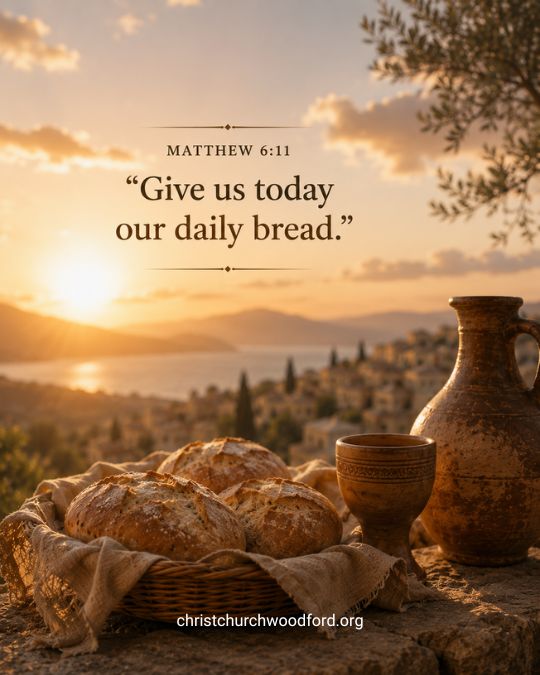
This echoes the manna pattern—trust God for today’s provision, not tomorrow’s security. It’s the opposite of anxiety-driven stockpiling.
In this sense, daily bread symbolizes both God’s physical provision and the spiritual nourishment believers receive from Him each day.
But here’s the deeper layer: the Greek word epiousios (translated “daily”) is super rare. Some scholars think it could mean “bread for today” or “bread for tomorrow” or even “bread of the coming age”—meaning both physical and spiritual sustenance.
When I pray “give us this day our daily bread,” I’m asking God for both the literal groceries I need and the spiritual nourishment to survive another day. Both matter. Both come from God.
The Feeding Miracles: Previews of the Eucharist
John 6:1-15 records Jesus feeding 5,000 people with five loaves and two fish. Later, He feeds 4,000 more (Matthew 15:32-39).
But notice what John emphasizes:
John 6:11 – “Jesus then took the loaves, gave thanks, and distributed to those who were seated as much as they wanted.”
The language—took, gave thanks, distributed—mirrors the Last Supper. These feeding miracles aren’t just compassion; they’re previews of communion, foreshadowing how Jesus will provide spiritual bread to multitudes.
Key Takeaways:
- “Daily bread” teaches dependence on God for physical and spiritual needs
- Jesus echoes manna’s daily provision pattern in the Lord’s Prayer
- Feeding miracles preview communion’s bread distribution
- Bread symbolizes both immediate needs and eternal provision
Jesus the Bread of Life: The Fulfillment of Bread Symbolism
Alright, buckle up for John 6:35-58, because this is where Jesus takes all the bread imagery and says “Yeah, that’s all about Me.”
The Declaration That Divided
Right after feeding 5,000 people, crowds follow Jesus wanting more free bread. Jesus responds:
John 6:35 – “I am the bread of life. Whoever comes to me will never go hungry, and whoever believes in me will never be thirsty.”
Not “I provide bread.” Not “I’m like bread.” “I AM the bread.”
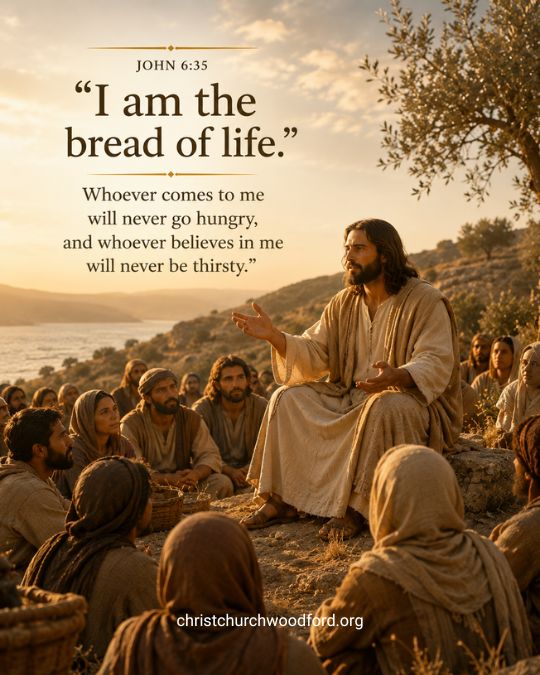
He’s claiming to be what manna foreshadowed, what Joseph’s grain pointed to, what Elijah’s flour prefigured—the ultimate provision that sustains life.
This is the climax of bread symbolism in the Bible. Every earlier picture of bread—from Joseph’s grain to manna in the wilderness—ultimately points to Jesus Christ as the true Bread of Life.
The Scandal Gets Worse
Then Jesus says something that freaks everyone out:
John 6:53-54 – “Very truly I tell you, unless you eat the flesh of the Son of Man and drink his blood, you have no life in you. Whoever eats my flesh and drinks my blood has eternal life.”
His Jewish audience is horrified. Eating flesh and drinking blood? That’s cannibalism! That’s forbidden!
John 6:66 – “From this time many of his disciples turned back and no longer followed him.”
This teaching was so offensive, people quit following Jesus. But He didn’t back down or clarify “Oh, I meant symbolically.” He doubled down.
What Jesus Actually Meant
Jesus is using shocking language to make a point: just as literal bread must be consumed to give physical life, He must be spiritually received to give eternal life.
Manna fed Israel’s bodies temporarily. Jesus feeds souls eternally. But you can’t just admire Jesus from a distance—you have to “eat” Him, internalize Him, make Him part of you.
That’s what communion is about—and it’s exactly why Jesus would later take bread at the Last Supper and give it an entirely new meaning.
Key Takeaways:
- Jesus claims to BE the bread of life, not just provide it
- This fulfills all Old Testament bread imagery (manna, Joseph’s grain, Elijah’s flour)
- “Eating His flesh” means spiritually receiving and internalizing Christ
- This teaching was so offensive many disciples abandoned Jesus
Communion Bread: “This Is My Body”
The night before His crucifixion, Jesus institutes something that would define Christian worship forever.
Breaking Bread, Breaking His Body
Matthew 26:26 – “While they were eating, Jesus took bread, and when he had given thanks, he broke it and gave it to his disciples, saying, ‘Take and eat; this is my body.'”
1 Corinthians 11:24 – “This is my body, which is for you; do this in remembrance of me.”
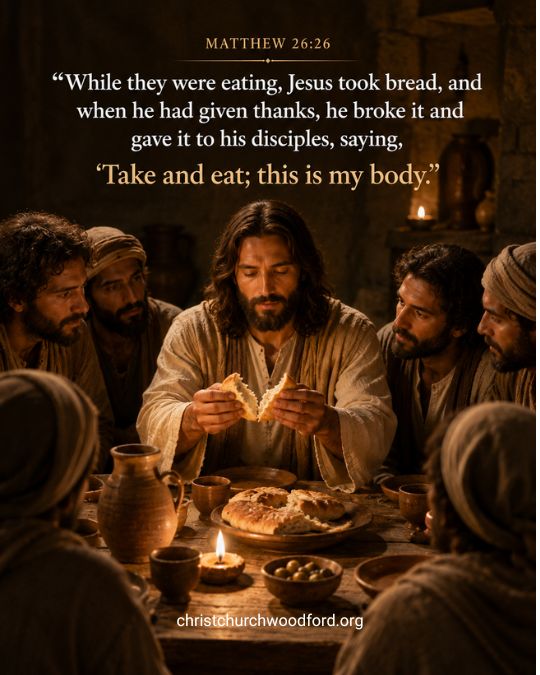
Jesus takes the most ordinary thing—bread—and transforms its meaning. This bread isn’t just food; it’s His body, about to be broken on the cross. In Christian communion, the bread represents the body of Christ given for the salvation of the world.
Remember what we said about bread requiring grain to be crushed, ground, and “killed” in the oven? Yeah. Jesus is that grain. His body was crushed, His life ground out, His suffering like fire—so that He could become the bread that gives us life.
The symbolism of bread reaches its fullest meaning here. Throughout Scripture, bread represented God’s provision, sustenance, and care for His people. At the Last Supper, Jesus reveals that He Himself is the ultimate provision—the Bread of Life whose sacrifice brings eternal life.
Communion Across the Centuries
Acts 2:42, 46 tells us the early church devoted themselves to “the breaking of bread”—communion wasn’t occasional, it was constant.
For 2,000 years, Christians have broken bread together, proclaiming “Christ’s body was broken for us.” It’s the physical symbol connecting us to Jesus’ sacrifice and to each other. Every time believers share communion, they remember Christ’s death, celebrate His resurrection, and proclaim their dependence on Him as the Bread of Life.
Key Takeaways:
- Jesus instituted communion using bread to represent His broken body
- Bread’s crushing/grinding/baking process mirrors Christ’s suffering
- Communion proclaims Christ’s sacrifice and our participation in it
- “Breaking bread” became central to early church worship

Comparison Table: Bread Throughout Scripture
| Scripture | Bread Event | What It Symbolized | Fulfillment in Christ |
|---|---|---|---|
| Genesis 41-47 | Joseph provides grain during famine | Rejected brother becomes savior through bread | Jesus, rejected by His people, provides spiritual bread |
| Exodus 16 | Manna from heaven (40 years) | Daily dependence on God’s provision | Jesus as true bread from heaven (John 6:32) |
| 1 Kings 17 | Widow’s flour never runs out; Elijah sustained 40 days | God’s supernatural provision during desperation | Jesus multiplies bread, sustains eternally |
| Leviticus 24 | Showbread always in God’s presence | God’s people continually sustained before Him | Jesus’ constant intercession for us |
| Matthew 6:11 | “Give us this day our daily bread” | Trust God for today’s physical and spiritual needs | Jesus as daily spiritual sustenance |
| John 6:35 | “I am the bread of life” | Jesus IS the provision, not just provider | Eternal life through receiving Christ |
| Matthew 26:26 | “This is my body” at Last Supper | Christ’s body broken for redemption | Communion as ongoing participation |
FAQ: Questions People Actually Ask
What’s the difference between manna and Jesus as “bread from heaven”?
Manna sustained physical life in the wilderness, but those who ate it eventually died. Jesus is the true bread from heaven who gives eternal life. Manna pointed forward to Christ; Jesus is the fulfillment.
Is communion bread literal or symbolic?
Christians hold different views. Some believe the bread becomes Christ’s body, others see it as a sacred symbol or spiritual reality. All Christians agree that communion points to Jesus’ sacrifice and is far more than ordinary bread.
What does bread symbolize in the Bible?
Bread symbolizes God’s provision, sustenance, daily dependence, and spiritual nourishment. Ultimately, it points to Jesus Christ, the Bread of Life, who gives eternal life.
Why Bread Symbolism Still Matters Today
Here’s why I think bread symbolism matters in 2026, when most of us buy bread from supermarkets:
It reminds us of daily dependence. Just like our bodies need daily food, our souls need daily spiritual nourishment. We can’t coast on yesterday’s faith any more than yesterday’s breakfast.
It shows God provides essentials. Bread wasn’t luxury—it was survival. God promises to provide what we actually need, not necessarily what we want.
It makes Jesus tangible. When Jesus says “I am the bread of life,” He’s not being abstract. He’s saying “I sustain you the way bread sustains your body—essentially, daily, completely.”
It connects us physically to spiritual truth. Every time we eat bread (or take communion), we can remember: God provides. Jesus sustains. I need Him like I need food.

The Bread That Satisfies Forever
Look, I’ve spent way too many years chasing satisfaction in things that don’t last. Career success, relationship validation, financial security—they’re all good things, but they don’t ultimately satisfy.
Bread symbolism reveals a truth our souls know but our minds resist: we’re starving for something deeper than physical food, and only Jesus fills that hunger.
From Joseph’s grain saving nations, to manna falling daily, to Elijah’s miraculous flour, to Jesus declaring “I am the bread of life,” to communion bread we break today—it’s all one story. God provides what we need to live, physically and spiritually, and Jesus is the ultimate provision our souls desperately crave.
The next time you eat bread—whether it’s communion on Sunday or a sandwich on Tuesday—let it remind you: God feeds those who hunger for Him. Jesus is the bread that satisfies forever. And just like physical bread, you need Him daily, essentially, constantly.
God will provide the bread. And He has—by becoming Bread Himself.
Disclaimer: The analysis of symbolism and numerology in this post is offered strictly for theological reflection and spiritual enrichment. We do not offer fortune-telling, guaranteed future outcomes, or specific financial or health advice. For any professional matter, please consult a qualified and licensed medical doctor, financial advisor, or legal counsel.