What Does ‘Hallelujah’ Mean? The Biblical Meaning Behind the Praise

You know the moment. The music swells, the congregation rises, and the word erupts—Hallelujah.
It’s instinctive. Exuberant. Sometimes spontaneous, sometimes corporate, but always unmistakable. We know it means praise. We know it belongs in worship. But if someone asked you—what kind of praise? Why this word?—could you answer?
Most of us couldn’t. The word has become so familiar it’s almost reflexive. We say it without thinking about what we’re actually declaring. And that’s a loss, because ‘Hallelujah’ isn’t generic enthusiasm. It isn’t religious filler. It’s a biblical battle cry that names Yahweh as the one worthy of all praise—even when, especially when, circumstances argue otherwise.
What ‘Hallelujah’ Actually Means
The word comes from Hebrew, and it’s simpler than you might think.
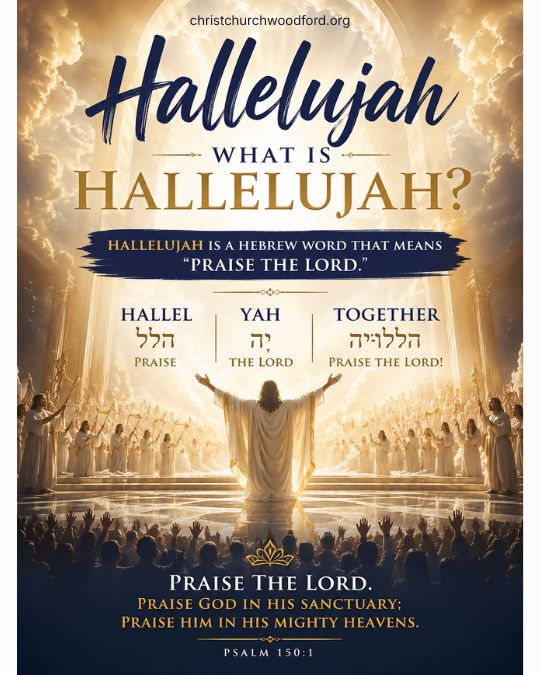
Hallelu is the imperative plural of the verb ‘to praise’—it means ‘you all, praise.’
Yah is the shortened form of Yahweh, the covenant name of God revealed to Moses at the burning bush. Put them together, and you get:
Praise the LORD.
But notice what kind of word this is. It’s not a description. It’s a command. When you say ‘Hallelujah,’ you’re not saying, ‘I’m praising God right now.’ You’re saying, ‘You—all of you—praise the LORD.’ It’s a summons. A call to arms.
And it’s plural. This isn’t solitary piety. It’s corporate worship. When you say ‘Hallelujah,’ you’re inviting—no, commanding—everyone around you to join in the act of praising Yahweh.
The Psalms anchor this word in Scripture. They open and close with it:
Psalm 150:1
“Praise the LORD. Praise God in his sanctuary; praise him in his mighty heavens.”
Psalm 150:6
“Let everything that has breath praise the LORD. Praise the LORD.”
When we say ‘Hallelujah,’ we’re not narrating our emotional state. We’re making a theological declaration. We’re saying:
This God—Yahweh—deserves praise. And I’m calling you into it with me.
Where ‘Hallelujah’ Appears in Scripture
The word doesn’t appear randomly throughout the Bible. It clusters. And the clusters matter.
The Hallel at Passover
Psalms 113–118 form what Jewish tradition calls the Egyptian Hallel—songs of praise tied to the Exodus and sung at Passover. These weren’t private devotional reading. They were corporate liturgy, sung by the gathered people as they remembered deliverance.
And here’s what matters for us: Jesus sang these.
Matthew 26:30 says, ‘And when they had sung a hymn, they went out to the Mount of Olives.’ That hymn was almost certainly the Hallel. After the Last Supper—after instituting the new covenant in His blood—Jesus and the disciples sang Praise the LORD knowing Gethsemane was hours away.
The Hallel was the soundtrack of redemption. It bracketed rescue. Psalm 113 was sung before deliverance—in anticipation. Psalm 118 was sung after—in celebration. And Jesus stood in the middle of both, about to become the Passover Lamb the whole thing pointed to.
Why We Praise—The Reasons the Psalms Give
‘Hallelujah’ is never vague. It’s never just ‘praise for praise’s sake.’ Every biblical Hallelujah is tethered to who God is and what He’s done. The Psalms teach us to praise specifically:
Psalm 113:5-7
“Who is like the LORD our God, who is seated on high, who looks far down on the heavens and the earth? He raises the poor from the dust and lifts the needy from the ash heap.”
Psalm 117:1-2
“Praise the LORD, all nations! Extol him, all peoples! For great is his steadfast love toward us, and the faithfulness of the LORD endures forever. Praise the LORD!”
Psalm 146:5-7
“Blessed is he whose help is the God of Jacob, whose hope is in the LORD his God, who made heaven and earth, the sea, and all that is in them, who keeps faith forever; who executes justice for the oppressed, who gives food to the hungry.”
Psalm 118:1, 21-24
“Oh give thanks to the LORD, for he is good; for his steadfast love endures forever! … I thank you that you have answered me and have become my salvation. The stone that the builders rejected has become the cornerstone. This is the LORD’s doing; it is marvelous in our eyes. This is the day that the LORD has made; let us rejoice and be glad in it.”
He lifts the poor. His mercy endures. He executes justice. He becomes our salvation. He makes heaven and earth. He keeps faith forever.
These aren’t abstract qualities. They’re observations. Look at your own life: the provision that came when the bank account hit zero. The friend who showed up the day you couldn’t get out of bed. The peace that made no sense given the diagnosis. The door that opened when every other one slammed shut. The sin you couldn’t break until suddenly—somehow—you could.
Believers praise Yahweh because we’ve watched Him act. Not always the way we wanted. Not on our timeline. But consistently enough that the pattern is undeniable: He sustains. He delivers. He keeps His word. That’s not theory. That’s testimony.
That’s why we say ‘Hallelujah.’ Not because we’re feeling enthusiastic, but because He has proven Himself to be this.
What Does ‘Hallelujah’ Mean in Hard Times?
Sometimes ‘Hallelujah’ feels impossible.
You’re saying it through tears. Through grief. Through the kind of confusion that makes you wonder if God is even listening. And the word sticks in your throat because part of you feels like you’re lying.
The temptation is to treat it like an incantation. ‘If I say it enough, maybe I’ll start to believe it. Maybe I’ll feel it.’ And then the fear creeps in: ‘Am I faking? Is this just toxic positivity with a Bible verse attached?’
Here’s the biblical answer: ‘Hallelujah’ in hard times isn’t magic. It’s not pretending. It’s something far more honest—and far more defiant.
When You Can’t Feel It, You’re Still Proclaiming Truth
When you say ‘Hallelujah’ and you don’t feel like it, you’re not conjuring feelings. You’re proclaiming truth that exists independent of your feelings.
You’re not pretending things are fine. You’re saying God is still God. You’re declaring—against the evidence, not in denial of it—that Yahweh is worthy of praise even when you can’t see how.
The Psalms know this tension. Psalm 44 is a lament—a cry from a people who feel abandoned:
Psalm 44:17-19, 22
“All this has come upon us, though we have not forgotten you, and we have not been false to your covenant. Our heart has not turned back, nor have our steps departed from your way; yet you have broken us in the place of jackals and covered us with the shadow of death … For your sake we are killed all the day long; we are regarded as sheep to be slaughtered.”
Notice: the word ‘Hallelujah’ doesn’t appear in that Psalm. It’s raw lament. But this Psalm sits in the Psalter surrounded by Hallel Psalms. The biblical editors didn’t hide the tension. They let it stand.
And Job—when everything was stripped away—said this:
Job 13:15
“Though he slay me, I will hope in him.”
That’s what ‘Hallelujah’ means in hard times. Not denial. Not pretending. Defiance against despair.
What Happens When You Praise Through Pain
When you say ‘Hallelujah’ in suffering, you’re doing something specific. You’re engaging in what the Bible calls covenant memory—and it’s more practical than it sounds.
You’re defying the lie that circumstances have final authority. The cancer, the bankruptcy, the betrayal, the loss—these are real. But they don’t get to define what’s true about God. What’s true about God is what He’s already proven in your past.
You’re speaking prophetically—declaring future reality into present pain. You’re saying, ‘One day this will make sense. One day I’ll see why He was worthy all along. Until then, I’m anchoring my praise in who He is, not in what I can see.’
You’re reminding yourself out loud—because you need to hear it—who this God is. He lifts the poor. His mercy endures. He keeps faith forever. He became our salvation.
What does that memory look like practically? It’s remembering the specific moment He came through before. The job that appeared. The relationship that was restored. The diagnosis that changed. The son who came home. The strength you didn’t have yesterday that somehow carried you through today.
Covenant memory isn’t mystical. It’s keeping a list. It’s saying out loud: “He did it then. He can do it now. And if He doesn’t do it now, He’s still the God who did it then.”
The Hallel Psalms weren’t written by people with easy lives. They were sung by exiles in Babylon. By people in grinding poverty. By those under threat of violence. This isn’t prosperity-gospel enthusiasm. It’s war-cry praise.
And Jesus is the pattern. He sang the Hallel at the Last Supper knowing the cross was hours away. He wasn’t pretending the cup would pass. He was declaring the Father’s worthiness even through Gethsemane. Even through the nails.
When we say ‘Hallelujah’ in suffering, we’re following the path Jesus walked. We’re anchoring praise not in circumstances, but in covenant faithfulness—in the pattern of God’s character we’ve already witnessed.
Revelation 19: Where Every ‘Hallelujah’ Is Heading
The word ‘Hallelujah’ appears only four times in the New Testament. All four are in Revelation 19. All four are in quick succession. And all four point to the same reality: this is where every earthly Hallelujah has been pointing.
The context matters. Babylon—the great enemy, the seducer of nations, the persecutor of the saints—has fallen. The Bride is ready. The marriage supper of the Lamb is near. And the heavenly multitude erupts:
Revelation 19:1-2
“After this I heard what seemed to be the loud voice of a great multitude in heaven, crying out, ‘Hallelujah! Salvation and glory and power belong to our God, for his judgments are true and just; for he has judged the great prostitute who corrupted the earth with her immorality, and has avenged on her the blood of his servants.'”
Revelation 19:3-4
“Once more they cried out, ‘Hallelujah! The smoke from her goes up forever and ever.’ And the twenty-four elders and the four living creatures fell down and worshiped God who was seated on the throne, saying, ‘Amen. Hallelujah!'”
Revelation 19:6-7
“Then I heard what seemed to be the voice of a great multitude, like the roar of many waters and like the sound of mighty peals of thunder, crying out, ‘Hallelujah! For the Lord our God the Almighty reigns. Let us rejoice and exult and give him the glory, for the marriage of the Lamb has come, and his Bride has made herself ready.'”
Notice what they’re praising for: salvation, glory, and power belong to God. His judgments are true and just. He has avenged the blood of His servants. The Lord God Almighty reigns. The marriage of the Lamb has come.
This is the destination. Not just rescue from Egypt—rescue from sin and death. Not just a delivered people—a Bride made ready for her Bridegroom.
Every ‘Hallelujah’ we sing now is rehearsal. We’re learning the song that will echo in eternity when every enemy is defeated, every tear wiped away, every question answered.
The war-cry Hallelujahs sung in darkness—those will make perfect sense then. This is where the command ‘Praise the LORD’ becomes effortless reality. This is where we finally see why He was worthy all along.
When you say ‘Hallelujah’—whether it comes easily or sticks in your throat, whether you’re singing with the congregation or whispering it alone in the dark—you’re joining a song that began in the Psalms and ends at the throne. You’re not faking it. You’re not performing. You’re declaring what’s true: the Lord God Almighty reigns.
And one day, you’ll sing it without the weight. Until then, let it be your defiance. Let it be your covenant memory. Let it be the truth you speak when everything else is uncertain.
Praise the LORD.