Ten Plagues of Egypt: When Completeness Became Judgment

The Ten Plagues of Egypt—blood, frogs, gnats, flies, livestock disease, boils, hail, locusts, darkness, and death of the firstborn—stand as one of Scripture’s most dramatic demonstrations of divine power and judgment. These ten catastrophic events systematically dismantled Egypt’s empire, exposed their gods as powerless, and ultimately freed the Israelites from slavery.
But here’s what most people miss: the Ten Plagues weren’t random acts of divine anger. They were the culmination of God’s complete, patient demonstration of sovereignty that transformed into unavoidable judgment when Pharaoh’s heart remained hard.
Most of us learned about the Ten Plagues in Sunday school with felt boards and cartoon animations. We memorized them, maybe even sang a song about them, but we probably missed the deeper pattern. Each plague was a surgical strike against Egypt’s pantheon of gods. The Nile turning to blood challenged Hapi, the Nile god. The darkness confronted Ra, the supreme sun god. The death of the firstborn struck at Pharaoh himself, who was considered a living god.
Let’s turn to Exodus 7-12 and examine each of the Ten Plagues of Egypt—understanding what actually happened, why the number ten matters, and what this reveals about God’s character.
Why Ten Plagues? The Mathematics of Divine Patience
In Hebrew thought and throughout Scripture, ten represents completeness. Think about the pattern: Ten Commandments given at Sinai. Ten generations from Adam to Noah, then ten more from Noah to Abraham. When Abraham pleaded with God to spare Sodom, he asked if God would spare the city for ten righteous people (Genesis 18:32)—he was asking for the minimum number that represented a complete remnant.
The ten plagues weren’t arbitrary. They represented God’s complete revelation of His character and power to Egypt. As if God was saying, “I’m going to give you the full picture. Nothing held back. Every opportunity to respond. Complete patience before complete judgment.”
Before nearly every plague, Moses and Aaron warned Pharaoh. They gave him a chance to repent, to let the people go, to acknowledge YHWH’s sovereignty. And every time—every single time—Pharaoh refused.
Here’s where it gets uncomfortable. The text repeatedly says that God “hardened Pharaoh’s heart” (Exodus 9:12, 10:20, 10:27). But notice this: the hardening came after repeated refusals. Exodus 8:15 and 8:32 tell us that Pharaoh hardened his own heart first. God’s patience reached completion. The opportunities were exhausted. What came next wasn’t capricious—it was the inevitable result of complete rejection meeting complete revelation.
The Three-Stage Escalation: From Warning to Catastrophe
Stage One: Plagues 1-3 – Annoying But Manageable
Plague 1: Water to Blood (Exodus 7:14-24)

The Nile turns to blood. Fish die. The water stinks. Egypt’s entire water supply becomes undrinkable. But here’s the crucial detail: Egypt’s magicians could replicate it (Exodus 7:22). Pharaoh’s response? “Neat trick. Not impressed.” He goes back into his palace and dismisses it.
God is confronting Hapi, the god of the Nile, and showing that the river Egypt worships is under YHWH’s control, not Hapi’s.
Plague 2: Frogs (Exodus 8:1-15)
Frogs everywhere. In your bed, in your oven, in your food, in your kneading bowls. I cannot even imagine. I once had a spider in my bedroom and couldn’t sleep until I removed it. A plague of frogs would’ve finished me off completely.
But again, the Egyptian magicians duplicated it (Exodus 8:7)—though why they’d want MORE frogs is beyond me. This challenged Heqet, the Egyptian fertility goddess depicted as a frog. And Pharaoh? Still unmoved. He asks Moses to pray for relief, promises to let Israel go, then changes his mind the moment the frogs die (Exodus 8:15).
Plague 3: Gnats or Lice (Exodus 8:16-19)
The Hebrew word kinnim is debated—it could be gnats, lice, or sand flies. Either way, it’s revolting. Tiny insects covering every person and animal in Egypt.
This time, something changes. The magicians couldn’t replicate it. They actually said to Pharaoh:
“This is the finger of God” (Exodus 8:19).
Even the occult practitioners recognized supernatural power they couldn’t match.
But Pharaoh’s heart remained hard.
Stage Two: Plagues 4-6 – Devastating But Not Deadly
Plague 4: Flies (Exodus 8:20-32)
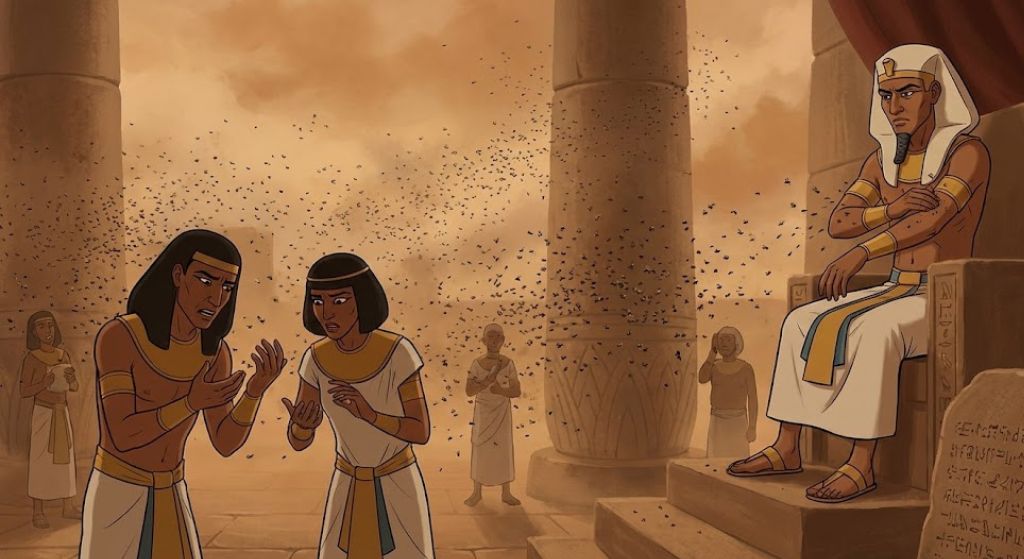
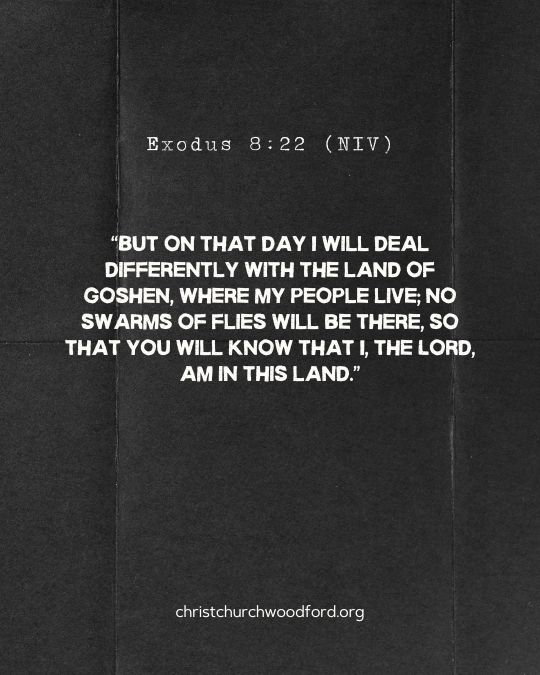
Now things escalate. Swarms of flies descend on Egypt, but here’s the crucial detail: they didn’t touch Goshen, where the Israelites lived (Exodus 8:22-23). God was making distinctions. This wasn’t random natural disaster—this was targeted judgment.
“But on that day I will set apart the land of Goshen, where my people dwell, so that no swarms of flies shall be there, that you may know that I am the LORD in the midst of the earth” (Exodus 8:22, ESV).
This challenged Khepri, the beetle god associated with creation and renewal. God was demonstrating He could protect His people while judging their oppressors.
Plague 5: Livestock Disease (Exodus 9:1-7)
“And the next day the Lord did it: All the livestock of the Egyptians died, but not one animal belonging to the Israelites died.” (Exodus 9:6)
A severe pestilence kills Egypt’s livestock—horses, donkeys, camels, herds, flocks. But “not one of the livestock of Israel died” (Exodus 9:6). This was economic devastation. In an agricultural economy, losing your livestock meant losing your livelihood, your food supply, your wealth.
This struck at Hathor (the cow goddess) and Apis (the sacred bull god). Egypt’s economy worshiped these animals. God showed they were powerless.
Plague 6: Boils (Exodus 9:8-12)
Painful boils broke out on people and animals throughout Egypt. Even the magicians couldn’t stand before Moses “because of the boils, for the boils came upon the magicians and upon all the Egyptians” (Exodus 9:11).
This confronted Sekhmet (goddess of disease) and Imhotep (god of healing). The suffering intensified, but still, no deaths… yet.
The text says explicitly here:
“But the LORD hardened the heart of Pharaoh” (Exodus 9:12).
After six plagues, six warnings, six opportunities to repent—God gave Pharaoh exactly what he was already choosing: a hard heart.
Stage Three: Plagues 7-9 – Supernatural and Terrifying
Plague 7: Hail and Fire (Exodus 9:13-35)
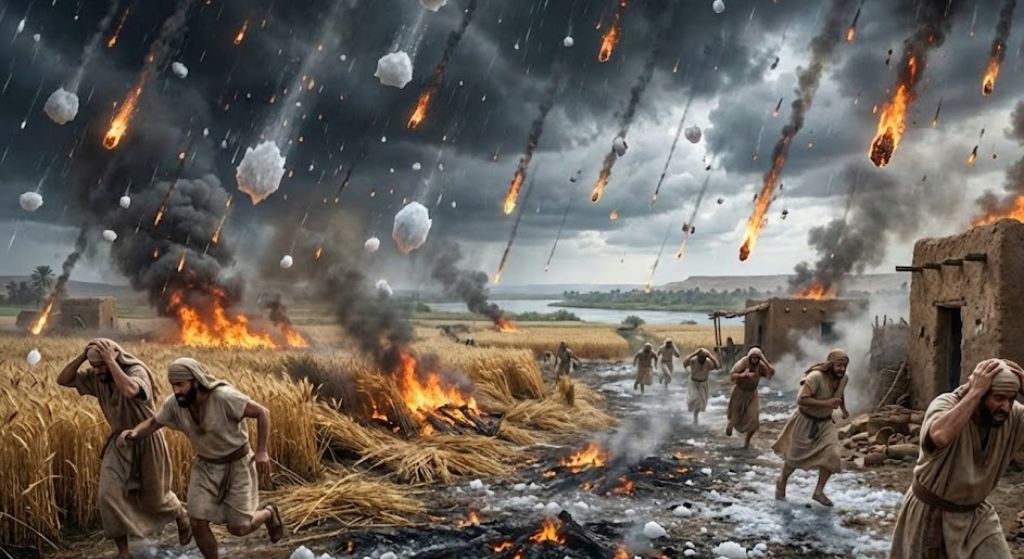
Hail mixed with fire—a meteorological impossibility—devastated Egypt’s crops. But those who feared God’s warning brought their servants and livestock inside and were protected (Exodus 9:20). Even some Egyptians were starting to believe.
This challenged Nut (sky goddess) and Seth (storm god). The very heavens Egypt worshiped turned against them.
Pharaoh calls Moses and says,
“This time I have sinned; the LORD is in the right, and I and my people are in the wicked” (Exodus 9:27).
But the moment the hail stops?
“He sinned yet again and hardened his heart” (Exodus 9:34).
Plague 8: Locusts (Exodus 10:1-20)
Locusts devoured what remained after the hail. By this point, even Pharaoh’s officials were begging him to let the Israelites go:
“Do you not yet understand that Egypt is ruined?” (Exodus 10:7).
Everyone could see where this was heading. Everyone except Pharaoh.
This struck at Isis (agriculture goddess) and Senehem (locust god who was supposed to protect against locusts). The irony is brutal.
Plague 9: Darkness (Exodus 10:21-29)
Three days of darkness so thick “it could be felt” (Exodus 10:21)—but the Israelites had light in their dwellings.
This was the ultimate confrontation with Ra, the sun god and supreme deity of Egypt. The god Egypt trusted for life, order, and blessing was shown to be impotent before YHWH.
After this plague, Pharaoh tells Moses:
“Get away from me; take care never to see my face again, for on the day you see my face you shall die” (Exodus 10:28).
The relationship is severed. The warnings are exhausted. Completeness has been reached.
The Final Plague: When Completeness Became Judgment
Plague 10: Death of the Firstborn (Exodus 11:1-12:36)
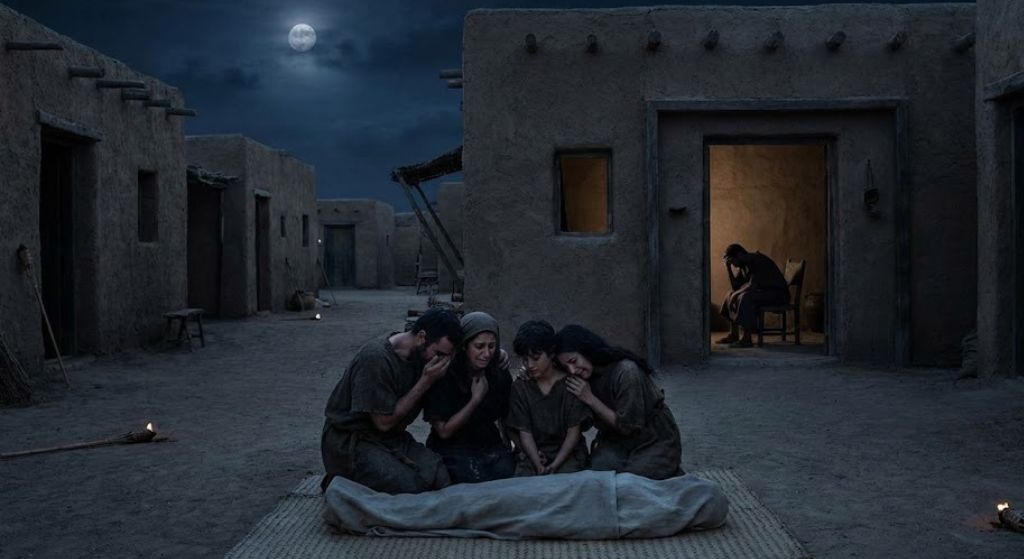
The death of every firstborn son in Egypt—from Pharaoh’s household to the prisoner’s cell to the livestock in the fields. This wasn’t just judgment—it was the complete dismantling of Egypt’s future. In their culture, the firstborn son carried the family legacy, the inheritance, the hope.
But here’s what’s crucial: this plague was coming for everyone—Egyptian and Israelite alike. God didn’t exempt His people automatically. He provided protection through obedience: kill a lamb, spread its blood on your doorposts, stay inside until morning.
“For the LORD will pass through to strike the Egyptians, and when he sees the blood on the lintel and on the two doorposts, the LORD will pass over the door and will not allow the destroyer to enter your houses to strike you” (Exodus 12:23, ESV).
This was when completeness became both judgment and salvation.
Understanding the Pattern: A Table of Divine Purpose
Let me show you the systematic nature of what God was doing:
| # | Plague | Egyptian God(s) Challenged | Escalation Level | Distinction for Israel? |
|---|---|---|---|---|
| 1 | Water to Blood | Hapi (Nile god), Osiris | Inconvenience | No |
| 2 | Frogs | Heqet (fertility goddess) | Annoyance | No |
| 3 | Gnats / Lice | Set (desert god) | Discomfort | Possibly |
| 4 | Flies | Khepri (beetle god) | Nuisance | Yes (Exodus 8:22) |
| 5 | Livestock Disease | Hathor (cow goddess), Apis (bull god) | Economic devastation | Yes |
| 6 | Boils | Sekhmet (disease goddess), Imhotep (healing god) | Physical suffering | Implied |
| 7 | Hail and Fire | Nut (sky goddess), Seth (storm god) | Crop destruction | Yes (Exodus 9:26) |
| 8 | Locusts | Isis (agriculture), Senehem (locust god) | Food security crisis | Yes |
| 9 | Darkness | Ra (sun god), supreme deity | Terror, isolation | Yes (Exodus 10:23) |
| 10 | Death of Firstborn | Pharaoh (living god), Osiris (afterlife) | Complete devastation | Yes (Passover protection) |
Notice how the “Yes” column starts appearing more frequently? That’s intentional. As the judgment intensified, God made it increasingly clear that this wasn’t random—this was personal, targeted, specific. He was making a distinction between the oppressor and the oppressed.
The Hardened Heart: Divine Sovereignty Meets Human Responsibility
Let’s wade into the theological deep end. The phrase “God hardened Pharaoh’s heart” appears throughout Exodus, and it’s bothered people for millennia. If God hardened his heart, how is Pharaoh responsible? Isn’t that divine manipulation? Where’s the free will?
I don’t have perfect answers. Anyone who tells you they’ve completely figured out the relationship between divine sovereignty and human responsibility is either lying or hasn’t thought deeply enough. But here’s what we can observe:
First, both are happening simultaneously. The text says Pharaoh hardened his own heart (Exodus 8:15, 32; 9:34) AND that God hardened Pharaoh’s heart (Exodus 9:12, 10:20, 10:27). Both things are true at the same time. It’s paradoxical, but maybe that’s the point.
Second, think about how hardening actually works. When you repeatedly resist truth, you become calloused to it. The first time you ignore your conscience, it’s difficult. The hundredth time? Easy. God didn’t force Pharaoh into cruelty—He gave him exactly what he was already choosing. The hardening was both Pharaoh’s action and God’s judgment on that action.
Paul picks this up in Romans 1, describing how God “gave them over” to their desires (Romans 1:24, 26, 28). Sometimes divine judgment looks like God removing His restraint and letting us have what we insisted on wanting. That’s terrifying.
Third, understand the context of Egypt’s sin. Egypt had been systematically murdering Hebrew baby boys for years (Exodus 1:22). Pharaoh had ordered genocide. The tenth plague was, in a sense, Egypt reaping what it had sown. Measure for measure. Justice isn’t pretty, but it’s necessary.
I’m reminded of Jesus weeping over Jerusalem:
“How often I would have gathered your children together as a hen gathers her brood under her wings, and you were not willing!” (Matthew 23:37).
Divine desire for redemption, human refusal—and eventually, judgment comes.
The Passover: Substitutionary Protection
The tenth plague introduces something radically different from all the others: a way out.
God didn’t automatically exempt His people from judgment. He provided protection through substitution. Every household—Israelite and Egyptian—needed the blood of a lamb on their doorposts. No one deserved exemption based on merit. Everyone needed the covering.
“The blood shall be a sign for you, on the houses where you are. And when I see the blood, I will pass over you, and no plague will befall you to destroy you, when I strike the land of Egypt” (Exodus 12:13, ESV).
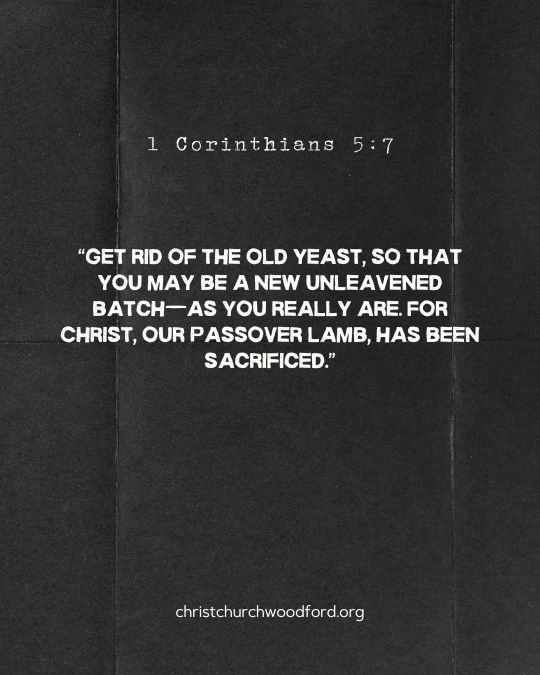
The Passover isn’t just an Old Testament story. It’s the template for understanding Jesus. Paul explicitly calls Christ “our Passover lamb” (1 Corinthians 5:7). John emphasizes that Jesus died at the exact time Passover lambs were being sacrificed (John 19:14). The pattern established in Exodus finds its fulfillment in Christ.
In the Passover, we see that judgment is universal (death was coming for everyone), but protection is available through substitution (the lamb’s blood marks the doorposts). Innocent life given so that guilty life could be spared. That’s the gospel in embryonic form.
The Israelites had to trust that the blood would work. They had to stay inside, even as they heard the wailing begin across Egypt. They had to believe that the mark was enough. That’s faith—not certainty, not understanding, but trust in God’s provision in the face of universal judgment.
What This Means for Us Today
This narrative reveals several uncomfortable truths we need to wrestle with:
God’s patience has purpose, but it’s not infinite. Every plague was preceded by warning. Every opportunity to repent was genuine. The text never presents God as gleeful about Egyptian suffering. Judgment came because every other option was exhausted. But it did come.
Corporate responsibility is real. While individuals may have been personally sympathetic to the Israelites, Egypt’s entire society benefited from their slavery. Pharaoh’s officials hardened their hearts too (Exodus 9:34). We participate in systems, and those systems have consequences.
God makes distinctions between oppressor and oppressed. The increasing protection of Goshen throughout the plagues shows that God isn’t neutral. He takes sides. He defends the enslaved against those who enslave them.
Judgment isn’t God’s preference—it’s the last resort. Even at plague nine, if Pharaoh had relented, the tenth plague might not have been necessary. But when completeness is reached and every warning has been rejected, judgment becomes the only remaining expression of God’s justice.
Where are we holding others captive for our benefit? Where are we ignoring warnings because acknowledging them would require us to change? Where have we become like Pharaoh—benefiting from systems we know are wrong but refusing to release our grip because it would cost us something?
And here’s the grace woven through this story: even in judgment, God was working toward redemption. The plagues led to the Exodus. The Exodus led to Sinai. Sinai led to the Promised Land. Egypt’s judgment was Israel’s liberation. God was writing a bigger story than anyone could see in the moment.
The Legacy Through History
Jewish and Christian traditions have wrestled with this narrative for millennia.
In Jewish tradition, the Passover Seder includes a moment where participants spill wine from their cups while reciting each plague—a recognition that even in liberation, there’s sadness for Egyptian suffering. The Talmud records a midrash where angels begin celebrating the Egyptian army’s destruction in the Red Sea, and God rebukes them: “My children are drowning, and you would sing?” (Babylonian Talmud, Megillah 10b).
There’s profound theology in that. God can enact justice while simultaneously grieving its necessity. Victory and sadness coexist.
Christian interpretation has largely focused on typology—seeing the Passover and Exodus as foreshadowing Christ and salvation. The early church fathers saw the blood on the doorposts as prefiguring the cross. The Reformers emphasized God’s sovereignty in the hardening of Pharaoh’s heart as demonstrating divine election. Liberation theologians have highlighted the Exodus as God’s preferential option for the oppressed, making this story central to understanding God’s character as liberator.
All these readings capture something true about the text. Scripture is dense enough to sustain multiple valid interpretations while remaining irreducible to any single one.
The Bottom Line
The ten plagues show us a God who is simultaneously more patient and more just than we’re comfortable with.
More patient because He warned repeatedly. He didn’t ambush Egypt—He telegraphed every consequence. He gave Pharaoh more chances than we’d give someone who wronged us.
More just because when completeness was reached, judgment wasn’t negotiable. God doesn’t tolerate oppression indefinitely. Evil doesn’t get unlimited runway.
We want God to be patient… until we want Him to be just. We want Him to be merciful… until we’re the ones being wronged. We want grace for ourselves and judgment for others. But God is completely gracious and completely just, and those realities collide in stories like this.
The plague narrative doesn’t let us have a tame God. It gives us a God who loves enough to warn, patient enough to give multiple chances, just enough to eventually act, and redemptive enough to use even judgment as a path toward liberation.
That’s the God revealed in the ten plagues. That’s the God who would eventually send His Son to become the Passover Lamb for the whole world. That’s the God who will one day bring complete judgment and complete redemption.
The choice, as it was for the Israelites that first Passover night, is ours: Will we trust the blood on the doorpost and walk into freedom?
Amen.
Further Reading:
- Enns, Peter.Exodus: The NIV Application Commentary. Zondervan, 2000.
- Currid, John D.Ancient Egypt and the Old Testament. Baker Academic, 1997.
- Hoffmeier, James K.Israel in Egypt: The Evidence for the Authenticity of the Exodus Tradition. Oxford University Press, 1999.
- Sarna, Nahum M.Exploring Exodus: The Origins of Biblical Israel. Schocken Books, 1996.