Prodigal Son Meaning: What Jesus’ Parable Really Teaches About Grace

What Is the Parable of the Prodigal Son?digal Son?
Few stories Jesus told are as beloved as the Parable of the Prodigal Son. For centuries, it has reminded people that no one is beyond God’s grace. The meaning of the prodigal son may be one of the clearest pictures of the gospel in the entire Bible.
The word prodigal means wasteful, reckless, or extravagantly spending resources. While it describes the younger son who squandered his inheritance, the parable ultimately points to something greater: the extravagant grace of a Father who welcomes sinners home.
In Luke 15:11–32, Jesus tells the story of a younger son who demands his inheritance, leaves home, and wastes everything in reckless living. When he finally returns in desperation, expecting rejection, his father runs to meet him. There is a robe, a ring, a feast, and a celebration. But there is also an older brother standing outside the party, unwilling to share his father’s joy.
At first glance, this seems like a story about a rebellious son who comes home. In reality, the prodigal son meaning goes much deeper. It is a story about repentance, grace, forgiveness, and the heart of a Father who seeks the lost.
Why Did Jesus Tell the Parable of the Prodigal Son?
To understand the meaning of the Prodigal Son, we first need to understand why Jesus told the story.
The parable did not begin as a lesson about family relationships or even repentance. It began with a complaint.
Luke 15 opens with the Pharisees and scribes criticizing Jesus because He welcomed people they believed should be excluded:
“This man receives sinners and eats with them.” (Luke 15:2)
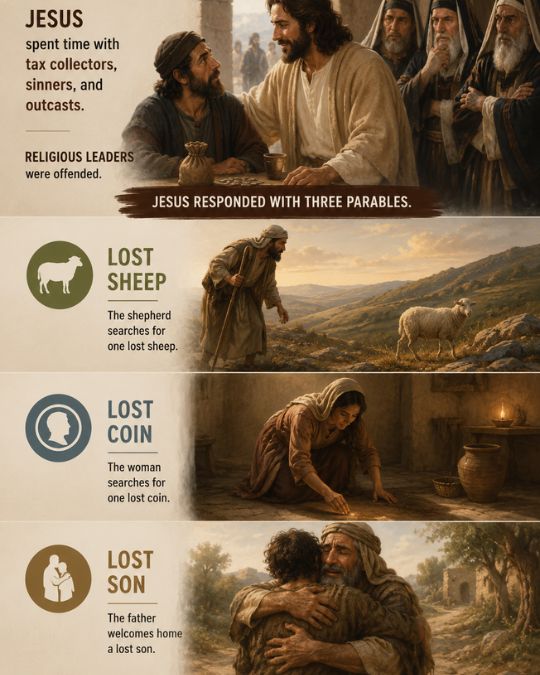
Religious leaders were offended that Jesus spent time with tax collectors, sinners, and other social outcasts. Instead of arguing with them, Jesus responded with three parables. A shepherd searches for one lost sheep. A woman searches for one lost coin. A father welcomes home a lost son.
All three stories reveal the same truth: God actively seeks the lost and rejoices when they are found. Each parable ends not with condemnation, but with celebration.
This context changes how we read the Parable of the Prodigal Son. It is certainly a story about repentance and forgiveness, but it is also a challenge to religious pride. Jesus was speaking to people who believed they had earned God’s favor and struggled to rejoice when grace was shown to others.
That is why the older brother matters so much. He is not simply a secondary character in the story. He represents the Pharisees standing before Jesus. And that is why the parable ends with an unanswered question, inviting every reader to consider whether they will rejoice when the lost come home.
The Younger Son: Humanity’s Rebellion Against God
The Shocking Inheritance Request
The story begins with a request that would have shocked Jesus’ audience.
The younger son comes to his father and says:
“Father, give me the share of property that is coming to me.” (Luke 15:12)
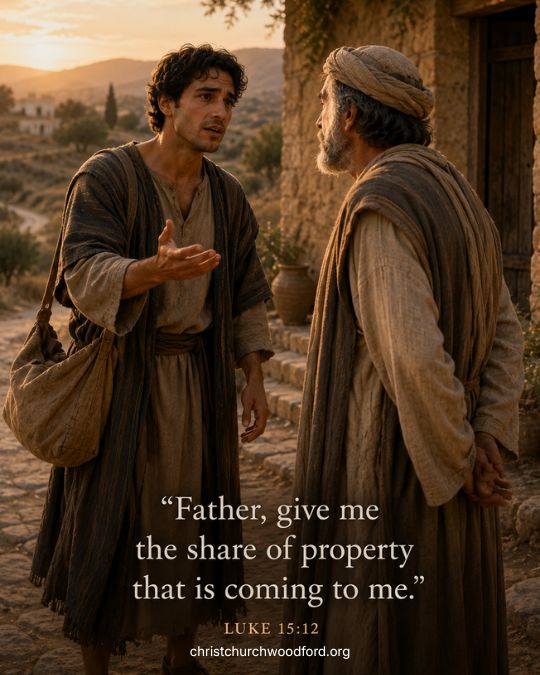
In the ancient world, an inheritance was normally received after a father’s death. By asking for it early, the son was effectively saying, “I want what belongs to me, but I do not want you.”
This was more than a financial request. It was a rejection of relationship. The son wanted the father’s wealth without the father himself.
That is why many Christians see themselves in the younger son. His story is not simply about one rebellious man. It is a picture of every person who has chosen independence from God. Like the younger son, we often want God’s blessings while resisting His authority.
The Far Country
After receiving his inheritance, the son leaves for a “far country.”
This far country is more than a place on a map. It represents life apart from the Father. It is the pursuit of freedom without boundaries, fulfillment without God, and happiness on our own terms.
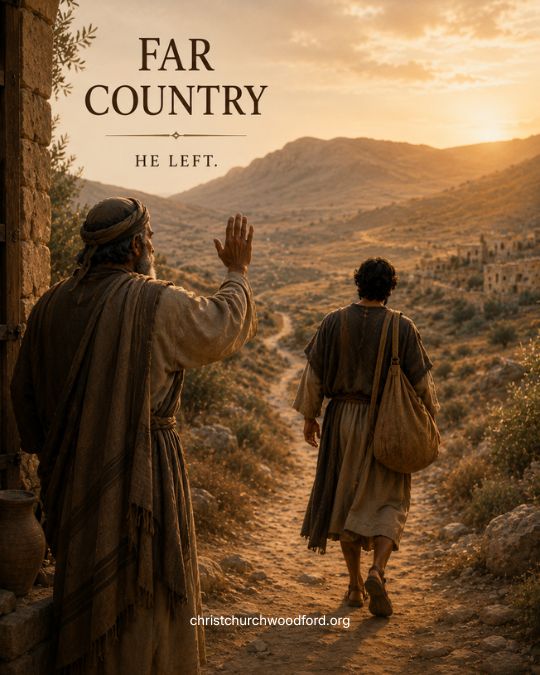
At first, everything appears to be working. The son has money, freedom, and no one telling him what to do. But the freedom he thought would satisfy him eventually leaves him empty.
The younger son meaning is not that he was uniquely sinful. Rather, he represents the tendency of every human heart to wander when it stops trusting the Father.
The Pig Pen and the Turning Point
The story reaches its lowest point when the son finds himself feeding pigs during a famine. For a Jewish audience, this was a picture of complete humiliation. He had fallen so far that he longed to eat the food given to unclean animals.
Then comes one of the most important moments in the entire parable:
“When he came to his senses, he said, ‘How many of my father’s hired servants have food to spare, and here I am starving to death!“ (Luke 15:17)
Those words mark the beginning of his return. Reality finally breaks through the lies he had been telling himself. He sees where his choices have led and remembers the goodness of his father’s house.
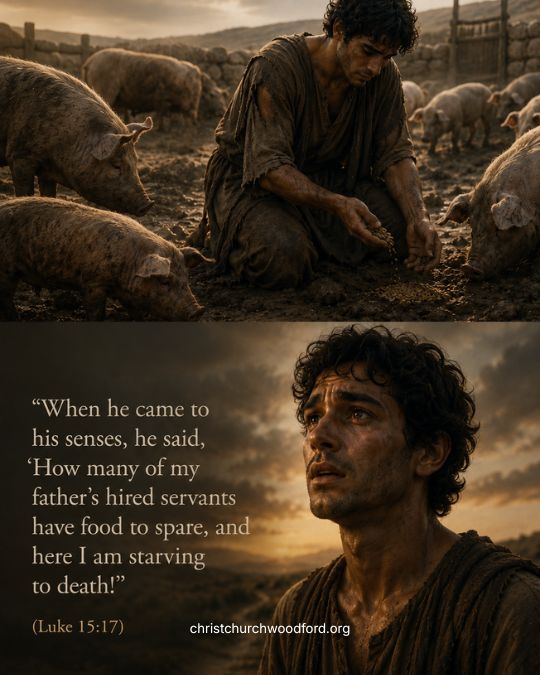
This is where true repentance begins. Not merely with guilt or regret, but with honesty. The son stops pretending the far country can satisfy him and starts seeing his situation as it really is.
Every journey home begins the same way.
The Father: A Picture of God’s Grace
If the younger son represents humanity’s rebellion, then the father represents the heart of God. In fact, the father in the Prodigal Son may be the most important character in the entire story. Everything Jesus wants us to understand about grace is revealed through him.
What does the father represent in the Prodigal Son? He represents a God who is not waiting to condemn repentant sinners, but eager to welcome them home.
Why Did the Father Run?
One detail in this parable would have stunned Jesus’ original audience.
As soon as the father sees his son returning, he runs to meet him.
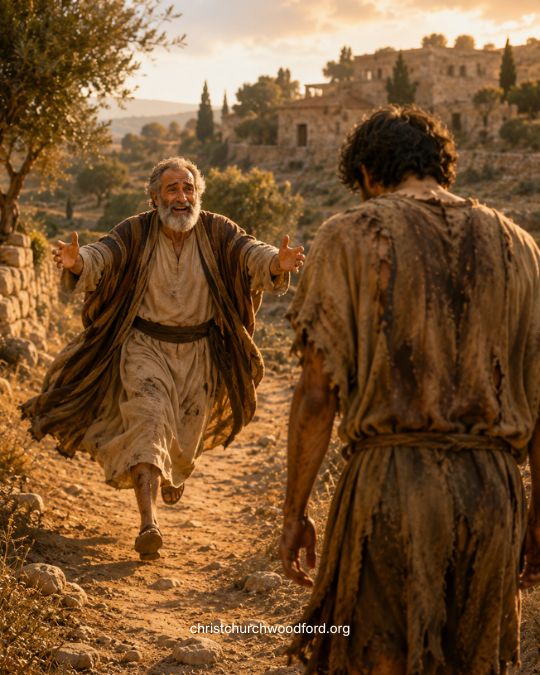
That may not sound unusual to modern readers, but in the ancient Middle East, respected older men did not run. Running meant lifting your robe and exposing your legs, something considered embarrassing and undignified. A man of the father’s status would normally wait for others to come to him.
Yet the father runs anyway.
More importantly, he runs before the son can finish his apology. Before there is a chance to earn forgiveness. Before there is any proof that the son deserves a second chance.
This is one of the clearest pictures of grace in the Bible. The father does not simply wait for the lost to find their way home. He moves toward them. His love is greater than his dignity, and his mercy is greater than the son’s failure.
The Robe, Ring, and Sandals
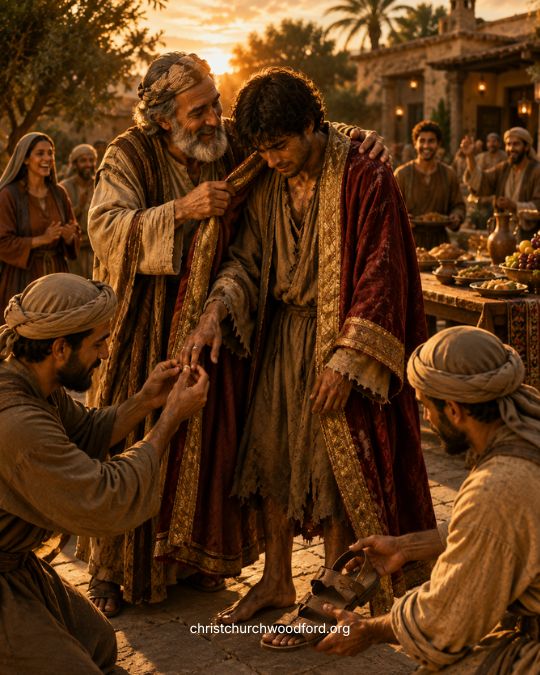
When the son arrives, the father immediately calls for a robe, a ring, and sandals.
Each gift communicates restoration. The robe covers the son’s shame. The ring restores his place in the family. The sandals identify him as a son rather than a servant.
The younger son expected probation. Instead, he received full acceptance.
The father does not say, “Prove yourself first.” He publicly declares that his son belongs in the family.
Why the Father Celebrated
The father explains the celebration with these words:
“For this my son was dead, and is alive again; he was lost, and is found.” (Luke 15:24)
Those words reveal the deeper meaning of the Prodigal Son. Jesus is not describing self-improvement or a fresh start. He is describing salvation.
The son was lost and has been found. He was spiritually dead and has been restored to life. That is why the father celebrates.
And that is why heaven rejoices whenever a sinner comes home.
The Older Brother: The Real Audience of the Parable
Both Sons Were Lost
Most people read the Parable of the Prodigal Son and focus on the younger brother. After all, he is the one who leaves home, wastes his inheritance, and ends up feeding pigs. But by the time Jesus reaches the end of the story, the spotlight has shifted.
Unlike his younger brother, the older son never left home. He stayed. He worked. He obeyed. From the outside, he appeared to be everything a father could want in a son. Yet when he hears that his brother has returned and that a celebration has begun, he becomes angry and refuses to go inside.
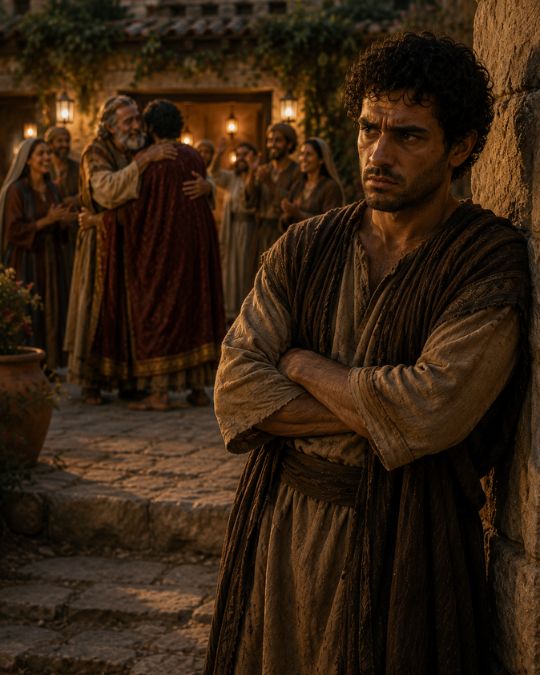
In that moment, we discover that both sons are lost.
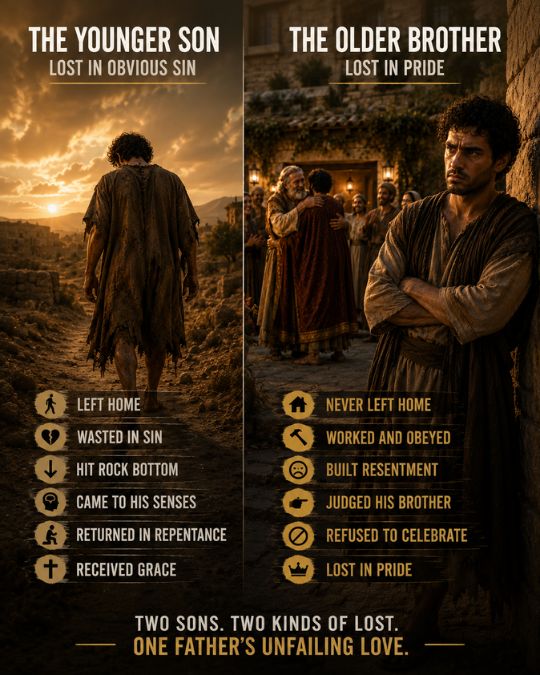
The younger brother was lost in open rebellion. The older brother was lost in self-righteousness.
His response reveals the problem. He does not speak like a son enjoying his father’s love. He speaks like a servant keeping score. He reminds his father of his years of obedience and complains that he has never received such a reward. He even refuses to call the prodigal his brother, referring to him instead as “this son of yours.”
Why the Older Brother Represents the Pharisees
This matters because the parable was never just about the younger son. Jesus told it in response to Pharisees who were criticizing Him for welcoming sinners.
Like the older brother, they believed they had earned God’s favor through their faithfulness. And like the older brother, they struggled to rejoice when grace was shown to people they considered undeserving.
That is why many Bible teachers see the older brother as the real audience of the parable. His greatest problem was not disobedience but pride. He had turned his relationship with his father into a transaction. In his mind, years of obedience had earned him certain rights, and his father’s generosity seemed unfair because it did not fit the rules he had created.
At the heart of the older brother’s anger is a question every believer must eventually face:
Am I serving God because I love Him, or because I expect something in return?
Why Jesus Leaves the Ending Unfinished
The most remarkable part of the story is that Jesus never tells us what the older brother decides. Does he enter the feast? Does he remain outside? The parable simply ends.
That unfinished ending is deliberate. Jesus leaves the decision in the hands of His listeners. Will the Pharisees continue standing outside, clinging to their pride? Or will they join the celebration and rejoice that the lost have been found?
The same question still stands today. Every reader must decide whether they will stand outside keeping score or step inside and share the Father’s joy when sinners come home.
What Is the Main Lesson of the Prodigal Son?
The meaning of the Prodigal Son can be summarized in four key truths. Together, they reveal the heart of the gospel and explain why this parable remains one of Jesus’ most beloved teachings.
God’s Grace Is Greater Than Our Failure
The younger son’s rebellion had real consequences, but it was not the end of his story. When he returned home expecting to be treated as a servant, his father welcomed him as a son.
The parable reminds us that no one is beyond God’s grace. No matter how far we wander, the Father stands ready to receive those who come home.
True Repentance Leads Home
The turning point of the story comes when the son “came to himself” and returned to his father.
Biblical repentance is more than feeling guilty. It is a change of direction that leads us back to God. The younger son’s journey home reminds us that genuine repentance always moves toward the Father.
Self-Righteousness Can Be Just As Dangerous As Rebellion
While the younger son was lost in obvious sin, the older brother was lost in pride.
Jesus warns that it is possible to be outwardly obedient while remaining far from God’s heart. Both brothers needed grace, even though their sins looked very different.
Heaven Rejoices When Sinners Return
The Parable of the Prodigal Son concludes a trilogy of stories about lost things being found. A sheep is found. A coin is recovered. A son comes home.
And each story ends with celebration.
The lesson is clear: God does not reluctantly welcome repentant sinners. Heaven rejoices when the lost are found.
What Does the Prodigal Son Mean for Christians Today?
The Parable of the Prodigal Son is more than a story about two brothers. It is a story about us. Whether you identify with the younger son, the older brother, or the father, its lessons remain deeply relevant.
If You Feel Far From God
Perhaps you see yourself in the younger son. You have wandered, made mistakes, or wonder whether you can ever come back.
The message of the parable is simple: come home.
The father was not waiting to reject his son. He was waiting to receive him. No matter how far you feel from God, His grace is greater than the distance.
If You Have a Wayward Child
Many parents read this story with a heavy heart.
The father could not force his son to stay, nor could he make him return. But he never stopped loving him. He waited, watched, and remained ready to welcome him home.
If you are praying for a prodigal son or daughter, do not lose hope. Continue to pray, continue to love, and trust God with what you cannot control.
If You Struggle With Self-Righteousness
The older brother reminds us that faithfulness can become unhealthy when it turns into a transaction.
He had forgotten that life with the father was already the reward.
The same danger exists for Christians today. We can begin serving God out of obligation, comparison, or a desire to earn what has already been freely given. Grace is not something we deserve more than others. It is something we all need.
Frequently Asked Questions
What does the father represent in the Prodigal Son?
The father represents God. Specifically, he shows us the nature of God’s grace: not waiting passively for full repentance before responding, but running toward the returning sinner, absorbing the shame, and restoring the relationship completely. The father in this parable is one of Jesus’ clearest portraits of who God is.
What does the older brother represent?
The older brother represents religious people — specifically, the Pharisees who were Jesus’ original audience. He stands for those who have been outwardly faithful but have confused faithfulness with earning, and who find it difficult to celebrate when grace reaches people they believe have not deserved it.
Is the Prodigal Son about salvation or repentance?
It is about both, and they cannot be fully separated. The son’s return is an act of repentance — a turning. The father’s response is an act of grace that results in full restoration. Jesus is showing that true repentance leads home, and that home is a place of welcome, not probation.
Why did Jesus leave the ending unfinished?
Because the question he was asking was still open. The parable was told to Pharisees who were standing outside the party of grace, refusing to go in. By leaving the older brother’s response unresolved, Jesus was asking his original audience — and every reader since — to decide: will you go in? That unfinished ending is one of the most deliberate literary choices in the Gospels.
The Father Is Still Watching the Road
Every part of this parable has been carefully constructed. The reckless son. The lavish father. The resentful older brother. The unfinished ending. Jesus did not tell this story by accident. He told it to a group of people who had decided that grace had a guest list, and that they were the ones holding it.
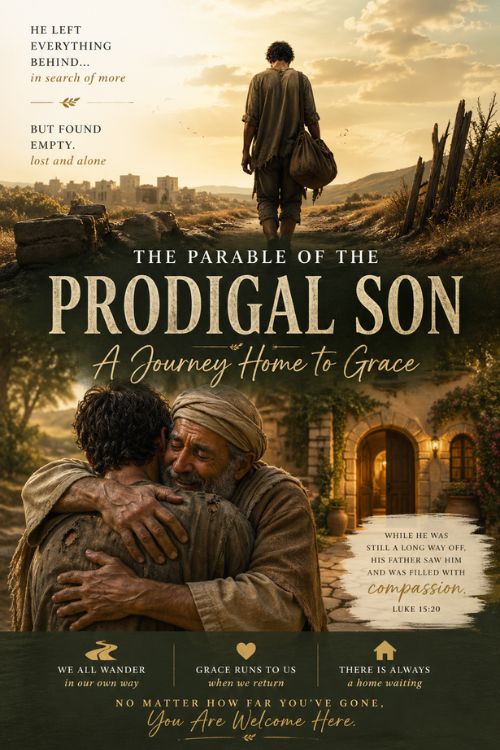
But the image that stays with you — the one that will not let you go — is the father running. An older man lifting his robe, losing his dignity, covering the distance so his son does not have to walk the last mile in shame alone. That is the prodigal son meaning at its deepest level. Not what the son wasted. Not even what he finally decided to do. But what the father did the moment he saw him coming.
The Father is still watching the road. Not to catch you in failure. Not to rehearse what you have done. But because love that is truly prodigal — extravagant, reckless, generous beyond what is reasonable — cannot do anything else.
If you are far off, turn around. He is already running.