The Lord’s Prayer Explained: Meaning of Every Line Jesus Taught

Few prayers in history have been prayed as often as the Lord’s Prayer. Children learn it in Sunday school. Congregations recite it every week. Even people who rarely open a Bible can often finish the line, “Give us this day our daily bread.” It is one of the most familiar passages in all of Scripture.
But familiarity can work against us. When words become routine, we stop noticing what they actually mean. Yet Jesus never intended this prayer to be empty repetition. He wasn’t simply giving His disciples words to memorize—He was teaching them how to approach God.
That is what makes the Lord’s Prayer so remarkable. Every line reveals something about who God is, what matters to Him, and what we truly need. When we slow down and consider it phrase by phrase, this familiar prayer becomes more than words we recite. It becomes a guide for knowing God and learning to pray as Jesus taught.
Why Did Jesus Teach the Lord’s Prayer?
The Lord’s Prayer didn’t appear out of nowhere. It came in response to a direct request.
In Luke’s Gospel, the disciples watched Jesus pray and then asked Him, “Lord, teach us to pray” (Luke 11:1). They had grown up hearing religious prayers, yet something about the way Jesus prayed made them want to learn from Him.
Jesus answered, as recorded in both Luke 11 and Matthew 6:9–13, with an important warning. Before teaching the prayer, He told His disciples not to pray like those who “heap up empty phrases”, thinking they would be heard because of their many words (Matthew 6:7). Jesus wasn’t just concerned with what people prayed, but with why and how they prayed.
That context matters. The Lord’s Prayer is Jesus’ answer to empty religious performance. It is short, sincere, and centered on God. Rather than trying to impress God with many words, it teaches us to begin with worship before bringing our needs to Him.
The prayer serves two purposes. It is both a model that teaches Christians how to pray and a prayer believers can pray word for word with genuine faith. Jesus gave His followers both a pattern to follow and words they could truly mean.
Its structure is just as instructive as its words: worship, surrender, provision, forgiveness, and protection. It reminds us that healthy prayer begins by fixing our eyes on God before turning to our own needs.
The Lord’s Prayer (Matthew 6:9–13)
Before we look at each line individually, let’s read the prayer the way Jesus first taught it in the Sermon on the Mount.
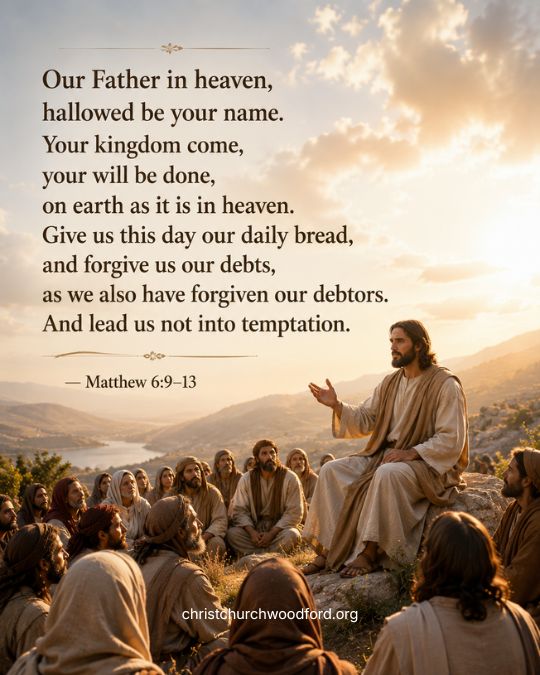
“Our Father in heaven,
hallowed be your name.
Your kingdom come,
your will be done,
on earth as it is in heaven.
Give us this day our daily bread,
and forgive us our debts,
as we also have forgiven our debtors.
And lead us not into temptation,
but deliver us from evil.”
— Matthew 6:9–13 (ESV)
The Lord’s Prayer is remarkably simple, yet every phrase carries profound meaning. It begins with God—His name, His kingdom, and His will—before turning to our own needs for provision, forgiveness, and protection. Let’s walk through it one line at a time and discover what Jesus was teaching His disciples, and what these words still mean for us today.
The Lord’s Prayer Explained Line by Line
Now that we’ve read the prayer as a whole, let’s explore the meaning of the Lord’s Prayer one phrase at a time. This line-by-line guide reveals what each petition teaches about God’s character, our relationship with Him, and how Jesus taught His followers to pray.
Our Father in Heaven
Our Father in heaven, hallowed be your name. – Matthew 6:9 (ESV)
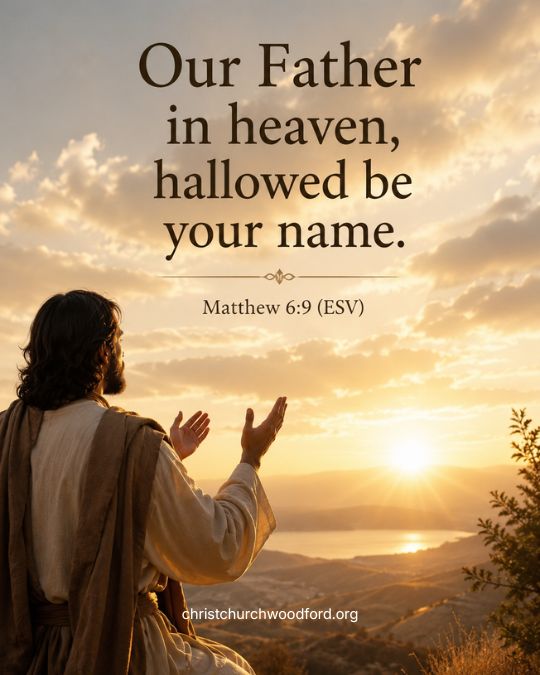
Jesus starts the prayer with a word that would have surprised His first listeners. In the Old Testament, God was certainly known as a Father to Israel in a corporate sense, but addressing Him personally and directly as “Father” in prayer was not common practice among the Jewish people of that time. Jesus opens the door for His followers to approach God not as distant strangers, but as children coming to a Father who welcomes them.
For Christians today, this opening line sets the tone for everything that follows. Before we ask God for anything, we are reminded of the relationship we already have with Him. He is not a reluctant authority we have to convince. He is “our Father,” and prayer begins from a place of belonging, not distance.
It’s also worth noticing the word “our” rather than “my.” Jesus is teaching a prayer meant to be prayed alongside other believers, not just alone in a private moment. Even when you pray this prayer by yourself, you are joining your voice with every other Christian who calls on the same Father. That small word quietly guards against a prayer life that becomes purely individual or self-focused.
Hallowed Be Your Name
The word “hallowed” simply means holy, set apart, worthy of reverence. To Jesus’ listeners, God’s name represented His entire character. To hallow His name was to honor everything He is: His holiness, His faithfulness, His power, His goodness.
For us, this line is a reset. Before we bring our requests, we are invited to pause and remember who we are actually talking to. Prayer that begins with worship keeps our requests in proper perspective. We are not approaching a genie or a vending machine. We are approaching the holy God of the universe, and that truth should shape everything we say next.
Your Kingdom Come
Your kingdom come, your will be done, on earth as it is in heaven. – Matthew 6:10 (ESV)
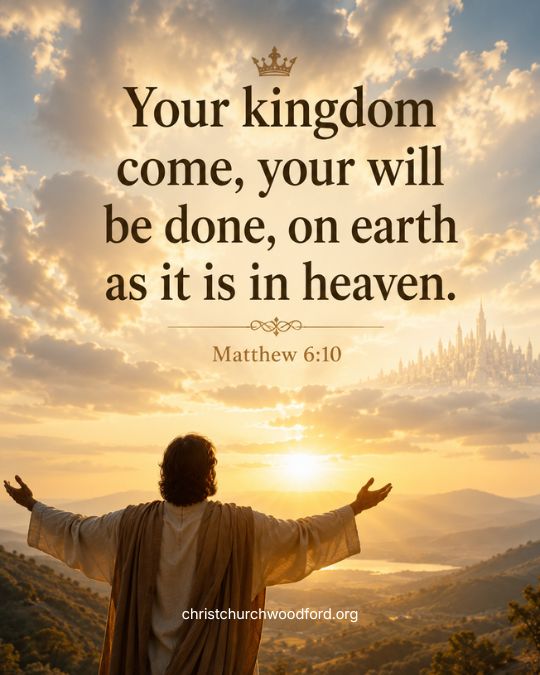
This line would have carried enormous weight for a Jewish audience living under Roman occupation. They longed for God’s kingdom to break in and set things right. When Jesus taught His disciples to pray “your kingdom come,” He was pointing them toward God’s rule breaking into the world, both now in the hearts of His people and fully in the future when Christ returns.
For believers today, this is a prayer of surrendered hope. We are asking God to establish His reign, first in our own lives, then in our homes, our churches, and eventually over all creation. It is a prayer that refuses to settle for the world as it currently is, while trusting God with how and when His kingdom fully comes.
Praying “your kingdom come” is also a way of checking our own priorities. It’s easy to spend most of our prayers on our personal circumstances and rarely pray for God’s kingdom to advance beyond our own lives. This line pulls our eyes upward, reminding us that God’s purposes are bigger than our individual concerns, even while He cares deeply about those concerns too.
Your Will Be Done
Right alongside “your kingdom come” sits “your will be done, on earth as it is in heaven.” This phrase asks God to make earth look more like heaven, where His will is followed completely and without resistance.
This is one of the hardest lines in the entire prayer to pray honestly, because it means surrendering our own plans. For Jesus’ first listeners, and for us today, this phrase is an act of trust. We are not just asking God to bless what we already want. We are asking Him to align our will with His, even when that is difficult, even when we don’t fully understand where He is leading.
Give Us Today Our Daily Bread
Give us this day our daily bread. –Matthew 6:11 (ESV)
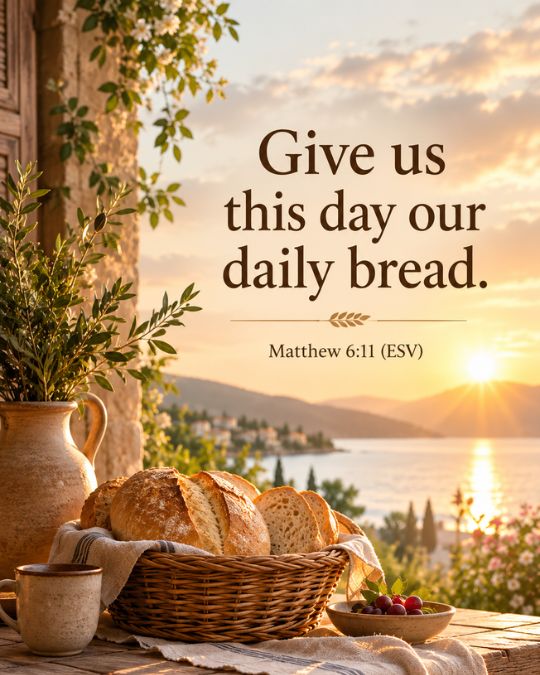
After beginning with worship and surrender, Jesus shifts the prayer toward our physical needs. “Daily bread” would have meant exactly what it sounds like to His original audience: enough food to get through the day. Most people in that culture lived without stockpiles or long-term security. They depended on provision day by day.
This line teaches ongoing dependence rather than one-time asking. Christians today are invited to bring their everyday needs to God honestly, without pretending we have it all figured out on our own. Whether it is provision, strength, or simply the ability to get through today, this phrase reminds us that God cares about the practical realities of our lives, not just the spiritual ones.
Notice also that Jesus says “give us,” not “give me.” Even a request as personal as daily bread is framed communally, a reminder that our needs are never entirely separate from the needs of the people around us. Praying for daily bread can also become an act of trust that pushes back against anxiety about tomorrow. Jesus isn’t teaching us to ask for a lifetime of security in one prayer. He’s teaching us to ask for today, and to trust Him again tomorrow.
Forgive Us Our Debts, As We Forgive Our Debtors
And forgive us our debts, as we also have forgiven our debtors. – Matthew 6:12 (ESV)
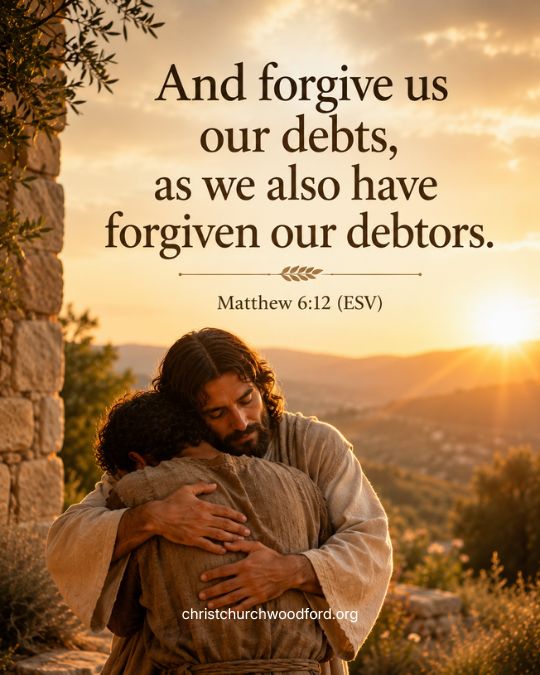
This may be the most convicting line in the whole prayer. Jesus links our forgiveness from God directly to our willingness to forgive others. To His listeners, “debts” referred to sins, moral failures owed to God that needed to be released.
For Christians, this line will not let us pray sincerely while holding a grudge. It does not suggest that forgiving others earns God’s forgiveness. Rather, it reveals that a heart that has truly received grace becomes a heart capable of extending it. If we are struggling to forgive someone, this line is a good place to pause and ask God to search our hearts.
Jesus underscores this connection right after giving the prayer, adding in Matthew 6:14–15 that our willingness to forgive others is directly tied to our experience of God’s forgiveness. That is a sobering thought to sit with. It doesn’t mean forgiveness is easy or automatic. It means this line of the prayer is meant to be prayed honestly, even when forgiving someone still feels like a process rather than something finished.
Lead Us Not Into Temptation
And lead us not into temptation, but deliver us from evil. – Matthew 6:13 (ESV)
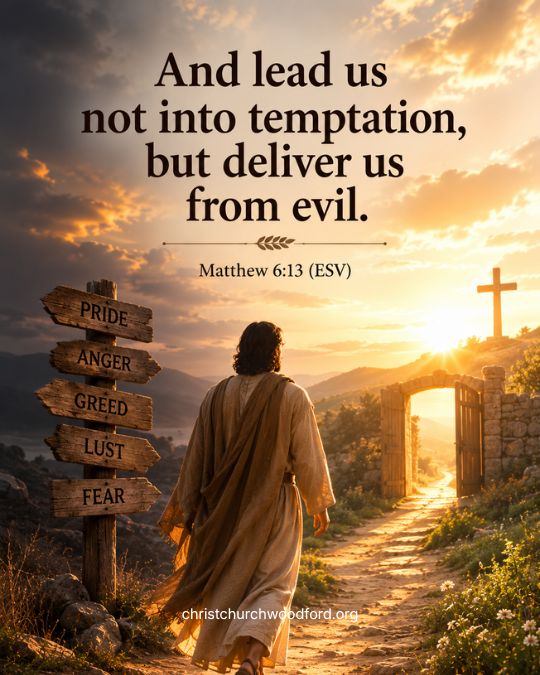
This phrase is not suggesting that God tempts people toward sin; James 1:13 makes that clear elsewhere in Scripture. Instead, Jesus is teaching His followers to ask for God’s protection from situations and seasons that would test their faithfulness, and for the strength to stand firm when trials come.
For us today, this is a prayer of humility. It acknowledges that we are not as strong as we think we are, and that we need God’s help to walk faithfully, not just His forgiveness after we fail. It is a prayer prayed in advance, asking for protection before the test arrives rather than rescue only after we’ve fallen.
Deliver Us From Evil
The final petition asks God for deliverance from evil, or as some translations render it, “the evil one.” This line acknowledges that there is real spiritual opposition in the world, not just personal weakness or bad luck.
For Christians today, this is a prayer for spiritual protection over our lives, our families, and our minds. It reminds us that faithfulness is not something we manage on our own strength. We need God actively standing between us and the schemes of the enemy, and this line asks for exactly that kind of ongoing protection.
It’s worth noting how the prayer ends here, not with a request that trails off, but with a settled confidence that God is able to deliver. Many ancient manuscripts and church traditions add a closing line of praise after this petition: “for yours is the kingdom, and the power, and the glory, forever. Amen.” Even without treating that phrase as part of the earliest text, it captures exactly where the prayer has been heading all along, back to worship, back to trusting God’s power rather than our own.
How the Lord’s Prayer Can Shape Your Daily Prayer
It’s easy to recite the Lord’s Prayer and move on. But when you let each line guide your own prayers, it becomes more than familiar words—it becomes a pattern for approaching God each day.
Begin with worship. Before bringing your requests, remember who God is. Honor His holiness and let that shape everything that follows.
Then surrender your plans. Ask God to align your heart with His will, trusting that His purposes are better than your own.
Bring your needs honestly. Whether you’re asking for provision, strength, or wisdom, remember that God cares about the ordinary details of your life as much as the extraordinary ones.
Confess your sins, forgive others, and ask God for the grace to do both sincerely. Finally, pray for His protection and strength to remain faithful in whatever lies ahead.
Prayed this way, the Lord’s Prayer becomes more than something you recite. It becomes a daily rhythm that draws you closer to your Father, even on the days when you don’t know what words to pray.
More Than Words to Recite
The Lord’s Prayer is more than one of the most familiar prayers in history. It is Jesus’ invitation to approach God as our Father—with reverence, trust, humility, and confidence.
As we’ve seen in this line-by-line explanation of the Lord’s Prayer, every phrase reveals something about God’s character, our relationship with Him, and the kind of prayer Jesus taught His followers.
The meaning of the Lord’s Prayer can be summed up in these timeless truths:
- Our Father in heaven — We approach God as beloved children, confident in His love and care.
- Hallowed be Your name — We begin with worship, honoring God’s holiness above everything else.
- Your kingdom come. Your will be done. — We surrender our plans and seek God’s purposes before our own.
- Give us this day our daily bread — We trust God to provide for our needs, one day at a time.
- Forgive us our debts, as we forgive our debtors — We receive God’s grace and extend that same grace to others.
- Lead us not into temptation, but deliver us from evil — We rely on God’s wisdom, strength, and protection every step of the way.
Whether you’ve prayed these words for years or are reading them for the first time, don’t let them become mere repetition. Instead, let the Lord’s Prayer shape the way you approach God each day.
Pray it slowly. Reflect on its meaning. As you do, this prayer will become more than familiar words—it will become a daily guide for trusting your heavenly Father and growing closer to Him.
Frequently Asked Questions
What is the Lord’s Prayer?
The Lord’s Prayer is the model prayer Jesus taught His disciples, found in Matthew 6:9–13 and Luke 11:2–4. It covers worship, surrender to God’s will, daily provision, forgiveness, and protection from evil, serving as both a pattern for prayer and a prayer believers can pray directly.
Where is the Lord’s Prayer found in the Bible?
The Lord’s Prayer appears in two places: Matthew 6:9–13, part of the Sermon on the Mount, and Luke 11:2–4, given in response to the disciples asking Jesus to teach them to pray.
Did Jesus mean for us to repeat this prayer?
Jesus gave this prayer partly as a model for how to pray, not merely words to recite without thought. He introduced it by warning against empty repetition, so the prayer works best when its meaning shapes our hearts rather than becoming a routine we rush through. That’s really the heart of how Christians should pray the Lord’s Prayer: with understanding, not just habit.
What does “daily bread” mean?
“Daily bread” refers to our everyday needs, provision for today rather than a guarantee for the future. It reflects a posture of ongoing dependence on God rather than self-sufficiency.
Why is God called “Our Father”?
Jesus taught His disciples to address God as Father to emphasize the close, personal relationship believers have with Him. It reframes prayer as approaching a loving Father rather than a distant deity, setting the tone for the rest of the prayer.