Sermon on the Mount Explained: Jesus’ Greatest Teaching in Matthew 5-7

The Sermon on the Mount is Jesus’ most famous collection of teachings, recorded in Matthew chapters 5 through 7. In these three chapters, Jesus explains what life in the Kingdom of God looks like—from the Beatitudes and loving your enemies to prayer, forgiveness, worry, judging others, and building your life on His words.
But the Sermon on the Mount is more than a list of moral instructions. Jesus repeatedly turns our attention from outward behavior to the condition of the heart. He teaches His followers not only what to do, but what it means to live with humility, mercy, faith, love, and wholehearted devotion to God.
Some of His best-known teachings are found here: “Blessed are the poor in spirit,” “You are the light of the world,” the Lord’s Prayer, the Golden Rule, and the parable of the wise and foolish builders.
In this guide, we’ll walk through the Sermon on the Mount in Matthew 5–7, explain its major teachings and meaning, and see what Jesus’ words mean for Christians today.
What Is the Sermon on the Mount?
The Sermon on the Mount is the longest recorded collection of Jesus’ teachings in the Bible, found in Matthew 5:1–7:29.
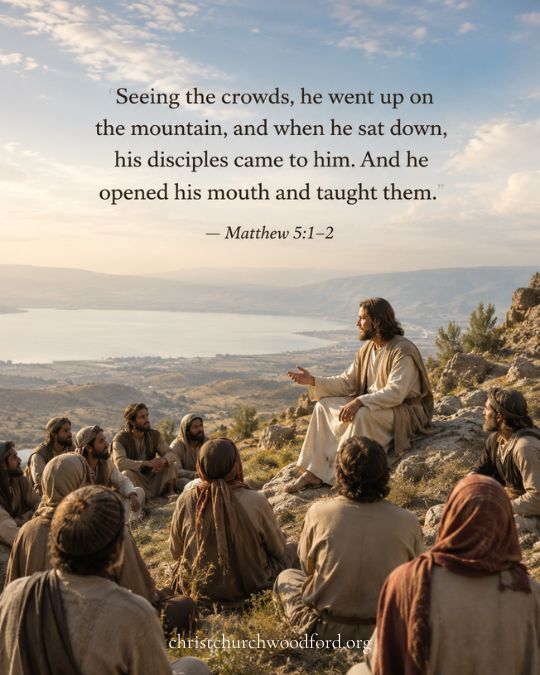
Matthew sets the scene simply: Jesus sees the crowds, goes up on a mountain, sits down, and begins teaching His disciples. From there, He delivers a wide-ranging message about righteousness, relationships, prayer, trust in God, and life in the Kingdom of Heaven.

The sermon includes some of Jesus’ most familiar teachings:
- The Beatitudes (Matthew 5:3–12)
- Salt and light (Matthew 5:13–16)
- Jesus and the Law (Matthew 5:17–48)
- Giving, prayer, and fasting (Matthew 6:1–18)
- The Lord’s Prayer (Matthew 6:9–13)
- Treasures in heaven and serving God rather than money (Matthew 6:19–24)
- Jesus’ teaching about worry (Matthew 6:25–34)
- Judging others (Matthew 7:1–5)
- Ask, seek, and knock (Matthew 7:7–11)
- The Golden Rule (Matthew 7:12)
- The narrow gate and false prophets (Matthew 7:13–23)
- The wise and foolish builders (Matthew 7:24–27)
Together, these teachings show that Jesus is concerned with more than outward religious behavior. Again and again, He goes deeper—to our motives, desires, relationships, priorities, and hearts.
The Sermon on the Mount ultimately describes what life under God’s rule looks like: loving our enemies, seeking reconciliation, praying sincerely, trusting our heavenly Father, showing mercy, pursuing righteousness, and putting Jesus’ words into practice.
That is why the Sermon on the Mount remains central to understanding not only what Jesus taught, but what it means to follow Him.
The Setting: Why a Mountain Matters
Matthew introduces the Sermon on the Mount with a simple scene:
“Seeing the crowds, he went up on the mountain, and when he sat down, his disciples came to him. And he opened his mouth and taught them.” — Matthew 5:1–2
The mountain setting is significant, especially when we read Matthew against the background of the Old Testament.
For Jewish readers, mountains were often places of important encounters with God. Most notably, Moses went up Mount Sinai and received God’s Law for Israel.
Because of this, many readers see an intentional connection between Moses at Mount Sinai and Jesus teaching on the mountain. Matthew does not explicitly say that Jesus is reenacting Sinai, but the parallel is difficult to miss.
There is also an important difference. Jesus does not simply repeat the Law. Throughout Matthew 5, He speaks with striking authority:
“You have heard that it was said… But I say to you…”
He addresses anger, lust, divorce, retaliation, love for enemies, and other matters by going beyond outward obedience to reveal the heart of righteousness God desires.
The mountain, then, provides a fitting setting for what follows: Jesus teaching His disciples what life in the Kingdom of Heaven looks like.
The Beatitudes: Jesus Redefines “Blessed”
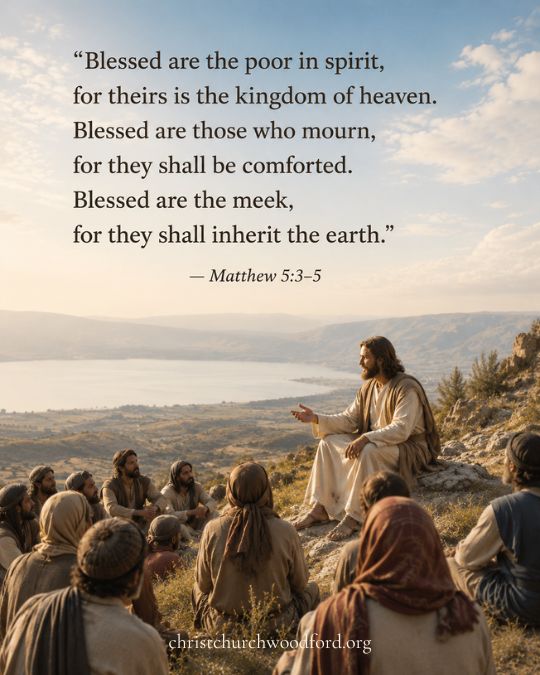
Jesus begins the Sermon on the Mount with what we call the Beatitudes—a series of statements beginning with the words “Blessed are…”
“Blessed are the poor in spirit, for theirs is the kingdom of heaven. Blessed are those who mourn, for they shall be comforted. Blessed are the meek, for they shall inherit the earth.” — Matthew 5:3–5
These opening words immediately challenge ordinary ideas about what it means to be blessed. Jesus does not begin with the powerful, successful, or self-sufficient. He speaks of the poor in spirit, those who mourn, and the meek.
To be poor in spirit is to recognize our spiritual need before God. Those who mourn grieve what is broken—including sin and its consequences. And the meek are not simply weak; they refuse to depend on power and self-assertion to secure their place.
Jesus continues:
“Blessed are those who hunger and thirst for righteousness… blessed are the merciful… blessed are the pure in heart… blessed are the peacemakers… blessed are those who are persecuted because of righteousness.” — Matthew 5:6–10
Together, the Beatitudes give us a picture of the kind of people who belong to God’s Kingdom. They hunger for righteousness, extend mercy, seek purity of heart, make peace, and remain faithful even when following God comes at a cost.
This is one of the central themes of the Sermon on the Mount: the values of the Kingdom of Heaven often look very different from the values the world rewards. Jesus begins His sermon not with a list of achievements, but with people who know their need for God and desire to live according to His ways.
Salt and Light: Your Mission in the World
After the Beatitudes, Jesus turns from describing the character of His followers to describing their influence in the world:
“You are the salt of the earth… You are the light of the world.” — Matthew 5:13–14
Notice that Jesus says “you are.” Salt and light are not simply goals His disciples should work toward; they describe the role they are called to have in the world.
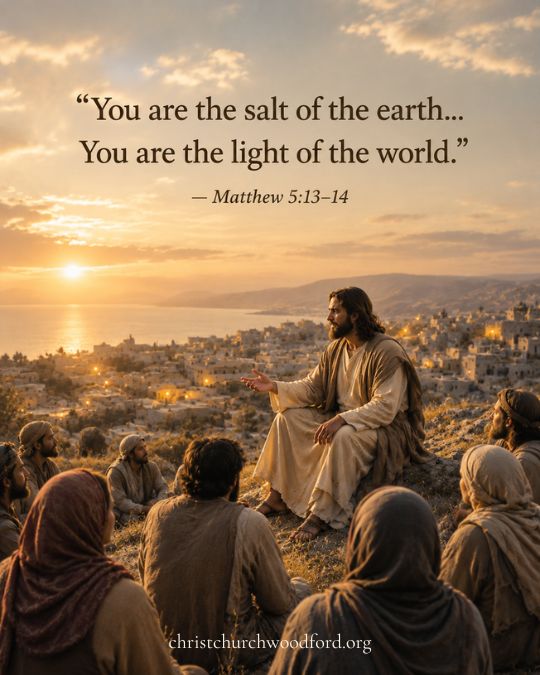
Salt was valuable in the ancient world and was used in several ways, including seasoning and preservation. Jesus warns that salt that loses its saltiness is no longer useful. His followers are meant to remain distinct rather than losing the qualities that identify them with God’s Kingdom.
The image of light makes the point even clearer. Jesus compares His followers to a city on a hill that cannot be hidden and a lamp that is placed where it can give light to everyone in the house.
He then explains the purpose:
“Let your light shine before others, that they may see your good deeds and glorify your Father in heaven.” — Matthew 5:16
The goal is not to draw attention to ourselves, but to live in such a way that our lives point others toward God.
That can happen in ordinary places—at home, at work, in our relationships, and in the way we respond when others treat us badly. Choosing honesty, mercy, forgiveness, and love allows the character of God’s Kingdom to become visible through everyday life.
Being salt and light, then, is about more than being a “good person.” It means allowing the values Jesus teaches in the Sermon on the Mount to become visible in the way we actually live.
Jesus and the Law: Not Destroying, but Fulfilling
In Matthew 5:17, Jesus makes one of the most important statements in the Sermon on the Mount:
“Do not think that I have come to abolish the Law or the Prophets; I have not come to abolish them but to fulfill them.” — Matthew 5:17
Jesus is not rejecting the Old Testament Scriptures. He says He has come to fulfill them. The Law and the Prophets point toward God’s purposes, and Jesus brings those purposes to their fulfillment while revealing the kind of righteousness God desires.
He then makes a striking statement:
“For I tell you that unless your righteousness surpasses that of the Pharisees and the teachers of the law, you will certainly not enter the kingdom of heaven.” — Matthew 5:20
What does that greater righteousness look like?
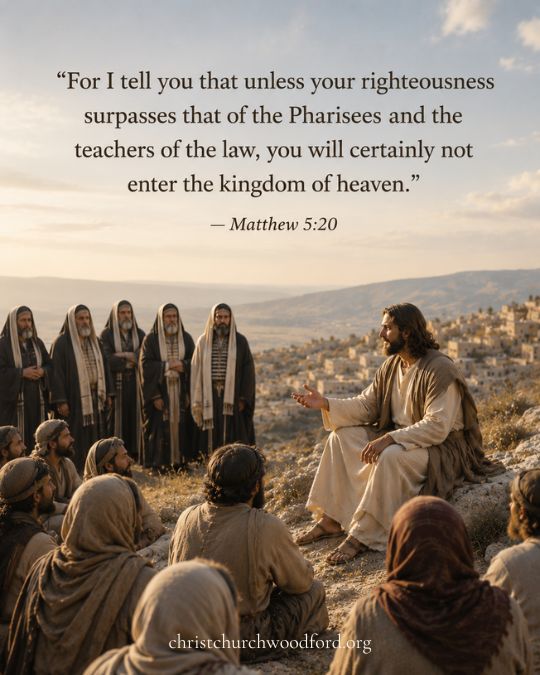
In the teachings that follow, Jesus repeatedly moves beyond outward obedience to address the heart behind our actions. The command against murder leads Him to speak about anger and reconciliation. The command against adultery leads to a warning about lust. He goes on to address divorce, oaths, retaliation, and finally the difficult command to love our enemies.
Again and again, Jesus uses the pattern:
“You have heard that it was said… But I tell you…”
His point is not simply, “Follow more rules.” Jesus exposes how deeply righteousness reaches. God cares not only about whether we avoid murder, for example, but also about the anger and contempt we allow to grow within us.
This is one of the challenging themes running throughout the Sermon on the Mount: true righteousness reaches beyond outward behavior to the heart—our motives, desires, attitudes, and the way we treat other people.
Jesus is not lowering God’s standard. He is showing just how deep it goes.
The Lord’s Prayer: How to Talk to Your Father
When Jesus turns to prayer in Matthew 6, He warns against praying simply to impress others or thinking that many words will make God more likely to listen.
Instead, He reminds His disciples:
“Your Father knows what you need before you ask him.” — Matthew 6:8
Then Jesus gives them the pattern we now call the Lord’s Prayer:
“Our Father in heaven, hallowed be your name. Your kingdom come, your will be done, on earth as it is in heaven. Give us this day our daily bread, and forgive us our debts, as we also have forgiven our debtors. And lead us not into temptation, but deliver us from evil.” — Matthew 6:9–13
The prayer begins with God’s name, Kingdom, and will, then turns to our daily needs: provision, forgiveness, and protection from temptation and evil.
In just a few lines, Jesus gives His followers a pattern of worship, surrender, dependence, forgiveness, and trust. Prayer is not a performance designed to impress God or other people. It is the expression of a genuine relationship with our Father in heaven.
That fits the larger message of the Sermon on the Mount: true righteousness is not merely something others see on the outside; it flows from a heart turned toward God.
Don’t Worry: Your Father Knows What You Need
In Matthew 6:25–34, Jesus turns to another deeply practical issue: worry.
“Therefore I tell you, do not be anxious about your life, what you will eat or what you will drink, nor about your body, what you will put on.” — Matthew 6:25
Jesus points His listeners to the world around them. Birds do not sow or gather into barns, yet their heavenly Father feeds them. The flowers of the field do not labor for their beauty, yet God clothes them with remarkable splendor.
His point is not that we should stop working, planning, or preparing for the future. It is that worry should not rule our lives because our heavenly Father knows what we need.
Jesus brings the teaching to its central point:
“But seek first the kingdom of God and his righteousness, and all these things will be added to you.” — Matthew 6:33
Instead of allowing our needs and fears to become our greatest concern, Jesus calls us to seek God’s Kingdom first and trust Him with what we cannot control.
This connects directly with the Lord’s Prayer just before it: the Father we ask for our “daily bread” is also the Father Jesus tells us to trust with tomorrow.
The Golden Rule: Love That Changes Everything
In Matthew 7:12, Jesus gives us what has become known as the Golden Rule:
“So whatever you wish that others would do to you, do also to them, for this is the Law and the Prophets.” — Matthew 7:12
The principle is simple: treat others the way you would want to be treated. But living it out can be much more challenging.
If we want to be forgiven when we fail, we should be willing to forgive. If we want others to listen to us, we should listen to them. If we hope to receive patience, kindness, and grace, we should extend those same things to others.
Jesus does not tell His followers to wait until someone treats them well before responding with love. His command begins with us: “Do to others…”
That principle can transform marriages, friendships, workplaces, churches, and everyday relationships.
And Jesus ends with an important phrase: “for this is the Law and the Prophets.” The Golden Rule is not an isolated piece of advice. It reflects a central theme running throughout the Sermon on the Mount—a heart shaped by God changes the way we treat other people.

Two Foundations: Building a Life That Lasts
Jesus closes the Sermon on the Mount with a picture of two builders. One builds his house on rock, while the other builds on sand.
“Everyone then who hears these words of mine and does them will be like a wise man who built his house on the rock.” — Matthew 7:24
Both houses eventually face the same storm. Rain falls, floods rise, and winds beat against them. The house built on rock stands; the house built on sand falls.
Jesus explains the difference clearly. The wise builder represents the person who hears His words and puts them into practice. The foolish builder hears the same words but does not act on them.
That makes this a fitting conclusion to the entire Sermon on the Mount. Jesus has taught about mercy, righteousness, reconciliation, love for enemies, prayer, trust in God, and the way we treat others. Now He asks His listeners what they will do with what they have heard.
The Sermon on the Mount is not simply teaching to admire. Jesus calls His followers to build their lives on His words.
The two houses may look similar before the storm comes. The foundation becomes visible when it is tested.
What Is the Main Message of the Sermon on the Mount?
At its heart, the Sermon on the Mount shows us what life in the Kingdom of God looks like. Jesus describes a righteousness that goes deeper than outward religious behavior. It reaches into our hearts—our motives, desires, relationships, priorities, and trust in God.
The Beatitudes show us the character of those who belong to God’s Kingdom: humble, merciful, pure in heart, hungry for righteousness, and willing to make peace. Jesus’ teaching about the Law shows that God cares not only about our actions but also about what is happening within us. His teaching on prayer and worry calls us to trust our heavenly Father, while the Golden Rule shows how that transformed heart should shape the way we treat others.
Again and again, the message moves from the inside outward. A changed heart produces a changed way of living.
But Jesus does not end by simply asking His listeners to understand His teaching. In the story of the two builders, He makes the response clear: the wise person is the one who hears His words and puts them into practice.
The main message of the Sermon on the Mount, then, is not simply “be a better person.” It is a call to live under God’s rule, trust our heavenly Father, pursue true righteousness, love others in ways that reflect His character, and build our lives on the words of Jesus.
The sermon shows us not only what Jesus taught, but what following Him is meant to look like.
Frequently Asked Questions About the Sermon on the Mount
1. Where Is the Sermon on the Mount Found in the Bible?
The Sermon on the Mount is found in Matthew chapters 5–7. It begins with the Beatitudes in Matthew 5 and ends with Jesus’ parable of the wise and foolish builders in Matthew 7.
2. What Is the Main Point of the Sermon on the Mount?
The main point of the Sermon on the Mount is to show what life in God’s Kingdom looks like. Jesus teaches a righteousness that goes beyond outward behavior and reaches the heart, shaping how we relate to God, treat others, respond to enemies, pray, handle worry, and live out our faith.
3. What Are the Most Important Teachings in the Sermon on the Mount?
Some of the best-known teachings include the Beatitudes, salt and light, loving your enemies, the Lord’s Prayer, treasures in heaven, trusting God instead of worrying, the Golden Rule, the narrow gate, and the wise and foolish builders. Together, they show what it means to hear Jesus’ words and put them into practice.
Further Reading
- Lloyd-Jones, D. Martyn.Studies in the Sermon on the Mount. Grand Rapids: Eerdmans, 1984.
- Stott, John R.W.The Message of the Sermon on the Mount (Matthew 5-7): Christian Counter-Culture. The Bible Speaks Today. Downers Grove: InterVarsity Press, 1985.
- Bonhoeffer, Dietrich.The Cost of Discipleship. Translated by R.H. Fuller. New York: Macmillan, 1959.
- Willard, Dallas.The Divine Conspiracy: Rediscovering Our Hidden Life in God. San Francisco: HarperSanFrancisco, 1998.
- Pennington, Jonathan T.The Sermon on the Mount and Human Flourishing: A Theological Commentary. Grand Rapids: Baker Academic, 2017.