What Is the Kingdom of God? Understanding Jesus’ Most Important Message

If you ask most people what Jesus preached about, they will probably say heaven. Get saved, go to heaven when you die. For many people, that is the entire message of Christianity.
But open the Gospels and you will notice something surprising. Jesus rarely spoke about heaven as a future destination. Instead, the theme that appears again and again throughout His ministry is the Kingdom of God.
He opened His ministry with these words:
“The time is fulfilled, and the kingdom of God is at hand; repent and believe in the gospel” (Mark 1:15).
He taught about the Kingdom through parables, instructed His disciples to pray for its coming, and returned to it repeatedly throughout His ministry.
So what did Jesus actually mean when He spoke about the Kingdom of God?
We cannot reduce it to simply being a good person, nor can we think of it merely as a place we go after we die. Jesus said the Kingdom was near. He said it was breaking into the world through His ministry. He even spoke of people entering it in the present.
In this article, we’ll explore what the Kingdom of God means in the Bible, why it was central to Jesus’ message, how a person enters it, and what it means to live under God’s reign today.
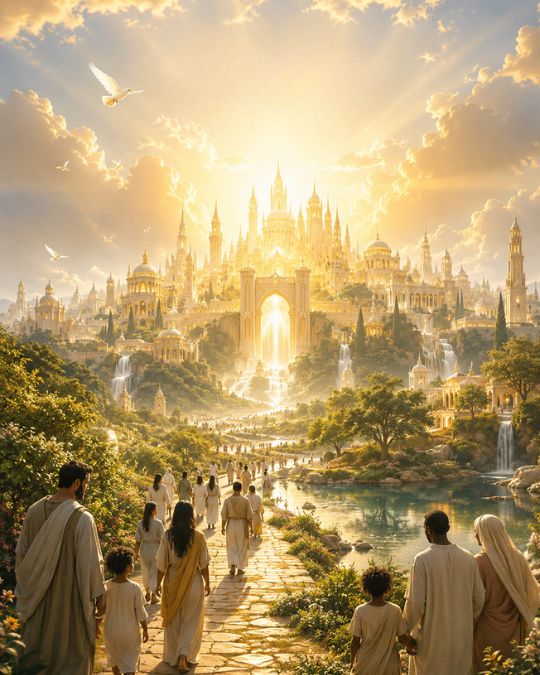
The Kingdom Everyone Was Waiting For
To understand Jesus’ message, we need to understand what people were expecting when He arrived.
By the time Jesus was born, Israel had lived under foreign rule for centuries. Babylon, Persia, Greece, and now Rome had all dominated the land. Roman soldiers patrolled the streets, Roman taxes burdened the people, and Roman authorities held the power of life and death. For a nation that remembered the glory days of David and Solomon, it was a constant reminder that they were no longer free.
Yet Israel held onto a powerful hope. Throughout the Old Testament, God had promised a coming King—a Messiah who would reign on David’s throne and establish an everlasting kingdom. Daniel saw a vision of “one like a son of man” receiving “dominion and glory and a kingdom” (Daniel 7:13–14), while Isaiah spoke of a ruler whose government and peace would never end (Isaiah 9:7).
By the first century, many Jews expected these promises to be fulfilled through a political deliverer who would overthrow Rome and restore Israel’s former glory. They were waiting for a kingdom that could be seen on a map.
So when Jesus began proclaiming, “The kingdom of God is at hand,” people immediately paid attention. Crowds followed Him, some even trying to make Him king by force after He fed the five thousand (John 6:15). Even His disciples struggled to let go of their expectations, asking after His resurrection, “Lord, will you at this time restore the kingdom to Israel?” (Acts 1:6).
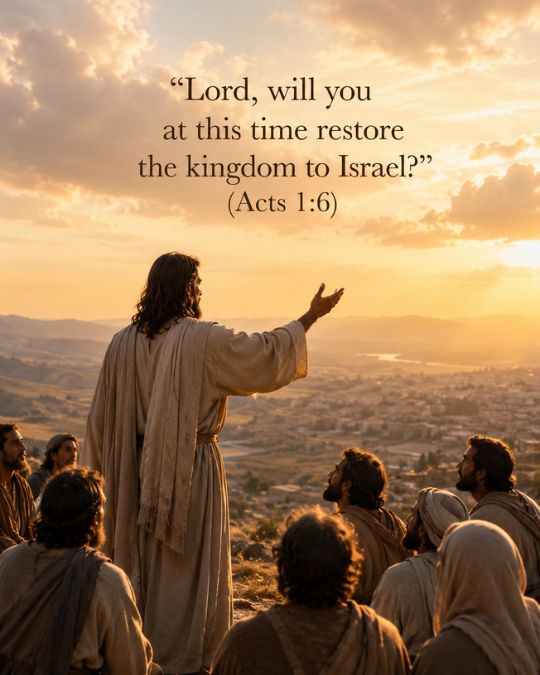
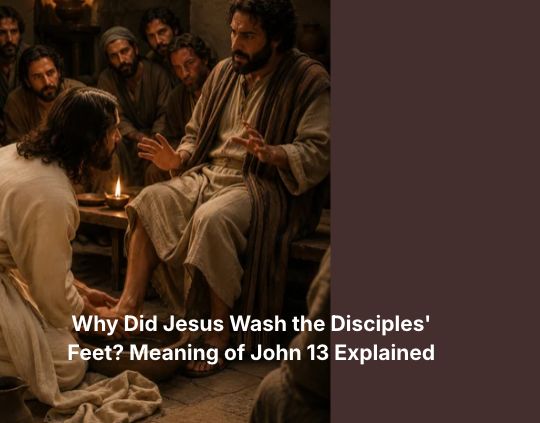
This helps explain why so many people misunderstood Jesus. They expected a conqueror. Instead, they met a King who rode into Jerusalem on a donkey, welcomed sinners, washed feet, and willingly went to the cross.
When Jesus announced the Kingdom, people expected a political revolution. What He brought was something far deeper: God’s reign breaking into human hearts and ultimately into the entire world.
What Is the Kingdom of God?
So let’s get to the heart of it. What is the Kingdom of God?
Here is the simplest way I can say it: the Kingdom of God is God’s rule and reign breaking into the world through Jesus Christ. It is not first a place. It is a reality—the reality of God as King, actively ruling and actively present wherever His authority is received and honored.
The Kingdom Is More Than a Place
Notice what that definition does not say. It does not say the Kingdom of God is heaven. It does not say it is a future event we simply wait for. And it does not describe a piece of geography.
In Matthew’s Gospel, Jesus often used the phrase “Kingdom of Heaven,” while Mark and Luke more commonly used “Kingdom of God.” In most cases, these phrases refer to the same reality: God’s rule and reign through Jesus Christ.
The word basileia in Greek carries the idea of kingship, rule, or reign more than territory. Think of it less like a country on a map and more like a king exercising his authority. Wherever the king’s word is obeyed, that is where his kingdom is found—even if it is only one room, one heart, or one decision.
This is why Jesus told the Pharisees:
“The kingdom of God is not coming in ways that can be observed… for behold, the kingdom of God is in the midst of you” (Luke 17:20–21).
The Pharisees were looking for signs of a visible political kingdom. Jesus pointed them somewhere unexpected. The King was standing right in front of them. The Kingdom was already breaking into the world through His presence and ministry.
That does not mean heaven and the Kingdom are completely unrelated. Heaven is where God’s reign is perfectly realized. But when Jesus spoke about the Kingdom, He was talking about something larger than a future destination. He was announcing that God’s reign had entered history through Him.
The Kingdom Is the Story the Bible Has Been Telling
The Kingdom of God is not a New Testament idea that suddenly appears when Jesus arrives. It is the thread running through the entire Bible.
From the beginning, God created a world where His rule was welcomed and His will was done. Sin disrupted that design as humanity rejected God’s authority and chose its own way instead.
From that moment forward, Scripture tells the story of God’s plan to restore His rightful reign. The calling of Israel, the giving of the Law, the covenant with David, and the promises of the prophets all pointed toward a coming King who would set things right.
When Jesus appeared, He was not starting a new story. He was bringing the old story to its fulfillment.
The Kingdom Arrived Through Jesus
Jesus came announcing that God’s long-promised Kingdom had arrived.
He healed the sick, demonstrating the King’s authority over sickness. He cast out demons, displaying the King’s authority over darkness. He forgave sins, revealing the King’s authority over the deepest problem in the human heart.
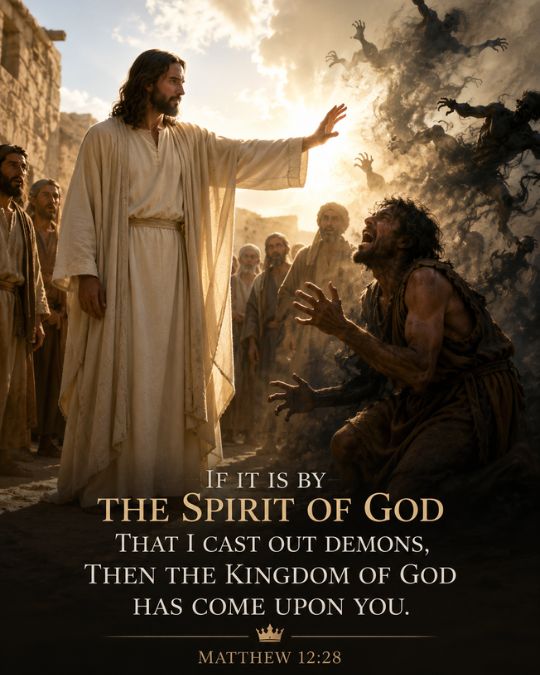
That is why Jesus said:
“If it is by the Spirit of God that I cast out demons, then the kingdom of God has come upon you” (Matthew 12:28).
Every miracle was a sign that the true King had come to reclaim what belonged to Him.
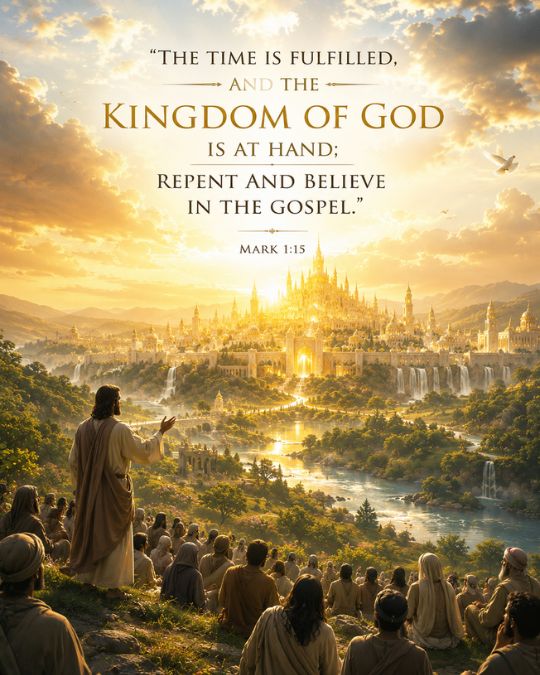
This also explains the urgency of Jesus’ first public message:
“The time is fulfilled, and the kingdom of God is at hand; repent and believe in the gospel” (Mark 1:15).
The Kingdom was no longer merely a future hope. God’s reign had stepped into human history through Jesus Christ, and every person had to decide how they would respond.
So where is the Kingdom of God today?
According to Jesus, it is wherever Christ reigns as King. It was present during His earthly ministry. It is present now wherever people submit to His authority. And one day it will be revealed in its fullness when He returns.
The Kingdom is not ultimately a place you travel to. It is a King you surrender to.
Why Jesus Used Parables to Explain the Kingdom
If the Kingdom of God was so important, you might expect Jesus to have offered a precise theological definition and left it at that. Instead, He told stories.
Again and again, Jesus described the Kingdom through ordinary images—seeds, treasure, pearls, farmers, and fishermen. That was intentional. The Kingdom of God is not merely a concept to understand; it is a reality to recognize and embrace.
One of Jesus’ most famous parables compares the Kingdom to a mustard seed:
“The kingdom of heaven is like a grain of mustard seed that a man took and sowed in his field” (Matthew 13:31–32).
To His listeners, this would have seemed almost ridiculous. People expected a kingdom of power and visible greatness. Jesus pointed to one of the smallest seeds they knew. Yet that tiny seed would grow into something far larger than anyone expected.
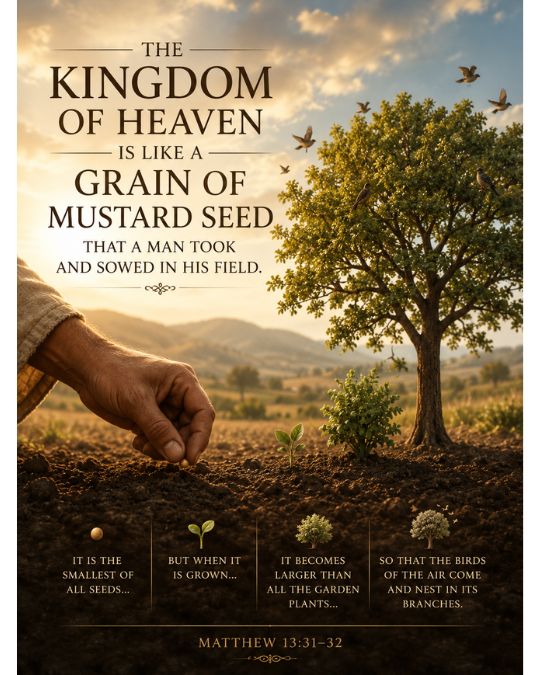
The message was clear: God’s Kingdom often begins in ways the world overlooks. It starts quietly, but it does not stay small.
Jesus also compared the Kingdom to hidden treasure and a pearl of great value (Matthew 13:44–46). In both stories, the person who discovers the treasure gladly gives up everything else to possess it.
That is what happens when someone truly understands who Jesus is. The Kingdom is not merely another priority to add to life. It becomes the treasure worth rearranging life around.
Put these parables together and a pattern emerges. The Kingdom may appear small at first. It may even be overlooked. But once it is discovered, nothing else compares to its value.
This is why Jesus taught through stories. A definition can explain the Kingdom, but a story helps people see it. Jesus was not simply informing people about God’s Kingdom. He was inviting them to enter it.
How Do You Enter the Kingdom of God?
This brings us to the question every honest reader eventually asks: how does a person enter the Kingdom of God? Not just learn about it or admire it from a distance, but actually enter it?
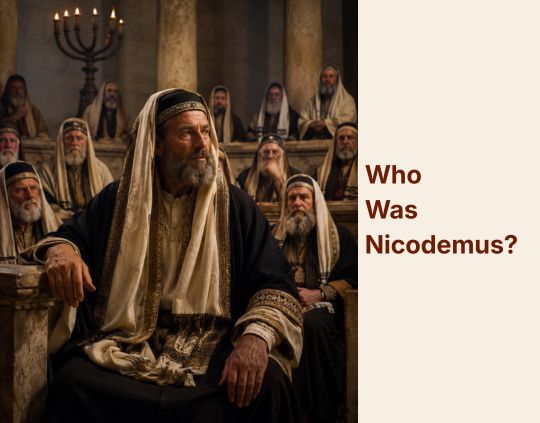
John 3 gives us the clearest answer through the story of a man named Nicodemus. He was a Pharisee, a member of the Jewish ruling council, and a respected teacher of the law. By every outward measure, Nicodemus seemed like the kind of person who already belonged in God’s Kingdom. Yet he came to Jesus at night because he knew something was still missing.
Jesus went straight to the heart of the matter:
“Truly, truly, I say to you, unless one is born again he cannot see the kingdom of God” (John 3:3).
Nicodemus was confused. How could someone be born a second time? But Jesus was not speaking of physical birth. He was describing a spiritual transformation brought about by the Holy Spirit—a new beginning from the inside out.
Jesus continued:
“Unless one is born of water and the Spirit, he cannot enter the kingdom of God” (John 3:5).
The message was startling. Religious knowledge, moral effort, and social standing were not enough. Entry into the Kingdom of God comes through new birth and faith in Jesus Christ.
This is what Christians mean when they speak about being born again. If you’d like to explore that topic further, we’ve written an article dedicated to it.
For now, remember this: the Kingdom of God is not entered through religious performance or personal achievement. It is entered by receiving God’s grace through faith in His Son.
As Jesus later declared:
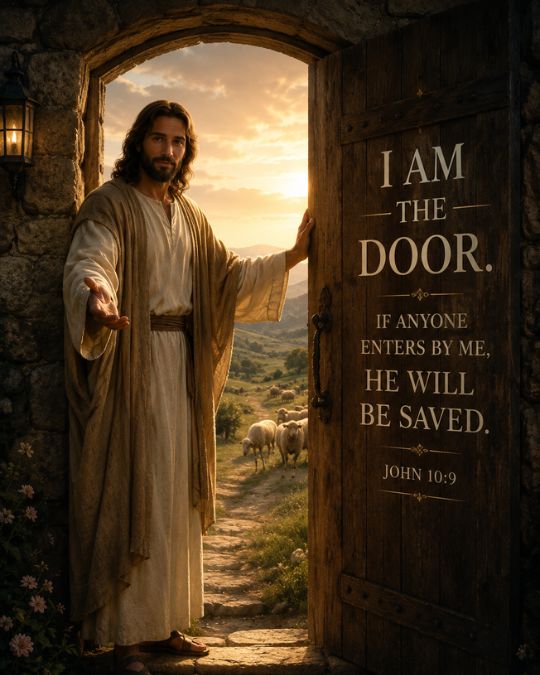
“I am the door. If anyone enters by me, he will be saved” (John 10:9).
The invitation that stood before Nicodemus still stands before us today: be made new, trust the King, and enter the Kingdom He came to establish.
The Kingdom Is Already Here, but Not Yet Complete
There is one more question we need to answer. If the Kingdom of God is really here, why does the world still look so broken?
It is a fair question. If Jesus is King, why is there still suffering? Why do people still get sick? Why do injustice, grief, and death continue to touch our lives?
The Bible’s answer is both simple and profound: the Kingdom has come, but it has not yet come in its fullness.
When Jesus came the first time, He inaugurated God’s Kingdom. Through His life, death, and resurrection, God’s reign broke decisively into human history. Sin was defeated at the cross. Death was conquered through the resurrection. The King had arrived, and His rule had begun.
But Jesus did not remove every effect of sin from the world at that moment. Evil still exists. People still suffer. Creation still groans under the weight of a fallen world.
This is why Christians often describe the Kingdom as “already, but not yet.” It is already here because Christ reigns today. Yet it is not yet complete because we are still waiting for His return.
One day that waiting will end. Jesus promised He would come again, and when He does, He will finish what He started. As Paul wrote:
“Then comes the end, when he delivers the kingdom to God the Father after destroying every rule and every authority and power” (1 Corinthians 15:24).
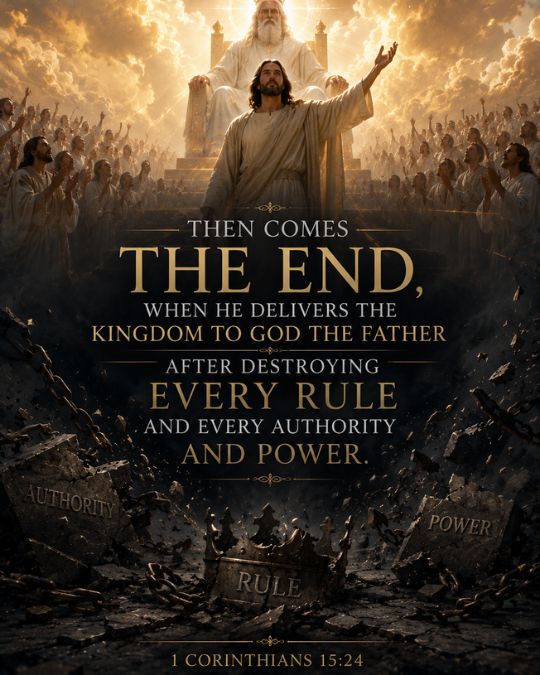
Until that day, believers live between two realities. We have already tasted the blessings of God’s Kingdom, but we still look forward to its full arrival. We know the King has won the victory, even though the final chapter has not yet been written.
That tension is not a weakness in the Christian message. It is the reason Christians can face a broken world with hope. The Kingdom is already here, and the best is still to come.
What Does Living in the Kingdom Look Like Today?
So what does this mean for your Monday morning — your work, your family, your decisions today?
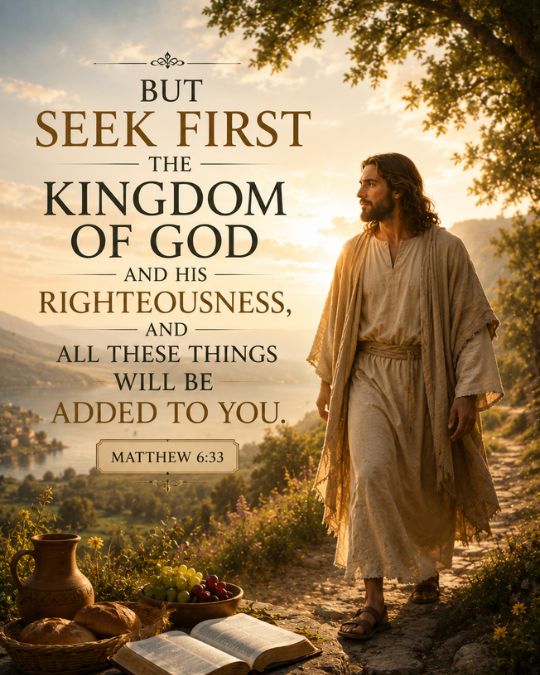
Living in the Kingdom of God starts with seeking God’s will above your own. Jesus put it plainly:
“But seek first the kingdom of God and his righteousness, and all these things will be added to you” — Matthew 6:33.
That word “first” matters. Not seek God’s kingdom when it’s convenient, not after you’ve secured everything else. First — before career, before comfort, before your own plans.
It means trusting the King even when His timing doesn’t match yours. A citizen of the Kingdom does not panic when circumstances look uncertain, because we know who is actually on the throne. And it means loving others the way the King loves — extending grace to people who don’t deserve it, because that is exactly what was extended to us.
This is not complicated theology. It is a daily posture — choosing, again and again, to live as though Jesus really is King over your life, not in theory, but in your actual choices today.
Living Under the Reign of the King
So what did Jesus mean when He talked about the Kingdom of God?
He meant something far bigger than heaven someday, and far more personal than a political revolution. He meant that God’s rightful reign had broken into the world through Him — near enough to touch, small enough to start with a seed, valuable enough to give up everything for.
That Kingdom is still breaking in today, every time someone surrenders their life to Jesus as King. It is not waiting for you somewhere far away. It is at hand. The only question left is the same one Jesus put in front of the crowds two thousand years ago — will you repent, believe, and step into the reign of the King who has already come for you?
FAQ
What is the Kingdom of God in simple terms?
The Kingdom of God is God’s rule and reign over His people and creation, made present through Jesus Christ. It is not a location but the reality of God reigning as King — in heaven, and increasingly on earth, wherever Christ is honored as Lord.
Is the Kingdom of God the same as heaven?
Not exactly. Heaven is part of where God’s reign is fully realized, but the Kingdom of God is broader — it describes God’s active rule, which Jesus said was already present in His ministry on earth, not only a future destination after death.
Why did Jesus preach about the Kingdom of God?
The Kingdom of God was the central theme of Jesus’s ministry because it announced that God’s long-promised reign had arrived through Him. It called people to repentance, faith, and a completely new way of life under His authority.
What does “seek first the Kingdom of God” mean?
In Matthew 6:33, Jesus calls His followers to prioritize God’s rule and righteousness above all other concerns — careers, possessions, security — trusting that God will provide for the rest as we put Him first.
Is the Kingdom of God present now or future?
Both. The Kingdom arrived when Jesus came, but it has not yet arrived in its fullness. That is why Christians still experience suffering, temptation, and death while also experiencing God’s presence, power, and grace. The King has come, but the day is still coming when every knee will bow and God’s Kingdom will be fully revealed.