What Is Repentance? Biblical Meaning and How to Turn Back to God

Adam hid in the garden after he sinned. Jonah booked passage in the opposite direction. Peter denied Jesus three times by a charcoal fire. And a young man we call the prodigal son packed his bags and walked away from his father’s house, convinced life would be better somewhere else.
Four different people. Four different centuries. Four different mistakes. But in every one of these stories, God offered the exact same invitation: come back.
That invitation sits at the center of what the Bible calls repentance.
If you grew up hearing the word “repent” shouted from a street corner or scribbled on a warning sign, you might picture something loud, dramatic, even a little scary. Does repentance mean feeling guilty for the rest of your life? Not according to Scripture. Repentance in the Bible isn’t a guilt trip, and it doesn’t mean feeling guilty on command until someone decides you’ve cried enough.
So what is repentance, really, and what does repentance mean in everyday life? In the simplest terms, it is the moment someone stops running from God and starts walking back toward Him. No theatrics required.
In this article, we’ll walk through the biblical meaning of repentance, why it’s important in Christianity, and how you can genuinely turn back to God, even if you’ve tried and failed before.
What Is Repentance? The Biblical Meaning
The Bible uses two key words for repentance, and understanding them clears up a lot of confusion.
In the Old Testament, the Hebrew word is shuv, and it simply means “to return.” Not “to feel bad.” Not “to punish yourself.” To return, the way you’d turn around and walk back the direction you came from.
In the New Testament, the Greek word is metanoia, which means “a change of mind.” Not a change of mood. A change of direction in how you think, which then reshapes how you live.
Put those two ideas together and you get the real biblical meaning of repentance: it is not merely changing your behavior. It is changing the direction of your heart. It means turning away from sin and turning toward God, with your mind, your will, and your life all moving the same way.
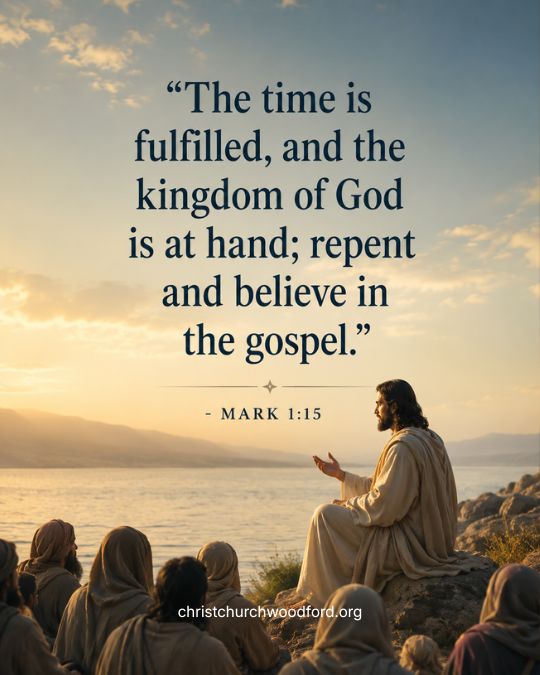
So what does Jesus say about repentance? This is exactly what He preached the moment He began His public ministry:
“The time is fulfilled, and the kingdom of God is at hand; repent and believe in the gospel.” – Mark 1:15
Notice Jesus doesn’t say “feel guilty and believe.” He says repent, turn around, and believe. Repentance and faith come as a package deal. One without the other isn’t the full picture.
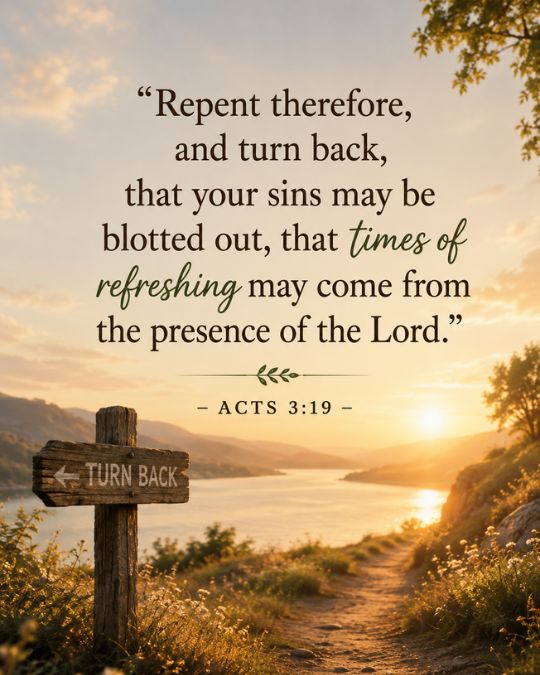
Later, Peter preaches something almost identical in Jerusalem:
“Repent therefore, and turn back, that your sins may be blotted out, that times of refreshing may come from the presence of the Lord.” – Acts 3:19
Read that verse slowly. Peter doesn’t describe repentance as punishment. He describes it as refreshing. That’s the biblical meaning of repentance in a sentence: not a door slamming shut, but a door swinging open.
It’s also worth clearing up repentance vs confession, since people often use the words interchangeably. Confession is admitting what you did. Repentance is turning away from it and walking a new direction. Confession is the first sentence. Genuine repentance is the whole conversation that follows.
Why Is Repentance So Important?
To understand that, you have to go back to the beginning, not to a rulebook, but to a relationship.
When God created Adam and Eve, He didn’t create them simply to obey commandments. He created them to know Him. Genesis describes God walking with them in the garden, a picture of close fellowship between the Creator and His people.
Sin changed everything.
Instead of running toward God, Adam and Eve hid from Him. Shame replaced peace. Fear replaced trust. The relationship that God intended was broken.
That pattern hasn’t changed.
Thousands of years later, people still run from God in different ways. Some become consumed by greed, believing success or money will finally satisfy them. Others chase lust, pride, anger, or envy, only to discover that the things they hoped would bring freedom eventually leave them feeling empty. Some try to silence their guilt by staying busy. Others convince themselves that God could never forgive what they’ve done.
But ask yourself honestly:
When you’ve made choices you regret, who do you run to?
When your heart is weighed down by guilt, where do you look for peace?
When you’ve broken God’s commands, does hiding actually make life better—or does it leave you carrying a burden you were never meant to bear?
This is why repentance is so important. It isn’t God’s way of making us feel worse about our failures. It is His invitation to stop running and come back to the One who loves us.
We see this throughout Jesus’ ministry. When the religious leaders brought a woman caught in adultery before Him, Jesus did not condemn her. After showing her mercy, He told her, “Go, and from now on sin no more” (John 8:11). His forgiveness was never permission to remain in sin. It was an invitation to begin a new life.

That is the heart of repentance.
God is not waiting for people to become perfect before coming to Him. He calls us to come as we are, confess our sin, receive His grace, and walk in a new direction. Repentance is not about losing your freedom—it is about finding the life that sin could never give.
How Do You Truly Repent?
If repentance means turning back to God, what does that actually look like?
The Bible doesn’t give us a formula to repeat or a checklist to complete. Instead, it shows us the lives of ordinary people who failed, were confronted with the truth, and found God’s mercy waiting for them.
Their stories reveal that true repentance is not about becoming perfect overnight. It is about changing the direction of your heart and taking your next step toward God.
1. Begin with an Honest Heart
The journey often begins the way it did for King David.
After committing adultery with Bathsheba and arranging the death of her husband, David carried on with life as though nothing had happened. He was still the king. People still honored him. But beneath the surface, his heart was restless. In Psalm 32, David later described how silence over his sin drained his strength day after day.
Everything changed when the prophet Nathan confronted him. David stopped hiding and simply confessed, “I have sinned against the Lord.” From that confession came one of the most heartfelt prayers in Scripture:
“Have mercy on me, O God, according to your steadfast love; according to your abundant mercy blot out my transgressions.” — Psalm 51:1
David didn’t make excuses or blame his circumstances. He brought his sin honestly before God and trusted God’s mercy more than his own ability to fix what he had broken.
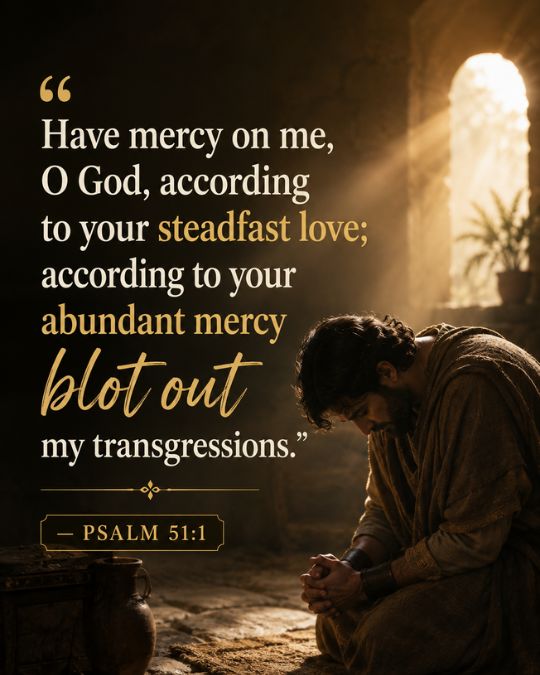
True repentance always begins here—not with pretending we’re better than we are, but with bringing our sins honestly before God. We cannot turn back to Him until we stop hiding from Him.
2. Turn Toward God’s Mercy
Repentance is more than admitting we’ve done wrong. It also means choosing where we will go next.
Peter’s story reminds us of this. On the night Jesus was arrested, Peter denied knowing Him three times. When the rooster crowed, Peter realized what he had done and left weeping bitterly. It seemed like the end of his story.
Instead, after the resurrection, Jesus met Peter on the shore of the Sea of Galilee. Around another charcoal fire, Jesus asked him three times, “Do you love me?”
One question for every denial. Jesus wasn’t trying to shame Peter; He was restoring him. Peter’s greatest failure became the place where he experienced Christ’s grace most deeply.
That is the heart of repentance. It is not simply feeling guilty about sin—it is turning back to the One who can forgive and restore. God’s grace is what gives repentance its hope. Without His mercy, repentance would only leave us in despair. Because of His mercy, repentance becomes the doorway to restoration.
3. Keep Walking with God
Repentance is not a single moment that ends with one prayer. It becomes a new direction for your life.
Like the prodigal son, we may wander, but we know where home is. Like David, we learn to confess instead of hiding. Like Peter, we discover that failure does not have the final word when we return to Christ.
This doesn’t mean Christians never struggle again. We still stumble, and we still need God’s grace every day. But a repentant heart keeps turning back to Him. Over time, that changed direction begins to produce visible fruit—a growing love for God, a desire to obey Him, and a life that increasingly reflects the work of the Holy Spirit.
If you wonder whether you can still come back after failing again, the answer is found throughout the Bible. David came back. Peter came back. The prodigal son came back.
Again and again, Scripture tells the same story: when people genuinely turn back to God, they find that He has been waiting for them all along.
Bible Stories That Teach Us About True Repentance
One of the best ways to understand repentance is to see it lived out. Throughout Scripture, God uses the stories of ordinary people to show what it looks like to turn back to Him. Although their failures were different, each story reveals another aspect of true repentance.
The Prodigal Son Returned Home
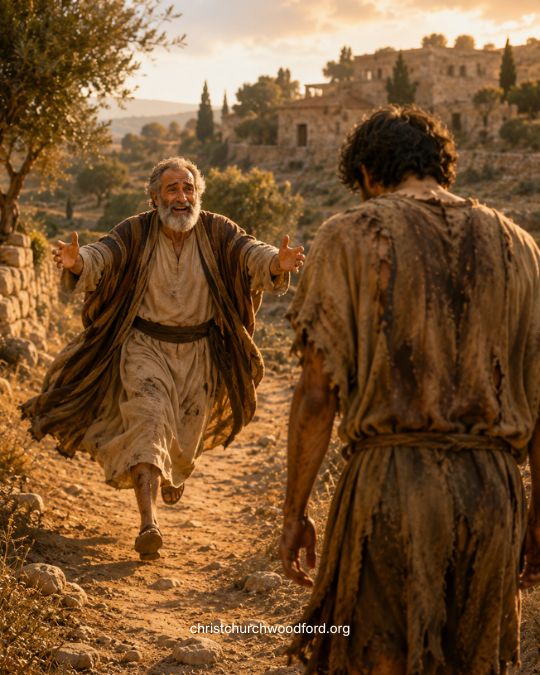
Jesus’ parable of the prodigal son may be the clearest picture of repentance in the Bible. After demanding his inheritance, the younger son wasted everything on reckless living until he found himself feeding pigs and longing to eat their food. In that desperate place, he realized what he had lost and decided to return home.
Expecting only to become a servant, he instead found a father running to embrace him before he could even finish his apology. The story reminds us that repentance is not about earning our way back to God. It is about turning around and discovering that our Heavenly Father is ready to welcome us home.
David Confessed His Sin
After his sin with Bathsheba and the death of Uriah, David tried to hide what he had done. But when the prophet Nathan confronted him, David admitted his guilt instead of making excuses. His prayer in Psalm 51 became one of the Bible’s greatest examples of sincere repentance.
David’s story reminds us that God is not looking for perfect people. He desires humble hearts that are willing to confess their sins and seek His mercy.
Peter Was Restored by Jesus
Peter denied knowing Jesus three times on the night of His arrest. Overcome with sorrow, he wept bitterly after realizing what he had done. Yet the story did not end there.
After His resurrection, Jesus lovingly restored Peter and entrusted him with caring for His people. Peter’s life shows that repentance is not the end of our story. Through God’s grace, failure can become the beginning of restoration.
Nineveh Turned Back to God
When Jonah finally preached God’s warning, the people of Nineveh responded with repentance. From the king to the ordinary citizens, they humbled themselves and turned from their evil ways.
Their response demonstrates that God’s mercy extends not only to individuals but also to entire communities willing to turn back to Him.
Zacchaeus Showed the Fruit of Repentance
Zacchaeus was a wealthy tax collector known for exploiting others. After meeting Jesus, however, his heart changed. He willingly gave half of his possessions to the poor and repaid those he had cheated four times over.
His story reminds us that genuine repentance produces visible change. It is not only expressed in words but also seen in the way we live and treat other people.
God Is Still Calling People to Return
If you’ve read this far, maybe you’re asking how do I return to God after drifting away, carrying some guilt, some regret, or simply a quiet desire to get closer to Him again. Here’s the truth worth holding onto: turning back to God was never about earning His love. It’s about responding to a love He already showed you first, through Jesus.
Throughout Scripture, God never brushed sin aside, but He also never turned away anyone who came to Him honestly. From the prodigal son to Peter, from David to an entire city in Nineveh, God’s mercy met every person who chose to turn back.
Wherever you are today, however many times you’ve tried and failed before, the invitation hasn’t changed.
Return to me.
That door has never been locked.
Frequently Asked Questions
What Does the Bible Say About Repentance?
The Bible teaches that repentance means turning away from sin and returning to God. Jesus began His ministry by saying, “Repent and believe in the gospel” (Mark 1:15), and the apostles called people to repent so their sins could be forgiven (Acts 3:19). Throughout Scripture, repentance is presented not as earning God’s love, but as responding to His grace with a changed heart.
What is the difference between repentance and regret?
Regret is feeling bad about the consequences you’re facing. Repentance is a deliberate change of direction toward God. You can regret getting caught without ever repenting, and you can repent without feeling much emotional regret at all.
Does repentance mean you will never sin again?
No. Repentance means your direction has changed, not that you’ll never stumble again. Even mature believers keep needing to turn back to God throughout their lives; what matters is the pattern of returning, not perfection.
Can Christians repent more than once?
Yes, absolutely. Peter needed restoration after denying Jesus three times, and Scripture never suggests there’s a limit. Repentance is meant to be an ongoing rhythm, not a one-time event you’re only allowed once.
Does repentance come before forgiveness?
Biblically, repentance is how a person receives the forgiveness God has already made available through Jesus. It’s less like paying a price and more like opening a gift that was already offered.
What did Jesus teach about repentance?
Jesus opened His entire ministry with the call to repent and believe in the gospel, and He told stories like the prodigal son to show what God’s response looks like: mercy that runs to meet you before you even finish your apology.