Tree Symbolism in the Bible: What Trees Represent Throughout Scripture

Open your Bible at almost any page, and you will not have to read far before you encounter a tree. From the Garden of Eden to the New Jerusalem, trees appear throughout Scripture at some of its most significant moments. They mark places where God meets His people, illustrate spiritual truths, and even point forward to Jesus Christ.
Trees are far more than part of the scenery. Throughout Scripture, God uses them to reveal truths about life, faith, blessing, judgment, and redemption. Because trees were such a familiar part of everyday life, they became powerful illustrations of God’s relationship with His people.
So, what does a tree symbolize in the Bible? Depending on the context, a tree can represent life, wisdom, spiritual growth, fruitfulness, strength, or judgment. Some of the Bible’s best-known passages—including the Tree of Life, the fig tree, the olive tree, and even the cross—become richer when we understand their symbolism.
In this guide, we’ll explore biblical meaning of trees, examine the most important trees found in Scripture, and discover what these timeless images teach us about God’s plan of salvation and the Christian life.
Why Are Trees Important in the Bible?
Before we explore what trees represent in the Bible, it helps to understand how central trees were to life in the ancient world. In Israel and the surrounding lands, trees provided food, shade, building materials, medicine, and fuel.
Olive trees produced oil for cooking, light, and anointing. Fig trees provided fruit, while cedars supplied timber for homes and the temple. People also gathered beneath trees to rest, meet, and remember important events.
Because trees were woven into everyday life, God repeatedly used them to teach spiritual truth. Throughout Scripture, trees become vivid illustrations of people, kingdoms, blessing, judgment, and eternal life. These images are not merely poetic—they help reveal God’s character and His relationship with His people in ways every generation can understand.
The Tree as a Symbol of Life
One of the clearest examples of tree symbolism in the Bible is the Tree of Life. It first appears in the Garden of Eden, where God placed both the Tree of Life and the Tree of the Knowledge of Good and Evil at the centre of the garden.
“And out of the ground the Lord God made to spring up every tree that is pleasant to the sight and good for food. The tree of life was in the midst of the garden, and the tree of the knowledge of good and evil.” – Genesis 2:9 (ESV)
The Tree of Life represents life in its fullest sense—life lived in perfect fellowship with God, free from sin and death. After Adam and Eve disobeyed God, they were driven out of the garden and no longer had access to the Tree of Life. Humanity’s relationship with God had been broken, and death entered the world.
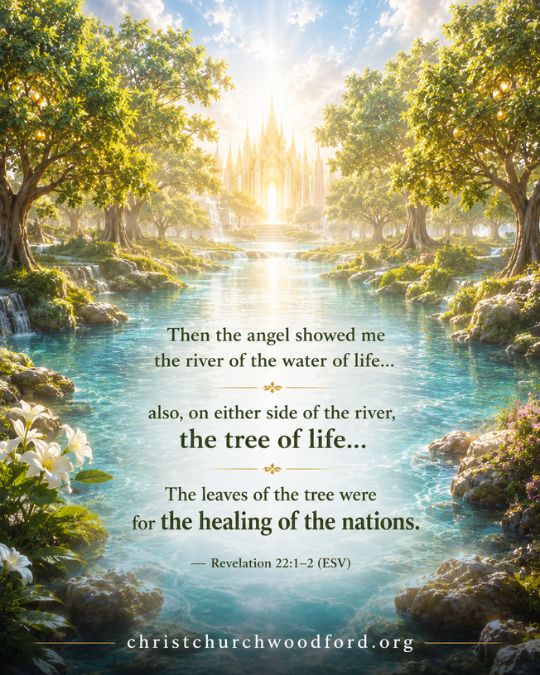
The Tree of Life appears again at the very end of the Bible. In John’s vision of the New Jerusalem, it stands beside the river of life, bearing fruit each month and bringing healing to the nations.
“Then the angel showed me the river of the water of life… also, on either side of the river, the tree of life… The leaves of the tree were for the healing of the nations.” – Revelation 22:1–2 (ESV)
From Genesis to Revelation, the Tree of Life reminds us that God desires His people to enjoy eternal life in His presence. What was lost through humanity’s sin is ultimately restored through God’s plan of redemption—a theme that reaches its fulfillment in Jesus Christ.
Trees as Symbols of Faith and Spiritual Growth
One of the most beautiful examples of tree symbolism in the Bible is the way Scripture compares a faithful believer to a healthy, flourishing tree. Just as a tree depends on deep roots for life and strength, God’s people are called to remain firmly rooted in Him.
Psalm 1 gives one of the clearest pictures of this truth.
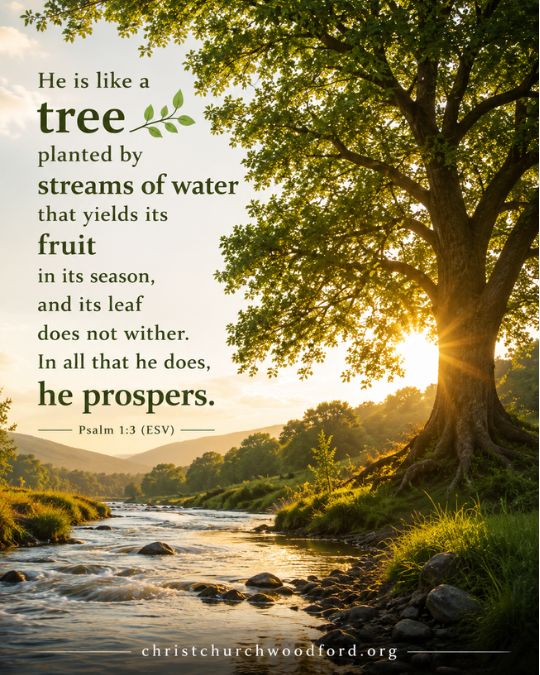
“He is like a tree planted by streams of water that yields its fruit in its season, and its leaf does not wither. In all that he does, he prospers.” – Psalm 1:3 (ESV)
The image is both simple and powerful. Trees do not grow overnight or produce fruit instantly. They grow steadily through changing seasons, sending their roots deep enough to find water even during times of drought. In the same way, spiritual maturity develops through a life that remains rooted in God’s Word rather than depending on changing circumstances.
Jeremiah echoes this same picture when describing those who trust in the Lord.
“Blessed is the man who trusts in the Lord… He is like a tree planted by water… and does not fear when heat comes, for its leaves remain green… nor does it cease to bear fruit.” – Jeremiah 17:7–8 (ESV)
Notice that the heat and drought still come. God’s people are not promised an easy life, but they are promised a source of strength that endures through every season. The deeper the roots, the stronger the tree. Likewise, a believer whose life is firmly rooted in God can remain faithful even in times of difficulty.
Trees Symbolize Spiritual Fruitfulness
Another important aspect of tree symbolism in Scripture is spiritual fruitfulness. Throughout Scripture, a healthy tree represents a healthy spiritual life. Just as a good tree naturally produces good fruit, a life rooted in God will display the evidence of genuine faith.
Jesus used this picture during the Sermon on the Mount:
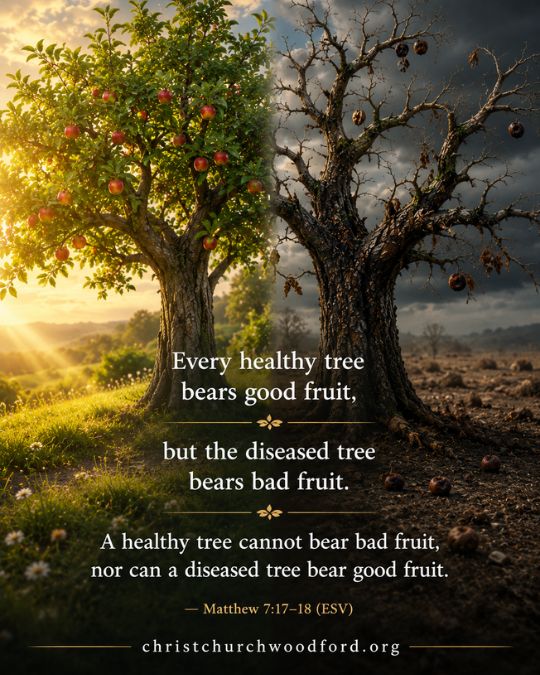
“Every healthy tree bears good fruit, but the diseased tree bears bad fruit. A healthy tree cannot bear bad fruit, nor can a diseased tree bear good fruit.” – Matthew 7:17–18 (ESV)
The fruit does not make the tree healthy—it reveals what the tree already is. In the same way, our words, actions, and character reveal the condition of our hearts. God is not looking for outward religion alone but for lives that have been truly transformed.
Jesus expands this image in John 15 by describing Himself as the True Vine and His followers as the branches. Although the imagery shifts from a tree to a vine, the principle remains the same: life flows from the source.
“I am the vine; you are the branches. Whoever abides in me and I in him, he it is that bears much fruit, for apart from me you can do nothing.” – John 15:5 (ESV)
The fruit of the Spirit—love, joy, peace, patience, kindness, goodness, faithfulness, gentleness, and self-control—is not something believers produce through human effort alone. It is the natural result of remaining connected to Christ, the One who gives life and enables lasting spiritual growth.
Trees Can Symbolize Nations and Kingdoms
Another aspect of tree symbolism in the Bible is that great trees sometimes represent nations, kingdoms, and powerful rulers. Just as a large tree provides shade and shelter, a mighty kingdom can influence and protect many people. Yet Scripture also reminds us that no earthly power lasts forever.
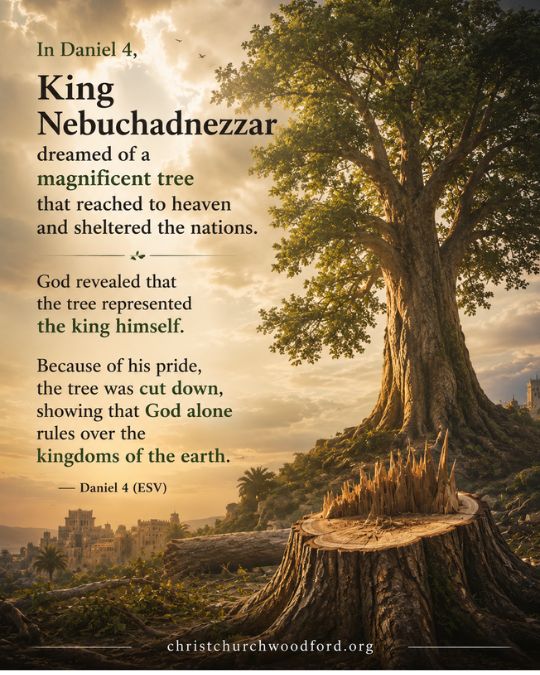
In Daniel 4, King Nebuchadnezzar dreamed of a magnificent tree that reached to heaven and sheltered the nations. God revealed that the tree represented the king himself. Because of his pride, the tree was cut down, showing that God alone rules over the kingdoms of the earth.
The prophets used similar imagery. Ezekiel compared Assyria and Egypt to towering cedars that were eventually brought low because of their arrogance (Ezekiel 31). These passages remind us that even the greatest empires remain under God’s authority.
Throughout the Bible, trees symbolize not only life and blessing but also the rise and fall of human kingdoms. Every kingdom that exalts itself above God will one day pass away, but God’s eternal kingdom will stand forever.
Common Trees and Their Symbolism in the Bible
While the Bible uses trees to communicate broad spiritual truths, certain trees carry unique symbolic meanings. Their significance often comes from how they were used in everyday life, the events associated with them, or the lessons God taught through them.
The table below provides a quick overview of some of the most significant trees found in the Bible. We’ll then explore each one in greater detail and discover what it teaches about God’s character, His people, and His plan of redemption.
| Tree | Primary Symbolism | Key Bible References |
| Tree of Life | Eternal life, God’s presence, restoration | Genesis 2–3; Revelation 22 |
| Olive Tree | Blessing, covenant, peace, God’s people | Psalm 52:8; Jeremiah 11; Romans 11 |
| Fig Tree | Israel, spiritual fruitfulness, judgment | Mark 11:13–14; Luke 13:6–9 |
| Cedar of Lebanon | Strength, majesty, humility before God | Psalm 92:12; Ezekiel 31; Isaiah 2 |
| Palm Tree | Victory, righteousness, flourishing | Psalm 92:12; John 12:13; Revelation 7:9 |
| Oak Tree | Strength, endurance, covenant | Genesis 35:4; Isaiah 61:3 |
Trees as Symbols of Judgment
While trees in Scripture often represent life, blessing, and spiritual growth, they can also symbolize judgment. Throughout the Bible, a fruitless or fallen tree serves as a warning that God holds people accountable for how they respond to Him.
John the Baptist used this imagery as he called Israel to repentance before the beginning of Jesus’ ministry.
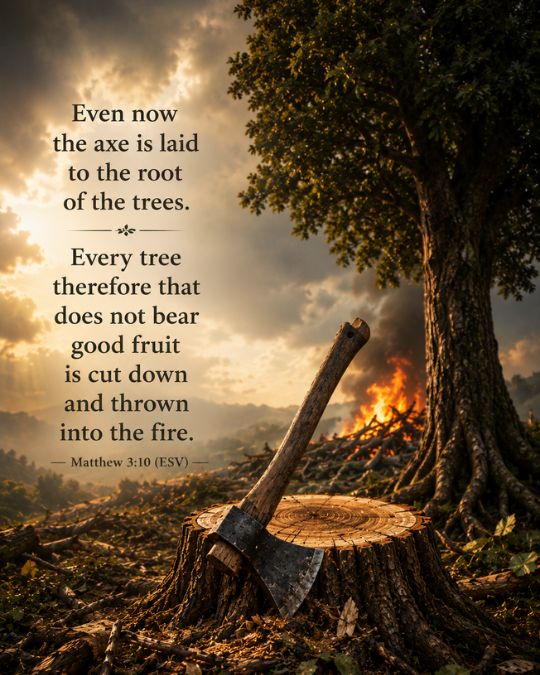
“Even now the axe is laid to the root of the trees. Every tree therefore that does not bear good fruit is cut down and thrown into the fire.” – Matthew 3:10 (ESV)
The warning was not about literal trees but about lives that appeared healthy yet produced no spiritual fruit. The image is striking because the axe is already at the root, emphasizing that God’s judgment is certain for those who continually reject Him.
Jesus echoed the same message in the parable of the barren fig tree (Luke 13:6–9). Although the tree was given more time to bear fruit, it would not remain in the vineyard forever if it continued to be barren. God’s patience provides opportunity for repentance, but His patience should never be mistaken for indifference.
Together, these passages remind us that tree symbolism in the Bible includes both God’s blessing and His judgment. The same God who delights in fruitful trees also calls His people to lives marked by genuine faith and obedience.
The Cross: The Most Important “Tree” in the Bible
No study of tree symbolism in the Bible would be complete without the cross. While many trees in Scripture point to important spiritual truths, the cross reveals their ultimate fulfillment. The New Testament itself repeatedly refers to Christ’s cross as a “tree.”
“The God of our fathers raised Jesus, whom you killed by hanging him on a tree.” – Acts 5:30 (ESV)
“Christ redeemed us from the curse of the law by becoming a curse for us—for it is written, ‘Cursed is everyone who is hanged on a tree.'” – Galatians 3:13 (ESV)
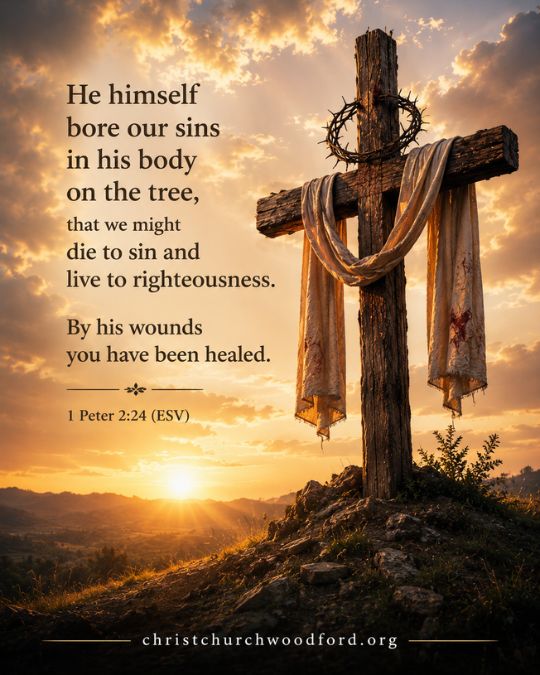
“He himself bore our sins in his body on the tree, that we might die to sin and live to righteousness. By his wounds you have been healed.” – 1 Peter 2:24 (ESV)
The Bible begins with a tree in the Garden of Eden, where Adam and Eve’s disobedience brought sin and death into the world. It reaches its turning point at another tree—the cross—where Jesus willingly bore the curse of sin so that humanity could be reconciled to God.
Because of Christ’s sacrifice, the story does not end with exile from Eden. It ends with the Tree of Life standing once again in the New Jerusalem, freely available to all who belong to Him (Revelation 22). What was lost through humanity’s sin has been restored through Jesus Christ. From Genesis to Revelation, the story of the Bible is a story of God’s redeeming grace, and the cross stands at its very center.
What Tree Symbolism Teaches Christians Today
Biblical symbolism is never meant to be merely interesting information. Throughout Scripture, God uses trees to reveal truths that shape how we live. As we reflect on significance of trees in the Bible, several practical lessons stand out for every believer.
Stay Rooted in God
The image of a tree planted by streams of water in Psalm 1 and Jeremiah 17 reminds us to cultivate deep roots in God. Roots are hidden, but they are what keep a tree standing during storms and seasons of drought.
Likewise, a strong spiritual life is built through a steady relationship with God, not merely outward appearances.
Bear Fruit with Patience
Trees do not grow overnight, and neither does spiritual maturity. God works patiently in the lives of His people, producing lasting fruit over time. If you feel discouraged because your growth seems slow, remember that some of God’s greatest work happens beneath the surface before it becomes visible.
Trust God’s Pruning
Jesus teaches in John 15 that the Father prunes fruitful branches so they can bear even more fruit. Pruning is often painful because it involves letting go of things we value. Yet God never wastes our trials. Even difficult seasons can become part of His work of making us more like Christ.
Keep the Cross at the Center
Every major theme of tree symbolism in the Bible ultimately points to Jesus Christ. The Tree of Life in Eden, the many symbolic trees throughout Scripture, and the promise of restoration all find their fulfillment at the cross, where Christ bore our sin and opened the way to eternal life.
Live with Eternal Hope
The Bible ends where God’s plan reaches its fulfillment—with the Tree of Life in the New Jerusalem (Revelation 22). This reminds believers that our future is secure in Christ. What was lost through sin will one day be fully restored, giving us hope to remain faithful no matter what challenges we face today.
Frequently Asked Questions About Tree Symbolism in the Bible
Why does God use trees as symbols in the Bible?
Trees were an important part of everyday life in biblical times. They provided food, shade, wood, and shelter, making them familiar illustrations that God used to teach spiritual truths about life, faith, blessing, judgment, and His relationship with His people.
Why are so many important events in the Bible connected to trees?
From the Garden of Eden to the cross of Christ and the Tree of Life in Revelation, trees mark key moments in God’s plan of redemption. They help connect the Bible’s story from creation and humanity’s fall to salvation through Jesus Christ and the promise of eternal life.
Are all trees in the Bible symbolic?
No. Many trees mentioned in Scripture are simply part of the historical setting. However, in many passages God intentionally uses trees as symbols to teach spiritual truths. The context determines whether a tree carries symbolic meaning.
Why is the cross sometimes called a tree?
Several New Testament passages, including Acts 5:30, Galatians 3:13, and 1 Peter 2:24, refer to Jesus being hung on a “tree.” This language connects Christ’s sacrifice with the Old Testament and emphasizes that He bore the curse of sin so believers could receive eternal life.
What is the difference between the Tree of Life and the Tree of the Knowledge of Good and Evil?
The Tree of Life represents eternal life and fellowship with God, while the Tree of the Knowledge of Good and Evil represents humanity’s choice to obey or reject God. Together, these two trees frame the opening chapters of Genesis and set the stage for the Bible’s story of redemption.
The Enduring Message of Tree Symbolism in the Bible
The Bible begins with a tree. It ends with a tree.
Between the garden of Eden and the new Jerusalem, trees appear at nearly every significant moment in the story of God’s relationship with humanity — marking life and death, blessing and judgment, covenant and restoration.
They are symbols of who we are: people who need roots, who are meant to bear fruit, who can flourish or wither depending on what — or who — we are connected to. They are symbols of what God does: plant, tend, prune, restore, and ultimately redeem.
Every tree in Scripture is pointing somewhere. It is pointing to Christ — the one who bore our curse on a tree so that we might one day stand beside the Tree of Life and eat freely from it again. That is the story. And we are still in it.
Stay rooted. Keep bearing fruit. And do not lose sight of where this is all heading.