Light Symbolism in the Bible: Presence, Truth, and God’s Glory

From the very first words of Genesis to the final vision of Revelation, light appears as one of the most powerful and consistent symbols throughout Scripture. It’s not accidental. Light symbolism in the Bible reveals something essential about who God is and how He relates to His creation.
When we ask what does light symbolize in the Bible, we discover it represents God’s presence, His truth, His holiness, His salvation, and His hope. Light isn’t just a decorative image Scripture uses occasionally—it’s woven into the very fabric of how God makes Himself known.
And all of this light imagery finds its ultimate fulfillment in Jesus Christ. He didn’t just speak about light—He claimed to be the light. Understanding the biblical meaning of light helps us grasp the depth of what Christ accomplished and what it means for us to walk in His light today.
What Does Light Symbolize in the Bible?
If you’re looking for a direct answer about the spiritual meaning of light in Scripture, here’s what you need to know: light consistently represents several core realities throughout the Bible.
The meaning of light in the Bible includes God’s presence—His nearness, His glory, His dwelling with His people. It represents truth and revelation, the unveiling of what was hidden or unknown.
Light symbolizes guidance and wisdom, showing us the path we should take. It speaks of holiness and purity, the untainted perfection of God’s character. Light also embodies salvation and hope, the promise of rescue and restoration. And finally, it demonstrates victory over darkness—the triumph of good over evil, life over death.
When Scripture declares that God is light and in Him is no darkness at all (1 John 1:5), it’s telling us something fundamental about His nature. The God is light meaning reveals that He is absolutely good, completely holy, and utterly trustworthy. There’s no shadow side to God, no hidden corruption, no moral compromise.
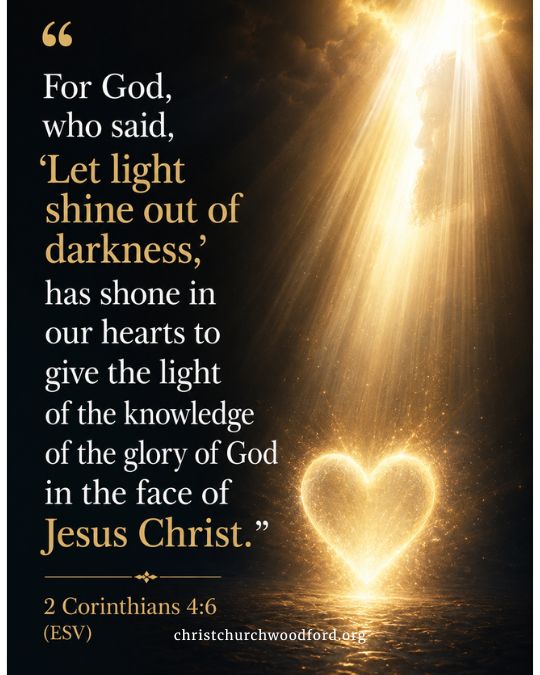
“For God, who said, ‘Let light shine out of darkness,’ has shone in our hearts to give the light of the knowledge of the glory of God in the face of Jesus Christ.” — 2 Corinthians 4:6 (ESV)
Light as God’s Presence
Creation Begins With Light
The divine light symbolism begins at the very beginning. “Let there be light” aren’t just the first words God speaks—they’re the first act of creation itself.
Before the sun, moon, or stars existed, God called light into being. This isn’t primarily about photons and wavelengths. It’s about the glory of God light bringing order out of chaos, life out of void, purpose out of emptiness.
Light represented God’s authority to speak and have things come into existence. It demonstrated His power to separate and define—light from darkness, day from night, good from evil. The God’s light meaning in the Bible starts here: God is the source of all life, all clarity, all goodness.
The Pillar of Fire Leading Israel
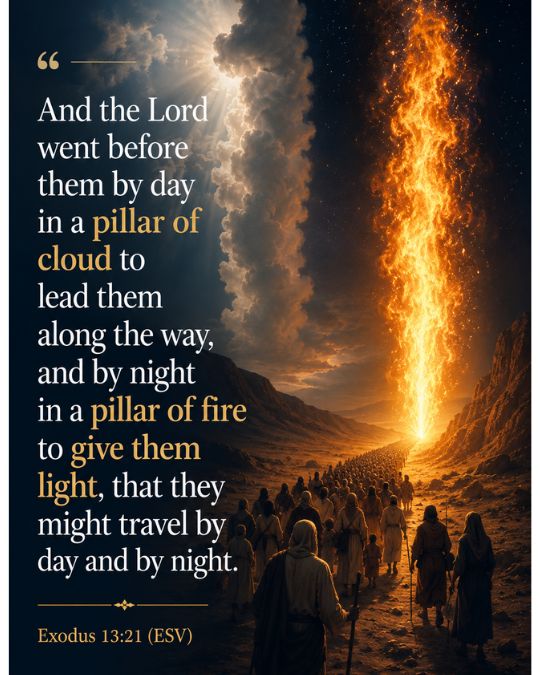
When God rescued Israel from Egypt, He didn’t just send them into the wilderness alone. He went with them—visibly, constantly—as a pillar of cloud by day and a pillar of fire by night. That pillar of fire was God’s presence made visible. It was protection, guidance, and assurance all wrapped into one blazing column.
Think about what this meant for those Israelites stumbling through unfamiliar terrain. In the darkness, when fear and uncertainty pressed in, God was there as light. The glory of God light didn’t just illuminate their path—it was their path. Where God’s light led, they could follow safely.
“And the Lord went before them by day in a pillar of cloud to lead them along the way, and by night in a pillar of fire to give them light, that they might travel by day and by night.” — Exodus 13:21 (ESV)
Moses Reflecting God’s Glory
After Moses spent time in God’s presence on Mount Sinai, something remarkable happened—his face began to shine. The Israelites could barely look at him. Moses had been so close to the glory of God light that it literally rubbed off on him.
This is the nature of light: it reflects. Moses didn’t generate his own glow—he reflected God’s holiness. And here’s what matters for us: we’re called to do the same thing.
When we spend time in God’s presence, when we absorb His Word and align ourselves with His character, we begin to reflect His light too. Not in a literal, visible way perhaps, but in how we live, love, and speak truth.
Jesus as the Light of the World
Why Jesus Called Himself the Light
When Jesus declared, “I am the light of the world,” He wasn’t speaking poetically. He was making a staggering claim about His identity and mission.
The Jesus the light of the world meaning goes straight to the heart of the gospel: Jesus is the one who reveals God, exposes truth, and rescues humanity from spiritual darkness.
Before Christ, humanity stumbled in spiritual blindness. We couldn’t see God clearly. We couldn’t see ourselves honestly. We couldn’t see the path to salvation. Jesus light symbolism explained reveals this: He came to open blind eyes, to show us the Father, to illuminate the way to eternal life. The light of the world Bible meaning is that Jesus doesn’t just point to the truth—He is the truth.
When you follow Jesus, you’re not groping around in the dark hoping you’re heading the right direction. You’re walking behind the One who knows the way because He is the way.
Light That Darkness Cannot Defeat
John’s Gospel opens with one of the most beautiful statements in all of Scripture: “The light shines in the darkness, and the darkness has not overcome it.” There’s profound hope in those words. Evil tried its worst against Jesus—betrayal, mockery, torture, execution. The darkness gathered all its forces. And the light kept shining.
The resurrection is the ultimate proof that light wins. Death couldn’t hold Jesus. Sin couldn’t stain Him. Darkness couldn’t extinguish Him. This is why the Jesus light symbolism carries such weight—it’s not just inspirational imagery. It’s the declaration that hope overcomes despair, life conquers death, and God’s purposes cannot be thwarted.
“The light shines in the darkness, and the darkness has not overcome it.” — John 1:5 (ESV)
The Transfiguration and Heavenly Glory
On the mountain of transfiguration, Peter, James, and John got a glimpse of something extraordinary. For a brief moment, Jesus’ appearance changed. His face shone like the sun. His clothes became dazzling white. The disciples were seeing Jesus’ divine glory breaking through His human form—radiant light Bible meaning on full display.
This wasn’t Jesus gaining something He didn’t have. This was Jesus allowing His disciples to see what had been true all along. He is the divine glory light in Scripture made flesh. The glory of God that filled the tabernacle, that led Israel through the wilderness, that shone on Moses’ face—all of it found its fullness in Christ.
Light as Truth, Wisdom, and Guidance
God’s Word as a Lamp
The psalmist wrote that God’s Word is a lamp to our feet and a light to our path. This lamp symbolism in the Bible is deeply practical. Ancient lamps didn’t light up the whole road ahead—they illuminated just the next few steps. That’s often how God’s guidance works too.
We want floodlights. We want to see the entire journey mapped out. God often gives us a lamp—enough light for the next faithful step. Scripture doesn’t answer every question we might have about the future, but it gives us what we need to walk wisely today. The spiritual light meaning here is that God’s Word provides reliable guidance even when we can’t see the full path ahead.
Light Reveals What Is Hidden
Light has a way of exposing what was hidden in darkness. Turn on the lights in a room and suddenly you see the dust, the clutter, the things that need attention. The walking in the light meaning includes this uncomfortable truth: God’s light reveals our sin, our blind spots, our need for grace.
But here’s what matters: God doesn’t shine His light on our mess to shame us. He does it to heal us. You can’t address what you won’t acknowledge. Light brings conviction, yes—but conviction leads to confession, and confession opens the door to cleansing. God’s light doesn’t just reveal truth about us; it provides the wisdom and power to change.
Finding Direction in Dark Seasons
We all face seasons when the path ahead feels unclear. Anxiety clouds our judgment. Confusion paralyzes our decision-making. We’re waiting for answers that don’t come. In those moments, the spiritual light meaning becomes deeply personal. God’s light doesn’t always remove the uncertainty, but it assures us of His presence in the middle of it.
Sometimes God’s guidance is simply, “I’m here. Keep walking with Me.” The lamp symbolism Bible teaches us to trust the light we have rather than demanding more clarity than God has chosen to give. He promises to guide us, but He doesn’t promise to satisfy our curiosity about every detail of the future.
“For the commandment is a lamp and the teaching a light, and the reproofs of discipline are the way of life.” — Proverbs 6:23 (ESV)
Light vs Darkness in the Bible
Darkness as Sin and Separation
When we talk about light vs darkness in the Bible, we’re not just discussing literal day and night. Darkness symbolism in Scripture represents everything opposed to God—sin, evil, rebellion, spiritual blindness, hopelessness. It’s the state of being separated from God, unable to see truth, stumbling toward destruction.
The spiritual darkness vs light contrast runs through the entire biblical story. Darkness is where lies flourish and sin hides. It’s the realm of deception, where people “call evil good and good evil.” But here’s what we need to understand: darkness isn’t just moral failure. It’s a power—a kingdom opposed to God’s kingdom of light.
Paul writes that we were once darkness, not just in darkness. Sin wasn’t something we did occasionally—it defined us. We were children of the night, living in rebellion, blind to God’s truth. That’s the weight of what Christ rescued us from.
Believers Called to Walk in Light
But now, Paul continues, you are light in the Lord. Not just enlightened—you are light. Your identity has fundamentally changed. Because you’re united with Christ, the light of the world, you now carry His light within you. The walking in the light meaning isn’t about moral perfection—it’s about living in alignment with who you now are in Christ.
This means transparency instead of hiding. It means pursuing truth instead of rationalizing sin. It means living in honest fellowship with God and others instead of maintaining a polished exterior while harboring secret darkness. Walking in the light is walking in reality—God’s reality, not the lies darkness tries to sell us.
Why Light Always Wins
Here’s something remarkable about light: even the smallest flame can pierce the deepest darkness, but no amount of darkness can extinguish light. Darkness has no power in itself—it’s simply the absence of light. This physical reality points to a spiritual truth: God’s light always wins.
The cross looked like darkness winning. Jesus hanging there, beaten and dying, seemed like evil’s greatest triumph. But it was actually the moment when light shattered darkness forever. The resurrection proved that God’s purposes cannot be stopped, His love cannot be defeated, His light cannot be overcome.
And one day, Revelation promises, there will be no more darkness at all. No more evil, no more sin, no more tears, no more death. Just the eternal light of God’s glory filling all things. That’s our certain hope.
“The night is far gone; the day is at hand. So then let us cast off the works of darkness and put on the armor of light.” — Romans 13:12 (ESV)
Lamps, Oil, and Spiritual Readiness
The Wise and Foolish Virgins
Jesus told a parable about ten virgins waiting for a bridegroom. Five were wise and brought extra oil for their lamps. Five were foolish and didn’t. When the bridegroom was delayed, everyone’s lamps began to run out. The foolish virgins asked to borrow oil, but the wise ones couldn’t share—there wasn’t enough for everyone. By the time the foolish ones got more oil, the door was shut.
The lamp symbolism Bible teaches here is sobering: spiritual readiness matters. You can’t borrow someone else’s faith. You can’t coast on someone else’s relationship with God. When Christ returns, what will matter is whether your lamp is burning—whether you’ve cultivated genuine faith, whether the oil of the Holy Spirit sustains your walk with God.
Oil Fueling the Light
The oil and lamp symbolism in the Bible connects throughout Scripture is significant. Oil often represents the Holy Spirit—the power that sustains spiritual life. A lamp without oil is useless. It might look fine, but it can’t fulfill its purpose. The same is true for believers. We can maintain religious appearances, but without the Spirit’s presence and power, our light goes out.
This is why Jesus emphasized that we must stay connected to Him. “Abide in Me,” He said. Apart from Him we can do nothing. The oil and light symbolism reminds us that faithful Christian living isn’t about working harder—it’s about remaining filled with God’s Spirit, drawing daily on His strength, staying connected to the source of light.
Let Your Light Shine
Jesus told His followers, “You are the light of the world. Let your light shine before others, so that they may see your good works and give glory to your Father who is in heaven.” The let your light shine meaning isn’t about showing off. It’s about living so visibly for God that others can’t help but notice.
We’re not meant to hide our faith or keep it private. We’re called to be lamps set on a stand, bringing light into dark places. When we love sacrificially, speak truth gently, pursue justice passionately, and forgive freely—that’s our light shining. And the goal isn’t to draw attention to ourselves but to point people to God.
“Stay dressed for action and keep your lamps burning.” — Luke 12:35 (ESV)
Bible Verses About Light
Scripture is filled with powerful reminders about God’s light and what it means for our lives. Here are some key Bible verses about light that anchor our faith and guide our steps.
“The Lord is my light and my salvation; whom shall I fear? The Lord is the stronghold of my life; of whom shall I be afraid?” — Psalm 27:1 (ESV)
“Though I sit in darkness, the Lord will be a light to me.” — Micah 7:8 (ESV)
“He reveals deep and hidden things; he knows what is in the darkness, and the light dwells with him.” — Daniel 2:22 (ESV)
“But you are a chosen race, a royal priesthood, a holy nation, a people for his own possession, that you may proclaim the excellencies of him who called you out of darkness into his marvelous light.” — 1 Peter 2:9 (ESV)
“And night will be no more. They will need no light of lamp or sun, for the Lord God will be their light, and they will reign forever and ever.” — Revelation 22:5 (ESV)
These God’s light Bible verses remind us of our calling. We’ve been rescued from darkness and brought into marvelous light—not just for our own benefit, but so we can tell others about the God who saved us. Our lives are meant to be living testimonies of what God’s light accomplishes.
What Light Symbolism Means for Christians Today
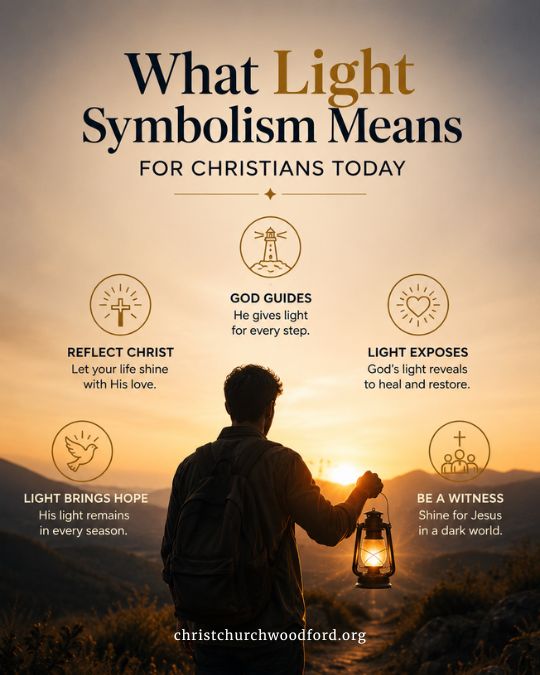
Understanding the spiritual meaning of light in Christianity isn’t just about grasping biblical imagery—it’s about living differently because of what that imagery reveals. Here’s what Christian light symbolism means for us right now.
First, God guides believers through confusion. When you don’t know which way to turn, when decisions feel overwhelming, when the future looks uncertain—God’s light is still there. You might not see the whole road, but you can see the next step. Trust the light you have instead of demanding more clarity than God has given.
Second, Christians are called to reflect Christ. Walking in God’s light means our lives should look different. Not perfect, but authentic. Not flawless, but faithful. When we pursue honesty, practice kindness, choose integrity, and extend forgiveness—we’re reflecting the character of the One who is light.
Third, light exposes hidden sin. This is uncomfortable but necessary. God’s Word and Spirit shine into the corners of our hearts we’d rather leave dark. But remember: God exposes sin in order to heal it, not to condemn us. Conviction is a gift, not a punishment. It’s God loving us enough to show us what needs to change.
Fourth, God’s light brings hope during suffering. When life feels dark—when you’re grieving, when you’re sick, when you’re disappointed, when you’re afraid—light still exists. The darkness around you doesn’t determine the truth about God. He remains faithful. He still sees you. He hasn’t abandoned you to the night.
Finally, believers are witnesses in a dark world. We’re not called to blend in. We’re called to shine. That doesn’t mean being obnoxious or self-righteous. It means living with such love, such joy, such peace, such hope that people wonder where it comes from. And when they ask, we get to tell them about the Light of the World who changed everything for us.
Frequently Asked Questions About Light Symbolism in the Bible
Why is Jesus called the Light of the World?
Jesus is called the Light of the World because He reveals God’s truth and brings salvation out of spiritual darkness. He illuminates the path to eternal life, exposes sin, and offers forgiveness. Just as physical light enables sight, Jesus opens blind spiritual eyes so we can see God, ourselves, and reality clearly.
What does light vs darkness mean in Scripture?
Light represents truth, life, and God’s kingdom, while darkness often symbolizes sin, evil, and separation from God. This contrast runs throughout the Bible, showing the ongoing spiritual battle between good and evil. Light always wins because God’s power and purposes cannot be defeated by darkness.
What does “walk in the light” mean?
It means living honestly, faithfully, and closely with God while following His truth. Walking in the light involves transparency, pursuing righteousness, maintaining fellowship with God and other believers, and living according to God’s Word rather than hiding in deception or sin.
Why are lamps important in biblical symbolism?
Lamps symbolize spiritual readiness, guidance, and maintaining faith through God’s power. The parable of the ten virgins teaches that we need our own genuine relationship with God, fueled by the Holy Spirit, to be ready when Christ returns. Lamps also represent God’s Word illuminating our path forward.
Walking in the Light of Christ
Light in Scripture is far more than physical brightness or poetic language. It reveals the very nature of God—His presence, His truth, His holiness, His salvation. From the first words of Genesis to the final vision of Revelation, light symbolism in the Bible points us consistently toward the God who is light and in whom there is no darkness at all.
And all of this light imagery finds its fullest expression in Jesus Christ. He is the Light of the World who came into darkness and was not overcome. He is the radiant glory of God made visible. He is the lamp illuminating our path home.
What does light represent in the Bible? It represents Jesus—the One who rescues us from darkness, reveals truth to us, and will one day be our eternal light when night exists no more.
I encourage you to walk in God’s light daily. Let His Word guide your steps. Let His Spirit illuminate your heart. Let His truth expose what needs healing. And let your life shine as a testimony of the biblical meaning of light—the light that cannot be extinguished, the hope that cannot be destroyed, the love that drives out all fear.
You were called out of darkness into His marvelous light. Now live like it.