The Holy Spirit Explained: Who He Is, What He Does, and Why He Matters

If you asked a room full of churchgoers to explain the Holy Spirit in one sentence, you’d probably get a long, uncomfortable silence. Most of us have sung about Him, prayed in His name, and heard sermons about His gifts—yet if someone stopped us on the street and asked, “Who exactly is the Holy Spirit?” many of us would struggle to answer.
That’s not something to be ashamed of. It’s a starting point.
Few truths in the Christian faith are more important—and more misunderstood—than the Holy Spirit. Is He a force, some kind of divine energy? Is He simply God’s power at work in the world? Or is He a person who can be known, followed, and even grieved?
When Jesus told His disciples He was leaving, they were devastated. They had walked with Him, eaten with Him, and watched Him raise the dead. Yet He said something that must have seemed impossible:
“It is to your advantage that I go away, for if I do not go away, the Helper will not come to you. But if I go, I will send him to you.” – John 16:7 (ESV)
How could that possibly be true? It could only be true if the One coming next was somehow even closer—not walking beside them, but living within them.
That is the Holy Spirit. And understanding who He is changes everything about how we live as followers of Christ.
1. Who Is the Holy Spirit?
Let’s settle this first, because everything else depends on it: the Holy Spirit is not an “it.” He is not a feeling, not a mystical force, and not a lesser form of God.
The Holy Spirit is the third Person of the Trinity — fully God, fully personal, co-equal and co-eternal with the Father and the Son.
When Jesus commissioned His disciples before ascending, He didn’t say “baptise them in the names” (plural). He said:
“Go therefore and make disciples of all nations, baptising them in the name of the Father and of the Son and of the Holy Spirit.”- Matthew 28:19 (ESV)
One name. Three Persons. The Holy Spirit shares the same divine name as the Father and the Son because He is God.
In Acts 5, when Ananias lied to the early church about his offering, Peter confronts him with words that carry enormous theological weight:
“Ananias, why has Satan filled your heart to lie to the Holy Spirit? … You have not lied to man but to God.” – Acts 5:3–4 (ESV)
Lying to the Holy Spirit is lying to God. The equation is that direct. And the apostolic blessing Paul gives at the close of 2 Corinthians places the Spirit on exactly the same level as Father and Son:
“The grace of the Lord Jesus Christ and the love of God and the fellowship of the Holy Spirit be with you all.” – 2 Corinthians 13:14 (ESV)
Christians don’t worship three Gods. They worship one God who exists in three Persons. The Holy Spirit is not a department of the Trinity. He is God.
2. The Holy Spirit Throughout the Bible
One of the remarkable things about Scripture is that the Holy Spirit is present from the very first page to the very last. He is not a New Testament addition or an afterthought in God’s plan of redemption. From creation to the birth of the church, the Spirit has always been actively at work.
In the Old Testament
The Holy Spirit first appears in Genesis 1:2, hovering over the waters as God brings creation into existence. Throughout the Old Testament, He empowers judges to deliver Israel, fills prophets to proclaim God’s Word, and comes upon kings like David to lead His people. His presence is unmistakable, but it is often given for specific people and specific purposes.
In the Gospels
The Holy Spirit is central to the life and ministry of Jesus. He conceives Jesus in the womb of Mary, descends upon Him like a dove at His baptism, and leads Him into the wilderness to be tempted. Jesus performs miracles, teaches with authority, and casts out demons through the power of the Holy Spirit. After His resurrection, Scripture also tells us that it was through the Spirit’s power that He was raised from the dead.
In the Church
Everything changes at Pentecost. Fifty days after Jesus’ resurrection, the Holy Spirit is poured out on the gathered believers—not just upon a prophet, a judge, or a king, but upon ordinary men and women, young and old.
From that moment on, every believer who trusts in Christ receives the Holy Spirit. He no longer comes only for particular tasks or seasons. He takes up residence within God’s people, empowering them to live for Christ and proclaim the gospel to the ends of the earth.
3. Is the Holy Spirit a Person or Just God’s Power?
This is where many people get stuck. “Surely,” they think, “the Holy Spirit is more like God’s power or energy—the force behind His actions.”
But Scripture presents a very different picture. The Holy Spirit is not an impersonal force. He is a divine Person who does what only a person can do.
He speaks. In Acts 13:2, the Holy Spirit says, “Set apart for me Barnabas and Saul.” He teaches, guides, comforts, and intercedes for believers in prayer. He also has a will, distributing spiritual gifts according to His purpose (1 Corinthians 12:11). And perhaps most surprisingly, He can be grieved:
“And do not grieve the Holy Spirit of God, by whom you were sealed for the day of redemption.” – Ephesians 4:30 (ESV)
You cannot grieve a force. You cannot grieve electricity or the wind. Grief belongs to relationships, and the Holy Spirit desires a real relationship with every believer. When we sin, we do not merely break a rule—we grieve the One who lives within us.
4. What Does the Holy Spirit Do?
This is where the Holy Spirit becomes deeply personal. He is not simply someone we learn about in theology. He is actively at work in the life of every believer from the moment they come to faith until the day they are with Christ.
His work is not limited to dramatic moments—it continues every day as He transforms us from the inside out.
He Convicts of Sin
Long before a person becomes a Christian, the Holy Spirit is already at work. Jesus said that the Spirit would convict the world concerning sin, righteousness, and judgment (John 16:8). That growing awareness that something is wrong, that our sin separates us from God, is often the Spirit drawing us to Christ. Conviction is not meant to condemn us but to lead us to repentance and forgiveness.
He Regenerates Believers
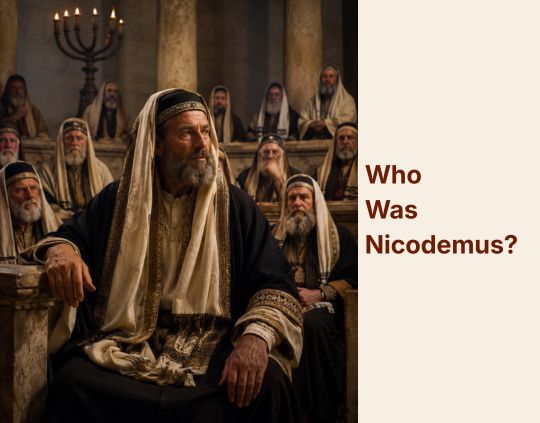
When Jesus told Nicodemus that he must be “born again,” He explained:
“That which is born of the flesh is flesh, and that which is born of the Spirit is spirit.” – John 3:6 (ESV)
No one can give themselves spiritual life. The Holy Spirit makes spiritually dead sinners alive, giving them a new heart and a new beginning in Christ. This miracle is what the Bible calls being born again.
He Lives Inside Believers
Every Christian is a temple of the Holy Spirit. Paul reminded the believers in Corinth, “Do you not know that you are God’s temple and that God’s Spirit dwells in you?” (1 Corinthians 3:16).
Unlike the Old Testament, where the Spirit came upon certain people for specific tasks, He now permanently dwells within every believer. His presence is the assurance that we belong to Christ (Romans 8:9).
He Gives Assurance
There are seasons when faith feels weak and doubts seem overwhelming. In those moments, the Holy Spirit reminds us of what is true.
“The Spirit himself bears witness with our spirit that we are children of God.” – Romans 8:16 (ESV)
Our confidence does not rest on our feelings but on God’s promises, and the Spirit continually points us back to those promises.
He Helps Us Pray
Prayer is not always easy. Sometimes we don’t know what to say, and sometimes our burdens are too heavy for words.
Romans 8:26 tells us that the Holy Spirit intercedes for us with groanings too deep for words. Even when our prayers seem weak, the Spirit faithfully brings them before the Father.
He Produces Spiritual Fruit and Gives Spiritual Gifts
The Holy Spirit changes us from the inside out, producing the fruit of love, joy, peace, patience, kindness, goodness, faithfulness, gentleness, and self-control (Galatians 5:22–23).
At the same time, He equips every believer with spiritual gifts to serve others and build up the church (1 Corinthians 12). He transforms both our character and our service.
He Sanctifies Believers
The Christian life is a lifelong process of becoming more like Jesus. The Bible calls this sanctification. The Holy Spirit patiently shapes our thoughts, attitudes, and actions so that, over time, we increasingly reflect the character of Christ. He does not abandon His work after our conversion—He continues it every day until it is complete.
5. Symbols of the Holy Spirit in the Bible
Because the Holy Spirit is invisible, Scripture often uses familiar images to help us understand His character and His work. These symbols are not literal descriptions of the Spirit but illustrations that reveal different aspects of His ministry.
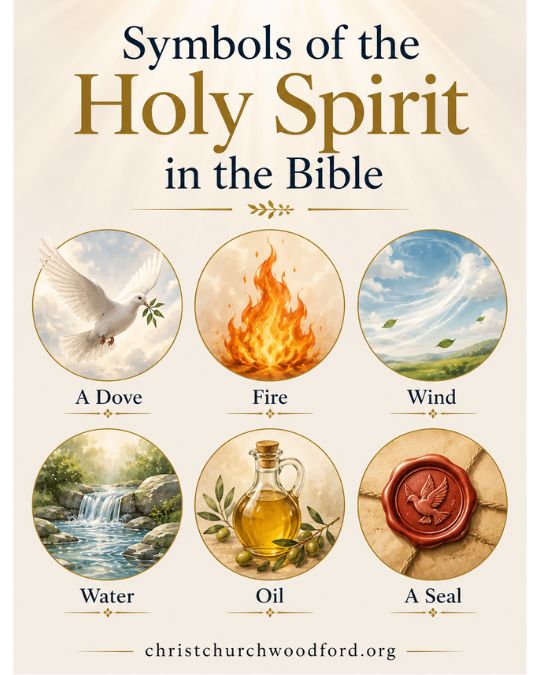
A Dove
At Jesus’ baptism, the Holy Spirit descended on Him like a dove (Matthew 3:16). Throughout Scripture, the dove is associated with peace, purity, and God’s approval. The image reminds us that the Spirit brings peace with God and gently leads those who follow Him.
Fire
At Pentecost, tongues of fire rested on each believer (Acts 2:3). Fire in the Bible often represents God’s holy presence, purification, and power. The Holy Spirit works to refine our lives, burn away sin, and empower us to live boldly for Christ.
Wind
Jesus compared the Holy Spirit to the wind when speaking to Nicodemus (John 3:8). We cannot see the wind itself, but we can clearly see its effects. In the same way, the Holy Spirit is invisible, yet His presence is evident wherever lives are transformed by the gospel.
Water
Jesus promised that those who believe in Him would have “rivers of living water” flowing from within them, referring to the Holy Spirit (John 7:37–39). Water refreshes, cleanses, and gives life. The Spirit satisfies our deepest spiritual thirst and continually renews those who trust in Christ.
Oil
Throughout the Old Testament, kings, priests, and sometimes prophets were anointed with oil as a sign that they had been set apart for God’s service.
Oil therefore became a symbol of the Holy Spirit’s anointing, reminding believers that He equips and empowers them to serve God’s purposes.
A Seal
Paul describes the Holy Spirit as God’s seal upon every believer and the guarantee of our inheritance (Ephesians 1:13–14).
In the ancient world, a seal marked ownership, authenticity, and security. The Holy Spirit is God’s assurance that we belong to Him and that His promise of eternal life will never fail.
6. The Fruit of the Holy Spirit
One of the clearest evidences of the Holy Spirit’s work is the transformation of a believer’s character.
In Galatians 5:22–23, Paul describes this transformation as the fruit of the Spirit—not separate fruits, but one unified harvest that grows as we walk with God.
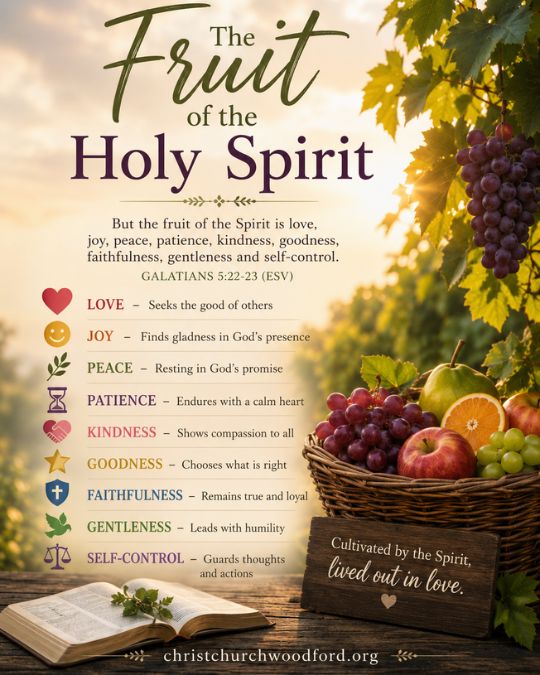
- Love — not merely emotion, but a self-giving love that reflects Christ.
- Joy — a deep gladness rooted in God rather than in circumstances.
- Peace — the quiet confidence that comes from trusting God, even in difficult times.
- Patience — the willingness to endure hardship and show grace to others.
- Kindness — treating people with compassion, generosity, and mercy.
- Goodness — living with integrity and pursuing what is right.
- Faithfulness — remaining dependable and steadfast in our relationship with God and others.
- Gentleness — strength under control, expressed with humility and care.
- Self-control — the ability to resist sinful desires and live in obedience to God.
These qualities are not produced through determination or self-improvement alone. They are the natural result of the Holy Spirit transforming us from the inside out. As we learn to trust and follow Him, His character becomes increasingly visible in our lives.
Each of these qualities deserves deeper study, which is why we’ve dedicated an entire article to exploring the Fruit of the Spirit in greater detail.
7. The Gifts of the Holy Spirit
While the fruit of the Spirit describes the character He develops in every believer, the gifts of the Spirit are abilities He gives to believers for ministry and service. Character reflects who we are becoming; gifts equip us to serve others.
The New Testament lists a variety of spiritual gifts. In 1 Corinthians 12, Paul mentions gifts such as wisdom, knowledge, faith, healing, prophecy, tongues, and the interpretation of tongues.
Romans 12 adds gifts like serving, teaching, encouraging, giving, leadership, and mercy. Though the gifts differ, they all have the same purpose: to strengthen the church and glorify Christ—not to draw attention to ourselves.
Faithful Christians have different views on whether every spiritual gift continues in exactly the same way today. That is a discussion worth approaching with humility and a commitment to Scripture.
What all Christians can agree on is this: the Holy Spirit equips every believer to serve God’s people and advance His kingdom. No follower of Christ is left without a purpose, and no gift is given for personal glory alone.
8. How Can You Receive the Holy Spirit?
Scripture gives a clear answer: every person who repents of their sin and places their faith in Jesus Christ receives the Holy Spirit at the moment of conversion.
Paul writes:
“In him you also, when you heard the word of truth, the gospel of your salvation, and believed in him, were sealed with the promised Holy Spirit.” – Ephesians 1:13 (ESV)
He goes even further in Romans 8:9, saying that anyone who does not have the Spirit of Christ does not belong to Him. In other words, belonging to Christ and receiving the Holy Spirit are not two separate events—they go together.
Faithful Christians hold different views about subsequent experiences of the Holy Spirit’s empowering after conversion, and those discussions should always be approached with humility and grace. However, there is broad historic evangelical agreement on this point: every believer receives the Holy Spirit the moment they trust in Christ.
If you have repented of your sin and trusted in Jesus as your Lord and Saviour, you do not need to wonder whether God has given you His Spirit. He has. The Holy Spirit already lives within you, guiding, strengthening, and transforming you day by day.
9. What the Holy Spirit Means for Christians Today
Let’s land this somewhere practical.
The Holy Spirit means you are never alone. Not in the middle of the night when anxiety spikes. Not in the hospital waiting room. Not in the moment of temptation. God is not at a distance, watching from above. He lives within every believer.
He means transformation is possible. Not by trying harder, but by surrendering more. The fruit of the Spirit is the kind of change that lasts — because it is produced by Someone who does not give up on His work.
He means prayer is always available. When words fail, He intercedes. When grief is too heavy for sentences, the Spirit carries it to the Father on our behalf.
He means the church is equipped. Every believer has received something from the Spirit for the good of others. The church is not a passive audience watching professionals perform. It is a body, each part contributing what the Spirit has placed in them.
And perhaps most importantly — the Spirit always points to Jesus. He does not draw attention to Himself. His whole work is to glorify Christ, reveal Christ, and form Christ in us. When the Spirit is truly at work in a person or a community, the conversation keeps coming back to Jesus.
Walk in step with the Spirit. Depend on Him in prayer. Read Scripture, through which He speaks. Say yes to His promptings. And trust that the one who began a good work in you will carry it forward to completion.
Frequently Asked Questions
Is the Holy Spirit God?
Yes. Scripture clearly identifies the Holy Spirit as God. In Acts 5:3–4, lying to the Holy Spirit is described as lying to God. He also shares the same divine name as the Father and the Son in Matthew 28:19 and receives equal honour in the apostolic blessing of 2 Corinthians 13:14.
Was the Holy Spirit active in the Old Testament?
Yes. The Holy Spirit has been active throughout the Bible, beginning in Genesis 1:2. In the Old Testament, He empowered judges, prophets, and kings for specific purposes. After Jesus’ resurrection and the coming of the Holy Spirit at Pentecost, He came to dwell permanently in every believer.
Can Christians grieve or quench the Holy Spirit?
Yes. Christians grieve the Holy Spirit through sinful attitudes and actions (Ephesians 4:30), and they quench the Spirit by resisting or suppressing His work (1 Thessalonians 5:19). Neither causes a believer to lose the Holy Spirit, but both hinder our fellowship with Him and our spiritual growth.
What is the difference between the fruit and the gifts of the Holy Spirit?
The fruit of the Spirit describes the Christlike character the Holy Spirit develops in every believer (Galatians 5:22–23). Spiritual gifts are abilities He gives to believers to serve others and build up the church. Fruit is about who we are becoming; gifts are about how we serve.
Why is the Holy Spirit called the Comforter or Helper?
Jesus called the Holy Spirit the Helper (or Paraclete) because He comes alongside believers to teach, guide, comfort, strengthen, and intercede for them. He is God’s abiding presence with His people.
Can the Holy Spirit’s guidance ever contradict the Bible?
No. Because the Holy Spirit inspired Scripture, He will never lead anyone to do something that contradicts God’s Word. Every spiritual impression or experience should be tested against the teaching of the Bible.
What is the difference between the Holy Spirit and the Holy Ghost?
There is no difference. “Holy Ghost” is simply the older English translation used in versions such as the King James Version, while most modern translations use “Holy Spirit.” Both titles refer to the same divine Person.
What are the seven spirits of God?
The phrase “the seven spirits of God” appears several times in Revelation (Revelation 1:4, 3:1, 4:5, and 5:6). It does not mean there are seven different Holy Spirits. Throughout the Bible, there is only one Holy Spirit (Ephesians 4:4).
Most Bible scholars understand the number seven in Revelation as a symbol of completeness or perfection. The phrase describes the Holy Spirit in the fullness of His power and ministry.
Many Christians also connect this expression with Isaiah 11:2, which describes the Spirit resting upon the Messiah with qualities such as wisdom, understanding, counsel, might, knowledge, and the fear of the Lord.