What Is the Meaning of Life? A Christian Perspective

What Does the Bible Say Is the Meaning of Life?
If you have ever lain awake wondering what your life actually adds up to, you are not alone, and you are not asking the wrong question. It is one of the oldest questions people have ever asked, and the Bible does not dodge it. So let’s start with the answer instead of circling it for three pages.
Jesus was once asked which commandment mattered most, and He gave an answer so simple it can fit on an index card.
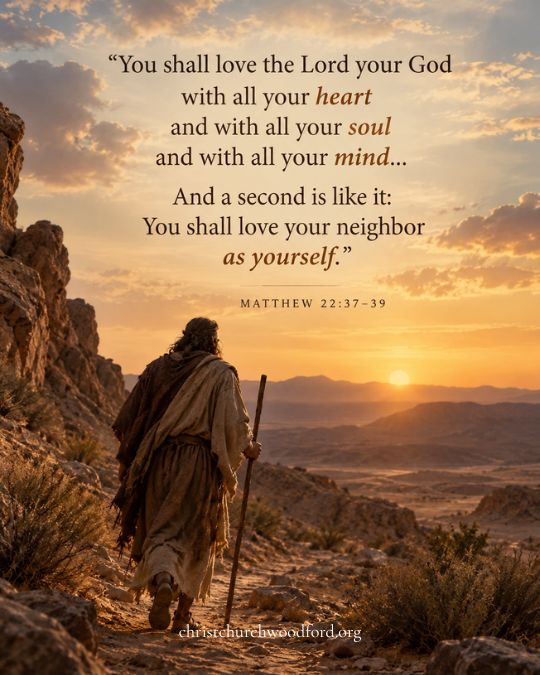
“You shall love the Lord your God with all your heart and with all your soul and with all your mind… And a second is like it: You shall love your neighbor as yourself.” – Matthew 22:37–39
That’s it. That’s the foundation. Not “build something impressive.” Not “make sure people remember your name.” Love God. Love people. Everything else in a meaningful life grows out of that soil.
From a Christian perspective, life doesn’t start with us figuring ourselves out — it starts with God. We were made by Him, made for relationship with Him, and made in His image, which is another way of saying our lives were never meant to be self-explaining.
You don’t have to invent your own worth from nothing. It was given to you before you did a single thing to earn it.
But here’s what’s important, and what we’re going to spend the rest of this time unpacking: loving God and loving people doesn’t require everyone to live an identical life. God gives the same foundation to a schoolteacher, a nurse, a stay-at-home parent, a business owner, and a missionary. What gets built on that foundation looks different for every single one of them. That’s not a contradiction. That’s actually the point.
Your Purpose Doesn’t Have to Look Like Someone Else’s
We live in a culture that measures meaning by scale. How many people did you reach. How much did you build. How large is your platform, your bank account, your influence. And if you’re not careful, you’ll walk away from that measuring stick feeling like your life is small.
Think about the way we talk about people like Steve Jobs or Elon Musk. We admire what they built, and there’s nothing wrong with that admiration. But somewhere along the way, a lot of us picked up the quiet assumption that a meaningful life has to look like theirs — an empire, a legacy with your name on a building, a story big enough for a documentary.
Here is the good news: you don’t have to become a billionaire, change an entire industry, or have your name remembered by millions for your life to matter to God. That was never the bar.

One person’s purpose might involve building a company that employs hundreds of families. Another person’s purpose might be teaching a classroom of nine-year-olds how to read. Another might be raising children who grow up knowing they are loved. Another might spend decades quietly caring for an aging parent, or showing up for a neighbor, or leading a small group of people no one outside their church will ever hear about. None of these lives are smaller in God’s eyes. They’re just different assignments from the same God.
This is why the Christian question isn’t really, “How much did I accomplish?” It’s something closer to, “What did I do with what God gave me?” Those are two very different questions, and they lead to two very different ways of measuring a life. One leaves you comparing yourself to people whose circumstances, gifts, and calling were never yours to carry. The other frees you to actually live the life in front of you.
A Meaningful Life Is About What We Become and What We Give
If purpose isn’t primarily about output, then what is it about?
Scripture points us toward something deeper than achievement — it points us toward character, and what that character gives to the people around us.
Paul describes it this way:
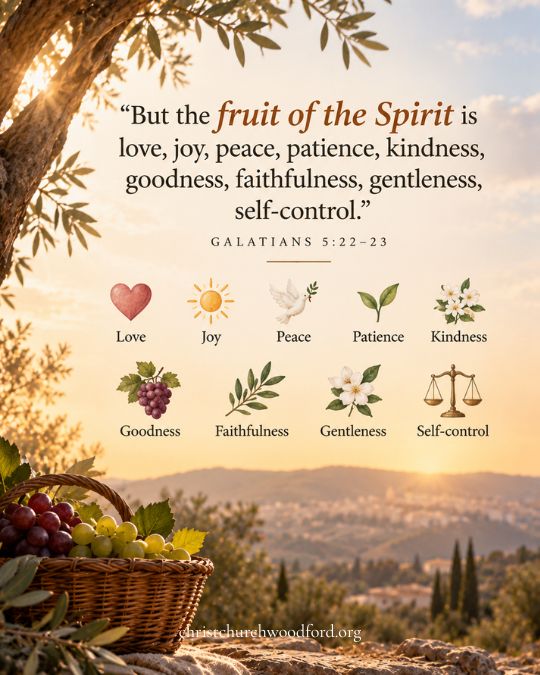
“But the fruit of the Spirit is love, joy, peace, patience, kindness, goodness, faithfulness, gentleness, self-control.” – Galatians 5:22–23
Notice that this isn’t a list of accomplishments. It’s a list of who we become. And here’s the part we often miss: these qualities were never meant to stay contained inside us.
When love, patience, and kindness actually take root in a person, they don’t stay private. They spill outward into every relationship that person touches.
A child learns kindness not from a lecture, but from watching a parent extend it. A student remembers, sometimes for the rest of their life, the one teacher who believed in them when nobody else did. Someone finally learns how to forgive because someone forgave them first, and it turned out to be possible after all. This is how values move from one generation to the next — not mainly through what we say, but through who we’ve allowed ourselves to become.
This is also where the idea of a footprint belongs, and it’s worth reframing what a footprint actually is.
We tend to think of it as what we build or what we leave behind materially. But often our real footprint is quieter than that. It’s the patience someone learned from watching you stay calm under pressure. It’s the faith a grandchild inherits because they watched you pray through hard years. It’s the courage someone else finds because they saw you keep going when it would have been easier to quit. Character is contagious, in the best possible sense, and that is a form of meaning that doesn’t require a headline.
Why Does Life Hurt If It Has Meaning?
At this point it would be easy to make this sound tidy — as if a meaningful life is just a matter of loving God, being kind, and watching everything fall into place. But if you’ve lived long enough, you know that’s not the whole story. So let’s be honest about the part that doesn’t resolve so neatly.
Why me? Why did I lose this person? Why did my plan fall apart right when it finally seemed to be working? Why did someone else receive the very thing I’ve been praying for? Why would a good God allow this?
These are not questions to be embarrassed about asking. Some of the most faithful people in Scripture asked them directly, out loud, to God’s face.
Christianity does not promise that every painful event will make sense to us, at least not right away, and sometimes not ever in this life. That’s a hard sentence, but it’s an honest one. What Scripture does not do is pretend suffering is an illusion, or that if you just had more faith, the pain would disappear.
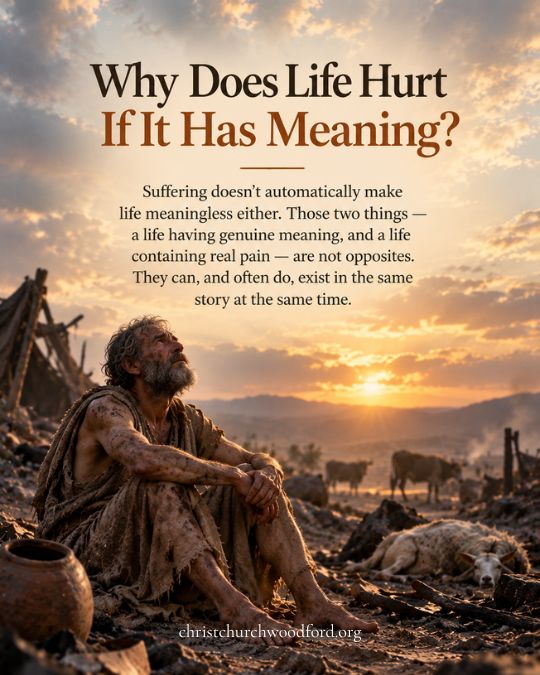
But here is the other side of that honesty: suffering doesn’t automatically make life meaningless either. Those two things — a life having genuine meaning, and a life containing real pain — are not opposites. They can, and often do, exist in the same story at the same time.
Think of Job, a man who lost nearly everything he had in a matter of days, and whose friends offered him theories instead of comfort. For chapter after chapter, Job never receives the tidy explanation we might expect. God never sits him down and lists the reasons. Instead, God meets him in the middle of his questions, and somehow that meeting is enough, even without the answers Job originally wanted. That’s worth sitting with. Sometimes what we’re actually looking for isn’t an explanation at all — it’s a sense that we haven’t been left alone in it.
Think also of Joseph, sold by his own brothers and forgotten in an Egyptian prison for years he never volunteered for. Nobody would have blamed Joseph for growing bitter during those years, and Scripture doesn’t rush past how genuinely hard that season was for him. And think of James, writing to believers who were scattered and suffering, not offering them a tidy explanation but something sturdier than an explanation.
“Count it all joy, my brothers, when you meet trials of various kinds, for you know that the testing of your faith produces steadfastness.” – James 1:2–3
James isn’t saying the trials themselves are enjoyable. He’s saying something is being formed in the trial that couldn’t have been formed any other way. That’s a very different claim than “everything happens for a reason you’ll be able to explain.” It’s closer to, “something real can grow here, even in soil you never would have chosen.”
Sometimes the Journey Shapes the Meaning
This is, in many ways, the heart of the whole conversation. We tend to think of meaning as something we find, like a destination we arrive at once we’ve figured life out. But often meaning isn’t found so much as it is formed, slowly, through the very seasons we would never have chosen for ourselves.
Hardship, walked through with God rather than alone, has a way of developing things in us that ease simply can’t produce — patience, empathy, courage, humility, resilience, and a kind of faith that has actually been tested rather than merely assumed. This is not the same as saying God engineered your worst season just to teach you a lesson, as though pain were a training exercise He designed specifically to shape you. That kind of explanation can feel more like a wound than a comfort, and it isn’t the picture Scripture gives us.
The picture Scripture gives us is closer to what Joseph said to the brothers who once sold him into slavery, years later, once he had the power to destroy them and chose grace instead.
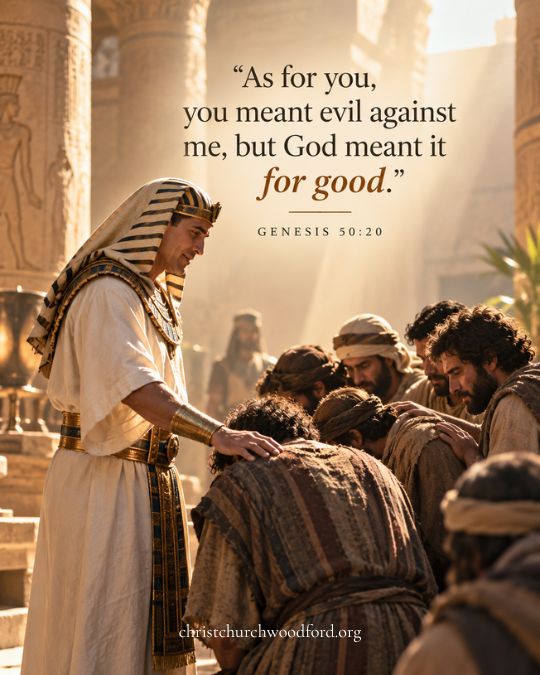
“As for you, you meant evil against me, but God meant it for good.” – Genesis 50:20
That is not Joseph saying his brothers’ betrayal was secretly a good thing. It was genuinely evil, and he never pretends otherwise. What he’s saying is that even inside real harm, God was present, and God was able to bring something good out of what was never good to begin with. That’s a meaningful distinction. Even when we cannot explain why something happened, God can still bring growth and meaning from it. Those are two very different claims, and only the second one holds up over time.
And often, this becomes clear only in hindsight. You rarely see, in the middle of a hard season, what it’s shaping in you. It’s usually years later — sometimes decades — that you look back and recognize the patience you carry now, or the compassion you have for people in pain, and realize it was formed in exactly the chapter you would have given anything to skip.
Life was never promised to be perfect. It was never meant to be. It was meant to be lived, learned from, and walked through with God rather than around Him.
So, What Makes Your Life Meaningful?
Let’s bring this down to the ground, because theology that never touches your actual Tuesday isn’t much use to you.
Instead of only asking the big, sweeping question — “What is my grand purpose in life?” — it can help to ask smaller, more honest questions instead.
- Who am I becoming?
- Who am I actually loving, in the ordinary, unglamorous way that love usually looks?
- What good am I creating with the hours I’ve been given?
- What am I giving to the people right in front of me — my family, my coworkers, the people in my church, the neighbor I pass every day?
- What values am I passing forward to the people watching me, whether I realize they’re watching or not?
- And am I using what God has actually given me — my time, my gifts, my circumstances — or am I too busy wishing I had someone else’s?
These questions matter because purpose doesn’t usually arrive as one giant revelation, a single dramatic moment where the clouds part and you suddenly understand your entire life’s assignment.
For most people, that’s not how it works. A meaningful life is far more often built through thousands of ordinary choices — the patience you chose this morning, the honest conversation you had this afternoon, the person you forgave this evening, the prayer you prayed before falling asleep. None of those moments feel significant on their own. But add them together over years, and they become the shape of a life.
It also helps to remember that you don’t have to have this figured out today. Most of the people you admire for their faith or their character didn’t arrive there quickly. They arrived there the same way anyone does — one decision at a time, across seasons that often didn’t feel meaningful while they were happening. If you’re in a season right now that feels uneventful, unremarkable, or simply hard to get through, that doesn’t mean nothing is being built. It often means quite the opposite.
Genesis tells us that human beings were made in God’s own image.
“So God created man in his own image, in the image of God he created him; male and female he created them.” – Genesis 1:27
That single sentence carries enormous weight. It means your worth was never something you had to build or prove. It was placed in you before you ever accomplished anything, and it stays with you even in the seasons when you feel like you’re accomplishing nothing at all.
From that starting point of worth, everything else — loving God, loving people, growing in character, doing good with what you’ve been given — becomes not a burden you carry to earn your place, but a response to a place you already have.
A Meaningful Life Doesn’t Have to Be an Extraordinary Life
So where does this leave us?
You don’t need to become a billionaire. You don’t need millions of people to know your name. You don’t need to leave behind something that ends up written about in history books for your life to have mattered.
What you can do is simpler, and honestly, more available to you than any of those things ever were.
- Do the best you can with the life God has actually given you — not the one you imagined, not the one someone else has, but this one.
- Love the people in front of you, deeply and consistently.
- Create something good with your hands, your work, your words.
- Show mercy, especially to people who haven’t earned it, because that’s exactly the kind of mercy you’ve received.
- Keep growing, even slowly.
- Help the people you can actually help.
- Pass something worthwhile to whoever comes after you — a child, a student, a friend, a church family.
- And when life becomes difficult, and it will, let those chapters shape you rather than destroy you.
Our individual purposes may look completely different from one another. Yours might involve a boardroom, a classroom, a kitchen table, or a mission field. But underneath all of that difference, the foundation stays exactly the same: to know God, to love, to become more like Christ, and to leave some good behind simply because we were here.
That is not a small life. That is, as it turns out, the whole point.