How to Overcome Peer Pressure: A Practical Christian Guide

Let me be real with you for a moment. Peer pressure is not just a teenager’s problem. It is not something you grow out of when you hit 25 or 30 or 40. It follows you into the workplace. It creeps into your marriages and friendships. It sits across from you at family dinners. And in 2026, it has a screen in your pocket — broadcasting what everyone else is doing, wearing, saying, and believing, twenty-four hours a day.
If you have ever done something you knew was wrong just to fit in — if you have ever stayed silent when you should have spoken up — if you have ever slowly drifted away from your convictions because the people around you made it feel too costly to hold them — then this article is written for you.
Because the Bible has more to say about this than you might think. And God has already made a way through it.
What Peer Pressure Actually Looks Like in 2026
Before we talk about how to overcome it, we need to be honest about what we are actually dealing with. Peer pressure has changed shape. It does not always look like a group of friends daring you to do something dangerous.
In fact, the most dangerous forms of peer pressure today are far more subtle — and far more effective.
1. Social Media and the Comparison Culture
This is the big one.
Every single day, your congregation — your teenagers, your young adults, your parents — are scrolling through a curated gallery of other people’s lives. And without even realising it, they begin to measure themselves. Am I successful enough? Am I attractive enough? Is my faith public enough or too public? Do I hold the right political views? Do I look like I am enjoying life the way everyone else seems to be?
The pressure is constant and it is quiet. Nobody is saying to your face: “Change who you are.” But the algorithm is doing it slowly, day by day.
2. Workplace Culture
Picture this: You work in an office where the entire team goes out on Fridays after work. The drinking is heavy. The conversation turns crude. The gossip about colleagues is relentless. You are new. You want to keep your job. You want to be liked. And every week you find yourself making a small compromise — laughing at a joke you found offensive, joining in on gossip you knew was wrong, staying silent about your faith because you have learned that mentioning Jesus in that environment gets a certain look.
This is peer pressure. It is dressed in business casual and it is sitting in your open-plan office.

3. Friend Groups and Relationship Drift
This one is painful to talk about because it often involves people we love. Maybe your closest friends have slowly moved away from the faith. Nobody sat you down and said, “Stop believing.” But over two or three years, Sunday mornings started to feel like a conflict because your friends wanted to catch up on Saturday nights. Questions about your church attendance started carrying a slight edge of mockery. The language around you normalised things that once would have troubled you.
Relationship drift is real. And it is one of the most powerful forms of peer pressure because it works slowly, through people you genuinely care about.
4. Family Expectations
Some of you face pressure not from outside the family but from within it. Maybe you come from a family where success is defined by career, money, and social standing — and your decision to serve in church, to give generously, or to prioritise your children’s faith formation rather than their weekend sport schedule is met with quiet disapproval. The pressure to conform to your family’s values over God’s values is one of the oldest and heaviest forms of peer pressure in the book.
5. The Online Christian Community
Here is one that surprises people: peer pressure exists inside the church too. Social media has created a hyper-visible version of Christianity — one that rewards certain expressions of faith and quietly marginalises others. Pray a certain way. Have the right opinions on certain issues. Perform your devotion in ways that generate engagement. The pressure to perform Christianity rather than live it is real, and it is exhausting.
“Do not conform to the pattern of this world.” — Romans 12:2
What the Bible Says About Peer Pressure
I want to take you into God’s Word now. Because here is what I know: every human being who has ever lived has faced this pressure to conform. And the Bible is not silent about it.
The Core Text: Romans 12:2
Do not be conformed to this world, but be transformed by the renewal of your mind, that by testing you may discern what is the will of God, what is good and acceptable and perfect. – Romans 12:2 (ESV)
The word Paul uses for ‘conformed’ is the Greek word syschematizo — it means to be pressed into a mould. Shaped by external force into a form that was not originally yours. That is exactly what peer pressure does. It applies constant external pressure until you start to take the shape of whatever surrounds you.
But notice what Paul does not say. He does not say ‘try harder to resist.’ He says be transformed by the renewal of your mind.
The solution is not white-knuckle willpower. It is a renewed way of thinking — a mind that has been so shaped by the truth of God that the moulds of this world simply stop fitting.
Daniel in Babylon: The Real Peer Pressure Story
If you want a real, lived example of peer pressure in Scripture, look no further than Daniel.
He was a young man — probably a teenager — captured from his homeland and brought into the most powerful empire on earth.
The entire apparatus of Babylon was designed to remake him: his name was changed, his language was changed, his education was changed. Everything around him said: conform, and you will thrive. Resist, and you will suffer.
But Daniel resolved that he would not defile himself with the king’s food or with the wine that he drank. So he asked the chief of the eunuchs to allow him not to defile himself. – Daniel 1:8
That word resolved is the key. Daniel made a decision before the pressure arrived. He did not wait until the food was in front of him to decide what he believed. He had already settled the question. And that prior resolution — that deeply rooted conviction — is what carried him through.
Later in the story, Daniel’s three friends — Shadrach, Meshach, and Abednego — face the ultimate peer pressure: everyone around them bows to the king’s idol. Everyone. The music plays. The crowd drops to their knees. And these three men stand.
If this is so, our God whom we serve is able to deliver us from the burning fiery furnace, and he will deliver us out of your hand, O king. But if not, be it known to you, O king, that we will not serve your gods or worship the golden image that you have set up. – Daniel 3:17-18
That phrase — “But if not” — is one of the most powerful statements of faith in the entire Bible. They were not relying on a guaranteed good outcome. They were standing on something deeper than results: the identity and character of God. That is what carries you through peer pressure when the outcome is uncertain.
Proverbs and the Warning About the Crowd
Whoever walks with the wise becomes wise, but the companion of fools will suffer harm. – Proverbs 13:20
The wisdom literature of Scripture is blunt about this: the company you keep shapes who you become. This is not a warning to be suspicious of everyone. It is a call to be intentional about who you allow to speak into your life.
Jesus and the Disciples: Pressure to Conform or Abandon

The disciples faced peer pressure of the highest order.
When Jesus was arrested, the pressure on them to abandon, deny, and hide was overwhelming — and for a moment, it worked. Peter denied him three times. The others scattered. This was not a failure of faith in theory — it was peer pressure in the most acute and terrifying form: the crowd, the danger, the overwhelming pull toward self-preservation.
But look at what happened after the resurrection. These same frightened men stood before the Sanhedrin — the most powerful religious body in their world — and said something extraordinary:
We must obey God rather than men. – Acts 5:29
What changed? The Holy Spirit. A renewed mind. A deeper identity. The same men who caved under pressure became men who stood before councils, beatings, and death without flinching. That transformation is available to you.
How to Actually Overcome Peer Pressure
Here are six anchors to hold onto before the pressure arrives. We will see what they look like in a real pastoral conversation in the next part.
Step 1: Know Who You Are Before the Pressure Arrives
Daniel resolved before the food was placed in front of him. The people who stand under pressure are the people who already knew where they stood. Write down your non-negotiables. Share them with someone you trust. Do not wait for the moment to decide what you believe.
Step 2: Choose Your Closest Circle Carefully
Not every relationship is pulling you toward who God made you to be. Jesus ate with sinners — but there is a difference between being a light in dark places and letting darkness slowly dim yours. Ask honestly: after I spend time with this person, do I feel closer to God or further from him?
Step 3: Build a Community That Calls You Forward
You were not designed to stand alone. Find your Daniel’s three friends — people who will stand with you when everyone else is bowing down. They are probably already in your church or your small group. Pursue those relationships with the same energy you give to everything else.
Step 4: Learn to Say ‘No’ Without a Full Explanation
You do not owe anyone a theological treatise every time you decline something. A quiet, confident “that’s not really my thing” — without anger or defensiveness — is often more powerful than a long justification. “No, thanks” is a complete sentence.
Step 5: Renew Your Mind Daily
The Word stored in your heart is accessible in the moment of pressure — not just in your quiet time. A person who starts their day in Scripture is differently shaped than one who starts it on social media. You are either being discipled by the Word or discipled by the world. There is no neutral ground.
How can a young man keep his way pure? By guarding it according to your word… I have stored up your word in my heart, that I might not sin against you. – Psalm 119:9, 11
Step 6: Keep Coming Back to Jesus
You will cave sometimes. That is not the end of your story. Peter denied Jesus three times and was restored. The pathway back is not shame — it is confession and renewed resolve.
If we confess our sins, he is faithful and just to forgive us our sins and to cleanse us from all unrighteousness. – 1 John 1:9
A Real Conversation — When Envy and Comparison Are Burning You Inside
I want to share something with you that happened in a pastoral conversation not long ago. A young woman — I will call her Sarah — came to speak with me after a Sunday service. She was not in crisis in the dramatic sense. She was not struggling with addiction or family breakdown. On the surface, everything looked fine.
But when she sat down and started talking, what came out was this: all of her friends — girls her age, same background, same circle — were earning well, travelling overseas, buying things she could only scroll past on Instagram. Designer bags. Weekend trips. Brunches that cost more than her weekly grocery budget. And she knew, she said — she really knew — that she should not feel this way. But the envy in her heart was burning her. It was a physical thing. A tightness in her chest every time she opened her phone.
And here is what made it worse: she had started spending money she did not have to try and keep up. Not enormous amounts. But enough that she was now carrying a quiet anxiety about her bank account on top of the quiet ache of comparison. The pressure was not just pulling her emotionally — it was pulling her financially, and she felt ashamed about both.
I want to walk you through what I shared with her that day. Because I do not think she is alone. I think a version of Sarah is sitting in our congregation right now. And I think a version of Sarah has lived inside most of us at some point.
1. Start with Who You Actually Are
The first thing I said to Sarah was this: before we talk about what your friends have, we need to talk about who you are. Because comparison only has power over you when your identity is built on externals — on what you own, what you can afford, where you have been, what you look like. When those things become your measuring stick, you will always be measuring.
But Scripture speaks a completely different identity over you. You are not defined by your salary or your travel history or your wardrobe. You are defined by what God says about you — and what he says is staggering.
I praise you, for I am fearfully and wonderfully made. Wonderful are your works; my soul knows it very well. – Psalm 139:14
I told Sarah: you were not assembled on a production line and then compared against the other models coming off the same line. You were specifically, intentionally made — with a particular set of gifts, a particular calling, a particular season.
The moment you start measuring your chapter three against someone else’s chapter seven, you have lost the plot of your own story.
This is not a self-help pep talk. It is a theological reality. Your identity is not comparative — it is covenantal. God is not standing over you with a scorecard comparing you to your friends. He is walking with you through your story. Get rooted in that first. Everything else flows from there.
2. Know Your Limits — and Make Peace With Them
The second thing I said to Sarah was gentler, but important: you need to know your limits. Not as a form of defeat — but as a form of wisdom. And I said this to her as someone who has had to learn it myself.
There is a difference between a season and a permanent state. Right now, Sarah could not afford what her friends could afford. That is just true. And trying to spend her way into a life she could not sustain was not closing the gap — it was creating a new wound on top of the original one. She was hurting inside because of what others had, and then hurting again because of what she was doing to herself trying to match it.
Knowing your limits is not the same as giving up on growth. It is being honest about where you actually are — financially, emotionally, in your season of life — and making decisions from that honest place rather than from the distorted place of comparison.
I have learned, in whatever situation I am, to be content. I know how to be brought low, and I know how to abound. In any and every circumstance, I have learned the secret of facing plenty and hunger, abundance and need. – Philippians 4:11-12
Notice that Paul says he learned contentment. It was not natural. It did not arrive automatically with his faith. It was something he had to practise, probably through many painful moments of comparison and longing. That gives me hope. And it should give you hope too.
3. You Have an Option — and It Is a Good One
Here is something I want to say very directly: you have a choice about how you live. Your friends have a choice. And their choices and yours do not have to be the same — and that is okay.
Sarah’s friends were choosing to spend, to travel, to build a certain kind of life. That is their choice. But Sarah has an option too. And her option — living by the values of God’s kingdom, stewarding her money faithfully, building a life around what God says matters — is not the lesser option. It is not the consolation prize for people who cannot afford the other one. It is a genuinely different way of living that has its own profound beauty and its own deep rewards.
God does not call you to his way because he wants to deprive you. He calls you to it because he loves you enough to protect you from a life built on sand. Every debt carried quietly. Every purchase made to impress people who were not thinking about you anyway. Every slow drift away from financial peace in pursuit of a version of life that keeps moving the goalposts — God sees all of that. And he says: there is a better way.
“For I know the plans I have for you, declares the Lord, plans for welfare and not for evil, to give you a future and a hope.” — Jeremiah 29:11
Your option is not restriction. Your option is freedom — the kind that comes from living within what God has given you, with open hands and a peaceful heart.
4. Respect Their Choice — and Do Not Condemn Them
This is where I want to say something that might surprise you: your friends are probably not trying to hurt you. I said this to Sarah and I saw something shift in her face. She had been carrying a low-level resentment alongside the envy — a feeling that somehow her friends were doing this to her. Showing off. Making her feel small on purpose.
But here is the truth: they are probably just excited. They got a pay rise and they are thrilled. They went to Bali and they had the time of their lives and they want to share it. They are not sitting at home thinking: “How can I make Sarah feel inadequate today?” They are just living their lives and posting about it the way everyone does.
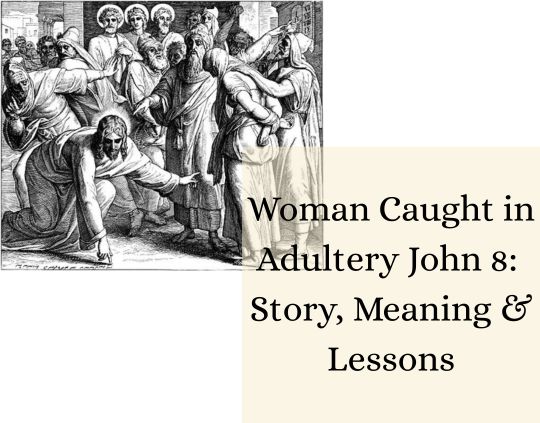
Jesus said something to a woman caught in adultery – a moment of profound shame and failure — a woman who had every reason to expect condemnation — and his words were: “Neither do I condemn you.” There was no lecture. No list of everything she had done wrong. Just mercy, followed by a quiet invitation to something better.
You can extend that same grace outward. You can let your friends be excited about their lives without making their joy a referendum on your worth. That is not weakness. That is the fruit of a person who knows who they are.
And on a practical level: it is okay to mute accounts on social media that consistently trigger comparison in you. That is not jealousy or bitterness — it is wisdom. You are guarding your heart, which Proverbs 4:23 tells you to do with all diligence. Nobody is entitled to direct access to your attention if that access is consistently harming you.
5. Find Your People — The Ones Who Want What You Want
The last thing I said to Sarah was perhaps the most practical. And it came from something she said almost in passing: “I just want to feel like I belong somewhere.”
That is not a shallow desire. That is a deeply human one. God himself said in the very beginning that it is not good for man — or woman — to be alone. The longing to belong, to be known, to be part of a group that shares your values and your interests — that is not something to be ashamed of. It is something to be directed.
I told Sarah: instead of spending energy trying to keep up with a group whose priorities are fundamentally different from yours — what if you invested that same energy in finding the people who want what you want? People who are building intentional financial lives. People who find joy in experiences that do not require a platinum credit card. People of faith who are learning to be content, together.

They exist. They are probably in your church. They are in small groups, in serving teams, in coffee catch-ups after Sunday. They are online in communities built around faith, simplicity, generosity, and purpose. The community you are looking for is not out of reach — but you may need to look in a different direction than you have been looking.
When you find those people, something remarkable happens. The pull of comparison weakens. Not because you have become indifferent to what others have — but because you have found something better: people who see you, who know you, and who are walking the same road.
When Sarah left that conversation, I do not think everything was resolved. These things do not resolve in an hour. But something had shifted. She had language for what she was experiencing. She had a framework that did not leave her feeling like a failure for struggling. And she had a direction — not just away from something, but toward something.
That is what I want for you too. Not just to escape the pressure of comparison — but to be so rooted in who God made you to be that there is simply less room for it to take hold.
A Final Word: You Were Made to Stand
I want to close by saying this directly to you: God did not save you to blend in. He called you out of darkness into light — not so that you could slowly drift back toward the darkness because the light made you unpopular.
But here is what I also know: standing firm is not about being strong enough. It is about being deeply rooted enough. A tree does not resist the storm by trying harder. It resists because its roots go deep. And deep roots come from time in the Word, time in community, and a daily, honest, humble walk with Jesus.
You are not facing peer pressure alone. The same God who shut the mouths of lions for Daniel, who stood in the furnace with Shadrach, Meshach, and Abednego, who restored Peter after his most shameful failure — that God is with you in your office, at your dinner table, in your friendships, and on your phone screen.
Have I not commanded you? Be strong and courageous. Do not be frightened, and do not be dismayed, for the Lord your God is with you wherever you go. – Joshua 1:9
Be rooted. Be courageous. And when you fall — come back. He is always there when you do.
A Prayer for Those Facing Pressure Right Now
Lord, the pressure around me is real and some days it feels relentless. I confess that I do not always stand firm — that I have caved when I should have stood, been silent when I should have spoken, drifted when I should have held my ground. Forgive me. Restore me. And renew my mind today by the truth of who you are and who you have made me to be. Let my roots go deeper than the pressure around me can reach. I ask this in the name of Jesus, who stood firm all the way to the cross for me. Amen.