Fruits of the Spirit Explained: Meaning, List & How to Grow in Christ

You’ve probably met someone who just seems different. Not because they have life all figured out, but because there’s a steadiness about them that doesn’t crack under pressure. They remain kind when others become harsh. They choose patience when they’re provoked. They carry a quiet peace even when life is difficult. The Bible says that kind of character isn’t simply a matter of personality—it’s the fruit of the Spirit at work in a person’s life.
So, what are the fruits of the Spirit, and why do they matter? Found in Galatians 5:22–23, the fruit of the Spirit describes the character the Holy Spirit produces in every believer. These qualities aren’t personality traits you’re born with or virtues you achieve through sheer determination. They grow naturally as you walk with Christ.
In this guide, we’ll explore the fruit of the Spirit meaning, why Paul uses the word “fruit” instead of “fruits,” what each of the nine fruits of the Spirit reveals about Christian character, and how these qualities can become increasingly visible in your everyday life.
What Are the Fruits of the Spirit?
The fruit of the Spirit refers to the nine Christlike qualities that the Holy Spirit produces in the life of every believer. Rather than focusing on what Christians do, Paul describes who they are becoming as God transforms them from the inside out.
He writes:
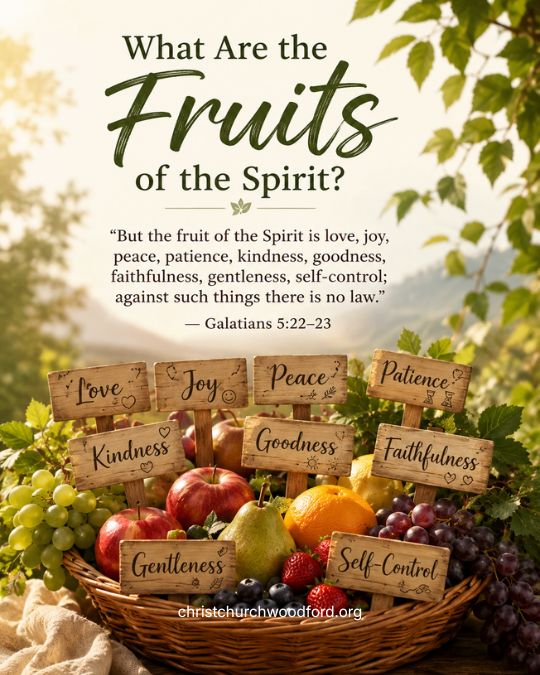
“But the fruit of the Spirit is love, joy, peace, patience, kindness, goodness, faithfulness, gentleness, self-control; against such things there is no law.” — Galatians 5:22–23 (ESV)
These qualities are not personality traits, natural talents, or achievements earned through hard work. They are the evidence of a life being transformed by the Holy Spirit.
Think of a healthy apple tree. You don’t tape apples onto its branches to make it look fruitful. If the tree is alive and firmly rooted, fruit appears naturally over time. In the same way, the fruit of the Spirit grows as believers remain connected to Christ. It is the result of spiritual life, not human effort.
Together, these nine qualities form the core characteristics of a Christian. While every believer grows at a different pace, love, joy, peace, patience, kindness, goodness, faithfulness, gentleness, and self-control should become increasingly evident throughout the Christian life.
That’s the heart of the fruit of the Spirit meaning. Fruit doesn’t make a tree alive—it reveals that it is alive. Likewise, the fruit of the Spirit doesn’t earn God’s acceptance; it demonstrates that His Spirit is already at work within us.
Where Are the Fruits of the Spirit Found in the Bible?
The primary passage is Galatians 5:22–23, where Paul writes to believers who were struggling with legalism, division, and the desires of the sinful nature. Just before listing the fruit of the Spirit, he contrasts them with the “works of the flesh”—things like jealousy, fits of anger, selfish ambition, and envy. The message is clear: a life led by the Holy Spirit produces a very different kind of character.
But Galatians 5 isn’t the only place Scripture talks about spiritual fruit. Jesus used the same picture in His own teaching:
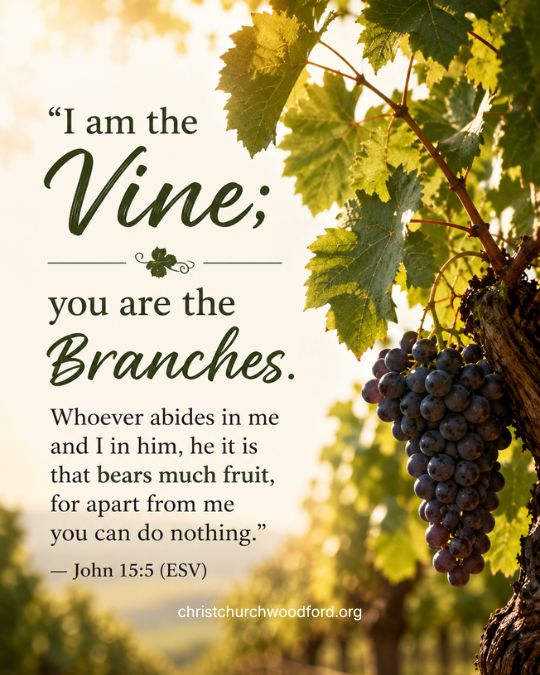
“I am the vine; you are the branches. Whoever abides in me and I in him, he it is that bears much fruit, for apart from me you can do nothing.” — John 15:5 (ESV)
From the Gospels to Paul’s letters, the message remains the same. Spiritual fruit is never something we manufacture through willpower. It grows naturally as we remain connected to Christ, the true source of life.
Why Paul Calls It “Fruit” Instead of “Fruits”
One of the most overlooked details in Galatians 5:22–23 is that Paul uses the word “fruit,” not “fruits.” In the original Greek, the word is singular, even though he immediately lists nine different qualities.
Why does that matter?
Because Paul isn’t giving us nine separate virtues to choose from. He’s describing one unified work of the Holy Spirit expressed in nine different ways. Love, joy, peace, patience, kindness, goodness, faithfulness, gentleness, and self-control all grow from the same source. They aren’t independent qualities that believers can pick according to their personality or strengths.
Think of an orange. It has many segments, but it’s still one piece of fruit. You wouldn’t remove a few segments and call it a different orange. In the same way, spiritual growth isn’t selective. As the Holy Spirit transforms your life, all nine qualities are meant to mature together, even though some may become more evident than others at different seasons of your walk with Christ.
The 9 Fruits of the Spirit and Their Meanings
Here’s where we slow down and look at each one honestly, not as a definition to memorize, but as a quality to recognize in your own life.
Love
Love here isn’t a feeling that comes and goes with your mood. Paul describes it this way:
“Love is patient and kind; love does not envy or boast; it is not arrogant or rude. It does not insist on its own way; it is not irritable or resentful.” – 1 Corinthians 13:4–5
This is love that chooses the good of another person even when it costs you something. It’s the kind of love that stays kind on a hard day, that doesn’t keep score, that shows up even when it’s inconvenient. Spirit-produced love isn’t about grand gestures. It’s about small, consistent choices to put someone else first.
Joy
Joy is not the same as happiness. Happiness depends on circumstances going well. Joy is deeper. It’s rooted in who God is, not in what’s happening around you. That’s why Paul could write about joy from a prison cell, and James could tell believers to consider it pure joy when facing trials.
“Count it all joy, my brothers, when you meet trials of various kinds.” – James 1:2
Joy in the Spirit means you can grieve honestly and still hold onto hope. It’s not pretending everything is fine. It’s trusting that God is good even when your circumstances aren’t.

Peace
Peace, in the biblical sense, is the settled confidence that God is in control even when life feels chaotic.
“Do not be anxious about anything, but in everything by prayer and supplication with thanksgiving let your requests be made known to God. And the peace of God, which surpasses all understanding, will guard your hearts and your minds in Christ Jesus.” – Philippians 4:6–7
This peace doesn’t mean the absence of a storm. It means you’re not being tossed around by it. You’ve handed the outcome to God, and that settles something in you that circumstances can’t touch.

Patience
Patience is the willingness to wait without giving up and to endure without lashing out. Scripture calls it long-suffering in some translations, and that word captures something important: patience often costs something. It’s suffering long with people and situations that frustrate you, without losing your composure or your love for them.
Patience shows up most clearly not when life is easy, but when someone tests your last nerve. It’s choosing calm over control, and trust over frustration, one moment at a time.
Kindness
Kindness is love in action. It’s the practical, everyday expression of care toward people, whether they deserve it or not.
“Be kind to one another, tenderhearted, forgiving one another, as God in Christ forgave you.” – Ephesians 4:32
Kindness doesn’t require a grand plan. It shows up in how you speak to the person serving your coffee, how you respond to a coworker’s mistake, how you treat someone who has nothing to offer you in return. It’s one of the most visible, ordinary ways the Spirit’s presence becomes obvious to the people around you.

Goodness
Goodness is moral integrity paired with generosity. It’s doing what’s right even when no one’s watching, and doing what’s good for others even when it costs you. Goodness isn’t about being nice for the sake of being liked. It’s about having a character shaped by God’s own goodness, one that consistently chooses what’s right over what’s easy.
This is the fruit that gives your other virtues backbone. Love without goodness can become sentimental. Goodness keeps love honest.
Faithfulness
Faithfulness is reliability over time. It’s showing up, keeping your word, and staying committed even when the excitement has worn off. God describes His own character this way:
“His mercies never come to an end; they are new every morning; great is your faithfulness.” – Lamentations 3:22–23
As the Spirit produces faithfulness in you, you become someone people can count on, not because you’re perfect, but because you follow through. Faithfulness is quiet. It rarely gets applause. But it’s the fruit that holds relationships, marriages, friendships, and churches together over the long haul.
Gentleness
Gentleness is strength under control. It’s not weakness or timidity. It’s the ability to hold power and choose restraint, to correct someone without crushing them, to be firm without being harsh.
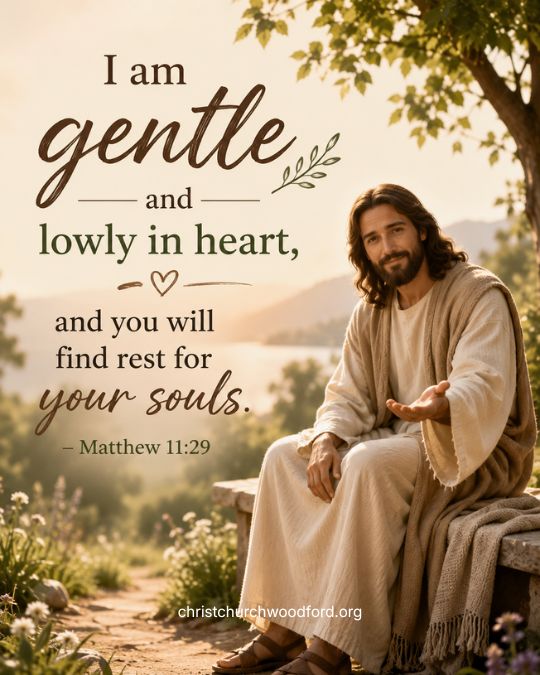
“I am gentle and lowly in heart, and you will find rest for your souls.” – Matthew 11:29
Gentleness matters most in the moments you have the most leverage, when you could win an argument, prove a point, or put someone in their place, and you choose not to. It’s a fruit that protects other people from your worst impulses.
Self-Control
Self-control is the ability to say no to what you want in the moment for the sake of what’s right in the long run. It governs appetite, temper, speech, and impulse. Without it, every other fruit becomes fragile, because love, patience, and gentleness all require the ability to hold yourself back.
Self-control isn’t white-knuckle discipline. It’s what grows naturally as the Spirit takes a deeper hold of your desires, so that what you want starts to line up with what God wants.
What Is the Difference Between the Fruit and Gifts of the Spirit?
One of the most common questions Christians ask is whether the fruit of the Spirit and the gifts of the Spirit are the same thing. While both come from the Holy Spirit, they are not the same.
Spiritual gifts are abilities God gives believers to serve others and build up the church. Paul lists many of them in 1 Corinthians 12, including teaching, prophecy, healing, leadership, and speaking in tongues. Not every Christian receives the same gifts because the Holy Spirit distributes them according to His will.
The fruit of the Spirit is different. Every believer is called to grow in all nine qualities listed in Galatians 5:22–23. Simply put, gifts shape your ministry, while fruit shapes your character.
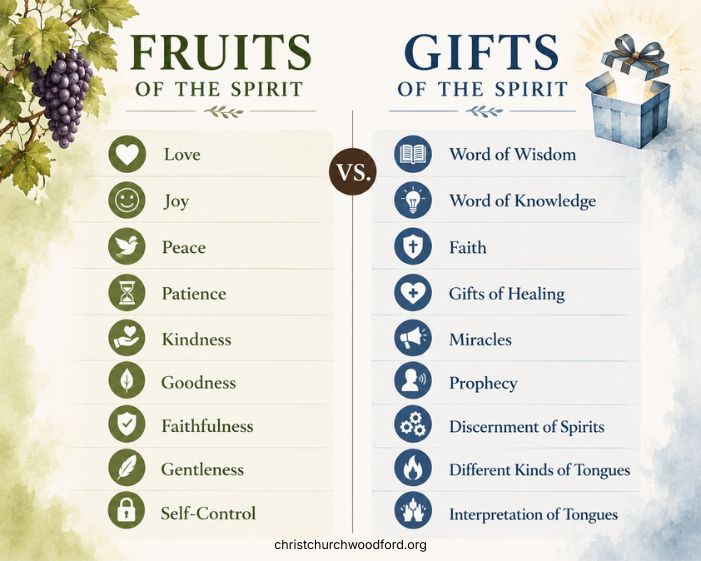
| Fruit of the Spirit | Gifts of the Spirit |
|---|---|
| Focus on character | Focus on service and ministry |
| Every believer should grow in all nine qualities | Each believer receives different gifts |
| Found in Galatians 5:22–23 | Primarily found in 1 Corinthians 12, Romans 12, and Ephesians 4 |
| Develop gradually through spiritual growth | Given by the Holy Spirit according to His will |
| Evidence of spiritual maturity | Equips believers to serve the church |
| Shows who you are becoming | Determines how you serve others |
Both are essential, but they should never be separated. A person may have an impressive spiritual gift and still struggle with patience, humility, or self-control. That’s why Paul follows his teaching on spiritual gifts in 1 Corinthians 12 with 1 Corinthians 13—the famous chapter on love. His point is clear: gifts without Christlike character are incomplete.
A simple way to remember the difference is this:
Gifts are what God enables you to do. Fruit is who God is transforming you to become.
As Christians, we should desire to use the gifts God has given us, but never at the expense of growing the fruit that reflects the character of Christ.
How to Grow the Fruit of the Spirit
The fruit of the Spirit doesn’t grow because we try harder—it grows because we stay connected to Christ. Jesus said, “Apart from me you can do nothing” (John 15:5). Like a branch connected to the vine, spiritual growth happens through an ongoing relationship with Him.
But staying connected to Christ isn’t only about reading your Bible in the morning. It’s about inviting Him into the decisions you make throughout the day.
- When you’re about to lose your temper, pause before you speak and ask yourself, “What response would honor Christ right now?”
- When someone disappoints you, resist the urge to react immediately. Take time to pray before sending the text or replying to the email.
- When you realize you’ve been impatient or selfish, don’t ignore it—confess it to God, learn from it, and choose differently the next time.
This kind of reflection matters because our character is shaped by repeated choices. Every time you choose forgiveness over resentment, generosity over selfishness, or self-control over impulse, you’re creating new habits that align with the work of the Holy Spirit. Over time, those choices become part of who you are.
God also uses ordinary life as His classroom. Waiting in traffic teaches patience. Raising children teaches kindness and gentleness. Disagreements become opportunities to practice self-control. Seasons of uncertainty teach us to find peace in God’s promises instead of our circumstances. The goal isn’t to avoid difficult situations but to let God use them to shape us.
Can I encourage you with something?
Don’t focus on trying to improve all nine fruits at once. Ask yourself, “Which area of my character is God exposing right now?” Spend the next week intentionally practicing that one fruit. At the end of each day, take a few minutes to reflect. Where did you respond like Christ? Where did you fall short? Thank God for His grace, ask for His help, and begin again tomorrow.
Like fruit on a tree, spiritual maturity develops gradually. You may not notice dramatic change in a week, but over months and years, the Holy Spirit quietly reshapes your character. One day you’ll look back and realize you respond differently than you once did—not because you became stronger on your own, but because Christ has been faithfully changing you all along.
Frequently Asked Questions
1. Can Christians have the Holy Spirit and still struggle with sin?
Yes. Receiving the Holy Spirit doesn’t mean a believer becomes instantly perfect. Christians still battle temptation and sin, but the Holy Spirit works within them to produce ongoing transformation. Spiritual growth is a lifelong process of becoming more like Christ.
2. Do the fruits of the Spirit appear instantly?
No. Like fruit on a tree, spiritual fruit develops over time. As believers continue walking with Christ, the Holy Spirit gradually shapes their character through everyday experiences, obedience, and seasons of growth. Don’t measure your faith by how quickly you’re changing, but by whether you’re becoming more like Christ over time.
3. Are the fruits of the Spirit the same as personality traits?
No. Personality comes naturally, while the fruit of the Spirit is the supernatural work of God in a believer’s life. A naturally calm person isn’t necessarily displaying biblical peace, just as someone who is naturally quiet isn’t automatically displaying biblical gentleness. The fruit of the Spirit becomes most evident when it appears in situations where your natural response would be the opposite.
4. Can a Christian be stronger in one fruit than another?
Yes. Every believer grows at a different pace, so some qualities may be more developed than others. However, because the fruit of the Spirit is one unified work of the Holy Spirit, God desires all nine qualities to mature throughout the Christian life. The goal isn’t perfection overnight but steady growth into the character of Christ.
5. Why does God develop fruit through difficult circumstances?
Many of the qualities listed in Galatians 5 are best developed during life’s challenges. Patience grows while waiting, peace grows during uncertainty, and kindness is often deepened through difficult relationships. Rather than wasting trials, God often uses them to shape believers into the likeness of Christ.
The Fruit Will Come
The fruit of the Spirit was never meant to be a performance. It’s what happens naturally when your life stays connected to Christ, season after season, choice after choice. Some days that growth will feel obvious. Other days it’ll feel painfully slow. Both are normal.
I want you to know that if you’re discouraged because you don’t feel patient or gentle or joyful today, that’s not a sign the Spirit has given up on you. It’s a sign you’re still growing. Stay rooted. Keep walking in step with the Spirit. The fruit will come, because it always does when the source is real.