Is Smoking a Sin? What the Bible Really Says (And Why It’s Complicated)

Okay, so here’s the honest answer upfront: The Bible never explicitly says “Thou shalt not smoke,” because tobacco didn’t exist in biblical times—but Scripture does give us principles about body stewardship (1 Corinthians 6:19-20), addiction and enslavement (Galatians 5:1), harming ourselves and others, and Christian witness that most theologians apply to smoking.
Whether it’s technically “sin” depends on how you define sin—is it only what Scripture explicitly forbids, or does it include violating biblical principles about caring for the body God gave you, avoiding addiction, and not causing others to stumble? Different Christian traditions answer this differently, which is why your Catholic friend, your Baptist pastor, and your Seventh-day Adventist coworker might all have completely different takes on whether lighting up makes you a sinner.
Let me be vulnerable here: I’ve never smoked cigarettes myself, but I’ve watched family members struggle with nicotine addiction for decades. I’ve seen the health consequences, the guilt, the failed quit attempts, and honestly? The last thing someone battling addiction needs is spiritual condemnation piled on top of physical dependency.
So we’re going to tackle this with grace, nuance, and honesty about what Scripture actually says versus what we’ve made it say.
What Does the Bible Actually Say About Smoking? (Spoiler: Nothing Directly)
Here’s the thing that makes this question tricky: tobacco wasn’t introduced to Europe until the 1500s. The apostle Paul never saw a cigarette. Jesus never addressed vaping. Moses didn’t come down from Mount Sinai with “No smoking within 25 feet of the tabernacle” etched on the tablets.
So when people ask “Is smoking a sin?”, we’re not asking “What does Leviticus 23:7 say about Marlboros?” We’re asking a deeper question:
Can we apply biblical principles about our bodies, self-control, and stewardship to a substance that wasn’t around when Scripture was written?
The answer is yes—but we’ve got to be honest about what we’re doing. We’re interpreting and applying principles, not quoting chapter and verse. There’s a massive difference between “The Bible clearly says X is sin” and “Based on biblical principles about Y and Z, many Christians conclude X violates those principles.”
The Key Passages Christians Reference
When Christians discuss smoking and sin, they typically point to these Scriptures:
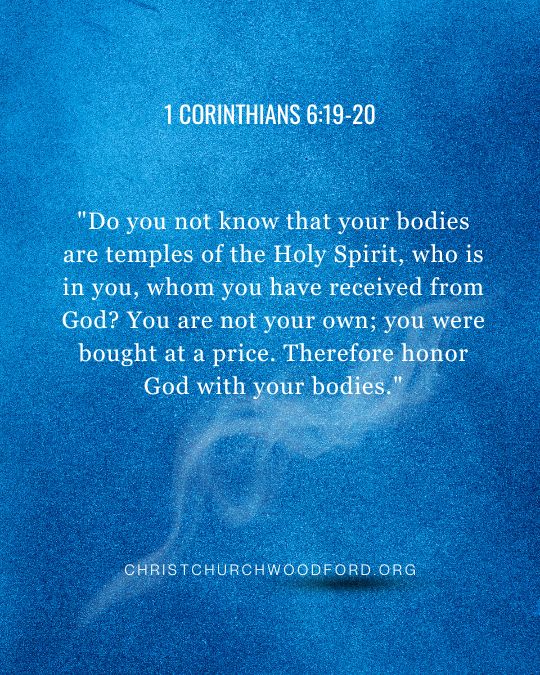
1 Corinthians 6:19-20 – “Do you not know that your bodies are temples of the Holy Spirit, who is in you, whom you have received from God? You are not your own; you were bought at a price. Therefore honor God with your bodies.”
This is the big one. Paul’s telling the Corinthian church that if you’re a Christian, your body isn’t just yours to do whatever you want with—it belongs to God. It’s literally the dwelling place of the Holy Spirit. The question becomes: Does deliberately inhaling carcinogenic smoke “honor God with your body”?
1 Corinthians 6:12 – “I have the right to do anything, you say—but not everything is beneficial. I have the right to do anything—but I will not be mastered by anything.”
Paul’s addressing Christian freedom here, but with a crucial caveat: Just because something isn’t explicitly forbidden doesn’t mean it’s wise or good for you. And here’s the kicker—if something has mastered you (hello, nicotine addiction), you’ve lost your freedom even if you started with it.
Galatians 5:1 – “It is for freedom that Christ has set us free. Stand firm, then, and do not let yourselves be burdened again by a yoke of slavery.”
Nicotine is one of the most addictive substances on earth. The irony of defending “Christian liberty” to smoke while being physically enslaved to cigarettes isn’t lost on most theologians.
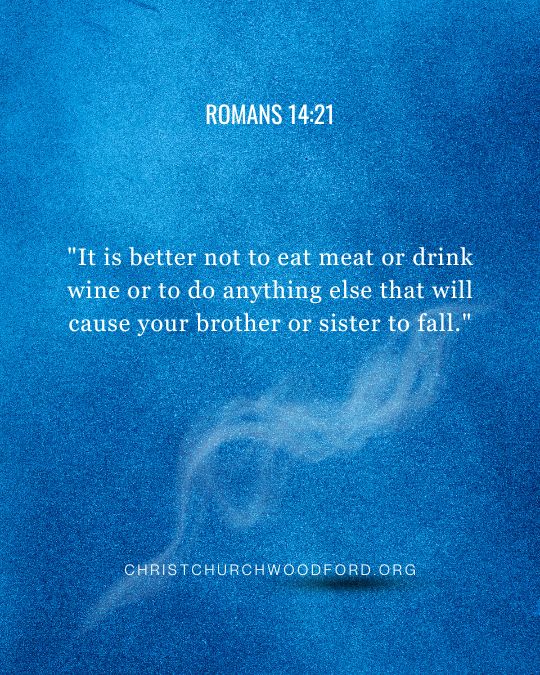
Romans 14:21 – “It is better not to eat meat or drink wine or to do anything else that will cause your brother or sister to fall.”
This one’s about how our actions affect other believers. If your smoking causes a weaker Christian to stumble, or undermines your testimony, or influences your kids to start smoking—that’s a problem regardless of whether smoking itself is technically sinful.
Key Takeaways:
- Scripture doesn’t mention tobacco because it didn’t exist in biblical times
- Christians apply general principles about body stewardship, addiction, and witness
- There’s a difference between explicit commands and principle-based application
- Context matters—Paul was addressing specific situations in first-century churches
The “Body as Temple” Argument: Does It Hold Up?
Let’s dig deeper into that 1 Corinthians 6 passage, because it’s the foundation of most Christian anti-smoking arguments.
When Paul writes “your bodies are temples of the Holy Spirit,” he’s originally addressing sexual immorality. The Corinthians were visiting temple prostitutes and arguing “Hey, it’s just physical stuff, doesn’t affect my spirit!” Paul demolishes that argument by saying your physical body matters spiritually because God’s Spirit lives there.
Now, Christians have legitimately extended this principle beyond sexual ethics to ask: “If my body is God’s temple, should I…
- Smoke cigarettes that cause lung cancer, emphysema, and heart disease?
- Overeat to the point of obesity and diabetes?
- Abuse alcohol or drugs?
- Neglect exercise and basic health?
- Get multiple plastic surgeries for vanity?”
See how this gets complicated fast? If we’re going to say smoking violates the “body as temple” principle, we’ve got to be consistent. That means addressing obesity, sedentary lifestyles, junk food addiction, and a whole lot of other behaviors that harm the body.
I’m not saying this to excuse smoking—I’m saying that if we’re going to use 1 Corinthians 6:19-20 as our anti-smoking verse, we need to apply it across the board to all self-destructive health behaviors, not just the ones that culturally bother us.
The Health Consequences Are Real
Let’s be brutally honest about what smoking does to “God’s temple”:
- Lung Cancer: “Smoking causes 87% of lung cancer deaths (American Cancer Society, (2023); U.S. Department of Health and Human Services, 2014).”
- COPD: “Chronic obstructive pulmonary disease (COPD) and emphysema represent chronic, irreversible lung damage primarily caused by smoking (Centers for Disease Control and Prevention, 2024).”
- Heart Disease: “Smokers face doubled risk for heart disease and stroke compared to non-smokers (American Heart Association, 2024; CDC, 2023).”
- Reduced Lifespan: “On average, smoking reduces lifespan by approximately 10 years (Jha et al., 2013; National Cancer Institute, 2017).”
- Secondhand Smoke: “Secondhand smoke causes significant harm to family members, particularly children, through increased risk of respiratory infections, asthma, and sudden infant death syndrome (CDC, 2023; U.S. Department of Health and Human Services, 2006).”
The medical science is undeniable. Smoking destroys the body systematically and progressively. If you genuinely believe your body is God’s property, not yours, then deliberately damaging it through smoking does seem inconsistent with that belief.
But—and this is important—being sick or having self-inflicted health problems doesn’t make you a worse Christian. Jesus didn’t heal people because they were worthy; He healed them because He’s compassionate. If you smoke and you’re struggling with addiction, God’s not standing over you with arms crossed, disappointed. He’s the Father who runs toward the prodigal son.
Key Takeaways:
- The “body as temple” principle legitimately applies to health choices
- We need consistency—if smoking violates this, so do other unhealthy habits
- Medical consequences of smoking are severe and well-documented
- Health struggles don’t make you less loved by God
Addiction, Enslavement, and the Freedom Problem
Here’s where the theology gets really interesting—and convicting.
Nicotine is as addictive as heroin or cocaine according to the Surgeon General. That’s not hyperbole. The reason so many smokers “want to quit but can’t” isn’t lack of willpower—it’s neurobiology. Nicotine rewires your brain’s reward pathways, creating physical and psychological dependency.
Now look again at what Paul writes:
“I will not be mastered by anything.” (1 Corinthians 6:12)
“It is for freedom that Christ has set us free.” (Galatians 5:1)
If you can’t quit smoking—if you’ve tried five, ten, twenty times and the cigarettes always win—are you free? Or are you enslaved?
I know this sounds harsh, especially to smokers reading this while thinking “Great, now I’m not just unhealthy, I’m also in spiritual bondage.” But hear me out:
Recognizing addiction as enslavement isn’t condemnation; it’s the first step toward freedom.
The Christian Liberty Defense Doesn’t Work Here
Some Christians defend smoking by saying “It’s a matter of Christian liberty—the Bible doesn’t forbid it, so it’s between me and God.” I’ve heard variations like:
- “Spurgeon smoked cigars!” (This is true, actually)
- “Jesus turned water into wine, so Christians can enjoy substances”
- “We’re saved by grace, not by being healthy”
- “Judge not, that ye be not judged”
Here’s my problem with applying “Christian liberty” to an addictive substance: Liberty means freedom to choose. Addiction means you’ve lost that choice.
You can’t claim Christian liberty to do something that has enslaved you. That’s not freedom—that’s rationalization.
Romans 14 talks about Christian liberty regarding “disputable matters”—eating certain foods, observing certain days. Paul’s point is that mature Christians have freedom, but they exercise it with wisdom and concern for others. Mature Christians don’t flaunt their freedom in ways that harm themselves or cause weaker believers to stumble.
Smoking cigarettes (an addictive carcinogen) while claiming “Christian liberty” is like… I don’t know, chain-eating donuts until you develop diabetes and saying “Food is neutral! All things in moderation! Christian freedom!” Technically you can do it, but it’s a weird hill to die on. Literally.
Key Takeaways:
- Nicotine addiction is real, powerful, and scientifically documented
- Being enslaved to substances contradicts Christian freedom
- “Christian liberty” doesn’t cover behaviors that have enslaved you
- Recognizing addiction isn’t condemnation—it’s truth that leads to freedom
Your Witness, Influence, and the “Causing Others to Stumble” Issue
Okay, let’s talk about how your smoking affects other people—because biblical ethics isn’t just about your personal relationship with God.
Romans 14:21 says: “It is better not to eat meat or drink wine or to do anything else that will cause your brother or sister to fall.”
Paul’s context was eating food sacrificed to idols, but the principle applies broadly: Your freedom ends where another person’s spiritual wellbeing begins.
So ask yourself:
- Does my smoking make it harder for non-Christians to take my faith seriously?
- Am I making it more likely my kids will smoke? (Studies say yes—children of smokers are 2-3x more likely to start)
- Is my smoking causing a fellow believer who’s trying to quit to relapse?
- Does my smoking undermine my testimony in a health-conscious culture?
I’ve got a friend who’s a youth pastor and a smoker. He’s tried to quit multiple times. He told me the hardest part isn’t the physical withdrawal—it’s knowing that teens at church have seen him smoking and thinking “How can he tell us to avoid drugs when he’s addicted to cigarettes?”
That’s the “causing others to stumble” issue in real life. It’s not theoretical.
The Public Perception Problem
Like it or not, smoking carries cultural baggage. In 1950, doctors appeared in cigarette ads. In 2025, smoking is increasingly seen as unhealthy, lower-class, and socially unacceptable. That’s not entirely fair (plenty of educated, thoughtful people smoke), but it’s reality.
When a Christian smokes publicly, non-believers often think:
- “If Christianity really transforms people, why can’t he quit?”
- “She says her body is God’s temple but treats it like an ashtray?”
- “How is he different from anyone else?”
Again—this might not be fair. We all have struggles and inconsistencies. But if our goal is to effectively witness for Christ, we have to consider how our actions are perceived, not just how we justify them internally.
Key Takeaways:
- Our behavior affects other Christians and non-believers
- Children of smokers are significantly more likely to smoke
- Public witness matters in an age where smoking is culturally declining
- “Causing others to stumble” is a real biblical concern, not just theory
What Different Christian Traditions Actually Teach
Here’s where it gets interesting—Christians disagree about smoking, which tells you it’s not a black-and-white issue.
| Tradition | Official Position | Reasoning |
|---|---|---|
| Roman Catholic | Not mortally sinful but potentially venial sin; discouraged | Violates stewardship of health; self-harm concerns; not explicitly forbidden |
| Protestant Evangelical | Generally considered unwise; many view as sinful | Body stewardship, addiction, and witness concerns outweigh “not explicitly forbidden” |
| Seventh-day Adventist | Clearly prohibited | Strong health emphasis; temperance as part of holiness; explicit church teaching |
| Eastern Orthodox | Discouraged as lack of self-control | Part of ascetic discipline; body care seen as spiritual practice |
| Pentecostal | Often considered sinful | Emphasis on holiness living; separation from worldly habits |
| Mainline Protestant | Personal conscience matter | Christian liberty; focus on grace rather than legalism |
Charles Spurgeon, one of history’s greatest preachers, famously smoked cigars. When criticized, he reportedly said he’d quit when the critic stopped overeating. (Burn. Literally and figuratively.)
John Wesley, founder of Methodism, was hardcore about health—no tobacco, moderate alcohol, lots of exercise. He connected physical health directly to spiritual vitality.
So even Christian giants disagreed. That should make us humble about condemning or defending too quickly.
Key Takeaways:
- Christian traditions vary on smoking from “clear sin” to “personal choice”
- Historical context shows respected Christians on both sides
- The diversity of views suggests humility and grace are needed
- Your denomination likely has an official or informal position worth knowing
FAQ: The Questions You’re Actually Wondering
Can I be saved and still smoke?
Yes. Absolutely. Salvation is by grace through faith in Jesus Christ (Ephesians 2:8-9), not by achieving perfect health habits. If smoking disqualified you from salvation, so would overeating, stress, lack of exercise, and every other health imperfection. You’re saved by Jesus’ perfection, not yours.
Am I condemned if I can’t quit smoking?
No. Romans 8:1 says “There is now no condemnation for those who are in Christ Jesus.” Struggling with addiction doesn’t change your standing before God. He knows your struggle, and He’s compassionate, not condemning.
Should I feel guilty about smoking?
The Holy Spirit convicts of sin to bring us to repentance and freedom, not to crush us with guilt. If you’re feeling genuinely convicted (not just culturally shamed) that smoking violates stewardship principles, that conviction is meant to lead you toward change, not paralyze you with guilt.
How do I quit from a Christian perspective?
Combine spiritual resources (prayer, accountability, Scripture memory) with practical ones (nicotine replacement, counseling, medical help). God works through both. Pray for strength, but also see your doctor. Spiritual willpower alone usually isn’t enough for addiction—and that’s okay.
So… Is Smoking a Sin? My Honest Answer
After all this, here’s what I actually think:
Smoking violates biblical principles about stewardship, self-control, and not being enslaved to anything—which makes it sinful in the sense of falling short of God’s best for us, even if it’s not explicitly forbidden by name in Scripture.
But—and this is crucial—being addicted to cigarettes doesn’t make you a worse Christian, doesn’t disqualify you from ministry, and doesn’t mean God loves you less.
The Christian life is progressive sanctification—we’re all works in progress. Some people struggle with nicotine, others with porn, others with gossip, others with greed. We’re all fighting something.
If you smoke and you’re reading this feeling convicted—good. Let that conviction lead you to seek freedom, not wallow in shame. God’s goal isn’t to make you feel terrible about yourself; it’s to set you free from everything that enslaves you.
If you don’t smoke but you’re feeling self-righteous about it—check yourself. How’s your eating? Your spending? Your anxiety? Your screen addiction? We’ve all got logs in our eyes before we go after the specks in others’ eyes (Matthew 7:3-5).
The Path Forward: Grace, Truth, and Freedom
Here’s how I think we should approach this practically:
If you smoke and want to quit:
- Acknowledge it’s hard—addiction is real
- Get help (medical, spiritual, community)
- Don’t try to white-knuckle it through prayer alone
- Give yourself grace through relapses
- Remember God’s not disappointed in you
If you’re a Christian leader who smokes:
- Consider how it affects your testimony and influence
- Be honest about the struggle rather than defensive
- Set a quit date and get accountability
- Model grace for yourself and others
If you’re addressing smoking in your church:
- Lead with compassion, not condemnation
- Provide resources, not just rules
- Acknowledge it’s complex, not simple
- Focus on freedom, not shame
The goal isn’t to create a new legalism where only perfectly healthy Christians are acceptable. The goal is helping people experience the freedom Christ died to give them—including freedom from addiction, harm, and anything that diminishes the abundant life Jesus promised (John 10:10).
Final Key Takeaways:
- Smoking likely violates biblical stewardship principles even if not explicitly forbidden
- Addiction is real and requires compassion, not condemnation
- God’s grace covers us even as we struggle with sanctification
- Freedom from smoking is possible through both spiritual and practical means
- We all have struggles—let’s extend the grace we want to receive
Look, I know this wasn’t a simple “yes” or “no” answer. But theology rarely is. What I hope you take away is this: God cares about your whole self—body, mind, and spirit. He wants you free from everything that enslaves you, healthy in every dimension, and living abundantly.
If smoking is blocking that—and honestly, for most people it is—then pursue freedom with everything you’ve got, knowing that God’s not mad at you; He’s madly in love with you and fighting for your freedom right alongside you.
Reference list:
American Cancer Society. (2023). Health risks of secondhand smoke.
https://www.cancer.org/cancer/risk-prevention/tobacco/secondhand-smoke.html
American Heart Association. (2024). Smoking and Heart Disease in Women.
https://www.goredforwomen.org/en/know-your-risk/risk-factors/smoking-and-heart-disease
Centers for Disease Control and Prevention. (2024). COPD: Basics about COPD. https://www.cdc.gov/copd/about/index.html
Centers for Disease Control and Prevention. (2023, December 19). Health effects of secondhand smoke.
https://www.cdc.gov/tobacco/secondhand-smoke/health.html
Jha, P., Ramasundarahettige, C., Landsman, V., Rostron, B., Thun, M., Anderson, R. N., McAfee, T., & Peto, R. (2013). 21st-century hazards of smoking and benefits of cessation in the United States. New England Journal of Medicine, 368(4), 341–350.
https://doi.org/10.1056/NEJMsa1211128
Leonardi-Bee, J., Jere, M. L., & Britton, J. (2011). Exposure to parental and sibling smoking and the risk of smoking uptake in childhood and adolescence: A systematic review and meta-analysis. Thorax, 66(10), 847–885.
https://doi.org/10.1136/thx.2010.153379
National Cancer Institute. (2017). Harms of cigarette smoking and health benefits of quitting.
https://www.cancer.gov/about-cancer/causes-prevention/risk/tobacco/cessation-fact-sheet
National Heart, Lung, and Blood Institute. (2022). COPD.
https://www.nhlbi.nih.gov/health/copd
Royal College of Physicians. (2000). Nicotine addiction in Britain: A report of the Tobacco Advisory Group of the Royal College of Physicians. Royal College of Physicians of London.
U.S. Department of Health and Human Services. (1988). The health consequences of smoking: Nicotine addiction: A report of the Surgeon General. U.S. Department of Health and Human Services, Public Health Service, Centers for Disease Control, Center for Health Promotion and Education, Office on Smoking and Health.
U.S. Department of Health and Human Services. (2006). The health consequences of involuntary exposure to tobacco smoke: A report of the Surgeon General. U.S. Department of Health and Human Services, Centers for Disease Control and Prevention, Coordinating Center for Health Promotion, National Center for Chronic Disease Prevention and Health Promotion, Office on Smoking and Health.
U.S. Department of Health and Human Services. (2012). Preventing tobacco use among youth and young adults: A report of the Surgeon General. U.S. Department of Health and Human Services, Centers for Disease Control and Prevention, National Center for Chronic Disease Prevention and Health Promotion, Office on Smoking and Health.