The Seventh Day— the Sabbath: What It Means for Us Today

Of all the rhythms God built into human life, the Sabbath may be the most countercultural. In a world that rewards busyness and treats rest as laziness, the Bible offers a very different word: stop. Breathe. Remember who you are and whose you are.
So what is the Sabbath? At its simplest, the Sabbath is the day God set apart for rest and worship. It appears first in the creation account, then as one of the Ten Commandments, and it winds its way through the entire biblical story — through Israel’s wilderness wanderings, through the teaching of Jesus, and finally into the book of Hebrews, where the Sabbath is reframed as a picture of the eternal rest available in Christ.
The Sabbath still matters today, not as a religious rule to earn God’s favour, but as a living invitation. Whether you are new to faith or have followed Jesus for decades, understanding what the Sabbath means in the Bible will change how you approach your week — and your whole life.
What Does the Sabbath Mean in the Bible?
Definition of Sabbath
The word Sabbath comes from the Hebrew Shabbat, which carries the meaning “to cease” or “to rest.” It is not primarily about sleeping in. The sabbath meaning in the Bible is rooted in intentional stopping — a deliberate laying down of ordinary activity in order to honour God.
The biblical meaning of sabbath, then, is not mere inactivity but a purposeful orientation of an entire day toward God. What does sabbath mean for the person of faith? It means one day out of seven is marked off as holy — different in quality, not just in content.
Why God Made the Sabbath Holy
The sabbath day meaning goes deeper than rest for its own sake. God declared the seventh day holy — set apart, consecrated — which is a word the Bible otherwise reserves for things that belong to God. In making one day holy, God was drawing a boundary around time itself, carving out a space where worship and rest would be woven together.
In that sense, the Sabbath is a gift before it is a command. God did not begin with rules; he began with rest, and then invited humanity into that same rhythm.
The Sabbath Begins at Creation
God Rested on the Seventh Day
Open your Bible to the very beginning and you will find the Sabbath already there. After six days of creative work, Genesis says:
By the seventh day God had finished the work he had been doing; so on the seventh day he rested from all his work. Then God blessed the seventh day and made it holy, because on it he rested from all the work of creating that he had done. – Genesis 2:2–3 (NIV)
It is worth pausing here. God was not tired. The Creator of the universe does not need to recover. When Scripture says God rested, it is describing a completion — a ceasing from the work of creation because the work was finished and good. The rest was not exhaustion; it was satisfaction.
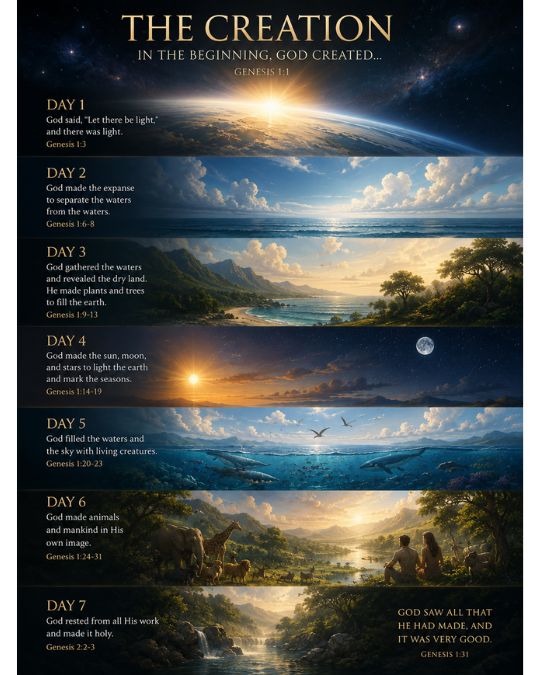
This is significant because it means the Sabbath is not built on human weakness. It is built into the very fabric of creation by a God who declared his work good and stopped — and then invited us to stop with him.
The Pattern of Work and Rest
Six days of creative activity followed by one day of rest: that is the rhythm God modelled at creation. And it is not an accident. God did not need seven days to make the world; he chose to structure creation across a week because he was also showing us how to live in it.
The pattern is as old as light itself — work and rest, effort and renewal, engagement and worship. This is God’s design for humanity, and when we ignore it, we pay a price. The world runs on a seven-day week not because of an ancient Jewish custom, but because God himself built rest into the very structure of time.
The Sabbath in the Ten Commandments
Remember the Sabbath Day
When God gave Israel the Ten Commandments at Sinai, the Sabbath commandment was the longest and most detailed of the ten. Notice the first word:
Remember the Sabbath day by keeping it holy. Six days you shall labour and do all your work, but the seventh day is a sabbath to the Lord your God. On it you shall not do any work, neither you, nor your son or daughter, nor your male or female servant, nor your animals, nor any foreigner residing in your towns. For in six days the Lord made the heavens and the earth, the sea, and all that is in them, but he rested on the seventh day. Therefore the Lord blessed the Sabbath day and made it holy. – Exodus 20:8–11 (NIV)
“Remember” — God knew this was a commandment Israel would be tempted to forget. He grounded it in creation: the rhythm of work and rest that began at Genesis was not new legislation at Sinai.
It was a reminder of something already woven into the world. The significance of the sabbath was not about religious performance; it was about living in alignment with the God who made you.
A Reminder of God’s Deliverance
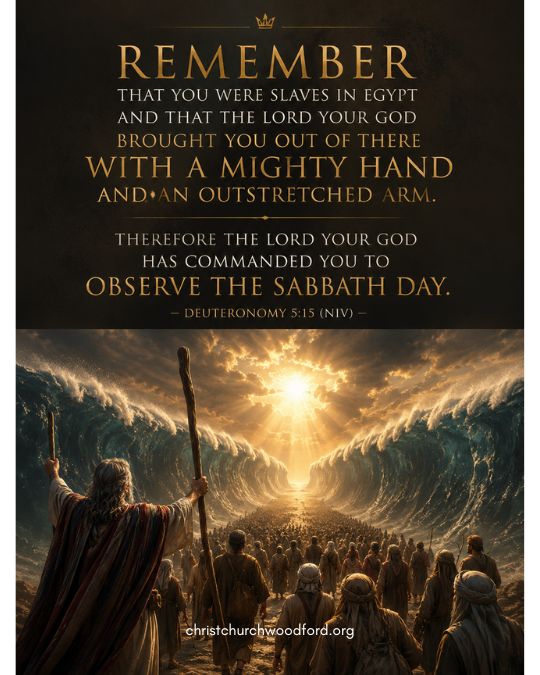
Deuteronomy gives the Sabbath commandment a second layer of meaning — and it is a pastoral one:
Remember that you were slaves in Egypt and that the Lord your God brought you out of there with a mighty hand and an outstretched arm. Therefore the Lord your God has commanded you to observe the Sabbath day. – Deuteronomy 5:15 (NIV)
In Exodus, the Sabbath points back to creation. In Deuteronomy, it points back to redemption. Israel was to rest because they were no longer slaves. Slaves cannot choose to stop. Free people can. Every Sabbath was a weekly declaration: we are not defined by our labour; we are defined by our God.
So the biblical Sabbath holds together two great truths — God is Creator, and God is Redeemer. Both of these found their ultimate fulfilment in Jesus, but we will come to that.
How Was the Sabbath Observed in the Old Testament?
For ancient Israel, the Sabbath was a day set apart for rest, worship, and trust in God. Ordinary work stopped, families gathered, and God’s people assembled for prayer, teaching, and worship. From Friday evening to Saturday evening, the rhythm of daily labour gave way to a rhythm of rest.
The Sabbath was more than a day off. It was a covenant sign between God and Israel, reminding them that they belonged to Him. By laying down their work each week, they demonstrated trust that God would provide for their needs.
At its heart, Sabbath observance taught a simple but powerful lesson: God’s people were not defined by their productivity, but by their relationship with Him.
What Did Jesus Teach About the Sabbath?
The Sabbath Was Made for Man
By the time Jesus came, the religious leaders had built an elaborate system of rules around Sabbath observance. Hundreds of regulations defined what counted as work. What began as a gift had become a burden.
Jesus cut through all of it with a single sentence:
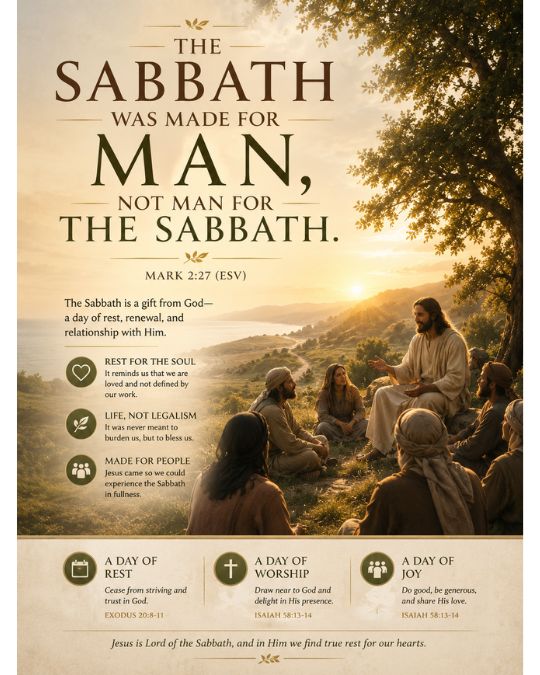
The Sabbath was made for man, not man for the Sabbath. Mark 2:27 (ESV)
This is one of those moments where you can almost hear the air go out of the room. Jesus was not dismissing the Sabbath — he was restoring it. The day was made to serve human flourishing, not to make human beings serve the day. God’s intent was never for the Sabbath to be a crushing obligation; it was always meant to be a gift.
Why Jesus Healed on the Sabbath
Jesus healed people on the Sabbath — deliberately, repeatedly, and without apology. A man with a withered hand. A woman bent double for eighteen years. A man born blind. Each healing on the Sabbath was a statement: mercy is not a violation of God’s law; mercy is the point of God’s law.
When the religious leaders objected, Jesus asked them a question they could not easily answer:
Is it lawful on the Sabbath to do good or to do harm, to save life or to kill?
Doing good on the Sabbath was never the problem. Reducing the day to performance and prohibition was the problem. Jesus drew the line between mercy and legalism and stood clearly on the side of mercy.
Jesus Is Lord of the Sabbath
Then he said something that would have stopped every listener cold:
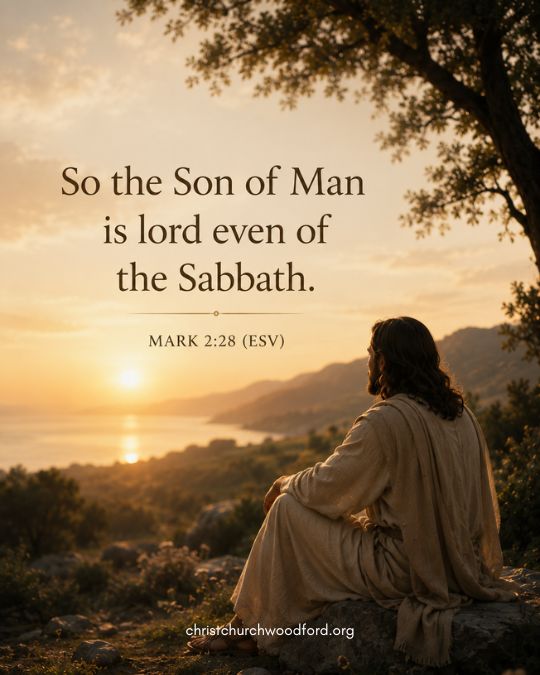
So the Son of Man is lord even of the Sabbath. – Mark 2:28 (ESV)
The Lord of the Sabbath meaning is not simply that Jesus had authority to reinterpret the day. It is that Jesus is the one to whom the Sabbath has always been pointing. The day of rest was never the destination; it was always a signpost toward the One who offers true rest. Jesus is not someone who fits within the Sabbath. The Sabbath fits within him.
Did Jesus keep the Sabbath? Yes — but he kept it in its fullness, stripping away the layers of human tradition that had buried the gift beneath performance.
Did Jesus break the Sabbath? Not by God’s standard. He broke the Pharisees’ standard, and that was exactly what needed breaking.
How the Sabbath Points to Jesus Christ
The Sabbath Finds Its Fulfillment in Christ
This is the theological heart of the matter. The writer of Hebrews sees the Sabbath not as a weekly obligation but as a cosmic promise — and a promise now available to us in Jesus:
So then, there remains a Sabbath rest for the people of God, for whoever has entered God’s rest has also rested from his works as God did from his. Let us therefore strive to enter that rest, so that no one may fall by the same sort of disobedience. – Hebrews 4:9–11 (ESV)
The Hebrews 4 sabbath rest is not merely about one day in seven. It is about the deeper rest that the weekly Sabbath always anticipated — the rest of a soul that has stopped striving to earn God’s favour and entered into the finished work of Christ.
The sabbath fulfilled in Christ means that every layer of the Sabbath — creation rest, redemption rest, eternal rest in the Bible — finds its full meaning in him.
The Rest Jesus Offers
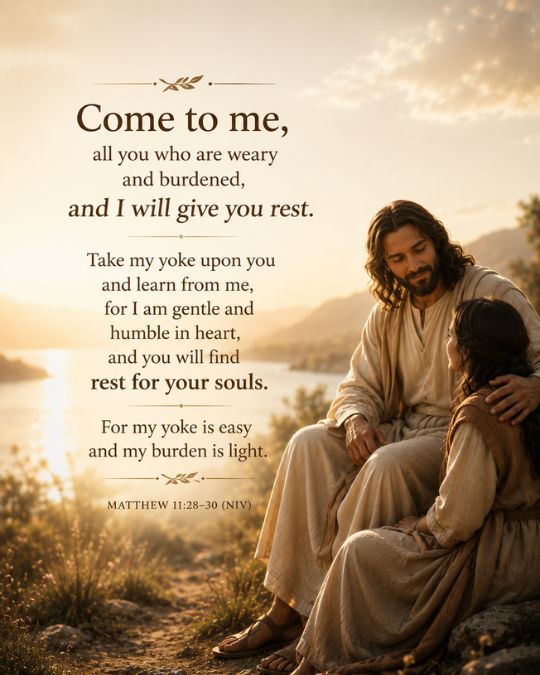
Jesus himself extended this invitation in words that every weary person needs to hear:
Come to me, all you who are weary and burdened, and I will give you rest. Take my yoke upon you and learn from me, for I am gentle and humble in heart, and you will find rest for your souls. For my yoke is easy and my burden is light. – Matthew 11:28–30 (NIV)
This is the voice of the Lord of the Sabbath speaking directly to you. Not “perform better.” Not “try harder.” Come. The spiritual rest in Christ that Jesus offers is a rest not just for your body on one day of the week, but for your soul across every day of your life.
Resting in Grace Rather Than Works
The Sabbath was always, at its deepest level, a theological statement: you are not saved by what you produce. Israel rested and trusted God to provide. Christians rest and trust Christ for something even greater — salvation itself.
The Sabbath fulfilled in Christ means we are not saved by our spiritual productivity. We are saved by faith in the one whose work is finished. The cross is the ultimate Sabbath — the moment when Jesus cried “It is finished” and the striving ended. The rest that remains for God’s people is not earned; it is received. This is what it means to rest in grace rather than works.
What Does the Sabbath Mean for Christians Today?
Making Time for Worship
Whatever your view on which day is the biblical Sabbath, the principle of gathering with God’s people remains clear throughout the New Testament.
The early church met on the first day of the week to break bread and hear the Word. If you are a Christian, this is not optional — it is part of what it means to belong to the body of Christ. Designating a day for worship is a sabbath for Christians in its most practical form.
Trusting God Enough to Rest
Here is the uncomfortable question the Sabbath puts to us: do you actually trust God enough to stop?
Every time you work through a Sunday, cancel worship for productivity, or cannot put down the phone because the world might fall apart without you, the Sabbath confronts you with the same question it put to ancient Israel: do you believe God will provide?
Is the Sabbath still relevant today? Urgently, yes. Especially in a culture where overwork is a badge of honour and rest is treated as weakness. The Sabbath says otherwise. Rest is an act of faith.
Finding Healthy Rhythms in a Busy World
You do not have to figure out every theological question about Saturday versus Sunday to begin practising the wisdom of the Sabbath. Start with this: give God one day. Gather with his people. Put the work down. Eat a meal with someone you love. Open your Bible without an agenda. Pray without rushing.
The Christian sabbath meaning — whether observed on Saturday, Sunday, or understood as a posture more than a day — is fundamentally this: stop doing and start receiving.
The same God who rested on the seventh day is offering you rest today. The same Jesus who said “come to me” is still saying it. The invitation has not expired.
Frequently Asked Questions
What day is the biblical Sabbath?
The biblical Sabbath is the seventh day of the week—Saturday, observed from Friday sunset to Saturday sunset in Jewish tradition. It is rooted in God’s rest after creation (Genesis 2:2–3) and the Fourth Commandment (Exodus 20:8–11).
Why do Christians worship on Sunday?
Christians worship on Sunday because Jesus rose from the dead on the first day of the week. The early church gathered on Sunday to celebrate the resurrection, and it became known as the Lord’s Day.
Did Jesus break the Sabbath?
No. Jesus challenged human traditions that had turned the Sabbath into a burden, but He did not violate God’s law. Instead, He revealed the Sabbath’s true purpose by showing mercy, healing the sick, and doing good.
What does Hebrews 4 say about the Sabbath?
Hebrews 4 teaches that the Sabbath ultimately points to a deeper spiritual rest found in Christ. Those who trust in Jesus enter God’s rest, ceasing from striving to earn salvation through their own works.
Why was the Sabbath changed to Sunday?
The original biblical Sabbath is Saturday. Most Christians began worshipping on Sunday because it was the day of Christ’s resurrection, though Christians hold different views on whether Sunday replaces the Old Testament Sabbath.
Are Christians required to keep the Sabbath?
Christians differ on this question. While some traditions continue to observe a Sabbath day, many believe the Sabbath was fulfilled in Christ and that believers have freedom regarding specific days (Romans 14:5–6; Colossians 2:16–17). Regardless of one’s view, Scripture continues to emphasize the importance of worship, rest, and trust in God.
Conclusion: The Rest That Remains
From the very first pages of Genesis to the theological heights of Hebrews, the Sabbath carries a single consistent message: God is both Creator and Redeemer, and the rest he offers cannot be earned — only received.
Christians differ on the details. Saturday or Sunday, strict observance or a more open approach — these are real questions, and Scripture gives room for genuine disagreement. But beneath those questions, something is not in dispute: the rhythm of rest is God’s gift to human beings, and it reaches its deepest meaning in Jesus Christ.
The shadow pointed to the substance. The substance has arrived. The invitation still stands.
So wherever you are today — exhausted by the pace of life, burdened by guilt, trying to earn something you were always meant to receive — hear the words of the Lord of the Sabbath: Come to me. Rest. The work is finished. You can stop now.
That is what the Sabbath has always been trying to tell us.

I’m wondering if there is a printable copy of this study. I love the the context expressed to help me understand the definition of the sabbath. Very well written😊