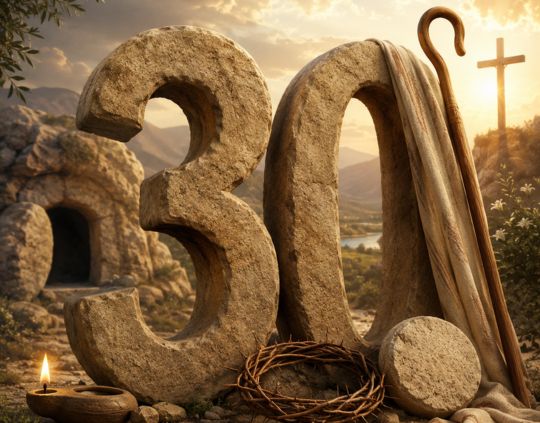
Biblical Meaning of Number 40: Why God Uses This Number for Testing and Transformation

The biblical meaning of the number 40 is closely associated with testing, preparation, waiting, and spiritual transformation. Throughout Scripture, the number 40 appears during pivotal moments when God prepares individuals, nations, and even all humanity for a new season. From Noah’s flood and Israel’s wilderness journey to Jesus’s fasting in the desert, the number consistently marks a period of refinement before a significant change or new beginning.
Why Is the Number 40 Significant in the Bible?
Unlike some biblical numbers that appear only occasionally, the number 40 is woven throughout both the Old and New Testaments. It is frequently connected to seasons of testing, judgment, repentance, preparation, and spiritual growth.
While the Bible does not explicitly explain why God chose this number, its repeated use reveals a consistent pattern: before major breakthroughs often comes a period of waiting, dependence on God, and transformation.
Key Takeaways:
- The number often appears before a new beginning, renewed purpose, or important transition.
- The number 40 is one of the most significant numbers in the Bible.
- It commonly represents testing, preparation, and spiritual growth.
- Major biblical events involving Noah, Moses, Israel, Elijah, and Jesus include a period of forty days or forty years.
Noah and the Original 40: When Heaven Opened for 40 Days and 40 Nights
Noah’s flood provides the first major appearance of the number 40 in Scripture, establishing a pattern that appears repeatedly throughout the Bible. The biblical meaning of number 40 is closely connected to testing, cleansing, judgment, and preparation for a new beginning.
Genesis 7:12 tells us, “And rain fell on the earth forty days and forty nights.”
This was far more than a prolonged storm. The forty days and forty nights of rain represented God’s judgment on a world filled with wickedness, while also preparing the way for renewal and restoration.

Yet the flood was not only about judgment. It was also about cleansing and transformation. While Noah and his family remained safely inside the ark, God was removing the old and preparing a new beginning for humanity. This theme of spiritual renewal becomes an important part of the significance of number 40 in the Bible.
The pattern continued even after the rain ended.
Genesis 8:6 says, “After forty days Noah opened a window he had made in the ark.”
Even after God’s judgment had passed, Noah experienced another period of waiting before stepping into what came next. Throughout Scripture, the number 40 often marks this transition period—a season when God is preparing His people for the next stage of His plan.
Noah’s story establishes an important biblical pattern: before a new beginning often comes a season of waiting, testing, and transformation.
Moses: The Man Who Lived in 40-Year Chapters
If anyone illustrates the biblical meaning of number 40, it is Moses. His life was divided into three distinct forty-year periods, each one preparing him for the next stage of God’s plan.
Act One: 40 years as a prince in Egypt (Acts 7:23). Living in luxury, completely oblivious to his true calling.
Act Two: 40 years as a shepherd in Midian (Acts 7:30). Exiled, humbled, learning to lead sheep before he’d lead people.
Act Three: 40 years leading Israel through the wilderness (Deuteronomy 29:5). The job he was born for, even though it nearly killed him.

Moses’s connection to the number 40 did not end there. He also spent forty days and forty nights on Mount Sinai receiving God’s Law. After Israel’s sin with the golden calf, Moses returned to the mountain and spent another forty days in God’s presence.
Exodus 24:18 says, “Then Moses entered the cloud as he went on up the mountain. And he stayed on the mountain forty days and forty nights.”
During this extraordinary encounter, Moses received God’s commandments and experienced a profound spiritual transformation. When he came down from the mountain, his face shone with God’s glory (Exodus 34:29-30), reflecting the power of time spent in God’s presence.
Moses’s story reveals an important aspect of the significance of number 40 in the Bible: God often uses extended seasons of preparation before calling His people into greater responsibility and service.
Israel’s 40 Years: The Wilderness That Redefined a Nation
One of the clearest examples of the biblical meaning of number 40 is Israel’s forty years in the wilderness. What should have been a relatively short journey to the Promised Land became an entire generation’s lifetime in the desert.
The Israelites arrived at the edge of the Promised Land and sent spies to explore the land God had promised them. Yet after hearing reports of giants and fortified cities, the people responded with fear instead of faith. Rather than trusting God’s promise, they longed to return to Egypt.
Numbers 14:34 – “For forty years—one year for each of the forty days you explored the land—you will suffer for your sins and know what it is like to have me against you.”
The forty years in the wilderness became a direct result of Israel’s unbelief and disobedience.
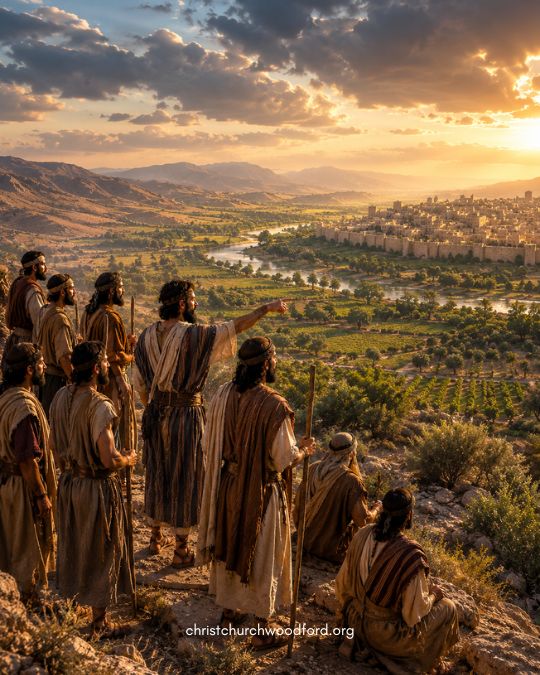
Yet those forty years were not only about judgment. They were also a season of spiritual formation. The generation that left Egypt still carried the mindset of slavery, but God used the wilderness to teach dependence, obedience, and trust. Their children—the generation that eventually entered the Promised Land—grew up experiencing God’s daily provision and guidance.
The significance of number 40 in the Bible is clearly seen here. God used an extended wilderness season to transform a group of former slaves into a covenant nation prepared for a new beginning in the land He had promised them.
Israel’s story reminds us that seasons of testing and waiting are not always wasted. Even in the wilderness, God is at work shaping His people for what comes next.
Jesus and the 40 Days That Changed Everything
Fast forward about 1,500 years. After His baptism in the Jordan River, the heavens opened and God declared:
“This is my Son, whom I love; with him I am well pleased.” – Matthew 3:17
Immediately afterward, the Spirit led Jesus into the wilderness to be tempted by the devil. For how long? Forty days.
“After fasting forty days and forty nights, he was hungry.” – Matthew 4:2
This was far more than a physical fast. Jesus’s forty days in the wilderness mirrored Israel’s forty years in the desert. Yet where Israel failed, Jesus remained faithful. Where they complained, He trusted. Where they sought physical bread, He relied on God’s Word.
“Man shall not live on bread alone, but on every word that comes from the mouth of God.” – Matthew 4:4
Jesus was doing what Israel could not do—passing the test. The spiritual meaning of 40 reaches its climax here as Christ endured a complete season of testing and emerged victorious.
The number 40 appears again after the resurrection. Before ascending to heaven, Jesus spent forty days appearing to His disciples and preparing them for their mission.
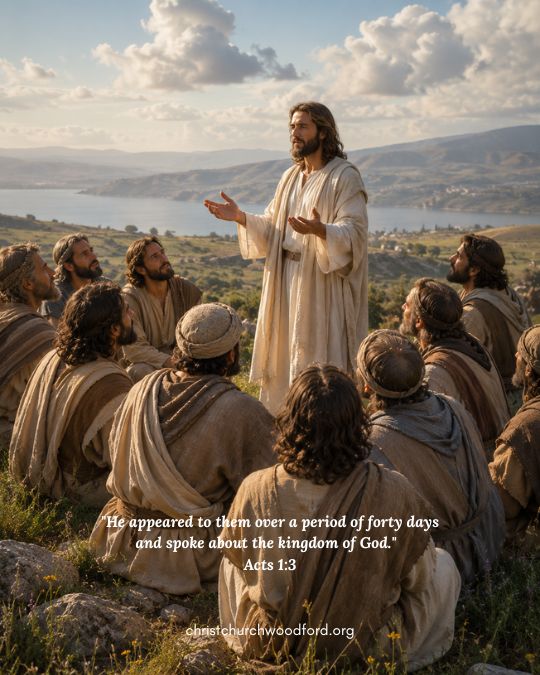
“He appeared to them over a period of forty days and spoke about the kingdom of God.” – Acts 1:3
Those forty days transformed a fearful group of followers into bold witnesses. Once again, the biblical meaning of number 40 points to preparation, transformation, and readiness for what God would do next.
Major Biblical Events Involving the Number 40
The examples above are some of the most well-known occurrences of the number 40 in Scripture. However, they are not the only ones. Throughout both the Old and New Testaments, the number 40 appears repeatedly in connection with testing, preparation, repentance, leadership, and spiritual transformation.
The table below provides a summary of some of the major biblical events involving the number 40:
| Biblical Event | Period of 40 | Significance |
|---|---|---|
| Noah’s Flood | 40 days and 40 nights | Judgment, cleansing, and a new beginning for humanity |
| Moses on Mount Sinai | 40 days and 40 nights | Receiving God’s Law and experiencing God’s presence |
| Israel’s Wilderness Journey | 40 years | Formation of a nation and preparation for the Promised Land |
| Jesus’s Temptation | 40 days and 40 nights | Testing and preparation before public ministry |
| Jesus’s Resurrection Appearances | 40 days | Preparing the disciples before His ascension |
| Goliath’s Challenge | 40 days | A period of testing before God delivered Israel through David |
| Elijah’s Journey to Horeb | 40 days and 40 nights | Spiritual renewal and preparation to hear God’s voice |
| Nineveh’s Warning Through Jonah | 40 days | An opportunity for repentance before judgment |
| Ezekiel’s Prophetic Sign | 40 days | Symbolizing Judah’s years of sin and coming judgment |
| Philistine Oppression | 40 years | A period of oppression before God raised up Samson |
| Reigns of Saul, David, and Solomon | 40 years each | Significant eras of leadership in Israel’s history |
These examples reveal a consistent biblical pattern. Whether forty days or forty years, the number 40 often marks a season of testing, preparation, repentance, or spiritual growth before God accomplishes something new.
What Can Christians Learn From the Number 40 Today?
While the number 40 appears in some of the Bible’s most significant events, its lessons are just as relevant for us today.
God Uses Seasons of Waiting
Most of us do not enjoy waiting. Yet when we look at Noah, Moses, Israel, and even Jesus, we see that waiting was often part of God’s plan. What feels like a delay may actually be a season of preparation.
Spiritual Growth Often Happens During Difficult Seasons
None of the biblical “40” periods were easy. They involved wildernesses, challenges, uncertainty, and testing. Yet those were often the very seasons God used to strengthen faith and shape character.
God’s Timing Is Purposeful
We often want immediate answers, but Scripture reminds us that God works according to His timing. The number 40 repeatedly points to a complete season that accomplishes God’s purpose before something new begins.
New Beginnings Often Follow Seasons of Preparation
One of the most encouraging patterns we see in Scripture is that periods of forty were usually followed by a new chapter. Noah stepped into a renewed world, Israel entered the Promised Land, and Jesus began His public ministry. God often prepares us before He calls us into what comes next.
The biblical meaning of number 40 reminds us that God is still at work, even when we cannot yet see the outcome. Seasons of waiting are rarely wasted when they are placed in His hands.
Frequently Asked Questions About the Biblical Number 40
What does the number 40 mean spiritually in the Bible?
The biblical meaning of number 40 is closely associated with testing, preparation, waiting, repentance, and spiritual transformation. Throughout Scripture, periods of forty often mark a complete season in which God refines His people before leading them into a new stage of His plan.
Why did God choose 40?
The Bible never explicitly explains why God chose the number 40. However, its repeated use reveals a consistent pattern throughout Scripture. From Noah’s flood and Israel’s wilderness journey to Jesus’s fasting in the desert, the number 40 regularly appears during seasons of testing, preparation, and spiritual growth. Rather than focusing on hidden meanings, Scripture emphasizes how God uses these periods to shape His people and prepare them for what comes next.
Why does the number 40 appear so often in the Bible?
The number 40 appears frequently because it is connected to many of the Bible’s most important events. It often marks a period of waiting, judgment, repentance, or preparation before a significant change or new beginning. This recurring pattern helps explain why the number 40 is one of the most recognizable numbers in Scripture.
How many times does the number 40 appear in the Bible?
The number 40 appears more than 150 times throughout the Bible. It is one of the most significant numbers in Scripture and is commonly associated with testing, judgment, preparation, leadership, repentance, and spiritual transformation.
Is there a connection between Jesus’s 40 days and Israel’s 40 years?
Yes. Jesus’s forty days in the wilderness closely parallel Israel’s forty years in the wilderness. Where Israel repeatedly struggled with unbelief and disobedience, Jesus remained faithful and obedient. In this way, Christ succeeded where Israel failed, demonstrating perfect trust in the Father.
Does the number 40 symbolize a new beginning?
In many biblical accounts, a period of forty is followed by a new chapter in God’s plan. After forty days of rain came a renewed world. After forty years in the wilderness came entry into the Promised Land. After Jesus’s forty days of fasting came the beginning of His public ministry. While the number itself does not automatically mean a new beginning, it is often connected to preparation for one.

The End of 40: What Comes Next
The biblical meaning of number 40 is not simply about waiting, testing, or hardship. It is about what God accomplishes during those seasons. Throughout Scripture, the number 40 consistently marks a period of preparation before a new chapter begins.
When we look at these biblical examples, we are reminded that God often does His deepest work before we can see the results. Seasons of waiting can strengthen faith, reveal character, teach dependence on Him, and prepare us for what comes next.
Many of us would prefer the breakthrough without the process. Yet the stories connected to the number 40 remind us that God is often working in ways we cannot immediately see. What feels like a delay may actually be preparation.
If you find yourself in a season of waiting today, take encouragement from the pattern we see throughout Scripture. God has not forgotten you, and He is not wasting the circumstances you are walking through. The same God who guided His people through their seasons of testing is still at work today.
Perhaps that is the greatest lesson of the number 40: God’s timing is purposeful, His work is ongoing, and every season has a purpose in His plan.
Disclaimer: The analysis of symbolism and numerology in this post is offered strictly for theological reflection and spiritual enrichment. We do not offer fortune-telling, guaranteed future outcomes, or specific financial or health advice. For any professional matter, please consult a qualified and licensed medical doctor, financial advisor, or legal counsel.