David’s Psalms of Trust: Finding Confidence When Everything Falls Apart

The Psalms of Trust are powerful expressions of confidence in God during times of fear, uncertainty, and trouble. Many of these psalms were written by David, who faced persecution, hardship, and personal loss throughout his life. Yet again and again, he chose to place his trust in the Lord’s faithfulness and protection.
These psalms remind us that faith does not ignore life’s difficulties. Instead, they teach us how to trust God in the middle of them.
In this guide, we’ll explore what the Psalms of Trust are, why they mattered to David, and what Christians today can learn from their message of confidence in God.
What Are the Psalms of Trust?
The Book of Psalms contains 150 psalms written by several authors over many centuries. These inspired songs and prayers cover every part of the human experience, including praise, thanksgiving, repentance, wisdom, lament, and worship.
Within this collection, many scholars identify a group often called the Psalms of Trust or Confidence. These psalms emphasize confidence in God’s faithfulness, protection, and care, even when the writer is facing danger, uncertainty, or suffering.
Unlike thanksgiving psalms, which celebrate God’s deliverance after a trial has passed, trust psalms are often written in the middle of the struggle. The danger is still present, the questions remain unanswered, and yet the psalmist chooses to place his confidence in the Lord.
I think this is one reason these psalms continue to speak so powerfully to believers today. Most of us know what it feels like to face uncertainty. We may not be hiding in caves like David, but we understand fear, disappointment, waiting, and unanswered questions. The Psalms of Trust remind us that faith is not found in perfect circumstances. Faith is found in a trustworthy God.
Characteristics of the Psalms of Trust
Although each trust psalm is unique, several themes appear repeatedly:
- Confidence in God’s protection during times of trouble.
- Images of God as a shepherd, rock, fortress, refuge, or shield.
- Trust rooted in God’s character rather than changing circumstances.
- Honest acknowledgement of danger without surrendering to fear.
- A focus on God’s faithfulness and promises.
These psalms do not ignore suffering. Instead, they teach us how to look beyond our circumstances and place our confidence in the One who never changes.
Why David Could Trust God
One of the most remarkable things about David’s psalms is that they were not written from a life of comfort and ease. Many of his greatest declarations of trust were written during seasons of hardship, uncertainty, and opposition.

David’s Life Was Filled With Trials
Although David was chosen by God to become king, his path to the throne was far from easy. King Saul grew jealous of him and spent years trying to take his life. David lived as a fugitive, hiding in caves and wandering through the wilderness while waiting for God’s promises to unfold.
Even after becoming king, David faced personal failures, family struggles, and political turmoil. One of the most painful periods of his life came when his son Absalom led a rebellion against him, forcing David to flee Jerusalem.
If you would like to explore these struggles in greater detail, you can read our guide on David and anxiety and how he learned to trust God through difficult circumstances.
When we read the Psalms of Trust, it is important to remember this context. David was not writing from a place of comfort. He was often writing in the middle of the storm.
Trust Rooted in God’s Faithfulness
David’s confidence was not rooted in his circumstances but in God’s faithfulness.
Throughout his life, he repeatedly witnessed the Lord’s provision and protection. From his days as a shepherd to his years as king, David saw God’s hand at work in both ordinary and extraordinary ways. These experiences taught him that the Lord could be trusted even when the future seemed uncertain.
David also understood that God’s promises do not fail. Rather than focusing on the dangers around him, he chose to focus on the character of the God who had never abandoned him.
I believe this is one of the greatest lessons we learn from David’s trust psalms. Faith grows when we remember God’s faithfulness. The same God who sustained David through his trials remains faithful today, giving us confidence to trust Him with whatever lies ahead.
David’s Trust Expressed in the Psalms
David’s confidence in God was not merely a private belief. It found expression in the songs and prayers he wrote throughout his life.
Many of the Psalms of Trust were composed during seasons of uncertainty, danger, and waiting. Rather than focusing on his circumstances, David repeatedly turned his attention to God’s character, describing Him as a Shepherd, a Refuge, a Rock, and a Fortress.
The following psalms provide some of the clearest examples of how David expressed his trust in the Lord. Although each psalm approaches the subject from a different angle, they all point to the same truth: God is worthy of our confidence in every season of life.
Psalm 23 — The Lord Is My Shepherd
Psalm 23 is perhaps the most beloved of all the trust psalms. It opens with David’s well-known declaration:
“The Lord is my shepherd; I shall not want.” – (Psalm 23:1)
Before becoming king, David spent his youth as a shepherd. He understood the responsibility of guiding, protecting, and caring for a flock. By describing the Lord as his Shepherd, David expresses complete confidence in God’s provision and care.
Later, David writes:
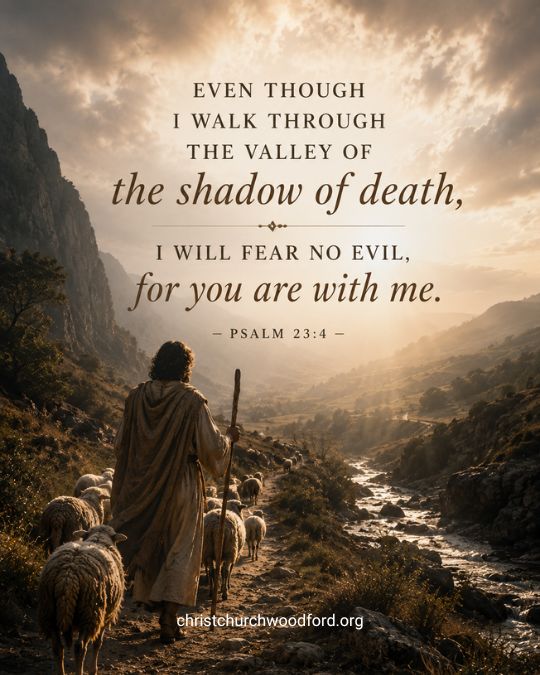
“Even though I walk through the valley of the shadow of death, I will fear no evil, for you are with me.” – (Psalm 23:4)
Notice that David does not promise an easy path. The valley is real, and so are its dangers. Yet his confidence is found in God’s presence. Psalm 23 reminds us that trust is not the absence of difficulties but the assurance that the Lord walks with His people through them.
Psalm 27 — Confidence in the Face of Fear
Psalm 27 begins with one of the most powerful declarations in the Psalms:
“The Lord is my light and my salvation; whom shall I fear?” – (Psalm 27:1)
At first glance, David’s words sound completely fearless. Yet as the psalm unfolds, we discover that enemies surrounded him and danger was very real. He speaks of evildoers, adversaries, and even the possibility of war (Psalm 27:2-3).
This is what makes Psalm 27 such a powerful psalm of trust. David is not pretending that his problems do not exist. Instead, he chooses to place his confidence in God despite them. His trust is rooted not in his circumstances but in the Lord’s character and faithfulness.

The psalm closes with a reminder that still encourages believers today:
“Wait for the Lord; be strong, and let your heart take courage; wait for the Lord!” – (Psalm 27:14)
David teaches us that trust is not the absence of fear. It is the decision to look to God even when fear is present.
Psalm 62 — Finding Rest in God Alone
Psalm 62 focuses on one of the most difficult aspects of trust: waiting on God.
David writes:
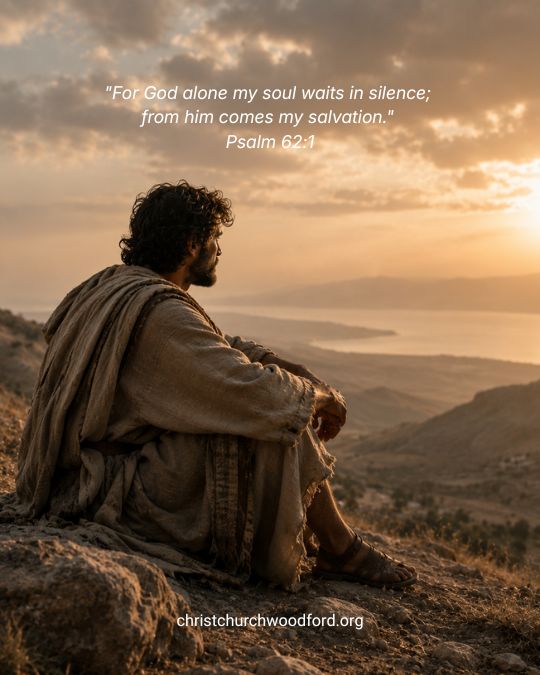
“For God alone my soul waits in silence; from him comes my salvation.” – (Psalm 62:1)
Throughout the psalm, David repeatedly describes God as his rock, salvation, and fortress. Rather than placing his confidence in human strength, wealth, or circumstances, he rests in the Lord alone.
For many believers, waiting is one of the greatest tests of faith. We want answers, solutions, and immediate action. Yet Psalm 62 reminds us that trust sometimes means quietly placing the situation in God’s hands and waiting for Him to work in His perfect timing.
David’s confidence was not based on knowing exactly how things would unfold. It was based on knowing the One who held the future. That same confidence can sustain believers today when life feels uncertain and answers seem far away.
Other Important Psalms of Trust
Psalm 11 — Taking Refuge in God
Psalm 11 opens with a simple declaration of confidence:
“In the Lord I take refuge.” – (Psalm 11:1)
Although others urged David to flee from danger, he chose to place his trust in God rather than surrender to fear. The psalm reminds believers that even when the foundations of life seem shaken, the Lord remains on His throne and continues to rule over all things.
Psalm 16 — Security in God’s Presence
In Psalm 16, David finds confidence not in his circumstances but in his relationship with God.
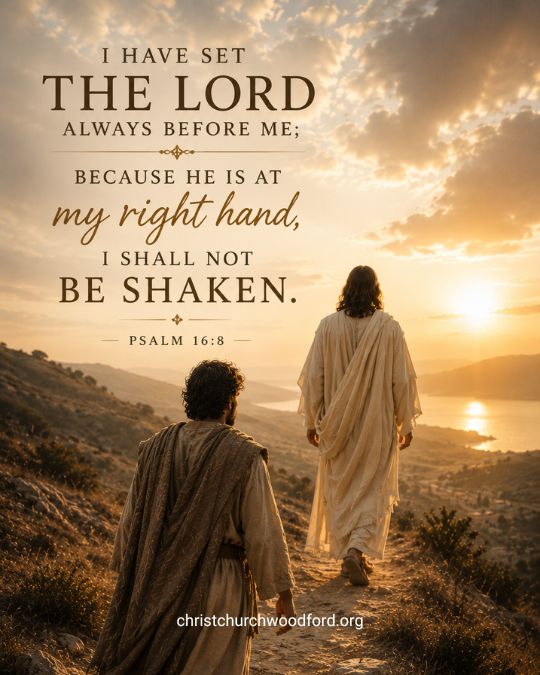
“I have set the Lord always before me; because he is at my right hand, I shall not be shaken.” – (Psalm 16:8)
The psalm emphasizes the security and joy that come from living in God’s presence. David’s trust rests in the Lord’s guidance, protection, and faithfulness.
Psalm 91 — Confidence in God’s Protection
Psalm 91 is one of the most well-known psalms of trust in the Bible. It paints a picture of those who find shelter under God’s care:
“He who dwells in the shelter of the Most High will abide in the shadow of the Almighty.” – (Psalm 91:1)
The psalm speaks of dangers, fears, and uncertainties, yet repeatedly points readers back to God’s protection and faithfulness. While the author is unknown, many Christians have found comfort in its promises during times of crisis.
Psalm 121 — Help Comes From the Lord
Psalm 121 begins with a question that every believer asks at some point:
“I lift up my eyes to the hills. From where does my help come?” (Psalm 121:1)
The answer follows immediately:
“My help comes from the Lord, who made heaven and earth.” (Psalm 121:2)
This psalm reminds us that our ultimate security is found not in human strength but in the God who watches over His people day and night.
How Jesus and the New Testament Use the Psalms of Trust
The Psalms of Trust did not end with David. Their message continues throughout the New Testament and finds its ultimate fulfillment in Jesus Christ.
Jesus and Psalm 91
One of the most well-known references appears during Jesus’ temptation in the wilderness. Satan quoted Psalm 91 in an attempt to persuade Jesus to test God’s protection (Matthew 4:5-7). Jesus rejected the temptation, demonstrating that true trust is not demanding signs from God but faithfully obeying Him.
Trust in the Early Church
The early Christians also drew strength from the themes found in the Psalms of Trust. As they faced persecution, opposition, and uncertainty, they continued to place their confidence in God’s faithfulness rather than in their circumstances.
The writer of Hebrews echoes this confidence when he writes:
“The Lord is my helper; I will not fear; what can man do to me?” – (Hebrews 13:6)
Like David, believers were encouraged to trust the Lord even in difficult times.
Confidence in God’s Faithfulness Through Christ
The greatest reason Christians can trust God is found in Jesus Christ. Through His life, death, and resurrection, God demonstrated His faithfulness in the clearest possible way.
The trust expressed throughout the Psalms ultimately points us to Christ, who perfectly trusted the Father and secured eternal salvation for all who believe in Him. Because of Him, Christians can face uncertainty with confidence, knowing that God remains faithful to His promises.
What Makes the Psalms of Trust So Powerful Today?
Although these psalms were written thousands of years ago, their message remains remarkably relevant. Every generation faces uncertainty, disappointment, fear, and waiting seasons. The Psalms of Trust remind us that God’s faithfulness does not change.
Trusting God During Fear
Fear is a common theme throughout the Psalms of Trust. David often found himself surrounded by enemies and uncertain about the future, yet he repeatedly chose to place his confidence in the Lord. These psalms remind us that trust is not the absence of fear but the decision to look to God in the midst of it.
Trusting God While Waiting
Many believers find waiting more difficult than facing the problem itself. We want immediate answers and quick solutions. Yet the Psalms of Trust teach us that God is at work even when we cannot see what He is doing. Waiting on the Lord is not passive resignation but active faith.
Remembering God’s Faithfulness
One reason David trusted God so deeply was that he remembered what God had done before. Throughout Scripture, God’s people are encouraged to recall His faithfulness in the past as a source of confidence for the future. Remembering God’s goodness strengthens our faith when new challenges arise.
Looking Beyond Present Circumstances
The Psalms of Trust consistently direct our attention away from temporary circumstances and toward God’s unchanging character. Situations change, people fail, and plans often unfold differently than we expect. Yet God remains faithful, trustworthy, and worthy of our confidence in every season of life.
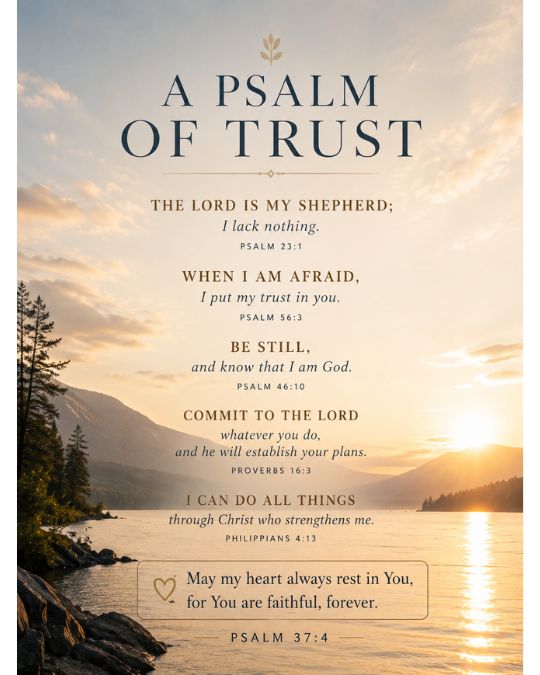
How to Pray the Psalms of Trust Today
The Psalms of Trust were not merely written to be studied. They were written to be prayed. For thousands of years, God’s people have turned to these psalms during seasons of fear, uncertainty, grief, and waiting.
Read Slowly and Meditate
Rather than rushing through a psalm, take time to reflect on each verse. Notice the promises, images, and descriptions of God’s character. Allow the words to shape your thinking and remind you of God’s faithfulness.
Personalize the Psalm
One helpful practice is to turn the psalm into a personal prayer. For example, when reading Psalm 23, thank God for being your Shepherd. When reading Psalm 27, ask Him to strengthen your faith in the midst of fear. When reading Psalm 62, surrender your worries and place them in His hands.
Use the Psalms During Difficult Seasons
The Psalms of Trust are especially powerful during times of uncertainty. When you do not know what to pray, Scripture can provide the words. Many believers have found comfort in returning to the same psalm day after day while waiting for God’s guidance or deliverance.
Pray Them for Others
These psalms can also become prayers for family members, friends, and fellow believers. As you read, ask God to strengthen their faith, encourage their hearts, and remind them of His presence in whatever circumstances they are facing.
Frequently Asked Questions
What are the Psalms of Trust?
The Psalms of Trust are psalms that emphasize confidence in God’s faithfulness, protection, and care during times of difficulty. Rather than focusing on fear or uncertainty, these psalms encourage believers to place their trust in the Lord.
Which psalms are considered trust psalms?
There is no universally agreed list, but Psalms 11, 16, 23, 27, 62, 91, and 121 are commonly identified as psalms of trust or confidence because they emphasize reliance on God’s protection and faithfulness.
Did David write all the trust psalms?
No. David wrote many of the most well-known trust psalms, including Psalms 23, 27, and 62. However, not every trust psalm is attributed to David. For example, the authors of Psalm 91 and Psalm 121 are unknown.
Why is Psalm 23 called a psalm of trust?
Psalm 23 is considered a psalm of trust because David expresses complete confidence in God’s guidance, provision, and protection. Even while walking through “the valley of the shadow of death,” he trusts that the Lord is with him.
Can Christians still pray David’s psalms today?
Yes. Christians have prayed the Psalms for centuries. The Psalms of Trust continue to encourage believers to rely on God’s faithfulness and find comfort in His presence during difficult seasons of life.
Why These Psalms Still Matter Today
One of the reasons the Psalms of Trust continue to encourage believers today is that they were not written by someone who lived a perfect life. David knew fear, uncertainty, disappointment, failure, and waiting. Yet again and again, he chose to place his confidence in the Lord.
These psalms do not promise that every problem will disappear overnight. Rather, they remind us where to turn when life feels overwhelming. They give us words to pray when we struggle to find our own and help us focus on God’s faithfulness rather than our fears.
Perhaps that is why believers have treasured these psalms for thousands of years. They were not written for people who have everything figured out. They were written for people who need God’s help.
If you are facing a difficult season, begin with Psalm 23, Psalm 27, or Psalm 62. Read them slowly. Pray through them carefully. Let David’s words point you to the God who remains faithful in every generation.
The Lord is still our Shepherd. He is still our Rock, our Refuge, and our Salvation. And He is still worthy of our trust.