Sermon on the Mount Explained: Jesus’ Greatest Teaching in Matthew 5-7

Have you ever wondered what Jesus actually taught? I mean, beyond the Sunday school stories and the feel-good quotes on coffee mugs, what did Jesus really say about how we should live?
If you want the answer, you need to look at Matthew chapters 5 through 7—what we call the Sermon on the Mount. This is Jesus’ most famous teaching, delivered on a hillside in Galilee to a crowd of ordinary people who were desperate for hope, hungry for truth, and tired of religious leaders who made God feel distant and demanding.
Think of the Sermon on the Mount as Jesus’ mission statement. It’s His manifesto for what life in God’s Kingdom actually looks like. And here’s what’s both beautiful and challenging about it: Jesus doesn’t just tell us how to behave better. He shows us how to think differently, love radically, and live with our hearts fully aligned with God’s heart.
Today, we’re going to walk through this incredible sermon together. We’ll see what Jesus taught, why it mattered then, and how it transforms everything about how we live right now—in 2026, dealing with workplace stress, relationship conflicts, financial pressures, and the constant noise of social media telling us what matters.
What Is the Sermon on the Mount?
Let’s start with the basics.
The Sermon on the Mount is the longest recorded teaching of Jesus in the Bible, found in Matthew 5:1–7:29.
Picture this: Jesus sees the crowds following Him, walks up a mountainside in Galilee, sits down (which is what rabbis did when they taught), and begins to teach His disciples and everyone else who gathered around.
This isn’t just a nice spiritual talk. This is Jesus saying, “Everything you thought you knew about God, about righteousness, about what it means to be blessed—I’m about to flip it upside down.”

The sermon covers everything from anger and lust to prayer and worry. It includes some of the most famous passages in all of Scripture: the Beatitudes (those “Blessed are…” statements), the Lord’s Prayer, the Golden Rule, and teachings about being salt and light in the world.
Matthew gives us three full chapters of Jesus teaching. Scholars estimate it would take about 15-20 minutes to read out loud, which means Jesus probably taught for much longer—this is the highlight reel of an extended teaching session.
What makes this sermon so powerful is that Jesus isn’t just adding a few suggestions to the existing religious system. He’s announcing a whole new way of living under God’s rule—what He calls the Kingdom of Heaven.
The Setting: Why a Mountain Matters
Let’s turn to Matthew 5:1-2:
“Seeing the crowds, he went up on the mountain, and when he sat down, his disciples came to him. And he opened his mouth and taught them.”
Why does Matthew tell us Jesus went up on a mountain? Because for Jewish people, mountains were significant. Moses went up Mount Sinai to receive the Law. God met His people on mountains. By teaching from a mountain, Jesus is making a statement: something as important as Mount Sinai is happening here.
But there’s a difference. Moses went up the mountain alone and brought God’s law down to the people. Jesus brings the people up the mountain with Him and teaches them directly. He’s accessible. He’s personal. He’s not distant.
This is Jesus saying, “I’m not just another prophet passing along God’s message. I am showing you what God is actually like, and I’m inviting you into relationship with Him.”
The Beatitudes: Jesus Redefines “Blessed”
Jesus starts with what we call the Beatitudes—eight statements that begin with “Blessed are…” These aren’t just nice sayings for greeting cards. They’re revolutionary.
“Blessed are the poor in spirit, for theirs is the kingdom of heaven. Blessed are those who mourn, for they shall be comforted. Blessed are the meek, for they shall inherit the earth.” Matthew 5:3–5 (NIV)
Wait, what? The poor, the mourning, the meek? In Jesus’ day (and honestly, in our day too), people thought God blessed the rich, the powerful, the successful. If you were wealthy and influential, clearly God favored you. If you were struggling, well, you must have done something to deserve it.
Jesus flips this completely. He says the truly blessed people are those who recognize their spiritual poverty—who know they need God. The blessed are those who mourn over sin and injustice. The blessed are the meek, who don’t use power to get their way but trust God’s timing.
Some of you right now are in the valley. You’ve lost a job. A relationship ended. Your health is failing. You feel spiritually dry. And our culture tells you that means you’re losing at life.
Jesus looks at you and says, “No. Right here, in your weakness and your need—this is where My Kingdom comes alive. Because people who know they need God actually find God.”
The Beatitudes continue:
“Blessed are those who hunger and thirst for righteousness… blessed are the merciful… blessed are the pure in heart… blessed are the peacemakers… blessed are those who are persecuted for righteousness’ sake.” Matthew 5:6–10 (NIV)
Do you see the pattern? Jesus is describing citizens of His Kingdom—people whose values are completely different from the world’s values. People who crave God’s ways more than success. People who show mercy instead of demanding revenge. People who make peace instead of winning arguments.
This is the upside-down Kingdom. And it’s the most right-side-up thing in the universe.
Salt and Light: Your Mission in the World
After the Beatitudes, Jesus gives His followers an identity:
“You are the salt of the earth… You are the light of the world.”
Not “you should try to be” or “I hope you’ll become.” You ARE. Present tense. This is who you are if you follow Him.
Salt in the ancient world did two main things: it preserved food and it added flavor. Jesus is saying, “Your presence in the world should preserve what’s good and make life taste better.” Light, obviously, pushes back darkness and helps people see where they’re going.
But here’s what gets me. Jesus doesn’t say, “Go be salt and light somewhere else.” He says you’re salt and light right where you are. In your office. In your neighborhood. In your family. With that difficult coworker. In that tense conversation.
Your job isn’t to escape the world or to become exactly like the world. It’s to be distinctly, obviously different in a way that makes people curious about Jesus.
What does that look like practically? It means when everyone else at work is gossiping, you redirect the conversation. When your friends are drowning in anxiety, you have a peace that doesn’t make sense to them. When the culture screams for revenge, you show forgiveness.
It’s not easy. But Jesus says this is your calling.
Jesus and the Law: Not Destroying, but Fulfilling
In Matthew 5:17, Jesus makes a crucial statement:
“Do not think that I have come to abolish the Law or the Prophets; I have not come to abolish them but to fulfill them.”
Some people in the crowd probably thought Jesus was going to throw out all the Old Testament rules. Others worried He wasn’t taking them seriously enough. Jesus says, “Neither. I’m showing you what they always meant.”
Then He gives a series of examples that start with
“You have heard that it was said… but I say to you.”
“You’ve heard ‘don’t murder.’ But I’m telling you, don’t even harbor hatred in your heart.”
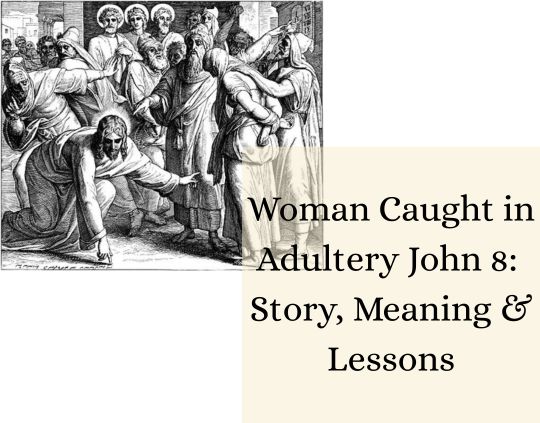
“You’ve heard ‘don’t commit adultery.’ But I’m telling you, don’t look at someone with lust.”
“You’ve heard ‘an eye for an eye.’ But I’m telling you, don’t retaliate when someone wrongs you.”
What’s Jesus doing? He’s showing that God cares about the heart, not just behavior. The Pharisees thought they were righteous because they didn’t kill anyone. Jesus says, “But what about the anger and contempt in your heart?”
This is uncomfortable. It’s easy to say, “Well, I’ve never murdered anyone.” It’s much harder to say, “I’ve never been angry in a way that tore someone down.”
Jesus isn’t lowering the bar. He’s revealing that the bar was always about the heart, and none of us can reach it on our own. That’s why we need Him—not just as a teacher, but as a Savior.
The Lord’s Prayer: How to Talk to Your Father
In Matthew 6, Jesus teaches His disciples to pray. He gives them what we now call the Lord’s Prayer, and it’s a masterclass in what prayer actually is.
“Our Father in heaven, hallowed be your name. Your kingdom come, your will be done, on earth as it is in heaven. Give us this day our daily bread, and forgive us our debts, as we also have forgiven our debtors. And lead us not into temptation, but deliver us from evil.”
Notice how it starts: “Our Father.” Not “The distant, terrifying judge” or “The cosmic force” or “The rule-enforcer.” Father. Jesus is teaching us to approach God the way a child approaches a loving dad—with confidence, with trust, with our needs.
The prayer covers everything: worship (hallowed be your name), submission (your will be done), provision (give us our daily bread), forgiveness (forgive us), protection (deliver us from evil).
It’s honest. It’s dependent. It’s relational.
Jesus is saying prayer isn’t about using the right words or praying long enough to impress God. It’s about coming to a Father who already loves you and wants to hear from you.
How many of us make prayer so complicated? We think we need to sound spiritual or pray for thirty minutes or get everything perfectly right. Jesus says, “Just talk to your Father.”
Don’t Worry: Your Father Knows What You Need
One of the most quoted sections of the Sermon on the Mount comes in Matthew 6:25-34, where Jesus tackles anxiety.
“Therefore I tell you, do not be anxious about your life, what you will eat or what you will drink, nor about your body, what you will put on.”
Then Jesus points to birds and flowers.
“Look at the birds of the air: they neither sow nor reap nor gather into barns, and yet your heavenly Father feeds them. Are you not of more value than they? Consider the lilies of the field… even Solomon in all his glory was not arrayed like one of these.”
Here’s Jesus’ logic: God takes care of birds. He makes flowers beautiful. How much more will He take care of you—you, whom He made in His image, whom He loves, whom He sent His Son to save?
Now, does this mean we don’t plan or work or save? Of course not. Jesus isn’t telling you to quit your job and wait for money to fall from the sky. He’s telling you where your security comes from.
Some of you are anxious right now about money, about your kids, about your future. You lie awake at night running scenarios. You check your bank account five times a day. You can’t stop thinking about what might go wrong.
Jesus says:
“But seek first the kingdom of God and his righteousness, and all these things will be added to you.” Matthew 6:33 (ESV)
Put God first. Trust that He sees you, knows what you need, and will provide. Then get up and do your work with peace instead of panic.
The Golden Rule: Love That Changes Everything
In Matthew 7:12, Jesus gives us what’s often called the Golden Rule:
“So whatever you wish that others would do to you, do also to them, for this is the Law and the Prophets.”
Simple, right? Treat others the way you want to be treated.
But think about how this works in real life. You want people to forgive you when you mess up? Then forgive them. You want people to listen to you? Then truly listen to them. You want people to assume the best about your motives? Then assume the best about theirs.
This one principle, if we actually lived it, would transform marriages, workplaces, churches, and neighborhoods.
The reason we don’t do it consistently is because we’re focused on ourselves. We want to be treated well, but we don’t think about treating others well first. We wait for others to make the first move.
Jesus says, “You go first. You be the one who loves generously, who gives grace freely, who serves sacrificially.”
Two Foundations: Building a Life That Lasts
Jesus ends the sermon with a story about two builders. One builds his house on rock; when storms come, the house stands. The other builds on sand; when storms come, the house collapses.
“Everyone then who hears these words of mine and does them will be like a wise man who built his house on the rock.”
Here’s the point: It’s not enough to hear Jesus’ teaching and think, “Wow, that’s beautiful” or “That’s inspiring.” You have to actually do it. You have to build your life on His words.
What does your foundation look like? When pressure comes—and it will come—what holds you steady? Is it your job? Your relationships? Your achievements? Because all of those can be taken away.
Or is your foundation Jesus and what He says is true about you, about God, about life?
The difference isn’t obvious when everything’s going well. Both houses look fine on a sunny day. The difference shows up in the storm.
Living the Sermon Today
So what do we do with all this? How do we live out the Sermon on the Mount in 2026?
First, recognize that you can’t do this on your own. Jesus’ teaching exposes our need for Him. We can’t be perfect. We can’t manufacture this kind of love and humility and trust. We need His Spirit working in us.
Second, start small. Pick one thing from this sermon and put it into practice this week. Maybe it’s memorizing the Lord’s Prayer and praying it daily. Maybe it’s choosing to show mercy to someone who doesn’t deserve it. Maybe it’s being honest about your anger instead of pretending you’re fine.
Third, remember this is about the heart. Jesus isn’t handing you a to-do list. He’s inviting you into a way of life where your heart is transformed by His love, and that transformation naturally flows into how you live.
The Sermon on the Mount isn’t just information. It’s transformation. It’s Jesus saying, “This is what it looks like to live in My Kingdom, under My rule, with My power.”
And here’s the beautiful truth: every impossible standard Jesus sets, He met perfectly. He was the perfectly meek one. He showed perfect mercy. He was the ultimate peacemaker. And when He died on the cross, He took the punishment we deserved for falling short, so we could be forgiven and empowered to live this new way.
The Sermon on the Mount is Jesus’ blueprint for Kingdom living. And the good news is, He doesn’t just give us the blueprint—He gives us Himself.
Amen.
Further Reading
- Lloyd-Jones, D. Martyn.Studies in the Sermon on the Mount. Grand Rapids: Eerdmans, 1984.
- Stott, John R.W.The Message of the Sermon on the Mount (Matthew 5-7): Christian Counter-Culture. The Bible Speaks Today. Downers Grove: InterVarsity Press, 1985.
- Bonhoeffer, Dietrich.The Cost of Discipleship. Translated by R.H. Fuller. New York: Macmillan, 1959.
- Willard, Dallas.The Divine Conspiracy: Rediscovering Our Hidden Life in God. San Francisco: HarperSanFrancisco, 1998.
- Pennington, Jonathan T.The Sermon on the Mount and Human Flourishing: A Theological Commentary. Grand Rapids: Baker Academic, 2017.