The Meaning of Number 70 in the Bible: God’s Timing and the Nations

Numbers show up everywhere in Scripture, and once you start noticing them, you can’t stop noticing them. Seven. Twelve. Forty. And then there’s seventy—a number that appears at some of the Bible’s most significant turning points.
The number 70 in the Bible first appears after the flood, when the nations of the earth are listed for the very first time. It appears again when Moses is overwhelmed by the burden of leading Israel, during Judah’s exile in Babylon, when Jesus sends out His followers ahead of Him, and in one of the most studied prophecies in all of Scripture.
So what is the biblical meaning of the number 70? What does the number 70 represent in the Bible?
Unlike some biblical numbers, seventy doesn’t carry one single, fixed meaning. Instead, its significance becomes clearer as you trace it through Genesis, Numbers, Jeremiah, Luke, and Daniel. Together, these passages reveal a consistent pattern that points to God’s work among the nations, His purposes for His people, and His perfect timing.
Biblical Meaning of Number 70 at a Glance
- Represents God’s complete purposes on a large scale
- Points to God’s authority over the nations
- Symbolizes shared spiritual leadership
- Marks divinely appointed periods of judgment and restoration
- Highlights God’s perfect timing in His plan of redemption
What Does the Number 70 Mean in the Bible?
If you’re looking for the short answer to the biblical significance of number 70, here it is.
In Scripture, this number generally points to completeness on a large scale — completeness that involves whole nations, whole generations, or whole periods of time. The spiritual meaning of number 70 shows up connected to God’s authority over the nations of the earth, the sharing of spiritual leadership among God’s people, a divinely appointed period of discipline, and the restoration that follows once that discipline has done its work.
Seventy also appears in one of Scripture’s most significant prophetic timelines, reminding us that God’s plan of redemption unfolds on His schedule, not ours.
Seventy is not a magic number or a hidden code waiting to be deciphered. Instead, it consistently points to God’s purposes reaching their appointed fulfillment, exactly as He intends.
Seventy Represents Completeness Among the Nations
The first major appearance of the number 70 in the Bible comes right after the flood.
Genesis 10 records the descendants of Noah’s three sons—Shem, Ham, and Japheth—as they spread out and repopulate the earth. When you count the family lines listed there, you traditionally arrive at seventy nations. Jewish and early Christian readers noticed this centuries ago, and the chapter has come to be known as the Table of Nations.
The point, however, isn’t that there were only seventy nations on earth. Genesis 10 was never intended to be a modern census or an exhaustive list of every people group. Instead, the seventy nations serve as a representative picture of humanity in its fullness. In other words, the number seventy symbolizes the whole world of nations, showing that every people and every family ultimately belong under God’s sovereign rule.
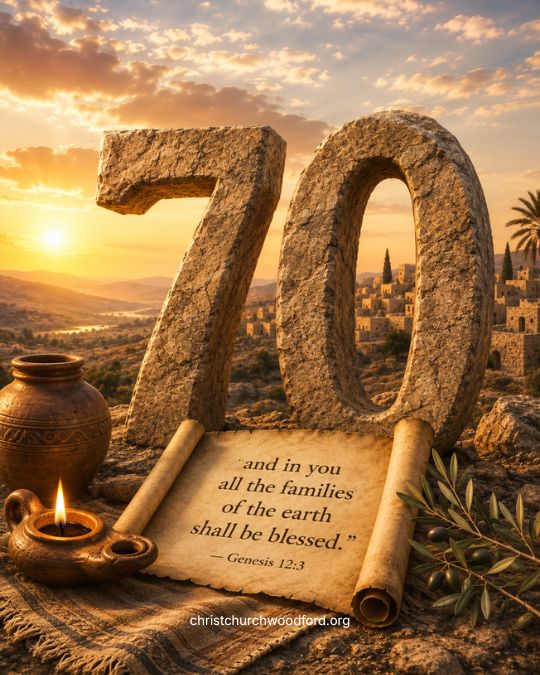
That makes the next chapter even more significant. In Genesis 12, God calls one man—Abraham—out of these nations. But notice the purpose behind that calling. God doesn’t set Abraham apart from the nations; He sets him apart for the nations.
“and in you all the families of the earth shall be blessed.” — Genesis 12:3
From the very beginning of the biblical story, before Israel existed as a nation and before the Law was given at Sinai, God’s heart already extended to every nation on earth. That’s an important key to understanding the biblical significance of 70 throughout Scripture. Whether it’s the seventy elders, the seventy years of exile, or the seventy sent out by Jesus in Luke 10, the number repeatedly points beyond a single individual or nation to God’s complete purposes for all peoples. It reminds us that God’s plan has always been global, reaching every nation He created.
Seventy Elders Represent Shared Spiritual Leadership
By the time you reach Numbers 11, Moses is exhausted. He has been leading a nation of complainers through the wilderness, and the weight of it has become too much for one man to carry. Moses even tells God plainly that he would rather die than keep carrying the burden alone.
God’s answer isn’t to remove the burden from Moses. It’s to share it.
“And I will come down and talk with you there. And I will take some of the Spirit that is on you and put it on them, and they shall bear the burden of the people with you, that you may not bear it yourself alone.” — Numbers 11:17
God tells Moses to gather seventy elders—respected leaders already recognized among the people—and bring them to the tent of meeting. When the Spirit rests on them, they begin to prophesy, a visible sign that God’s presence and authority now rest on this group of leaders, not on Moses alone.
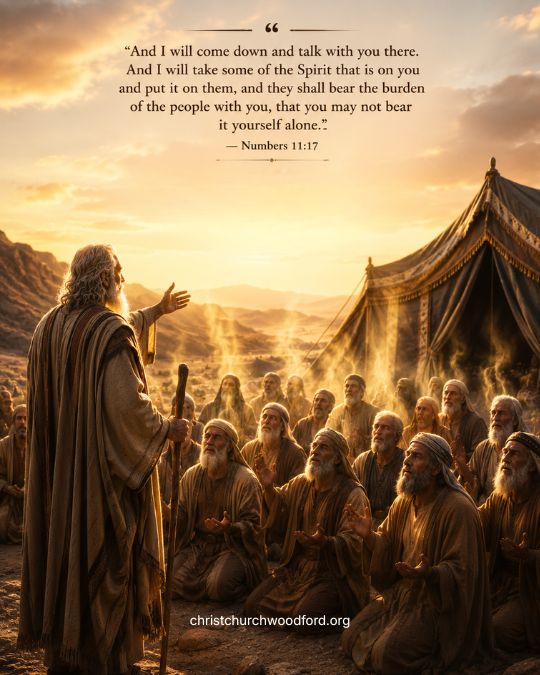
The emphasis here isn’t simply on the number itself but on what it represents. Rather than placing the responsibility on one leader, God appoints a complete body of leaders to help shepherd His people. In this context, the number 70 in the Bible reflects God’s provision of sufficient and orderly leadership for the entire nation.
This is one of the clearest pictures in the Old Testament of shared spiritual leadership. The seventy elders, empowered by the same Spirit that rested on Moses, now carry the burden together. It isn’t a demotion for Moses; it’s relief. God is establishing a pattern of leadership that doesn’t depend on one extraordinary individual but on faithful people serving together under His guidance.
There’s something for every generation of God’s people in this. Ministry was never meant to rest on one set of shoulders. Whether it’s the seventy elders in the wilderness or leaders serving a local church today, God’s pattern remains the same. He raises up people, equips them by His Spirit, and calls them to serve together. The biblical significance of 70 here isn’t merely a headcount—it is a picture of God’s wise provision, showing that His work is accomplished through a complete, Spirit-empowered community rather than through one person alone.
Seventy Years of Exile Show God’s Judgment and Restoration
Perhaps the most sobering appearance of the number 70 in the Bible comes through the prophet Jeremiah.
For decades, Jeremiah warned Judah that their persistent unfaithfulness would bring consequences. They didn’t listen. Babylon invaded, Jerusalem fell, the temple was destroyed, and the people were taken into exile.
Even in the midst of judgment, God’s mercy was already preparing the way for restoration.
“For thus says the LORD: When seventy years are completed for Babylon, I will visit you, and I will fulfill to you my promise and bring you back to this place.” — Jeremiah 29:10
Seventy years. Not indefinite exile. Not abandonment. A divinely appointed period of discipline followed by restoration.

Jeremiah 25 gives the same timeframe, and 2 Chronicles 36 explains why it lasted seventy years: the land would finally enjoy the Sabbath rests Israel had neglected for generations. The exile wasn’t arbitrary. It reflected God’s justice and His faithfulness to His covenant.
Judgment and restoration are woven together throughout this story. God’s discipline, painful as it was, was never the final word. Seventy years was long enough to humble a nation and shape a generation, but it wasn’t forever. When the appointed time had come, God raised up Cyrus of Persia to bring His people home and begin rebuilding Jerusalem, just as He had promised.
Here, the biblical significance of 70 is a complete period of discipline that accomplishes God’s purpose. The number reminds us that God’s correction is never random or open-ended. It is measured, purposeful, and ultimately redemptive.
If you’ve ever wondered whether God’s discipline has an end point, Jeremiah’s seventy years offers real hope. God disciplines because He loves His people, and His purpose is always to restore them to Himself.
Jesus Sending the Seventy Shows the Gospel for Every Nation
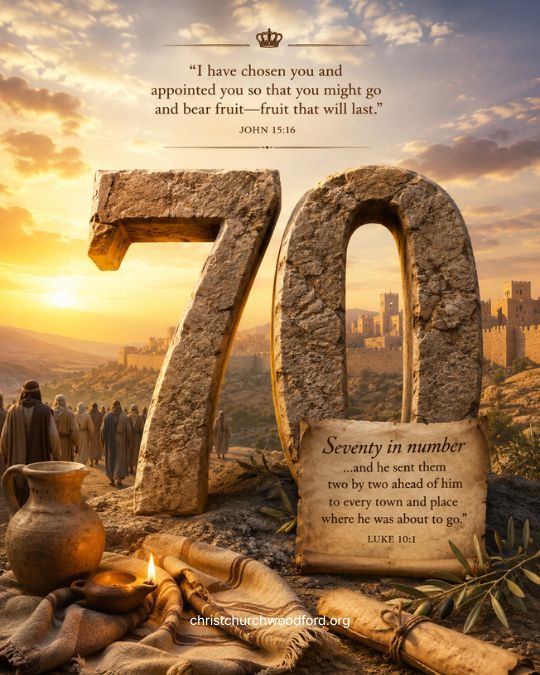
The number 70 in the Bible resurfaces in a very different setting in Luke 10. Jesus has already sent out the twelve apostles earlier in His ministry. Now He appoints a larger group and sends them out ahead of Him, two by two, into every town He is about to visit.
“After this the Lord appointed seventy-two others and sent them on ahead of him, two by two, into every town and place where he himself was about to go.” — Luke 10:1
Some Bible translations say seventy, while others read seventy-two because of differences in the ancient manuscripts. Both readings are well supported, and the difference doesn’t affect the message of the passage. What matters most is what the number represents.
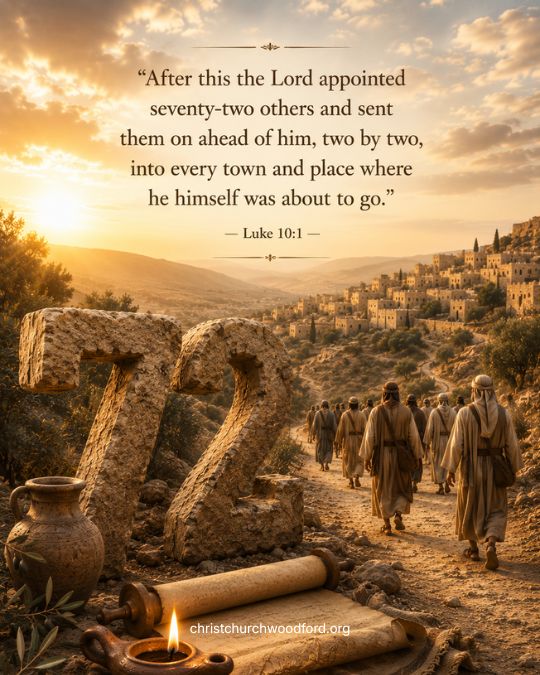
Many scholars see an intentional connection to the Table of Nations in Genesis 10. Just as the seventy nations symbolically represented all humanity, the seventy (or seventy-two) disciples symbolize the worldwide scope of Jesus’ mission. The promise God made to Abraham—that “all the families of the earth shall be blessed” (Genesis 12:3)—is now beginning to unfold through Christ and His followers.
Here, the biblical significance of 70 points beyond Israel to the nations. The gospel was never meant to remain within one people group or one geographical region. From the seventy nations in Genesis 10 to the seventy disciples in Luke 10, Scripture tells one consistent story: God’s plan of salvation has always embraced the whole world.
When you read Luke 10, you’re watching that plan move from promise into action. The disciples are sent ahead of Jesus, but their mission foreshadows the Great Commission that would soon send the gospel to every nation.
Once again, the number seventy serves as a picture of God’s complete mission reaching all peoples.
Daniel’s Seventy Weeks Reveal God’s Redemptive Timeline
Of all the appearances of the number 70 in the Bible, Daniel 9 is perhaps the most studied—and the most debated.
While living in exile, Daniel prays over Jeremiah’s prophecy of the seventy years of captivity. In response, the angel Gabriel reveals a greater prophecy: seventy weeks.
“Seventy weeks are decreed about your people and your holy city, to finish the transgression, to put an end to sin, and to atone for iniquity, to bring in everlasting righteousness, to seal both vision and prophet, and to anoint a most holy place.” — Daniel 9:24
Christians have long differed over how the seventy weeks should be understood and how they relate to Israel’s history and the coming of the Messiah. While those details are important, they go beyond the purpose of this article.
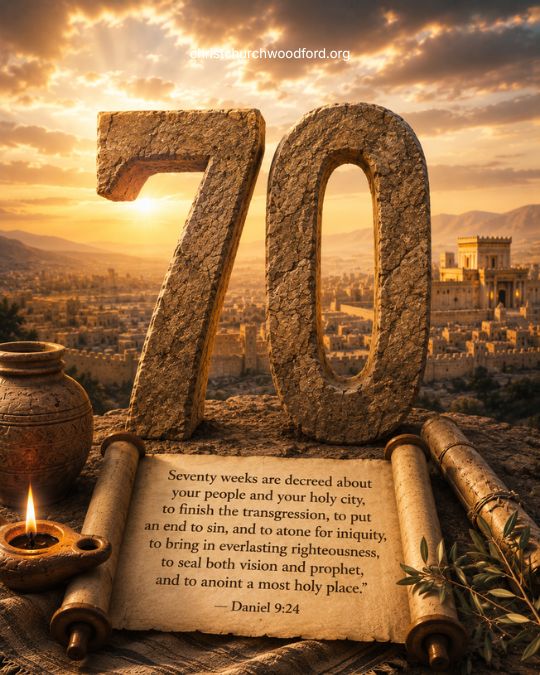
What all major interpretations agree on is the central message: God has established a definite timeline for His redemptive plan. The prophecy points toward the defeat of sin, the coming of everlasting righteousness, and the fulfillment of God’s saving purposes.
Here, the number 70 is seen in God’s complete and sovereign plan unfolding exactly as He intends. Just as the seventy years of exile had a divinely appointed beginning and end, the seventy weeks remind us that history is not random. God’s promises are fulfilled according to His perfect timing.
Other Occurrences of Number 70 in the Bible
Beyond these five major moments, the number seventy shows up several more times throughout Scripture. Some of these appearances reinforce the themes already covered, while others add a bit of nuance — including a couple of sobering reminders that not every use of seventy in the Bible is a positive one.
| Passage | Event | Significance |
| Genesis 46:27 | Jacob’s family entered Egypt | Beginning of Israel’s growth as a nation |
| Exodus 24:1 | Seventy elders worship with Moses on the mountain | Shared covenant leadership before God |
| Judges 9:5 | Seventy sons of Gideon killed by Abimelech | A tragic abuse of power and family bloodshed |
| 2 Kings 10:1 | Seventy sons of Ahab | Judgment falling on a corrupt royal dynasty |
| Ezra 8:7 | A family group returning from exile | Restoration continuing after captivity |
| Psalm 90:10 | The typical human lifespan | Human frailty and the brevity of life |
The Biblical Meaning of Number 70 in Summary
Throughout Scripture, the number 70 in the Bible consistently points toward God’s complete work. We see it in the nations listed after the flood, the elders who shared Moses’ burden, the years of exile that had a promised end, the disciples Jesus sent out to prepare the way, and the prophecy that reveals God’s redemptive timeline.
Taken together, these passages reveal the biblical meaning of number 70: God’s purposes are always brought to completion, His plans are sovereign, and His sovereign purpose is always perfect. Whether He is leading His people, disciplining them, restoring them, or extending His salvation to the nations, God is always accomplishing His will exactly as He intends.
As you encounter the number seventy throughout Scripture, let it remind you that God is in control of history. His promises never fail, His purposes are never delayed, and His redemptive plan is always moving forward according to His perfect wisdom and timing.
Frequently Asked Questions
Is the number 70 considered a holy number in the Bible?
Seventy is often connected to completeness and God’s purposes being fulfilled, but Scripture doesn’t single it out as “holy” in the same way it treats numbers like seven. It’s better understood as a number of significance and completeness rather than a sacred number with independent spiritual power.
What is the difference between 7 and 70 in the Bible?
Seven frequently represents completeness on a smaller, more personal scale — a week, a cycle, a set of instructions. Seventy tends to represent completeness on a much larger scale, often involving whole nations, whole generations, or extended periods of time, as seen in Genesis 10 and Jeremiah’s seventy years.
Why do some Bible translations say 70 disciples while others say 72?
The manuscripts of Luke 10 themselves differ on this number, and both readings have solid textual support among ancient copies of the Gospel. Bible translators and scholars remain divided, which is why you’ll see faithful translations rendering the verse both ways.
Does the number 70 have prophetic significance today?
Seventy appears in Scripture’s completed prophecies, like Jeremiah’s seventy years, and in Daniel’s seventy weeks, which points toward God’s redemptive plan. Christians hold different views on how these prophecies apply to future events, but the safest approach is reading them in their biblical context rather than as a template for predicting present-day happenings.
Does the Number 70 Always Have the Same Meaning in the Bible?
No. Like other biblical numbers, the meaning of 70 depends on its context. In Genesis 10 it represents the fullness of the nations, while in Numbers 11 it relates to shared leadership, and in Daniel 9 it points to God’s redemptive timeline. Rather than assigning one fixed meaning to every occurrence, it’s best to understand the number within the passage where it appears.
Should Christians use biblical numbers to predict future events?
Scripture uses numbers to teach theological truth within their original context, not as tools for forecasting. Rather than using numbers like seventy to predict what’s ahead, it’s wiser to let them deepen your understanding of who God has always been and how faithfully He works.