The Beatitudes Explained: Meaning of Matthew 5:3–12

Every so often, you meet someone who seems to live by a different set of values. They are not chasing what the world tells them to chase, yet even in difficult circumstances, there is something steady about the way they live.
That is the kind of life Jesus describes in the Beatitudes.
Found in Matthew 5:3–12, the Beatitudes are eight declarations of blessing that open the Sermon on the Mount. They are not a checklist for earning God’s favor. Instead, Jesus uses them to show us the character, hope, and surprising values of life in God’s kingdom.
So what does each Beatitude actually mean? Let’s begin with the words Jesus spoke on the mountain.
What Are the Beatitudes?
The word “Beatitudes” comes from the Latin beatus, meaning “blessed.” That is exactly what Jesus announces at the beginning of Matthew 5. After going up on a mountain and sitting down to teach, Jesus begins with a series of statements that all open with the same words: “Blessed are…”
That word “blessed” means more than simply “happy.” Happiness often depends on circumstances going well. The blessing Jesus describes runs deeper. A person can mourn and still be blessed. They can be persecuted and still be blessed. The Beatitudes reveal a kind of blessing rooted not in comfortable circumstances, but in belonging to God’s kingdom and receiving His promises.
Matthew 5:3–10 contains eight distinct Beatitudes. Verses 11–12 continue and personalize the final blessing about persecution, which is why some traditions count nine. For this article, we will follow the common grouping of eight Beatitudes, with Matthew 5:10–12 understood together.
The 8 Beatitudes at a Glance
| Beatitude | Matthew | In Simple Terms |
|---|---|---|
| Blessed are the poor in spirit | Matthew 5:3 | Recognize your spiritual need and dependence on God. |
| Blessed are those who mourn | Matthew 5:4 | Grieve honestly over sin, suffering, and brokenness. |
| Blessed are the meek | Matthew 5:5 | Live with humility and strength under God’s control. |
| Blessed are those who hunger and thirst for righteousness | Matthew 5:6 | Deeply desire what is right in God’s sight. |
| Blessed are the merciful | Matthew 5:7 | Show compassion and mercy to others. |
| Blessed are the pure in heart | Matthew 5:8 | Seek God with a sincere and undivided heart. |
| Blessed are the peacemakers | Matthew 5:9 | Pursue peace and reconciliation rather than conflict. |
| Blessed are those persecuted for righteousness | Matthew 5:10–12 | Remain faithful to Christ even when that faithfulness brings opposition. |
Read together, the Beatitudes form a picture of a life shaped by God’s kingdom: dependent on God, sensitive to what is broken, humble, hungry for righteousness, merciful, sincere in heart, committed to peace, and faithful even when following Jesus comes at a cost.
But each of these short statements carries much more meaning than a one-line summary can capture. So let’s look at them one by one.
The 8 Beatitudes Explained: What Each One Means
This is the heart of the passage, so let’s walk through each one slowly.
For every Beatitude, it helps to ask three questions: what does this actually mean, what does it not mean, and how does it shape the way we live.
Taken together, these eight statements are the fullest picture we get of Sermon on the Mount Beatitudes theology in Jesus’ own words.
1. “Blessed Are the Poor in Spirit” — Matthew 5:3
Blessed are the poor in spirit, for theirs is the kingdom of heaven. – Matthew 5:3
To be poor in spirit means recognizing that you do not have everything figured out on your own. You cannot control every circumstance or always know the right path, so you remain humble enough to let God guide you.
Think of God as the Shepherd. The sheep cannot see the whole road ahead, but the shepherd can. In the same way, Christians still think, work, and make their own decisions, but they do so with God in mind, asking not only “What do I want?” but also “Is this the right way to live?”
That is why Jesus begins here. Before we can be led, we must first be willing to admit that we need guidance. That humility is what it means to be poor in spirit.
2. “Blessed Are Those Who Mourn” — Matthew 5:4
Blessed are those who mourn, for they will be comforted. – Matthew 5:4
Jesus is speaking about people who do not ignore what is painful or broken. They grieve real loss, but they can also mourn sin, injustice, and the brokenness they see in themselves and the world around them.
Jesus does not promise that God’s people will avoid sorrow. He promises that sorrow is not the end of their story: “they will be comforted.” We can bring grief honestly before God rather than carrying it alone, trusting that He sees what hurts and remains with us through it.
If you are facing personal loss, these Bible verses for grief offer more Scripture about finding comfort in times of sorrow.
3. “Blessed Are the Meek” — Matthew 5:5
Blessed are the meek, for they will inherit the earth. – Matthew 5:5
To be meek does not mean being weak, timid, or allowing others to walk over you. Biblical meekness is strength guided by humility and self-control. Jesus Himself was gentle and humble, yet He was also courageous enough to confront wrongdoing and stand firm in truth.
The world often tells us that getting ahead requires being louder, stronger, or more forceful than everyone else. Jesus turns that idea upside down: “the meek will inherit the earth.” We do not always have to fight for control or prove our strength. We can stand firm when necessary while trusting God with what we cannot control.
4. “Blessed Are Those Who Hunger and Thirst for Righteousness” — Matthew 5:6
Blessed are those who hunger and thirst for righteousness, for they will be filled. – Matthew 5:6
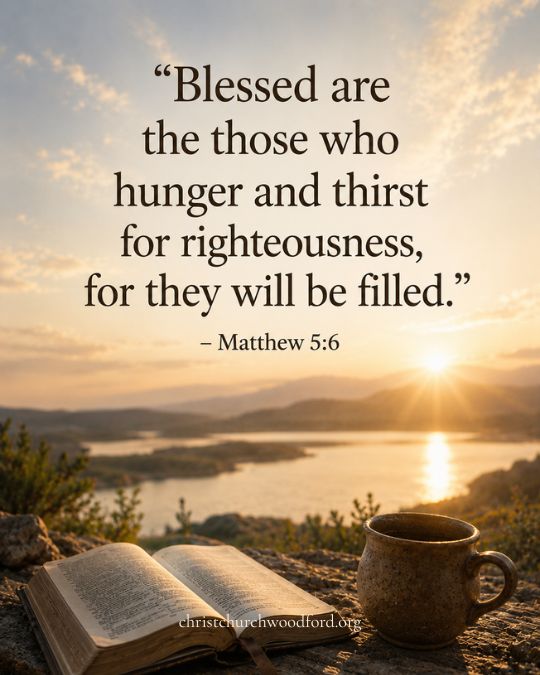
Jesus compares righteousness to hunger and thirst because it should be something we deeply desire, not simply a rule we reluctantly follow. To hunger for righteousness means wanting what is right in God’s eyes—both in the way we live and in the world around us.
It means wanting to become more honest, just, merciful, and faithful, while also longing to see what is wrong made right. Jesus promises that this desire is not empty: “they will be filled.” A life that genuinely seeks what is right draws us closer to the kind of life God intended.
5. “Blessed Are the Merciful” — Matthew 5:7
Blessed are the merciful, for they will be shown mercy. – Matthew 5:7
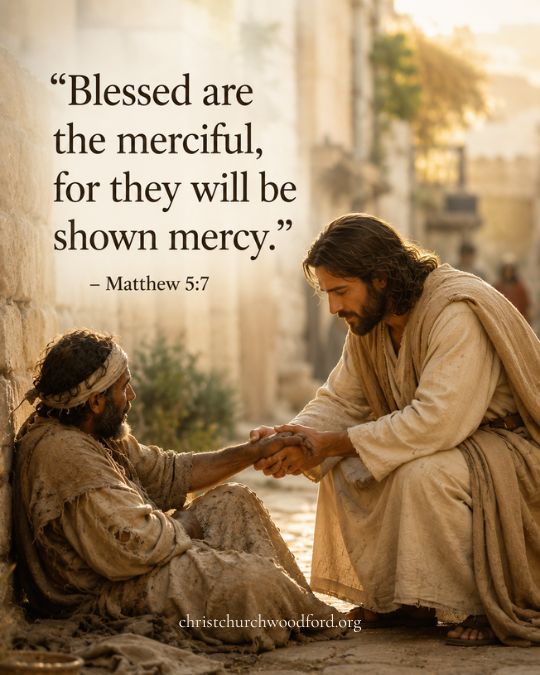
To be merciful is to respond to someone’s weakness, suffering, or wrongdoing with compassion rather than cruelty or revenge. It can mean forgiving someone who hurt you, helping someone in need, or choosing not to return the harm you received.
Mercy does not mean pretending that wrong is right or allowing harmful behavior to continue. It means refusing to let anger and revenge decide how you treat another person. This is why Jesus later teaches His followers to love their enemies: the mercy we receive from God should shape the mercy we are willing to show others.
6. “Blessed Are the Pure in Heart” — Matthew 5:8
Blessed are the pure in heart, for they will see God. – Matthew 5:8
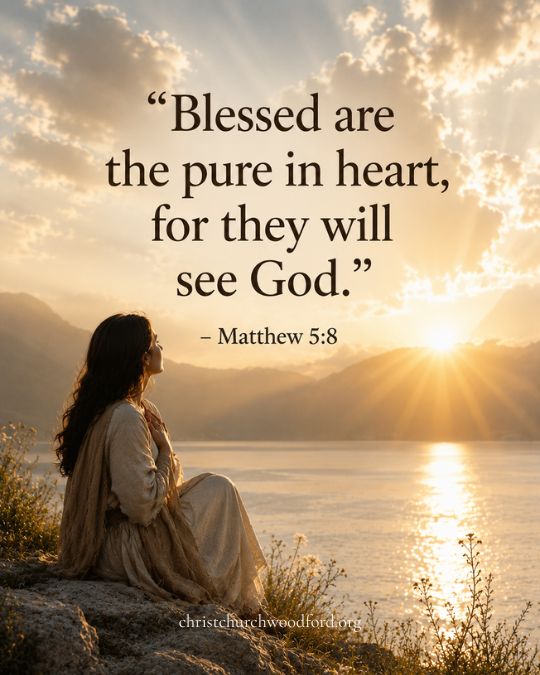
To be pure in heart means more than sexual purity. It means having a sincere heart toward God—where what you believe, what you desire, and how you live are not pulling in completely different directions.
Jesus repeatedly looks beyond outward appearances to what is happening inside us. Someone can appear religious while their heart is driven by pride, dishonesty, or selfish motives. Purity begins when we allow God to shape that inner life too.
The promise is “they will see God.” The closer our hearts are aligned with God, the more clearly we recognize His presence and His ways, with the ultimate hope of one day being fully in His presence.
7. “Blessed Are the Peacemakers” — Matthew 5:9
Blessed are the peacemakers, for they will be called children of God. – Matthew 5:9
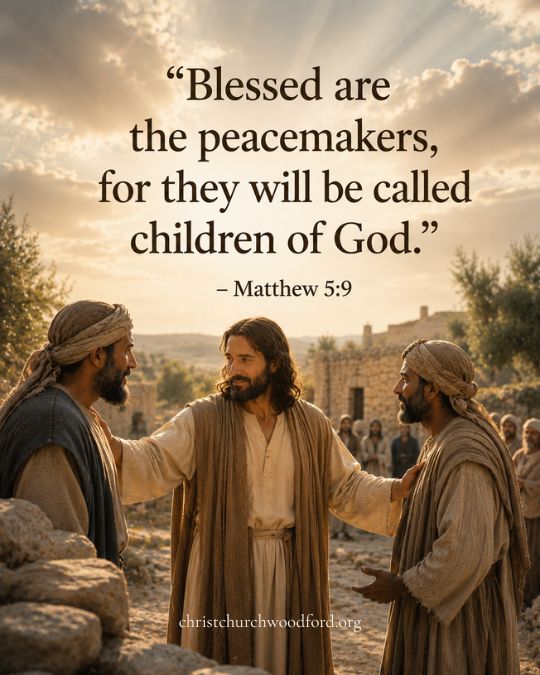
A peacemaker is not simply someone who avoids arguments. Sometimes real peace requires an honest conversation, an apology, forgiveness, or the courage to address something that is wrong.
Jesus blesses those who actively try to replace hostility with understanding and reconciliation. We cannot control whether another person chooses peace, but we can control what we bring into the situation. When we choose truth without cruelty, forgiveness without revenge, and reconciliation where possible, we reflect the character of God. That is why Jesus says peacemakers “will be called children of God.”
8. “Blessed Are Those Who Are Persecuted Because of Righteousness” — Matthew 5:10–12
Blessed are those who are persecuted for righteousness’ sake, for theirs is the kingdom of heaven. Blessed are you when others revile you and persecute you and utter all kinds of evil against you falsely on my account. Rejoice and be glad, for your reward is great in heaven, for so they persecuted the prophets who were before you. – Matthew 5:10–12
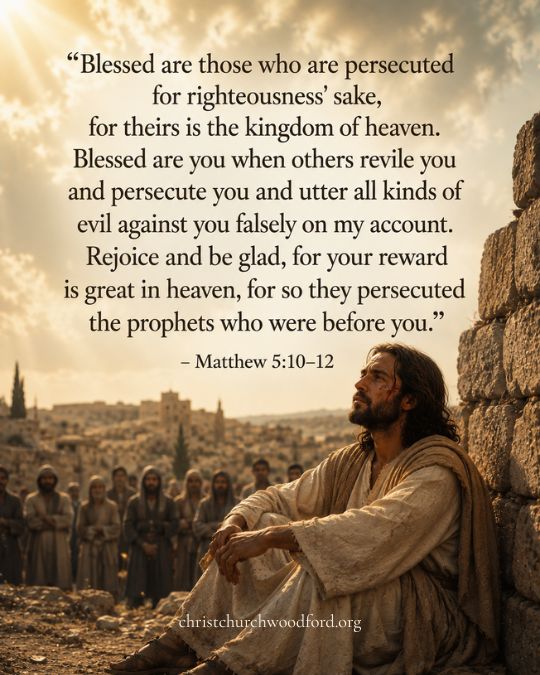
Jesus is not saying that every criticism or hardship means we are being persecuted for our faith. He specifically speaks about people who suffer because they choose what is right and remain faithful to Him, even when doing so costs them acceptance, comfort, or reputation.
Jesus tells them to “rejoice and be glad,” not because suffering itself is good, but because rejection does not mean God has abandoned them. The prophets before them also faced opposition for remaining faithful to God. What may look like loss in the eyes of the world does not change where they stand in God’s kingdom.
What Is the Main Message of the Beatitudes?
When you read all eight Beatitudes together, one message becomes clear: Jesus is redefining what it means to be blessed.
We naturally associate a blessed life with things going well—security, success, recognition, enough money, good relationships, and freedom from suffering. Yet Jesus begins His sermon by calling people blessed who do not necessarily have any of those things. Some are mourning. Some are persecuted. Some choose mercy when they could take revenge. Others make peace instead of fighting to come out on top.
Why would Jesus call them blessed?
Because in the Beatitudes, blessing is not measured by how comfortable or successful your life looks from the outside. It is measured by your relationship with God and the kind of person you are becoming under His guidance. The poor in spirit know they need Him. The meek do not need to dominate others to feel strong. Those who hunger for righteousness genuinely want what is right. The merciful refuse to let revenge shape them. The pure in heart seek God sincerely, and the peacemakers try to repair what conflict has broken.
Even persecution fits this pattern. Following what is right may sometimes cost you approval, opportunities, relationships, or comfort. Jesus does not pretend otherwise. His point is that losing something because you remained faithful does not mean you have lost God’s blessing.
This is why the Beatitudes feel so different from the way we normally measure a good life. Jesus shifts the question from “What do I have?” and “How well is my life going?” to “Who am I becoming, and what is guiding the way I live?”
That is also why the Beatitudes belong at the beginning of the Sermon on the Mount. Before Jesus teaches about anger, forgiveness, loving enemies, prayer, money, worry, and judgment, He first establishes the kind of heart from which those teachings are meant to be lived.
The Beatitudes are therefore not simply eight beautiful sayings. Together, they describe a life increasingly shaped by the values of God’s kingdom—even when living that way looks very different from what the world normally calls success.
How Can Christians Live Out the Beatitudes Today?
The Beatitudes are not eight separate tasks to complete. They are qualities that can shape the way we respond to God, other people, and everyday situations. In practice, that can look like:
- Be poor in spirit: Remember that you do not always know the best way forward. Pray, seek God’s wisdom, and remain willing to be guided rather than relying only on yourself.
- Mourn what is broken: Do not become indifferent to suffering, injustice, or your own mistakes. Care enough to grieve what is wrong and, where possible, help make it better.
- Practice meekness: Be strong without needing to dominate. You can stand firm, speak honestly, and still treat people with gentleness and respect.
- Hunger for righteousness: Ask not only what is easiest or most beneficial to you, but what is actually right.
- Show mercy: Forgive where you can, help people who are struggling, and resist the instinct to hurt someone simply because they hurt you.
- Keep a pure heart: Pay attention to your motives, not just your outward behavior. Try to make what you say, believe, and do consistent.
- Make peace: Do not simply avoid conflict. Apologize when you are wrong, listen before reacting, and seek reconciliation where it is possible and healthy.
- Remain faithful under pressure: Do not abandon what you believe is right simply because it becomes unpopular, uncomfortable, or costly.
Living the Beatitudes is less about checking eight boxes and more about allowing these values to shape the person you are becoming. Together, they describe a life increasingly guided by God—humble, compassionate, sincere, peaceful, and willing to remain faithful even when doing so is difficult.
The Beatitudes and the Rest of the Sermon on the Mount
The Beatitudes are the beginning of a much larger teaching. They describe the heart and character of a person shaped by God’s kingdom, while the rest of the Sermon on the Mount shows what that kind of life looks like in practice.
Jesus moves from the Beatitudes into teachings about being salt and light, dealing with anger, [loving your enemies], giving, prayer, money, worry, judging others, and ultimately putting His words into practice. He also gives His disciples the Lord’s Prayer as a model for how to approach God.
In that sense, the Beatitudes provide the foundation: first Jesus describes the kind of person His teaching is forming, then He shows us how that person lives.
Frequently Asked Questions About the Beatitudes
What are the Beatitudes in simple terms?
The Beatitudes are eight blessings Jesus speaks at the start of the Sermon on the Mount in Matthew 5:3–12, describing the character and hope of people who belong to God’s kingdom.
How many Beatitudes are there?
Matthew 5:3–10 gives eight distinct statements beginning with “Blessed are…” Verses 11–12 expand the final one about persecution, which some count as a ninth, though it is really the eighth deepened and applied personally.
Why are they called the Beatitudes?
The name comes from the Latin word beatus, meaning blessed, which is how each of Jesus’ eight statements begins.
What does “blessed” mean in the Beatitudes?
It means more than temporary happiness. Biblical blessedness describes a deep, God-given favor and wellbeing that holds steady even in hard circumstances.
The Blessing of God’s Kingdom
The Beatitudes do not promise that following Jesus will make life easy. Mourning and persecution appear alongside mercy, peace, and righteousness. Yet Jesus still uses the word “blessed.” That tells us something important: God’s blessing cannot be measured only by how comfortable or successful our circumstances appear.
Look again at the promises Jesus gives: theirs is the kingdom of heaven, they will be comforted, they will inherit the earth, they will be filled, they will receive mercy, they will see God, and they will be called children of God.
The Beatitudes invite us to measure our lives differently. Instead of asking only, “Is everything going the way I hoped?” we can also ask, “Am I becoming more humble, merciful, sincere, peaceful, and faithful to God?”
Some seasons will still include grief. Doing what is right may sometimes cost us something. Making peace may be difficult, and there will always be moments when we do not know the road ahead. But the message Jesus gives at the beginning of the Sermon on the Mount is clear: a blessed life is not necessarily a life without hardship. It is a life increasingly shaped by God and anchored in the promises of His kingdom.