The Parable of the Sower Explained: What Jesus Meant by the Four Soils

If you have ever wondered why some people eagerly receive God’s Word while others reject it, or why someone can seem passionate about Jesus for a season and then slowly drift away, the Parable of the Sower speaks directly to those questions. It is one of the most familiar stories Jesus ever told, and yet it is easy to focus on the seed while overlooking what Jesus says about the condition of our own hearts.
This parable appears in three Gospels—Matthew 13, Mark 4, and Luke 8—which tells us how important Jesus considered it. And unlike many of His parables, He does not leave us guessing. He actually explains it to His disciples, revealing exactly what the seed, the soils, and the harvest represent. That makes the Parable of the Sower one of the clearest teachings in all of Scripture, and one of the most searching. Jesus is not simply telling a story about farming. He is revealing the different ways people respond to God’s Word, and He quietly invites each of us to ask which response best describes our own heart.
What Is the Parable of the Sower?
The Parable of the Sower is one of Jesus’ simplest stories, yet it carries one of His deepest spiritual lessons.
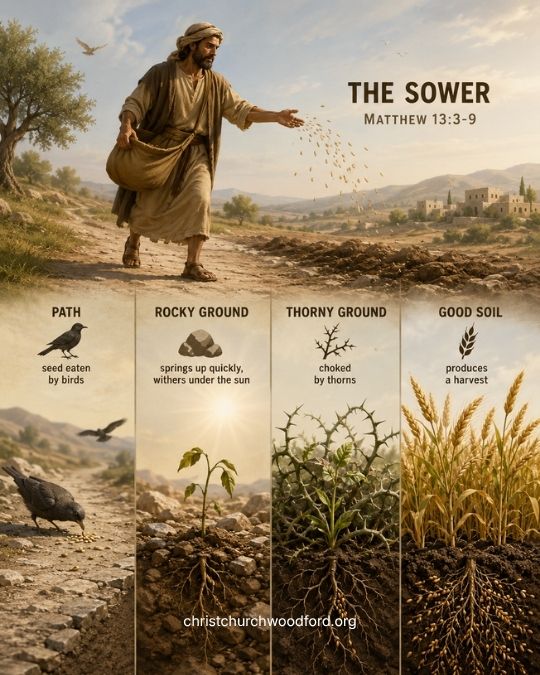
A farmer goes out to sow seed. As he scatters it by hand, the way farmers did in first-century Israel, the seed lands on four different types of ground.
Some falls on a hard path and is eaten by birds before it can even take root. Some falls on rocky, shallow soil, springs up quickly, and then withers under the sun because it has no root. Some falls among thorns, which grow up and choke the plant. And some falls on good soil, where it produces a harvest—thirty, sixty, even a hundred times what was sown.
You can read the full account in Matthew 13:1–9, Mark 4:1–9, and Luke 8:4–8. Each Gospel writer records it slightly differently, but the heart of the story remains the same: one sower, one seed, four soils, and four very different responses. Though the story is easy to follow, Jesus uses it to reveal a profound truth about how people respond to the Word of God.
Why Did Jesus Teach in Parables?
When studying the Parable of the Sower, one of the first questions many readers ask is why Jesus taught in parables at all. His disciples asked Him this question directly, and His answer surprises many people. Jesus did not teach in parables simply to make spiritual truths easier to understand. Instead, His parables both revealed truth to those who were willing to receive His teaching and exposed the hardness of those who continually rejected Him.
“To you it has been given to know the secrets of the kingdom of heaven, but to them it has not been given.” — Matthew 13:11
This also fulfilled the prophecy of Isaiah, spoken centuries earlier about people who would hear without understanding and see without perceiving. In that sense, the Parable of the Sower is more than a lesson about seeds and soil—it is a living example of its own message. Some who heard Jesus that day dismissed His words and walked away unchanged. Others stayed, asked questions, and listened as He explained the meaning. The parable revealed the condition of every listener’s heart.
What Does the Seed Represent?
Jesus tells us plainly what the seed is.
“The seed is the word of God.” — Luke 8:11
The seed is not a technique, a personality, or a style of preaching. It is the Word of God—the gospel of Jesus Christ and the truth of Scripture. One of the most encouraging truths in the Parable of the Sower is that the seed itself never changes. God’s Word is always living, always true, and always able to accomplish His purposes. What changes from one soil to another is not the seed’s power, but the condition of the soil that receives it. That truth should humble every one of us who opens God’s Word. We are not the source of life; we are simply the ground where His Word takes root and, by His grace, bears fruit.
What Does the Sower Represent?
In its immediate context, the sower is Jesus Himself, proclaiming the kingdom of God to all who would hear. More broadly, everyone who faithfully shares God’s Word becomes a sower—a pastor preaching on Sunday, a parent reading Scripture to a child at bedtime, a missionary crossing an ocean, or a friend sending a Bible verse during a difficult week.
The Parable of the Sower reminds us that we are called to scatter the seed generously, not knowing in advance which hearts will receive it. That is worth remembering the next time you wonder whether sharing your faith is “worth it.” Our responsibility is not to guarantee the harvest, but to faithfully sow the seed and trust God with the results.
The Four Soils Explained
This is where the Parable of the Sower becomes deeply personal. Jesus is not merely describing different kinds of soil—He is revealing the different ways people respond to the Word of God.
As you read through each one, the question is not simply, “Which soil describes other people?” but “How am I responding to God’s Word today?”
1. The Path — The Hardened Heart
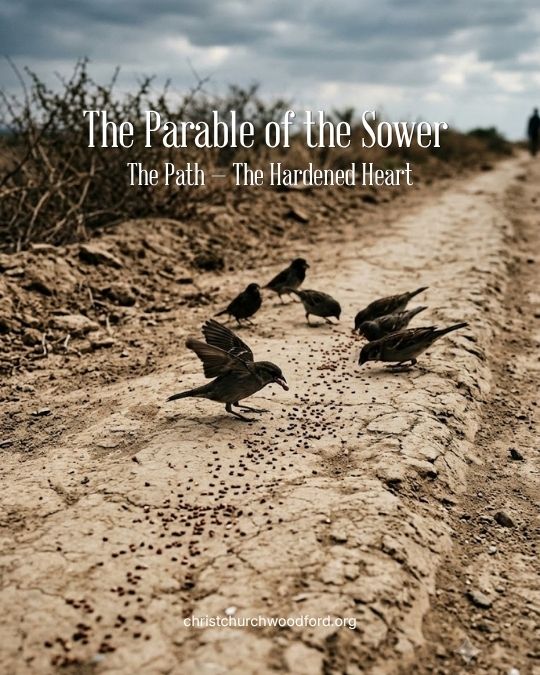
The seed that falls on the path never even gets the chance to sink in. The ground has been walked over so many times that it is packed hard, and the birds—which Jesus says represent Satan—snatch the seed away almost immediately.
This is the heart that hears God’s truth but never truly receives it. Sometimes it is outright unbelief. Sometimes it is pride that refuses correction. Sometimes years of skepticism leave a person resistant to anything spiritual. Many of us have experienced moments when a sermon or a passage of Scripture barely seemed to register before our thoughts moved elsewhere. The path reminds us that hearing God’s Word with our ears is not the same as receiving it with our hearts.
2. Rocky Ground — The Shallow Heart
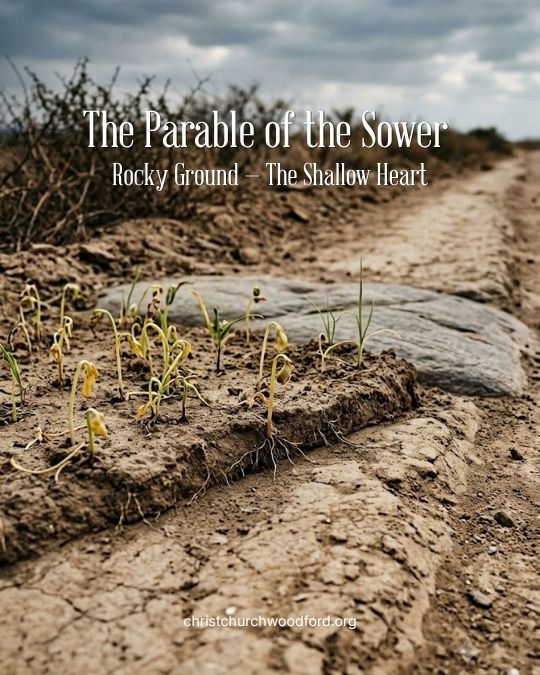
This soil looks promising at first. The seed springs up quickly, full of life. But beneath the thin layer of soil lies solid rock, leaving the roots nowhere to grow. When the sun rises—when trials, persecution, or hardship come—the plant withers just as quickly as it appeared.
This is faith that begins with enthusiasm but never develops deep roots. It is the person who leaves a conference or worship service inspired, yet struggles to remain faithful when life becomes difficult. There is nothing wrong with strong emotions in worship, but emotion alone cannot sustain faith. Lasting spiritual growth comes through abiding in God’s Word, prayer, and faithful fellowship with other believers long after the emotional high has faded.
3. Among Thorns — The Distracted Heart
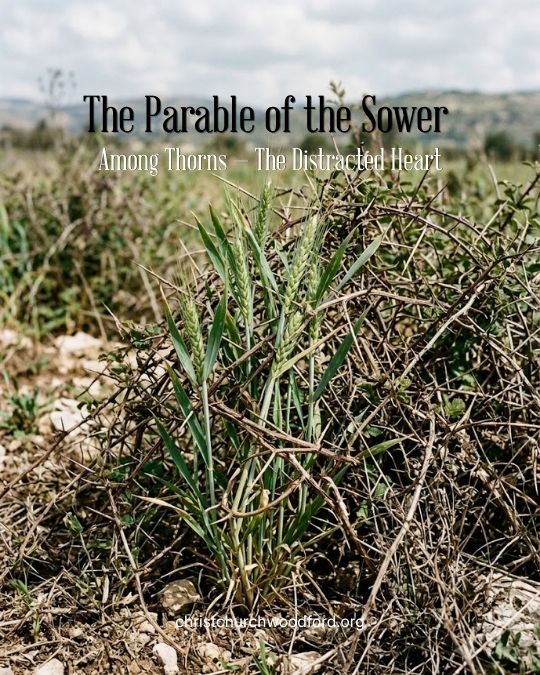
Here the seed actually grows. Nothing destroys it immediately. But thorns grow alongside it—the worries of this life, the deceitfulness of riches, and the pleasures of the world—and gradually choke the plant until it no longer bears fruit.
This may be the soil many Christians recognize most easily today. We are not openly rejecting God, nor have we necessarily abandoned our faith. We are simply busy—with careers, bills, endless notifications, and the constant pursuit of comfort and security. None of those things are sinful in themselves. But when they are allowed to dominate our attention, they slowly crowd out the life God’s Word is meant to produce within us.
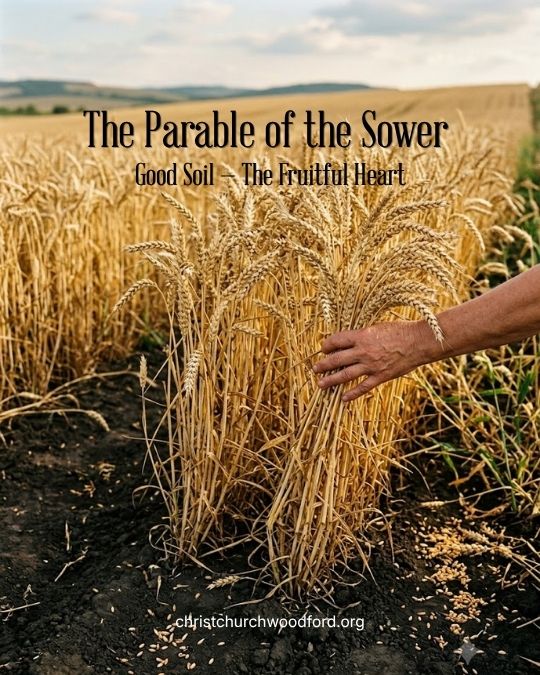
4. Good Soil — The Fruitful Heart
Finally, Jesus describes the good soil: a heart that hears God’s Word, receives it, and perseveres until it produces a harvest—thirty, sixty, and even a hundredfold.
Good soil is not a perfect heart. It is a receptive one—a heart softened by God’s grace, willing to be corrected, and faithful through every season. Over time, that faith becomes visible in everyday life: in the way we love our families, forgive those who hurt us, use the resources God has given us, and quietly serve others. Fruit does not appear overnight. Like a healthy crop, it grows steadily through many seasons under God’s faithful care.
Why Are There Four Different Responses?
Here is the theological center of the Parable of the Sower, and I do not want you to miss it: the seed never changes, and the sower never changes. What changes is the soil. The same gospel is proclaimed to everyone, yet people respond to it very differently.
In one life, God’s Word is rejected almost immediately. In another, it takes root but does not endure. In another, it is choked by the cares of this world. And in another, it bears a harvest beyond expectation. The difference was never the message. The difference is the condition of the heart that receives it.
That should keep us from thinking the gospel needs to be improved, rebranded, or made more appealing to “work” on people. God’s Word is already living and powerful. Our calling is not to change the seed, but to faithfully sow it—and to examine the condition of our own hearts.
What Fruit Should Christians Bear?
Scripture gives us a clear picture of what this fruit looks like. Paul describes it as love, joy, peace, patience, kindness, goodness, faithfulness, gentleness, and self-control—the fruit of the Spirit growing in the life of every believer (Galatians 5:22–23). Jesus also tells His disciples,
“By this my Father is glorified, that you bear much fruit.” — John 15:8
And James reminds us that genuine faith always shows itself through action — that a faith with no works, no fruit, no visible change, was never really alive to begin with (James 2:17).
It is worth being clear here: fruit does not earn salvation. We are not saved because we produced a harvest. We are saved by grace through faith in Christ alone. But fruit does demonstrate that the faith we claim is genuine. A tree does not work to produce apples in order to become an apple tree — it produces apples because that is what it already is. In the same way, good works and lasting spiritual fruit flow out of a heart that has truly been made new.
What Does This Parable Teach Christians Today?
The Parable of the Sower is not just about four kinds of soil—it is an invitation to examine our own hearts. Let it ask you a few honest questions.
- Am I truly listening when I open God’s Word, or am I letting it wash over me without taking root?
- Have worries about money, work, or comfort quietly become thorns in my life?
- Is my faith rooted deeply enough to endure hardship, or has it only been tested in easier seasons?
- And most importantly, is my life producing fruit that reflects Christ?
A heart that receives God’s Word does not become fruitful overnight. Spiritual growth is a lifelong work of God’s grace as we continue to abide in Christ through Scripture, prayer, repentance, fellowship with other believers, and faithful obedience. As we remain close to Him, He continues to shape our hearts so that His Word can take deeper root and produce lasting fruit.
The Bigger Picture: Living as Good Soil
The Parable of the Sower is far more than a story about a farmer scattering seed. It is the doorway into Jesus’ teaching about the Kingdom of God in Matthew 13, revealing how people respond to God’s Word and how His kingdom grows in the world. It reminds us that our responsibility is to faithfully receive and share the Word, while God alone gives the growth.
So where does that leave us? Not with guilt, but with an invitation. Every time we open the Scriptures, we have another opportunity to receive God’s Word with humble and receptive hearts. None of us has perfect soil. We all need God to continue softening our hearts, pulling out the thorns that distract us, deepening our roots through times of trial, and producing the fruit that only He can grow.
That work happens through ordinary faithfulness: opening your Bible even on days you do not feel like it, bringing your worries to God in prayer instead of carrying them alone, repenting when He convicts you, staying connected to other believers, and remaining in Christ through every season of life. As we continue to abide in Him, His Word takes deeper root, our faith grows stronger, and our lives begin to bear fruit that brings glory to God.
That is the invitation at the heart of the Parable of the Sower—not simply to identify which soil we are today, but to keep responding to God’s Word with faith, trusting that He is still at work in every heart that receives Him.
Frequently Asked Questions
Does the Parable of the Sower mean Christians can lose their salvation?
This is one of the most discussed questions about the Parable of the Sower, and faithful Christians have reached different conclusions. Some understand the rocky and thorny soils as describing people whose profession of faith never developed genuine, lasting roots. Others see them as true believers who experience seasons of spiritual struggle without losing their salvation. Rather than settling that debate, Jesus’ main point is to call every listener to examine how they are responding to God’s Word.
Is Jesus saying only perfect people are good soil?
No. Good soil is not a perfect or sinless heart. It is a heart that humbly receives God’s Word, responds in faith, and continues to grow over time. Every believer still struggles with sin, but God faithfully continues His work of transforming those who belong to Him.
Is the sower responsible for how people respond?
No. The sower’s responsibility is to faithfully share God’s Word. The response depends on the condition of the hearer’s heart, while God alone gives spiritual growth. This should encourage every Christian who shares the gospel: our calling is to sow the seed faithfully and leave the results to God.
Which Gospel contains the Parable of the Sower?
The Parable of the Sower appears in three Gospels: Matthew 13:1–23, Mark 4:1–20, and Luke 8:4–15. Each account emphasizes the same central message while including slightly different details.
How can Christians become good soil?
Christians cultivate receptive hearts by regularly reading and obeying God’s Word, spending time in prayer, repenting when they fall into sin, remaining connected to other believers, and depending on God’s grace. As we abide in Christ, He continues to deepen our roots and produce lasting spiritual fruit.
Why is the Parable of the Sower important?
The Parable of the Sower is one of Jesus’ most important teachings because He explains its meaning Himself. It reveals that the same Word of God produces different results depending on how people receive it, challenging every reader to examine the condition of their own heart and respond to God’s truth with faith.





Wonderful clarification of Jesus’ simple parable yet profoundly meaningful food for thought as we enter diverse seasons of our lives. Thank you!