What Does the Number 50 Mean in the Bible? Jubilee, Pentecost, and New Beginnings

If you’ve been searching for the biblical meaning of number 50, you’re not alone. It’s one of the most searched numbers in Scripture, and for good reason. The Bible never teaches that numbers have mystical power or hide secret codes waiting to be unlocked. Instead, some numbers become significant because God repeatedly uses them at key moments in His redemptive story.
Fifty is one of those numbers.
It appears at two of the Bible’s most remarkable events: the Year of Jubilee and the Day of Pentecost. One brought freedom and restoration to Israel every fiftieth year. The other marked the outpouring of the Holy Spirit and the birth of the Church. Though separated by centuries, these events are connected by a remarkable pattern that reveals something important about God’s character and His plan of redemption.
So, what does the number 50 mean in the Bible? To answer that question, we need to look at the stories where God chose to make this number significant.
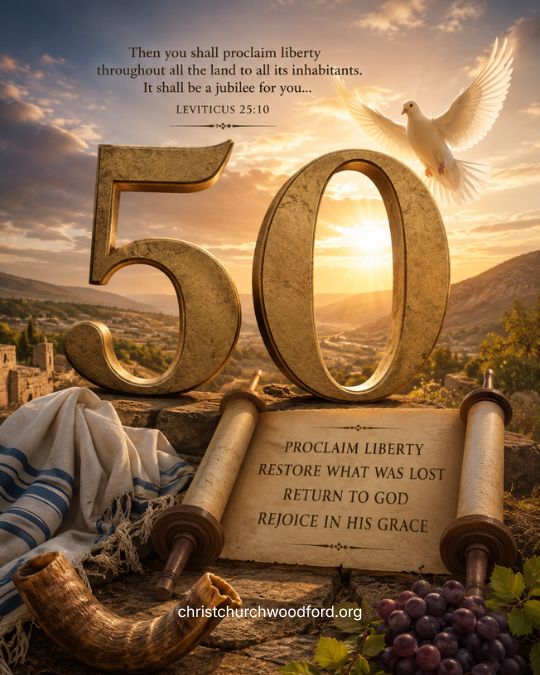
What Does the Number 50 Mean in the Bible?
Throughout Scripture, the number 50 is closely associated with freedom, restoration, and new beginnings. These themes aren’t based on hidden symbolism or biblical numerology. Instead, they emerge from the way God repeatedly uses the fiftieth count at pivotal moments in His redemptive plan.
The two clearest examples are the Year of Jubilee, proclaimed every fiftieth year, and Pentecost, celebrated on the fiftieth day after Passover. Although separated by centuries, both marked a new work of God—bringing freedom to those in bondage, restoring what had been lost, and opening the door to a new beginning for His people.
The story begins with the Year of Jubilee in Leviticus 25. There, God gave Israel one of the most remarkable laws in the ancient world—a law that not only transformed the nation’s economy and society but also foreshadowed the greater redemption that would one day come through Christ.
The Year of Jubilee: Where the Meaning of Number 50 Begins
The biblical meaning of number 50 begins with one of the most remarkable laws God ever gave Israel—the Year of Jubilee.
More than a celebration, Jubilee revealed God’s heart for freedom, restoration, and redemption, themes that would later find their ultimate fulfillment in Christ.
Every Family Received an Inheritance
When Israel finally entered the Promised Land after four hundred years of slavery in Egypt and forty years of wandering in the wilderness, God did something unusual. He didn’t let the strongest families claim the best territory. He didn’t let tribal leaders divide the land according to power or wealth.
Instead, every family received an inheritance—a specific portion of land assigned by God and intended to remain with that family for generations.
But there was an important principle behind this arrangement. The land was never truly Israel’s to own forever because it ultimately belonged to God. As He declared:
“The land shall not be sold in perpetuity, for the land is mine. For you are strangers and sojourners with me.” — Leviticus 25:23 (ESV)
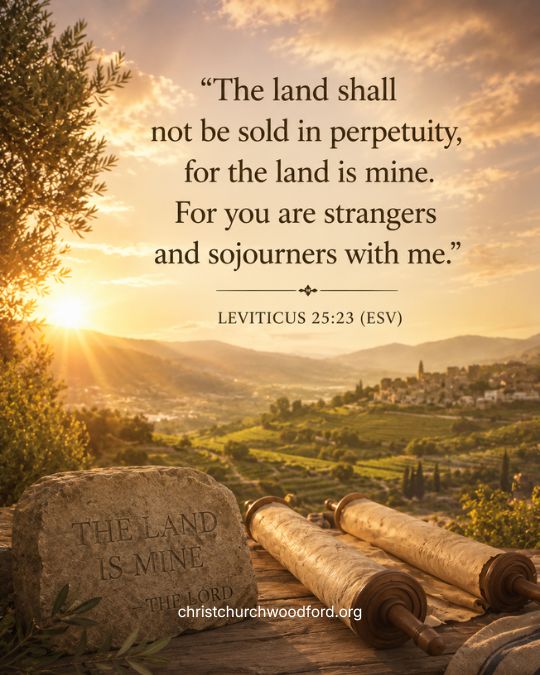
Israelite families were not absolute owners; they were stewards. God entrusted the land to them, but it remained His possession. That truth became the foundation for everything Jubilee represented.
Of course, life wasn’t always easy. A drought could destroy a harvest. Illness could leave a family unable to work. Debt could quickly accumulate. To survive, families might sell part of their land or even sell their labor to pay what they owed. Within a generation, a family that once enjoyed God’s inheritance could lose its fields, its independence, and its future.
Without intervention, wealth would naturally gather in the hands of a few while poverty became a permanent condition for many others. Debt would continue to grow, and each generation would inherit fewer opportunities than the one before it.
This is exactly the problem God designed Jubilee to solve.
The Fiftieth Year: A Fresh Start for God’s People
In Leviticus 25, God introduced one of the most extraordinary laws in the ancient world.
Every seventh year was already observed as a Sabbath year, when the land rested and Israel trusted God to provide. But after seven complete cycles of seven years—forty-nine years in total—God commanded something even greater.
“Then you shall sound the loud trumpet on the tenth day of the seventh month. On the Day of Atonement you shall sound the trumpet throughout all your land. And you shall consecrate the fiftieth year, and proclaim liberty throughout the land to all its inhabitants.” — Leviticus 25:9–10 (ESV)
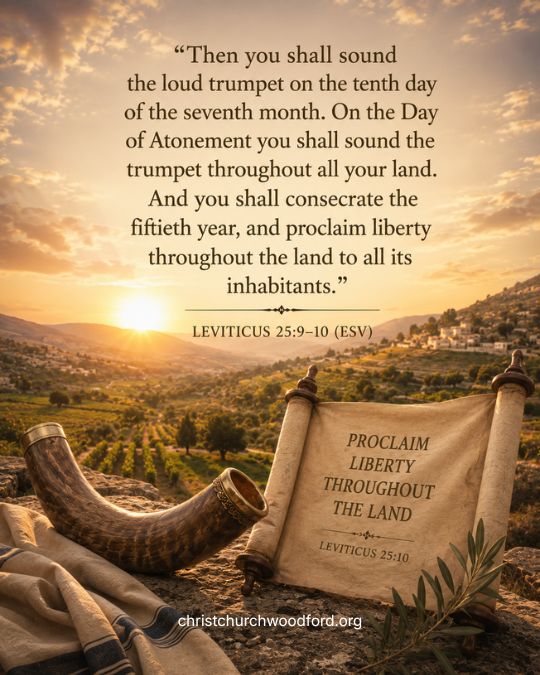
The fiftieth year began with the sound of a trumpet echoing across the nation on the Day of Atonement, Israel’s annual day of repentance and forgiveness. That timing was no coincidence. The Year of Jubilee announced liberty after forty-nine years of waiting, making the fiftieth year a powerful picture of freedom, restoration, and a new beginning.
Imagine hearing that trumpet.
Families who had lost their land began returning home. Servants who had sold their labor because of poverty were released. Property that had changed hands through financial hardship was restored to its original family. Even the land itself rested, allowing the nation to pause and trust God’s provision once again.
Jubilee wasn’t merely an economic policy. It reminded Israel that no failure, no debt, and no season of hardship had the final word. God alone had the authority to restore what had been lost.
Why the Year of Jubilee Matters
Jubilee reveals God’s compassion for people trapped by circumstances beyond their control. Crop failures, illness, and financial hardship could happen to anyone, but God refused to let temporary struggles become permanent bondage.
It also protected Israel from extreme inequality. No family could lose everything forever, and no family could accumulate everything forever. Every fiftieth year brought a fresh beginning that reminded the nation that blessing ultimately came from God, not from wealth or power.
Most importantly, Jubilee reminded Israel that everything belonged to the Lord. The land was His. The people were His. Their freedom was His gift. Every trumpet blast declared that God’s grace was greater than human failure.
Yet the Year of Jubilee pointed beyond itself.
Centuries later, Jesus stood in the synagogue at Nazareth and read these words from Isaiah:
“The Spirit of the Lord is upon me… He has sent me to proclaim liberty to the captives… to set at liberty those who are oppressed, to proclaim the year of the Lord’s favor.” — Luke 4:18–19 (ESV)
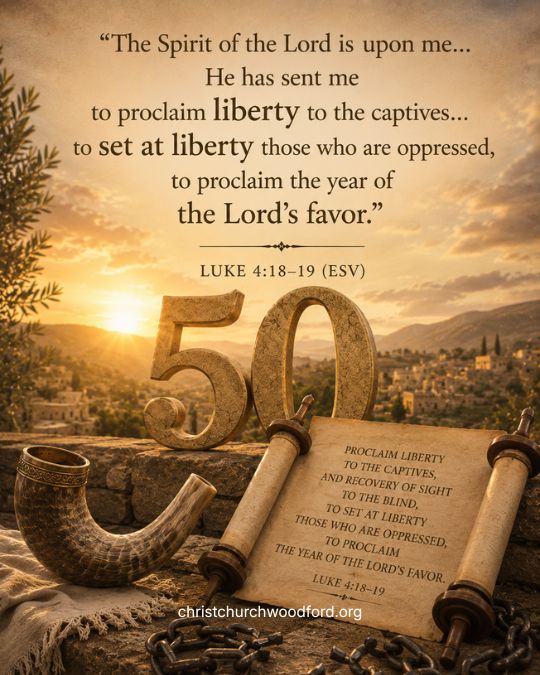
By applying this prophecy to Himself, Jesus revealed that He was the fulfillment of everything Jubilee anticipated. The freedom announced every fiftieth year ultimately pointed to the greater freedom found in Christ—not simply the cancellation of financial debt, but the forgiveness of sin, restoration to God, and the promise of eternal redemption.
This is why the biblical meaning of number 50 begins with the Year of Jubilee. It established a pattern that God would later fulfill completely through Jesus Christ.
Pentecost: Another Fiftieth Day That Changed History
The biblical meaning of number 50 doesn’t end with the Year of Jubilee.
Centuries later, God used another fiftieth count to mark an even greater act of redemption. This time, instead of counting years, His people counted days.
Counting Fifty Days to Pentecost
After Passover—the feast that celebrated Israel’s deliverance from slavery in Egypt—the Israelites began counting toward another important festival. Seven full weeks, or forty-nine days, were counted, and the fiftieth day was celebrated as the Feast of Weeks, later known by its Greek name, Pentecost, meaning “fiftieth.”
Originally, Pentecost was a joyful harvest festival. The people brought the firstfruits of their crops to God, thanking Him for His faithful provision.
Year after year, Israel observed this feast as part of its worship, never realizing that one future Pentecost would become one of the most significant days in history.
The Day the Holy Spirit Came
That extraordinary Pentecost came shortly after Jesus’ death, resurrection, and ascension into heaven. Before returning to the Father, Jesus instructed His disciples to remain in Jerusalem and wait for what He called “the promise of the Father.” They didn’t know exactly what would happen, but they obeyed.
Then everything changed.
“And suddenly there came from heaven a sound like a mighty rushing wind, and it filled the entire house where they were sitting. And divided tongues as of fire appeared to them and rested on each one of them. And they were all filled with the Holy Spirit and began to speak in other tongues as the Spirit gave them utterance.” — Acts 2:2–4 (ESV)
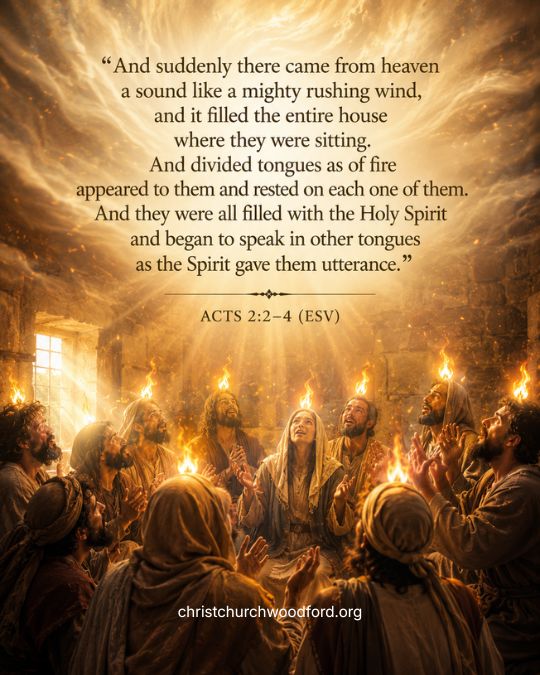
Imagine witnessing that moment. Ordinary fishermen, tax collectors, and other followers of Jesus were suddenly filled with the Holy Spirit and began speaking languages they had never learned. Jews from many nations who had gathered in Jerusalem for the festival heard the disciples proclaiming God’s mighty works in their own languages.
Peter—the same disciple who had denied Jesus only weeks earlier—stood before the crowd with remarkable courage and proclaimed the gospel. About three thousand people believed and were baptized that very day. What began as a Jewish harvest festival became the day the Church was born.
How Pentecost Completes the Picture of Number 50
The connection between Jubilee and Pentecost is impossible to miss.
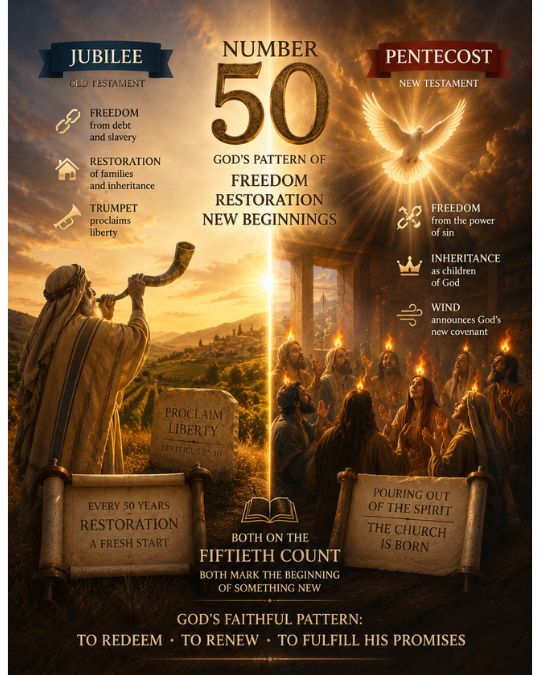
The Year of Jubilee proclaimed freedom from debt and slavery. Pentecost proclaimed freedom from the power of sin.
Jubilee restored families to their inheritance. Pentecost welcomed believers into an eternal inheritance as children of God.
Jubilee announced liberty with the sound of a trumpet. Pentecost announced God’s new covenant with the sound of a mighty rushing wind.
Both events came on the fiftieth count, and both marked the beginning of something entirely new. In the Old Testament, God restored His people through the Year of Jubilee. In the New Testament, He poured out His Spirit and established the Church through Pentecost.
Seen together, these two events reveal why the number 50 in the Bible carries such rich meaning. It consistently points to God’s work of bringing freedom, restoration, and new beginnings. The number itself has no supernatural power, but the God who chose these moments demonstrates His power to redeem, renew, and fulfill His promises.
Other Times the Number 50 Appears in the Bible
The Year of Jubilee and Pentecost give the number 50 its deepest theological significance, but they aren’t the only places where the number appears in Scripture. In several other passages, fifty is simply used as a practical number rather than a symbolic one.
| Bible Reference | How the Number 50 Is Used | Symbolic Meaning? |
|---|---|---|
| Exodus 26:5–6 | The Tabernacle curtains were joined with 50 loops and 50 gold clasps. | No. This describes the Tabernacle’s construction rather than conveying a theological message. |
| 2 Kings 1:9–14 | Captains commanded groups of 50 soldiers sent to Elijah. | No. It refers to the size of a military unit. |
| Exodus 18:21, 25 | Moses appointed leaders over groups of 50 people to help govern Israel. | No. The number is part of Israel’s administrative organization. |
| Leviticus 27:3 | Certain vows were assigned a value of 50 shekels according to the Law. | No. This is a legal valuation rather than symbolic imagery. |
Not every occurrence of 50 carries symbolic meaning, and that’s an important principle when studying biblical numbers. Sometimes fifty is simply a number used for counting people, materials, or measurements.
The major biblical themes associated with the number 50 in the Bible come from the Year of Jubilee and Pentecost. These two events consistently point to freedom, restoration, and new beginnings, while many other references simply record historical or practical details without assigning special symbolism.
What Does the Biblical Meaning of Number 50 Teach Christians Today?
The Year of Jubilee and Pentecost weren’t simply remarkable events in Israel’s history. Together, they reveal timeless truths about God’s work of redemption. While Christians are not called to observe a Jubilee year or celebrate Pentecost in the same way ancient Israel did, the principles behind these events continue to shape our faith today.
God’s Redemption Is Both Physical and Spiritual
The Year of Jubilee restored land, freedom, and families. Pentecost brought something even greater by offering forgiveness of sins and the gift of the Holy Spirit. Together, these events show that God’s plan of redemption isn’t limited to one area of life. He cares about restoring people completely.
God’s Timing Is Always Perfect
Neither Jubilee nor Pentecost happened by accident. Both came after a carefully counted period of waiting—the fiftieth year and the fiftieth day. Throughout Scripture, God works according to His perfect timing, even when His people don’t fully understand what He is preparing.
Every Old Testament Promise Points to Christ
Jubilee was never the final destination. It pointed forward to Jesus, who proclaimed liberty to the captives and fulfilled what the Year of Jubilee could only symbolize. Likewise, Pentecost fulfilled God’s promise to pour out His Spirit on His people.
The number 50 reminds us that God’s promises unfold across the whole story of Scripture and find their fulfillment in Christ.
Our Hope Is Found in God’s Work, Not in Numbers
The biblical meaning of number 50 doesn’t invite Christians to look for hidden messages whenever the number appears in daily life. Instead, it points us back to what God has already accomplished through His redemptive work. The significance is never in the number itself but in the God who chose to use it to reveal His purposes.
Frequently Asked Questions
Is the number 50 considered a lucky number in the Bible?
No. The Bible never describes 50 as a lucky or magical number. Its significance comes from how God used it in key moments of redemption, particularly the Year of Jubilee and Pentecost, rather than from any special power in the number itself.
Is the biblical meaning of number 50 connected to biblical numerology?
Not in the way numerology is often understood today. Scripture does not encourage Christians to search for hidden messages or mystical meanings in numbers. Instead, the meaning of 50 comes from the historical events where God chose to use it to reveal His redemptive plan.
Why did God choose the fiftieth year for the Year of Jubilee?
The Bible doesn’t explicitly explain why God chose the fiftieth year instead of another number. However, after seven complete cycles of seven years, the fiftieth year marked the completion of a cycle and became God’s appointed time for proclaiming liberty, restoring inheritances, and giving His people a fresh beginning.
Did Christians continue celebrating the Year of Jubilee?
The Year of Jubilee was part of Israel’s covenant under the Old Testament Law. The New Testament never commands the Church to observe it. Instead, Christians understand Jubilee as a picture that ultimately points to Jesus Christ, who brings lasting freedom and redemption.
Why is Pentecost important for Christians today?
Pentecost marks the outpouring of the Holy Spirit in Acts 2 and the beginning of the Church’s mission. It reminds believers that God not only saves His people through Christ but also empowers them to live for Him through the Holy Spirit.
What is the main biblical meaning of number 50?
Throughout Scripture, the number 50 points to God’s work of redemption. Whether in the Year of Jubilee or the Day of Pentecost, it consistently marks moments of freedom, restoration, and new beginnings brought about by God’s grace.
The Lasting Significance of the Number 50
The biblical meaning of number 50 ultimately reminds us that God’s story is always moving toward redemption. From the Year of Jubilee to the Day of Pentecost, the fiftieth count marked moments when God fulfilled His promises and opened a new chapter for His people.
Those events belong to a specific time in biblical history, but the God behind them has not changed. He is still the God who keeps His promises, restores what sin has broken, and accomplishes His purposes according to His perfect timing.
That’s why Christians don’t look to the number itself for power or hidden messages. Instead, the number 50 invites us to look beyond the symbol to the God who gave it meaning. Jubilee points us to Christ, Pentecost points us to the Holy Spirit, and together they remind us that the greatest hope in Scripture has never been found in numbers—it has always been found in God’s faithfulness.
When you encounter the number 50 in the Bible, don’t ask, “What secret message is hidden here?” Ask instead, “What does this passage reveal about God’s plan to redeem His people?” That question will always lead you to something far more valuable than numerology—it will lead you to the heart of the gospel.