Sermon on Hope in the Dark: When You Can’t See God Anywhere

Let me ask you something, and I want you to be honest—at least with yourself. How many of you have ever prayed and felt like your words just hit the ceiling and bounced right back? You’re talking to God, pouring your heart out, and it feels like nobody’s home. Anyone? Yeah, I thought so.
We’re continuing our journey through what it means to live by faith when circumstances are screaming otherwise. We’ve been talking about unshakeable hope—that kind of hope that doesn’t depend on your bank account, your health report, or whether your kids are making good choices. Today we’re diving into something nobody really wants to talk about in church, but everybody’s experienced: those seasons when God feels completely absent.
Here’s what I need you to hear right up front: Biblical hope doesn’t deny darkness—it survives it. That’s our theme today. Write that down. Text it to yourself. Because by the time we’re done, I want you to understand that your darkness doesn’t disqualify your faith.
We’re going to learn what it means to anchor your soul when you can’t see, can’t feel, and can’t sense God anywhere near you. And here’s the thing—this isn’t some abstract theological exercise. This is for the person sitting here today who’s barely holding it together.
Think about it.
Some of you are probably sitting in a doctor’s waiting room this week, waiting for test results that could change everything. Some of you have been praying for years—years—about a relationship that’s still broken, a child who’s still wandering, a job that still hasn’t come through. Some of you woke up this morning and had to force yourself to come to church because honestly, you’re not sure God’s even listening anymore. Some of you are grieving a loss so deep you can’t talk about it without falling apart. Some of you are battling depression that makes every day feel like you’re walking through mud. Some of you posted on Instagram yesterday about your “blessed life” while inside you’re wondering if anyone would notice if you just disappeared. And some of you—maybe most of you—are just tired. Tired of waiting. Tired of hoping. Tired of pretending you’re okay when you’re not.
If that’s you, this message is for you. Stay with me.
What Biblical Hope Actually Means (Spoiler: It’s Not Optimism)
Before we go any further, we need to clear something up because the word “hope” has been absolutely butchered in our culture.
If I Google “hope,” here’s what I get: “a feeling of expectation and desire for a certain thing to happen.” That’s the world’s definition. That’s optimism. That’s crossing your fingers and wishing on a star and saying, “I hope it doesn’t rain on my wedding day.”
But biblical hope? That’s something entirely different. Biblical hope is a confident expectation anchored in God’s unchanging character and promises, not wishful thinking about circumstances improving. Romans 15:13 calls God the “God of hope” who fills us with joy and peace. Not because life is easy. Not because everything’s working out. But because of who He is.
Let me give you three options for how people typically handle hard seasons:
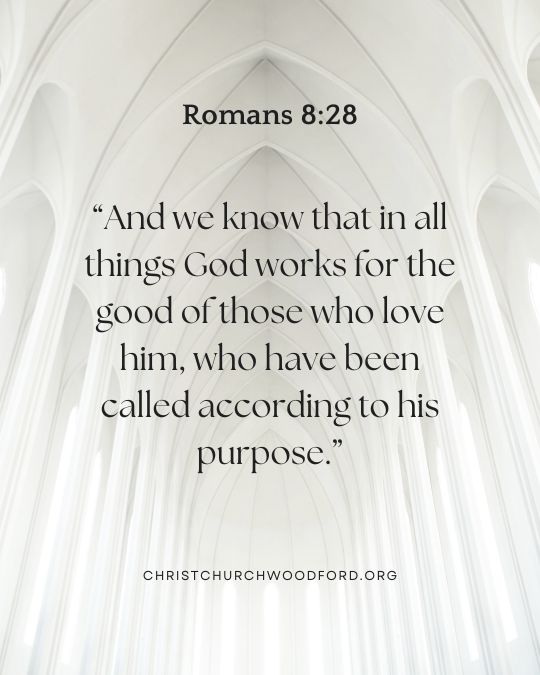
Option 1: Toxic Positivity. This is the person who slaps a Christian smile on everything and says, “God is good all the time!” even when their world is collapsing. They deny the pain. They spiritualize suffering. They quote Romans 8:28 while refusing to acknowledge that right now, nothing feels like it’s working together for good.
Option 2: Cynical Realism. This person says, “Well, life is hard, God is distant, and I just have to deal with it.” They acknowledge the pain but have no anchor. It’s pessimism dressed up as being “realistic.”
Option 3: Biblical Hope. This is the person who says, “This is terrible. This hurts. I don’t understand. But God is still God, and He’s still good, and He’s still here.” They don’t deny the darkness, but they don’t let the darkness have the final word.
Guess which one actually survives the storm? Option 3. Every single time.
Hebrews 6:19 says hope is “an anchor for the soul, firm and secure.” Think about what an anchor does. It doesn’t stop the storm. It doesn’t calm the waves. It doesn’t make the wind go away. It just keeps you from drifting when everything else is chaos. That’s biblical hope. It’s not about fixing your circumstances. It’s about holding onto God when your circumstances are unfixable.
Here’s my working definition: Biblical hope is certainty about who God is, even when circumstances are screaming otherwise. It’s God-dependent, not circumstance-dependent. And that changes everything.
Trusting God Means Getting Real with Him (Even When You’re Angry)
Let’s turn to Psalm 42.
After these things—after David has been anointed king, after he’s experienced incredible victories, after he’s written some of the most beautiful worship songs in history—he writes this:
“As the deer pants for streams of water, so my soul pants for you, my God. My soul thirsts for God, for the living God. When can I go and meet with God? My tears have been my food day and night, while people say to me all day long, ‘Where is your God?’ Why, my soul, are you downcast? Why so disturbed within me? Put your hope in God, for I will yet praise him, my Savior and my God.” (Psalm 42:1-5)
Look at what’s happening here. David is desperate for God. He’s crying so much his tears are his food. People are mocking him, asking where his God is. And then he does something wild—he argues with his own soul. “Why are you downcast? Why are you disturbed?”
This is a man after God’s own heart, and he’s in spiritual darkness. He can’t sense God. He’s depressed. He’s being mocked. And he brings all of it—the anger, the confusion, the desperation—straight to God.
Like David, many of us have been taught that we need to clean ourselves up before we come to God. We think we need to have our theology straight, our emotions under control, our faith strong. So when we’re angry at God, or confused, or doubting, we hide it. We pray these sanitized prayers that don’t match what’s actually going on inside.
But here’s what David teaches us: God wants your honesty more than your performance.
Here’s what else Scripture shows us. Job said:
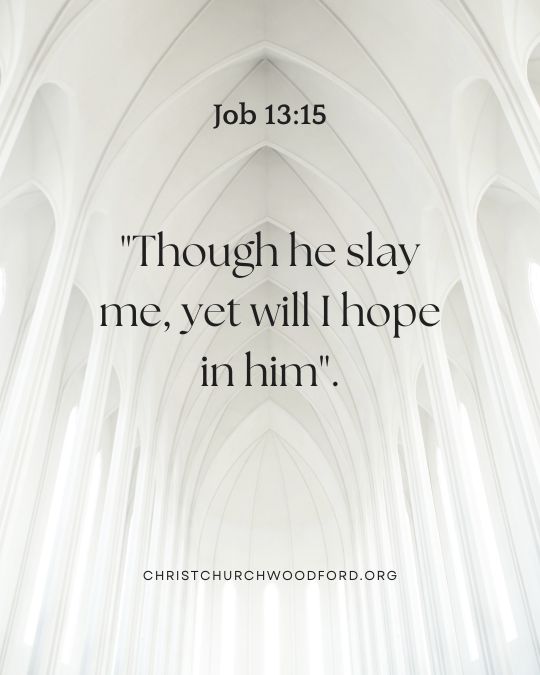
“Though he slay me, yet will I hope in him” (Job 13:15).
Jeremiah accused God of deceiving him (Jeremiah 20:7). Jesus Himself cried out:
“My God, my God, why have you forsaken me?” (Matthew 27:46).
You see the pattern? The people closest to God were the ones who got most real with Him. They didn’t pretend. They didn’t perform. They brought their raw, unfiltered, messy emotions straight to God’s throne.
This doesn’t mean God is okay with us doubting His character or rejecting His authority. But it does mean He can handle our questions. Our anger. Our confusion. He’s a big God. He’s not going to fall off His throne because you told Him you’re struggling.
Amen
Holding Onto Hope Means Remembering God’s Faithfulness (When You Can’t See His Hand)
Let’s turn to Genesis 22.
After these things—after God has promised Abraham descendants as numerous as the stars, after Abraham and Sarah finally have the son they’ve been waiting for, after years of learning to trust God—God says something that makes absolutely no sense:
“Then God said, ‘Take your son, your only son, whom you love—Isaac—and go to the region of Moriah. Sacrifice him there as a burnt offering on a mountain I will show you.’ Early the next morning Abraham got up and loaded his donkey.” (Genesis 22:2-3)
Wait. Stop right there. God promises Abraham a son. Abraham waits 25 years for that promise. Isaac is finally born. And now God says, “Kill him”?
Talk about God feeling absent. Talk about God not making sense. This is the definition of darkness—when God’s current command contradicts His previous promise, and you have no idea what’s going on.
But look at what Abraham does. “Early the next morning Abraham got up.” He doesn’t argue. He doesn’t negotiate. He doesn’t delay. Why? Because Abraham had a history with God. He’d seen God show up before. He’d watched God provide a son when it was physically impossible. He’d experienced God’s faithfulness over and over for decades.
So when nothing made sense, Abraham anchored himself to what he knew about God’s character, not what he could understand about God’s plan.
Like Abraham, many of us are facing situations that make absolutely no sense. You prayed for that marriage, and it ended anyway. You prayed for healing, and your loved one died. You prayed for provision, and the money didn’t come. And now God feels silent, and His promises feel empty, and you’re wondering if any of this is real.
Here’s what I want you to do this week—and I mean literally do this, don’t just nod and forget about it. Start a list. On your phone, in a journal, wherever. Write down every time God has shown up in your life. Answered prayers, unexpected provisions, doors that opened, disasters that didn’t happen, moments when you knew it was Him.
Have you ever noticed that when they run a test on Thursday how they say, “We’ll get back to you next week—have a great weekend”? Like you’re supposed to just go about your life while you’re waiting to find out if you have cancer or not. That’s when you need your list. When you can’t see God in your present, let your past preach to you about His faithfulness.
I’m not saying this is easy. It’s not. I still struggle with this. When things get hard, my first instinct isn’t to remember God’s faithfulness—it’s to panic and try to fix everything myself. But here’s the thing: remembering is a choice. It’s a discipline. It’s work.
God told the Israelites to stack stones when they crossed the Jordan River (Joshua 4:5-7). Why? So future generations would ask, “What do these stones mean?” And they could say, “God was faithful here.” Your list is your stack of stones. When the next hard thing comes—and it will come—you’ll have evidence that God doesn’t abandon His people.
We see this pattern in Psalm 77. Asaph is in darkness, questioning if God has forgotten him. And then verse 11 shifts: “I will remember the deeds of the Lord; yes, I will remember your miracles of long ago.” The moment he starts remembering, hope begins to return.
“Because of the Lord’s great love we are not consumed, for his compassions never fail. They are new every morning; great is your faithfulness.” (Lamentations 3:22-23)
Every. Morning. Not when you feel like it. Not when circumstances are good. Every morning, His mercies show up whether you notice them or not.
Amen
Walking in Hope Means Taking One More Step (Even When You Want to Quit)
Let’s turn to 1 Peter 1.
After these things—after Peter has denied Jesus three times, after he’s been restored, after he’s seen the church explode in growth and then face brutal persecution—he writes this to believers who are suffering:
“In his great mercy he has given us new birth into a living hope through the resurrection of Jesus Christ from the dead… In all this you greatly rejoice, though now for a little while you may have had to suffer grief in all kinds of trials.” (1 Peter 1:3, 6)
Notice the tension Peter is holding? Living hope and present suffering. Rejoicing and grief. Both are true at the same time. This isn’t toxic positivity that denies pain. This isn’t cynical realism that has no anchor. This is biblical hope that says, “Yes, this is terrible. And yes, God is still good.”
Peter calls it a “living hope.” Not a dead hope that’s stuck in the past. Not a wishful hope that’s based on good vibes. A living hope that’s anchored in the resurrection of Jesus—the ultimate proof that God brings life out of death.
Like Peter’s audience, many of us are in situations where we don’t need a sermon—we need to know how to survive the next 24 hours. You’re not thinking about theology; you’re thinking about whether you can make it through one more day.
And here’s what hope looks like in that moment: Take one more step. That’s it. Not ten steps. Not a five-year plan. Just the next right thing.
Maybe that means getting out of bed even though depression is screaming at you to stay there. Maybe it means showing up to church even though you feel like a fraud. Maybe it means praying one sentence—just one—even though it feels pointless. Maybe it means calling a friend and saying, “I’m not okay” instead of isolating. Maybe it means choosing not to numb the pain with whatever you usually use to escape.
I hate how hard this is. I really do. I hate that some of you are fighting battles nobody knows about. I hate that some of you have been waiting for answers for years and still nothing’s changed. I hate that faith sometimes feels like walking through mud in the dark with no end in sight.
But here’s what I’ve learned, and what Scripture shows us over and over: Morning always comes. Always. Psalm 30:5 promises:
“Weeping may stay for the night, but rejoicing comes in the morning.”
Your night might last longer than you want. But it doesn’t last forever.
God tells us in Isaiah 40:31:
“Those who hope in the Lord will renew their strength. They will soar on wings like eagles; they will run and not grow weary, they will walk and not be faint.”
Notice the progression? Soaring comes first, then running, then walking. Sometimes hope looks like soaring. But sometimes—most times—hope looks like just walking. One foot in front of the other. That’s enough.
Paul was in prison when he wrote Philippians 4:12-13:
“I have learned the secret of being content in any and every situation, whether well fed or hungry, whether living in plenty or in want. I can do all this through him who gives me strength.”
That verse gets thrown on gym posters and motivational memes, but it’s actually about surviving in darkness. It’s about finding strength when circumstances are terrible and there’s no visible way out.
If Paul can have hope in chains, you can have hope in your darkness. Not because your darkness is less real than his. But because the God who sustained him is the same God who’s with you right now.
Amen
Conclusion
Remember our anchor? Biblical hope doesn’t deny darkness—it survives it. That’s been our theme today, and I need you to take it with you.
Here’s what we’ve learned:
First, trusting God means getting real with Him. Bring your anger, your questions, your doubt. God’s not looking for perfect prayers; He’s looking for honest ones. Lament is biblical. Your feelings of God’s absence don’t change the fact of His presence.
Second, holding onto hope means remembering God’s faithfulness. When you can’t see God in your present, let your past preach to you about His character. Stack your stones. Build your list. Because morning always comes eventually, and you’ll need evidence to hold onto while you wait.
Third, walking in hope means taking one more step. You don’t need to figure out the whole journey. Just do the next right thing. Get out of bed. Show up. Pray. Take one step. That’s hope in action, and it’s enough.
We’re on this journey together—this unshakeable hope journey—and today we’ve looked at the hardest part: what to do when you can’t see, can’t feel, and can’t sense God anywhere.
So whatever darkness you’re in right now—the depression, the grief, the unanswered prayers, the silence from heaven—you don’t have to pretend it’s not dark. Just don’t walk through it alone. And don’t stop believing that morning is coming.
Because it is. It always does.
Your darkness doesn’t negate God’s goodness. Your doubt doesn’t disqualify your faith. Your questions don’t push God away. If anything, they pull you closer to the Jesus who experienced darkness Himself. Who knows what it’s like to feel forsaken. Who sweat blood in a garden while begging God for another way.
He gets it. And He’s with you.
Amen