Why Did Jesus Wash the Disciples’ Feet? Meaning of John 13 Explained

The meal is already underway. Around the table sit twelve men who have followed Jesus for three years — fishermen, a tax collector, dreamers, doubters, and one man carrying a secret the others do not yet understand.
Jesus knows His hour has come. He knows what tomorrow holds. And in the middle of that knowledge, in the shadow of the cross He is about to carry, He does something none of them expect.
He gets up from the table.
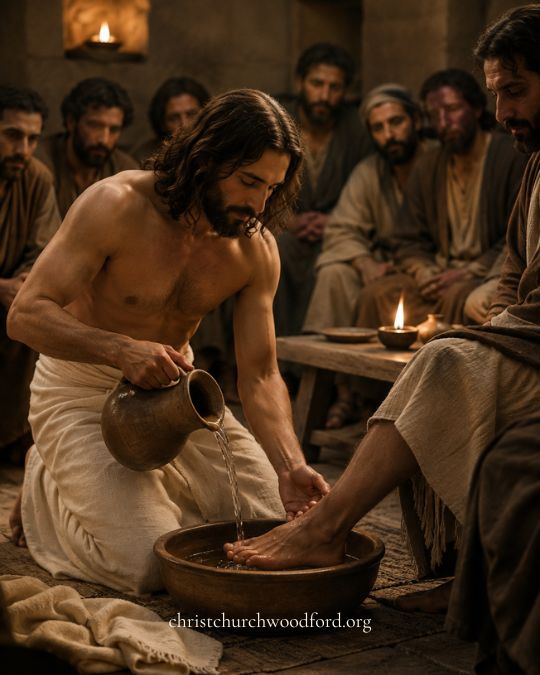
He removes His outer garment, wraps a towel around His waist, pours water into a basin, and begins washing His disciples’ feet — one by one, moving from disciple to disciple like a servant clearing the dust of the road.
It’s one of the most familiar scenes from the night before Jesus’ crucifixion, but every detail in it matters. Why would their Teacher and Lord take the lowest position in the room? And why did Jesus tell Peter, “If I do not wash you, you have no share with me” — John 13:8?
To understand why Jesus washed the disciples’ feet, we have to slow down and walk through John 13 the way John tells it — not as a lesson first, but as a story.
Jesus Washes His Disciples’ Feet — The Story in John 13
Jesus Knew His Hour Had Come
Before John tells us what Jesus did, he tells us what Jesus knew.
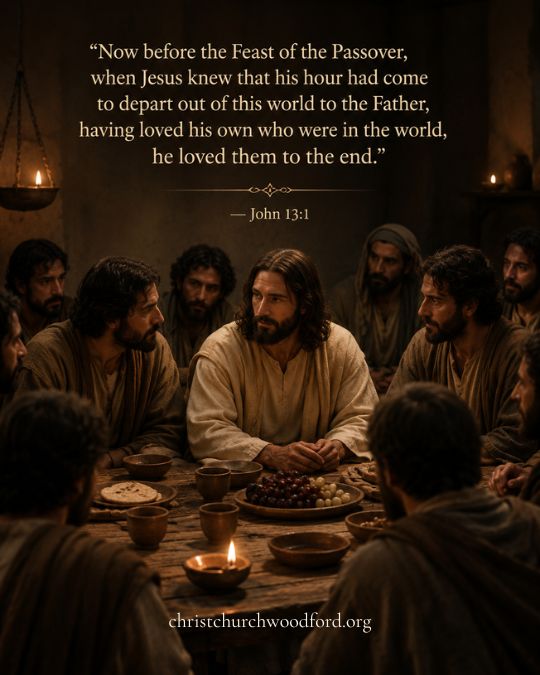
“Now before the Feast of the Passover, when Jesus knew that his hour had come to depart out of this world to the Father, having loved his own who were in the world, he loved them to the end.” — John 13:1
Jesus knows His hour has come. He knows He is about to leave this world and return to the Father. He also knows that betrayal is already at work around the table. Judas is there among the disciples, and Jesus knows exactly what he is about to do.
John gives us all of this before Jesus ever reaches for the towel because it changes the way we see what happens next.
A few verses later, he makes the contrast even clearer:
“Jesus, knowing that the Father had given all things into his hands, and that he had come from God and was going back to God, rose from supper…” — John 13:3–4
Think about the contrast John is giving us. Jesus knows where He came from. He knows where He is going. He knows that the Father has placed all things into His hands.
And then those same hands reach for a towel and a basin.
Jesus does not kneel because He has forgotten who He is. He kneels knowing exactly who He is. The One who has been given all things chooses to take the place of a servant and wash the feet of His disciples.
Jesus Gets Up From the Table and Takes a Towel
John slows the story down here, almost frame by frame:
“Rose from supper. Laid aside his outer garments, and taking a towel, tied it around his waist. Then he poured water into a basin and began to wash the disciples’ feet.” — John 13:4–5
Every movement is worth noticing. Jesus rises from the table. He lays aside His outer garments. He takes a towel and ties it around His waist. Then He pours the water Himself, kneels down, and begins washing His disciples’ feet.
To understand why this scene was so striking, it helps to know what washing feet meant in biblical times.
People traveled dusty roads in sandals, so arriving with dirty feet was simply part of everyday life. Providing water for a guest’s feet was a common act of hospitality, and actually washing another person’s feet was the kind of lowly task associated with service.
And now Jesus is the one doing it.
The men around the table call Him Teacher and Lord, yet He is on the floor before them with a towel around His waist and a basin at His side. The roles seem completely reversed. The One they follow is doing for them what we would expect a servant to do.
That’s what makes this moment so jarring. Jesus isn’t simply taking care of dusty feet. He is deliberately taking the servant’s place — and soon He will explain to His disciples why.
Why Was Peter So Shocked That Jesus Would Wash His Feet?
Then Jesus comes to Peter.
“Lord, do you wash my feet?” — John 13:6
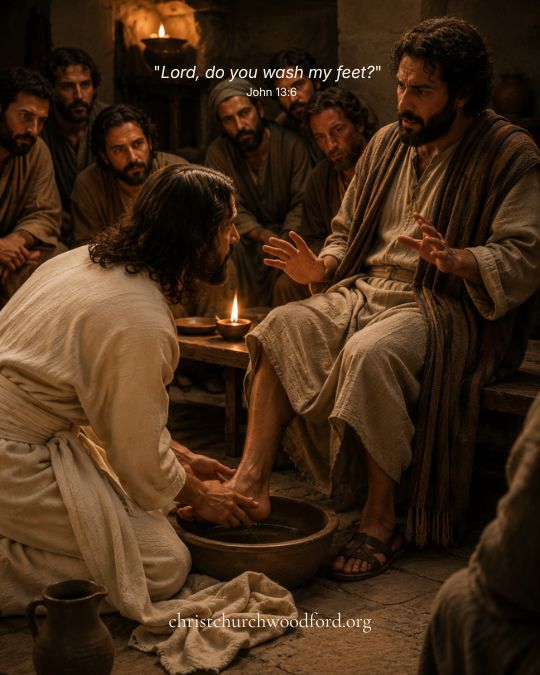
You can almost hear the disbelief in the question. Peter has just watched Jesus take the towel, pour the water, and begin doing the work of a servant. But when Jesus kneels in front of him, Peter can no longer stay silent.
You are going to wash my feet?
Everything about it feels backwards to him. Peter is the disciple. Jesus is his Lord. If anyone should be kneeling before the other, surely it should be Peter before Jesus — not Jesus before Peter.
But Jesus answers:
“What I am doing you do not understand now, but afterward you will understand.” — John 13:7
Peter doesn’t understand, and for the moment, he doesn’t want to accept it either.
“You shall never wash my feet.” — John 13:8
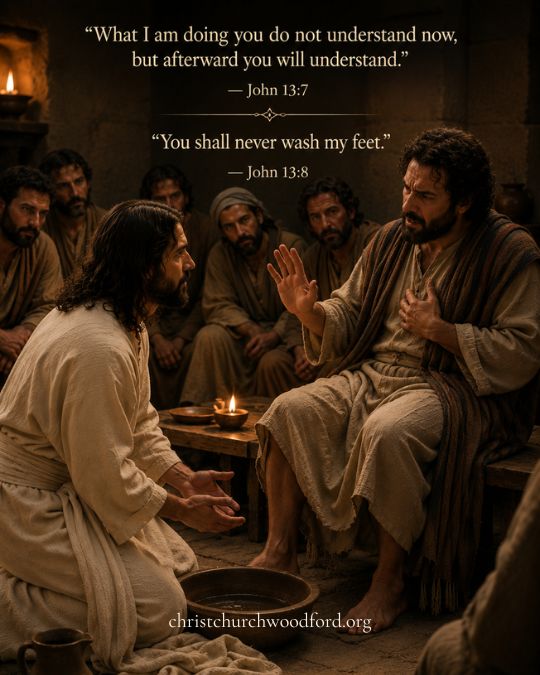
His answer is emphatic. Peter isn’t merely confused by what Jesus is doing; he resists it altogether.
And that is where the story turns.
Until now, the washing has looked like an extraordinary act of humble service. But Jesus’ response to Peter is about to show that there is more happening here than the removal of dust from a disciple’s feet.
“Unless I Wash You, You Have No Share With Me” — What Did Jesus Mean?
Jesus’ reply is the line the whole passage turns on:
“If I do not wash you, you have no share with me.” — John 13:8
Peter is still thinking about feet. Jesus is talking about something deeper.
And suddenly Peter’s resistance disappears. In classic Peter fashion, he swings all the way to the other extreme:
“Lord, not my feet only but also my hands and my head!” — John 13:9
If being washed by Jesus is necessary to share with Him, Peter wants all of it.
But Jesus answers:
“The one who has bathed does not need to wash, except for his feet, but is completely clean. And you are clean, but not every one of you.” — John 13:10
At this point, the conversation is no longer simply about dusty feet. Jesus has connected His washing with being clean and, even more importantly, with having a share in Him. Peter cannot simply refuse the washing because receiving from Jesus is part of belonging to Jesus.
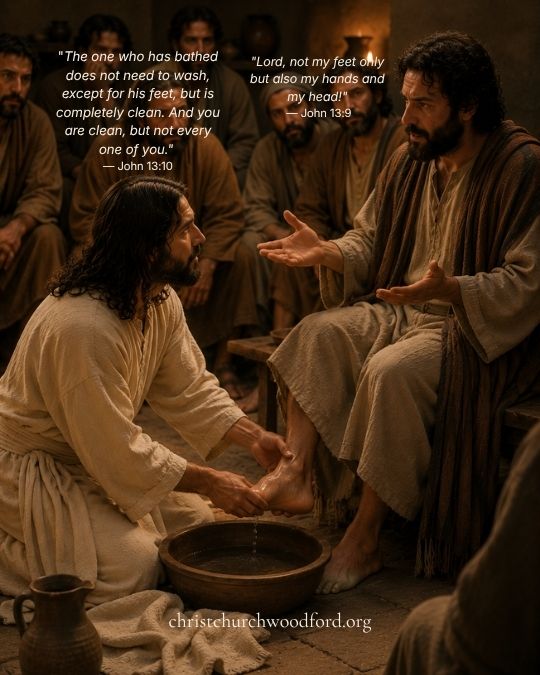
There have been different interpretations of exactly what Jesus means by the person who has already bathed but still needs his feet washed.
Some Christians have understood it as a picture of the difference between being made clean by Christ and the continuing cleansing believers need as they walk through life. But John does not stop here to explain every part of the image.
What he does make clear is something simpler and deeper: Peter cannot make himself clean, and he cannot dictate the terms on which Jesus serves him. He has to let Jesus wash him.
The foot washing, then, is becoming more than an example of humility. Before Jesus tells His disciples to wash one another’s feet, He first shows them that they must allow Him to wash them. The cleansing has to be received before the example can be followed.
“You Are Clean, But Not Every One of You” — Judas at the Table
That last phrase — “not every one of you” — is easy to pass over, but John doesn’t let us. He explains exactly why Jesus said it:
“For he knew who was to betray him; that was why he said, ‘Not all of you are clean.'” — John 13:11
Judas is still at the table.
Jesus knows who will betray Him, yet nothing in John’s account suggests that Judas is excluded from the washing. He is there among the disciples as Jesus kneels, takes their feet into His hands, and does for them the work of a servant.
That makes the scene even more striking. Jesus isn’t serving a room full of faithful men who are about to stand courageously beside Him. One will betray Him. Peter will deny Him. The others will scatter. And Jesus already knows what is coming.
Still, He kneels.
Later that same evening, Judas will take the morsel Jesus gives him and leave the room. John records his departure with four haunting words:
“And it was night.” — John 13:30
The man Jesus had served would walk out into the darkness to betray Him.
That detail gives the foot washing an even greater weight. Jesus’ act of service isn’t a reward for the disciples’ faithfulness. It comes from who He is and how He loves — even with betrayal already sitting at the table.
Why Did Jesus Wash the Disciples’ Feet?
So what did Jesus mean by washing His disciples’ feet?
John 13 gives us more than one answer. The foot washing reveals who Jesus is, what His disciples must receive from Him, and the kind of relationship He expects them to have with one another.
Jesus Showed That True Lordship Serves
The first meaning is the clearest because Jesus explains it Himself.
“You call me Teacher and Lord, and you are right, for so I am.” — John 13:13
Jesus never stops being their Lord when He kneels before them. That is the point. His willingness to serve does not diminish His authority; it reveals what His authority looks like.
By doing a task associated with lowly service, Jesus overturns the disciples’ ordinary expectations about status and greatness. The highest person in the room takes the lowest position.
The foot washing therefore reveals something important about Jesus Himself: His greatness is not expressed by demanding that others serve Him, but by willingly serving them.
The Washing Pointed to Cleansing They Had to Receive From Jesus
Peter’s conversation with Jesus shows that the washing also carries a deeper meaning.
“If I do not wash you, you have no share with me.” — John 13:8
If Jesus were only teaching Peter humility, those words would be difficult to explain. Instead, Jesus connects being washed by Him with being clean and having a share in Him.
John does not explain every detail of the imagery, so we should be careful not to force a meaning onto every part of the washing. But the central idea is clear: Peter needs something from Jesus that he cannot provide for himself.
He cannot make himself clean. He must allow Jesus to wash him.
That makes the order of John 13 important. Before Jesus tells Peter to serve others, Peter must first receive from Jesus. The foot washing is not only about what a disciple should do for Christ. It is also about what a disciple must first receive from Christ.
Jesus Showed His Disciples How They Were to Treat One Another
Jesus then gives the foot washing a third meaning:
“If I then, your Lord and Teacher, have washed your feet, you also ought to wash one another’s feet.” — John 13:14
“For I have given you an example, that you also should do just as I have done to you.” — John 13:15
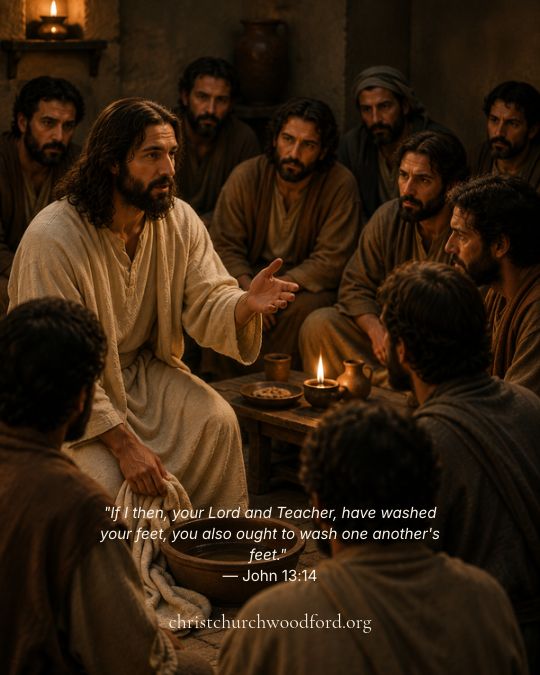
The disciples are not simply supposed to admire Jesus’ humility. They are supposed to imitate it.
If their Lord willingly takes the servant’s place, none of His followers can consider humble service beneath them. Status, position, and importance are no excuse for refusing to serve another person.
Whether Jesus’ words are practiced through literal foot washing or understood more broadly as a pattern of humble service, the meaning of His example is unmistakable: the people who follow a serving Lord are called to serve one another.
The Foot Washing and the Cross
There is one more detail that gives the foot washing even greater weight: Jesus does it with the cross only hours away.
John tells us this before the washing even begins:
“Jesus knew that his hour had come.” — John 13:1
The timing matters. Jesus is not simply showing His disciples what humble service looks like. He is showing them the heart of the One who is about to give His life for them.
We don’t need to turn every detail — the towel, basin, water, or garments — into a symbol of the crucifixion. John does not explain the scene that way. But the larger connection is hard to miss.
The foot washing gives us a glimpse of the character we are about to see at the cross. Jesus does not cling to status or demand to be served. He gives Himself.
The basin and the cross are not the same act, but they reveal the same Lord — the Lord who serves, the Savior from whom His disciples must receive, and the Teacher who calls them to follow His example.
And that brings us back to the question Jesus asked when He returned to the table:
“Do you understand what I have done to you?” — John 13:12
By the end of John 13, the answer is beginning to come into view.
Frequently Asked Questions
Where in the Bible did Jesus wash the disciples’ feet?
Jesus washes His disciples’ feet in John 13:1–17, during the final meal He shares with them before His arrest and crucifixion. John places the scene just as Jesus knows that His “hour” has come.
Why did Peter refuse to let Jesus wash his feet?
Peter was shocked to see Jesus taking the servant’s place. In his mind, the roles seemed completely reversed: Jesus was his Lord and Teacher, yet Jesus was kneeling to wash his feet. Peter initially refused, but Jesus told him, “If I do not wash you, you have no share with me” (John 13:8).
What did Jesus mean by “Unless I wash you, you have no share with me”?
Jesus’ words show that the washing pointed beyond simply removing dust from Peter’s feet. Peter had to receive something from Jesus that he could not provide for himself. Jesus connects being washed by Him with being clean and having a share in Him, giving the physical washing a deeper spiritual meaning.
Did Jesus wash Judas’ feet?
John does not separately describe Jesus washing Judas’ feet, but Judas was still present during the foot washing, and John says Jesus washed the disciples’ feet. The narrative therefore strongly indicates that Judas was included, even though Jesus already knew that he would betray Him.
Did Jesus literally command Christians to wash each other’s feet?
Jesus told His disciples, “You also ought to wash one another’s feet” and said that He had given them an example to follow (John 13:14–15). Some Christian traditions therefore practice literal foot washing, while others understand Jesus’ command primarily as a pattern of humble service. Christians have interpreted its practice differently, but the central point of the passage is clear: the Lord served His disciples and expected His example to shape the way they served one another.