50 Powerful Bible Verses on Salvation (With Commentary)

Looking for Bible verses about salvation? These 50 carefully selected Scriptures reveal God’s plan of salvation through Jesus Christ, from His promise of redemption in the Old Testament to the gift of eternal life fulfilled in the New Testament. Together, they show that salvation is not something we earn, but a gift of God’s grace received through faith in Christ alone.
Whether you’re studying the Bible, preparing a sermon, encouraging a friend, or simply seeking hope for your own heart, these verses will help you understand what Scripture teaches about salvation. You’ll discover passages about God’s saving grace, faith and repentance, the assurance of eternal life, and the hope believers have because of Jesus’ death and resurrection.
Take your time as you read. Let these Bible verses point you to the Savior who came to seek and save the lost, and remind you of the unchanging promise that everyone who calls on the name of the Lord will be saved.
Jesus Christ — The Only Way and Saviour
Every road in Scripture eventually leads here: to a Person, not a programme. Salvation has a name, and that name is Jesus. Before we open any of the other great themes, we must start where the gospel starts — with the Saviour Himself.
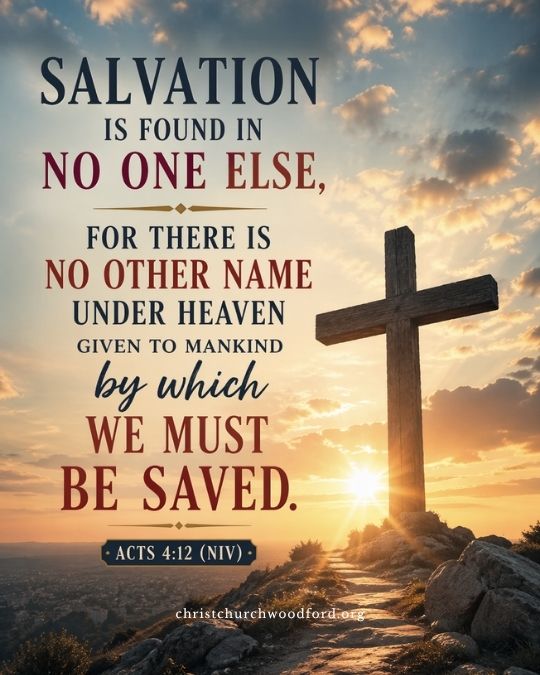
1. Acts 4:12 (NIV) — “Salvation is found in no one else, for there is no other name under heaven given to mankind by which we must be saved.”
Peter boldly declares that salvation is found in Jesus Christ alone. No one else can reconcile us to God.
2. John 14:6 (ESV) — “Jesus said to him, ‘I am the way, and the truth, and the life. No one comes to the Father except through me.'”
Jesus is not simply a guide to God—He is the only way to the Father and the source of eternal life.
3. John 10:9 (NIV) — “I am the gate; whoever enters through me will be saved. They will come in and go out, and find pasture.”
Jesus invites everyone who trusts in Him to find salvation, security, and lasting peace.
4. 1 Timothy 2:5–6 (ESV) — “For there is one God, and there is one mediator between God and men, the man Christ Jesus, who gave himself as a ransom for all, which is the testimony given at the proper time.”
Christ is the only mediator between God and humanity because He gave Himself as the ransom for our sins.
5. Acts 16:31 (NIV) — “They replied, ‘Believe in the Lord Jesus, and you will be saved—you and your household.'”
Paul points the jailer to the heart of the gospel: salvation is received by placing your faith in Jesus Christ.
6. Luke 19:10 (ESV) — “For the Son of Man came to seek and to save the lost.”
Jesus took the initiative to seek those who were separated from God, demonstrating His love and saving purpose.
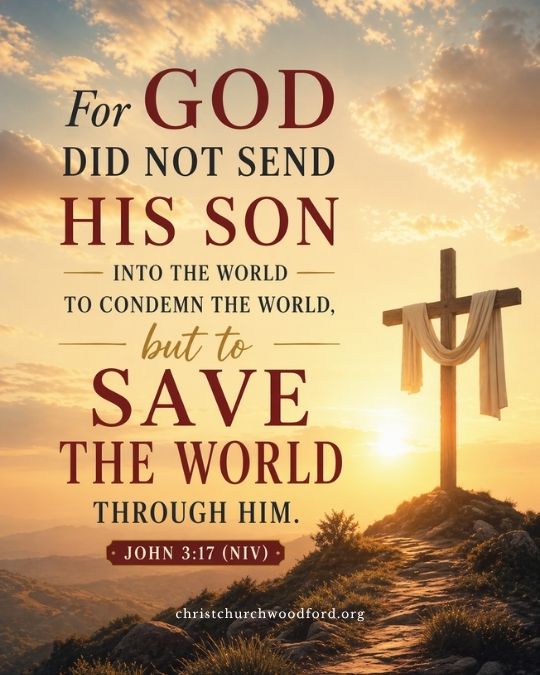
7. John 3:17 (NIV) — “For God did not send his Son into the world to condemn the world, but to save the world through him.”
Christ came not to condemn sinners but to offer them salvation through His grace.
8. Hebrews 7:25 (ESV) — “Consequently, he is able to save to the uttermost those who draw near to God through him, since he always lives to make intercession for them.”
Jesus completely saves those who trust Him and continually intercedes for them before the Father.
9. Romans 5:8 (NIV) — “But God demonstrates his own love for us in this: While we were still sinners, Christ died for us.”
God’s love is revealed in the cross. Christ died for us before we could ever earn His favor.
10. Isaiah 53:5 (ESV) — “But he was pierced for our transgressions; he was crushed for our iniquities; upon him was the chastisement that brought us peace, and with his wounds we are healed.”
Written centuries before Jesus’ crucifixion, this prophecy points to the suffering Messiah whose sacrifice brings forgiveness and peace.
Being Saved – The Gift of Grace
The Bible makes one truth unmistakably clear: salvation is God’s gift of grace, not something we can earn through our own efforts. These verses remind us that forgiveness and eternal life are received by faith in Jesus Christ, not by our works.
11. Ephesians 2:8-9 (NIV) — “For it is by grace you have been saved, through faith — and this is not from yourselves, it is the gift of God — not by works, so that no one can boast.”
Paul makes it airtight. Grace. Faith. Gift. Not works. Not boasting. If you are trying to earn God’s acceptance, you are solving the wrong problem — the problem has already been solved.
12. Titus 3:5 (ESV) — “He saved us, not because of works done by us in righteousness, but according to his own mercy, by the washing of regeneration and renewing of the Holy Spirit.”
Salvation is rooted in God’s mercy, not our merit. The washing he describes is not self-improvement — it is transformation from the outside in, by the Spirit.
13. Romans 6:23 (NIV) — “For the wages of sin is death, but the gift of God is eternal life in Christ Jesus our Lord.”
Two words carry this verse: wages and gift. Wages are earned. Gifts are given. Death is what sin earns. Eternal life is what God gives. The contrast is total.
14. 2 Timothy 1:9 (ESV) — “Who saved us and called us to a holy calling, not because of our works but because of his own purpose and grace, which he gave us in Christ Jesus before the ages began.”
Before time. Before you were born. Before your first sin or your first prayer, God’s grace in Christ was already determined. Your salvation was not a reaction — it was a plan.
15. Romans 11:6 (NIV) — “And if by grace, then it cannot be based on works; if it were, grace would no longer be grace.”
Grace and works cannot be the basis of salvation at the same time. If salvation is by grace, it is God’s gift from beginning to end.
16. Galatians 2:16 (ESV) — “Yet we know that a person is not justified by works of the law but through faith in Jesus Christ.”
We are declared righteous before God through faith in Jesus Christ, not by keeping the law or relying on our own obedience.
17. Isaiah 64:6 (NIV)— “All of us have become like one who is unclean, and all our righteous acts are like filthy rags; we all shrivel up like a leaf, and like the wind our sins sweep us away.”
Even our best efforts, apart from Christ, are not good enough currency for God’s standard. This is not cruelty — it is honesty that opens the door to grace.
18. Romans 4:5 (ESV) — “And to the one who does not work but believes in him who justifies the ungodly, his faith is counted as righteousness.”
God declares sinners righteous not because of their works, but because they place their faith in Christ. Righteousness is received as a gift, not earned by human effort.
19. Philippians 3:9 (NIV) — “And be found in him, not having a righteousness of my own that comes from the law, but that which is through faith in Christ — the righteousness that comes from God on the basis of faith.”
Paul — a former Pharisee who could have boasted in religious credentials — counted it all as loss. His righteousness was borrowed. It came from Christ. So does ours.
20. Romans 3:24 (ESV) — “And are justified by his grace as a gift, through the redemption that is in Christ Jesus.”
Justified. Graced. Gifted. Redeemed. Four of the most beautiful words in theology, and every one of them points away from us and toward Jesus.
God as Deliverer — His Role as Saviour
Throughout Scripture, God reveals Himself as the One who saves, delivers, and rescues His people. These verses remind us that salvation begins with God’s initiative and flows from His faithful love and mercy.
21. Psalm 62:1-2 (ESV) — “For God alone my soul waits in silence; from him comes my salvation. He alone is my rock and my salvation, my fortress; I shall not be greatly shaken.”
There is a stillness in these words that is profoundly pastoral. David does not panic. He waits. Because he knows where salvation comes from — and it is not from himself.
22. Psalm 3:8 (NIV) — “From the Lord comes deliverance. May your blessing be on your people.”
This verse reminds us that salvation and deliverance belong to the Lord, not to human strength.
23. Isaiah 12:2 (ESV) — “Behold, God is my salvation; I will trust, and will not be afraid; for the Lord God is my strength and my song, and he has become my salvation.”
Trust replaces fear when we recognize that God Himself is our salvation and strength.
24. 2 Peter 3:9 (NIV) — “The Lord is not slow in keeping his promise, as some understand slowness. Instead he is patient with you, not wanting anyone to perish, but everyone to come to repentance.”
God’s patience is not indifference — it is mercy extended. Every day that passes without the return of Christ is another day of grace for those who have not yet come home.
25. Exodus 15:2 (ESV) — “The Lord is my strength and my song, and he has become my salvation; this is my God, and I will praise him, my father’s God, and I will exalt him.”
Moses sings this after the Red Sea. Salvation has already happened. The response is worship. That is always the right order — God saves first, we praise in response.
26. Psalm 27:1 (NIV) — “The Lord is my light and my salvation — whom shall I fear? The Lord is the stronghold of my life — of whom shall I be afraid?”
When God is your salvation, the grammar of fear changes entirely. There is no one left to be afraid of, because the One who holds all power is holding you.
27. Zephaniah 3:17 (ESV) — “The Lord your God is in your midst, a mighty one who will save; he will rejoice over you with gladness; he will quiet you by his love; he will exult over you with loud singing.”
God does not save reluctantly. He saves with singing. The God who rescues you is also the God who rejoices over you. That is the character of the Saviour.
28. Jonah 2:9 (NIV) — “But I, with shouts of grateful praise, will sacrifice to you. What I have vowed I will make good. I will say, ‘Salvation comes from the Lord.'”
Jonah says this from inside a fish — which tells us something important. There is no situation so dark, so desperate, so self-made, that salvation cannot reach you there.
29. Psalm 68:20 (ESV) — “Our God is a God of salvation, and to God, the Lord, belong deliverances from death.”
Deliverances — plural. God is not a one-time rescuer. He is consistently, repeatedly, inexhaustibly a saving God. Death itself does not have the final word in His hands.
30. Habakkuk 3:18 (NIV) — “Yet I will rejoice in the Lord, I will be joyful in God my Savior.”
Habakkuk writes this when everything around him is falling apart. Joy is not rooted in circumstances. It is rooted in the character of the God who saves.
The Role of Faith and Confession
How do you receive salvation according to the Bible? Scripture consistently points to faith in Jesus Christ. These salvation Bible verses explain that those who believe in Him, repent, and confess Him as Lord receive God’s gift of eternal life. Salvation is by grace through faith, and genuine faith is reflected in a life that trusts and follows Christ.
31. John 3:16 (NIV) — “For God so loved the world that he gave his one and only Son, that whoever believes in him shall not perish but have eternal life.”
This well-known verse summarizes the gospel: God loved the world, gave His Son, and promises eternal life to everyone who believes in Him.
32. Romans 10:9-10 (ESV) — “Because, if you confess with your mouth that Jesus is Lord and believe in your heart that God raised him from the dead, you will be saved. For with the heart one believes and is justified, and with the mouth one confesses and is saved.”
Salvation comes through believing in the risen Christ and confessing Him as Lord. True faith begins in the heart and is expressed through our lives.
33. Romans 10:13 (NIV) — “For, ‘Everyone who calls on the name of the Lord will be saved.'”
God’s invitation is open to everyone. Anyone who calls on the name of the Lord in faith will be saved.
34. Mark 1:15 (ESV) — “The time is fulfilled, and the kingdom of God is at hand; repent and believe in the gospel.”
Repentance and faith belong together. Repentance is turning from — faith is turning to. They are two sides of the same movement toward Jesus.
35. John 1:12 (NIV) — “Yet to all who did receive him, to those who believed in his name, he gave the right to become children of God.”
Everyone who receives Jesus by faith is welcomed into God’s family and given the privilege of being His child.
36. Hebrews 11:6 (ESV) — “And without faith it is impossible to please him, for whoever would draw near to God must believe that he exists and that he rewards those who seek him.”
Faith is essential to a relationship with God. Those who trust Him and seek Him are invited to draw near to Him.
37. Acts 3:19 (NIV) — “Repent, then, and turn to God, so that your sins may be wiped out, that times of refreshing may come from the Lord.”
Repentance means turning away from sin and turning to God. Through His forgiveness, He offers both cleansing and spiritual renewal.
38. Galatians 3:26 (ESV) — “For in Christ Jesus you are all sons of God, through faith.”
Through faith in Jesus Christ, believers are adopted into God’s family and share in His promises as His children.
39. 1 John 1:9 (NIV) — “If we confess our sins, he is faithful and just and will forgive us our sins and purify us from all unrighteousness.”
God faithfully forgives and cleanses those who confess their sins, demonstrating both His mercy and His justice through Christ.
40. 2 Corinthians 7:10 (ESV) — “For godly grief produces a repentance that leads to salvation without regret, whereas worldly grief produces death.”
Not all sorrow leads to salvation. Godly grief — sorrow over sin because it grieves God — leads somewhere transformative. That kind of repentance produces life, not regret.
The Assurance of Salvation — Held Forever
One of the greatest promises in the Bible is the assurance of salvation. Those who place their faith in Jesus Christ can have confidence that God will keep them by His grace. These Bible verses remind believers that eternal life is secure in Christ and that nothing can separate them from God’s love.
41. John 10:28–29 (ESV) — “I give them eternal life, and they will never perish, and no one will snatch them out of my hand. My Father, who has given them to me, is greater than all, and no one is able to snatch them out of the Father’s hand.”
Jesus promises eternal security for those who belong to Him. Our salvation is held securely in the hands of both the Son and the Father.
42. Romans 8:38–39 (NIV) — “For I am convinced that neither death nor life, neither angels nor demons, neither the present nor the future, nor any powers, neither height nor depth, nor anything else in all creation, will be able to separate us from the love of God that is in Christ Jesus our Lord.”
Nothing in all creation can separate believers from God’s love in Christ. His saving love is constant, faithful, and everlasting.
43. Philippians 1:6 (ESV) — “And I am sure of this, that he who began a good work in you will bring it to completion at the day of Jesus Christ.”
God does not start things He does not finish. The salvation He began in you is His project — and He will see it through to the final day. That is not optimism. That is a promise.
44. 1 John 5:11–12 (NIV) — “And this is the testimony: God has given us eternal life, and this life is in his Son. Whoever has the Son has life; whoever does not have the Son of God does not have life.”
Eternal life is found in Jesus Christ alone. Everyone who trusts in the Son has the assurance of life with God.
45. 2 Timothy 4:18 (ESV) — “The Lord will rescue me from every evil deed and bring me safely into his heavenly kingdom. To him be the glory forever and ever. Amen.”
Even as Paul faced death, he trusted that God would bring him safely into His heavenly kingdom. This verse reminds believers to place their confidence in God’s faithful promises.
46. 1 Peter 1:3–4 (NIV) — “Praise be to the God and Father of our Lord Jesus Christ! In his great mercy he has given us new birth into a living hope through the resurrection of Jesus Christ from the dead, and into an inheritance that can never perish, spoil or fade.”
Through Christ’s resurrection, believers have a living hope and an eternal inheritance that can never be lost or destroyed.
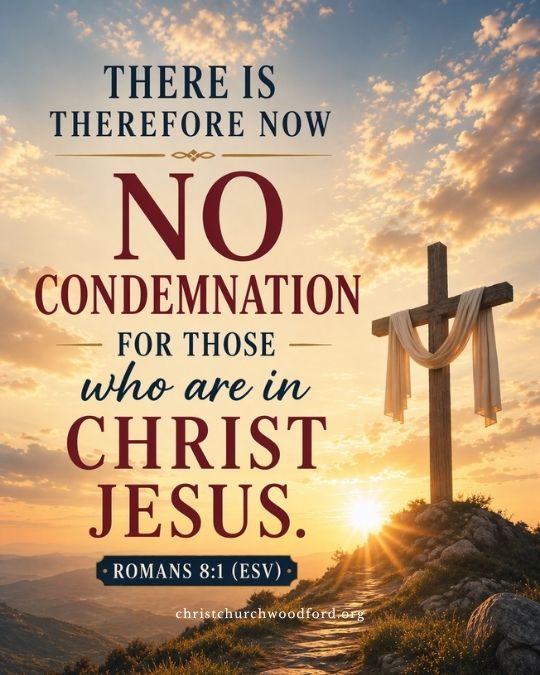
47. Romans 8:1 (ESV) — “There is therefore now no condemnation for those who are in Christ Jesus.”
Those who are in Christ are fully forgiven and no longer stand condemned before God. This is one of the clearest promises of the assurance of salvation.
48. Jude 24 (NIV) — “To him who is able to keep you from stumbling and to present you before his glorious presence without fault and with great joy.”
God not only saves His people but also keeps them, faithfully bringing them into His presence with joy.
49. Hebrews 13:5b (ESV) — “For he has said, ‘I will never leave you nor forsake you.'”
God promises His constant presence with His people. No matter what we face, He remains faithful and will never abandon those who trust in Him.
50. Revelation 21:4 (NIV) — “He will wipe every tear from their eyes. There will be no more death or mourning or crying or pain, for the old order of things has passed away.”
Salvation reaches its glorious fulfillment in God’s eternal kingdom, where every sorrow ends and believers will live forever in His presence.
A Final Word
These Bible verses about salvation reveal one consistent message from beginning to end: God saves. Through Jesus Christ, He offers forgiveness, new life, and the hope of eternity to everyone who believes in Him. Salvation is not something we achieve by our own efforts—it is God’s gracious gift, received through faith.
If these Scriptures have stirred your heart, don’t ignore that invitation. Jesus came to seek and save the lost, and He continues to call people to Himself today. No matter your past, His grace is greater, and His promise of salvation remains open to all who trust in Him.
If you are ready to place your faith in Christ or would like to learn more about the gospel, we would be honored to walk alongside you at Christ Church Woodford. Wherever you are in your journey, know that God invites you to come to Him through His Son, Jesus Christ.